14 – 17 August 2019
The drive up to Lisbon was relatively uneventful, interrupted only by repeated visits to petrol stations as we tried to beat a petrol strike that’s gripping the country at the moment and ensure we had enough fuel to both get to Lisbon and, subsequently, out of Portugal and back into Spain.
Lisbon was largely an unknown for us. Anthony had visited it with Adam and Jeff in 1994, staying a total of 8 hours there (basically to justify spending 2 nights sleeping ‘for free’ on trains whilst interrailing around Europe). Needless to say, it hadn’t left a lasting impression, as you would probably expect in 8 hours after spending the (not) night sleeping on a train.
For whatever reason, Lisbon was one of the few capitals, and Portugal one of the few countries, we had bypassed on our travels from London. This wasn’t planned, and I’m not sure we even realised we had omitted it at the time.
We were excited to have a few days here, keen to see some of the sights but mainly just try and absorb a bit of the vibe of the place.
As we made our way over the Golden Gate Bridge like 25 April Bridge across the Tagus River we laid eyes on the city for the first time, and of course immediately noticed the large Rio like statue of Jesus keeping a watchful eye over the place. Quite the first impression.
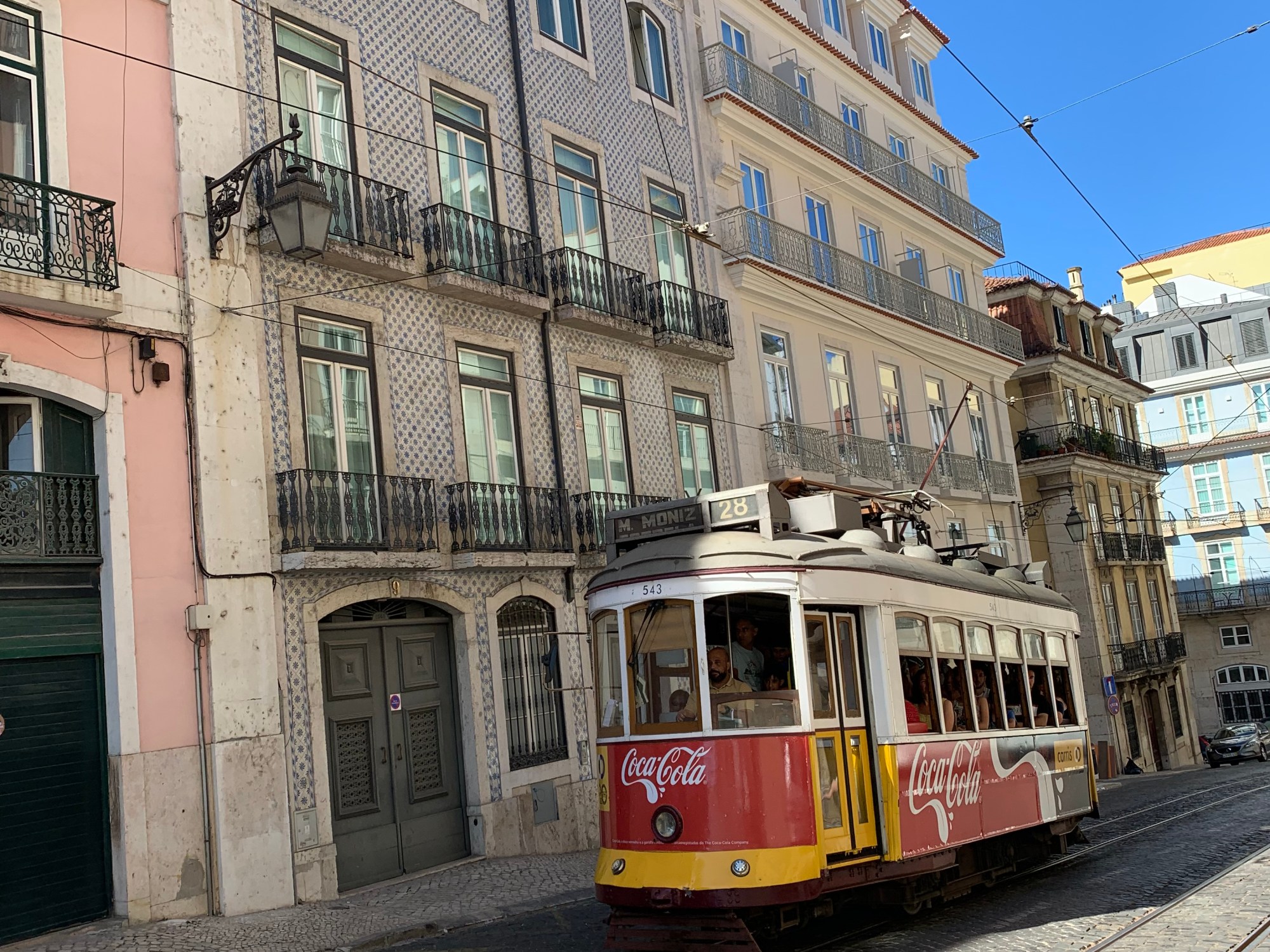
From there, it was the increasingly more familiar slog of getting the car through a relatively major capital city, guided by often inaccurate GPS (which gets particularly confused in old towns) without killing ourselves, anyone else or damaging anything of significant historic value (such as our trusty Duster or one of the many 1930s trams which are still in service). It is actually quite hard to get a positive first impression of any city under these conditions.
Lisbon was particularly exciting on this front as it is
a. Pretty big (around 3 million people)
b. Has an active tram network (hook turns anyone?) and
c. we were staying bang in the middle of the old town (in the Chiado district), much of which (including our car park) is closed off to non residential traffic and where many of the streets are actually staircases.
Anyway, after what seemed like hours, if not days (it was probably 15 mins) of driving around, frustrated by bollards that were invisible to our GPS and generally furthering the kids linguistic education (ie swearing), we found the magic pincode for the bollards, made our way to the carpark and stashed the car, hoping that we wouldn’t need it for the rest of our time here.
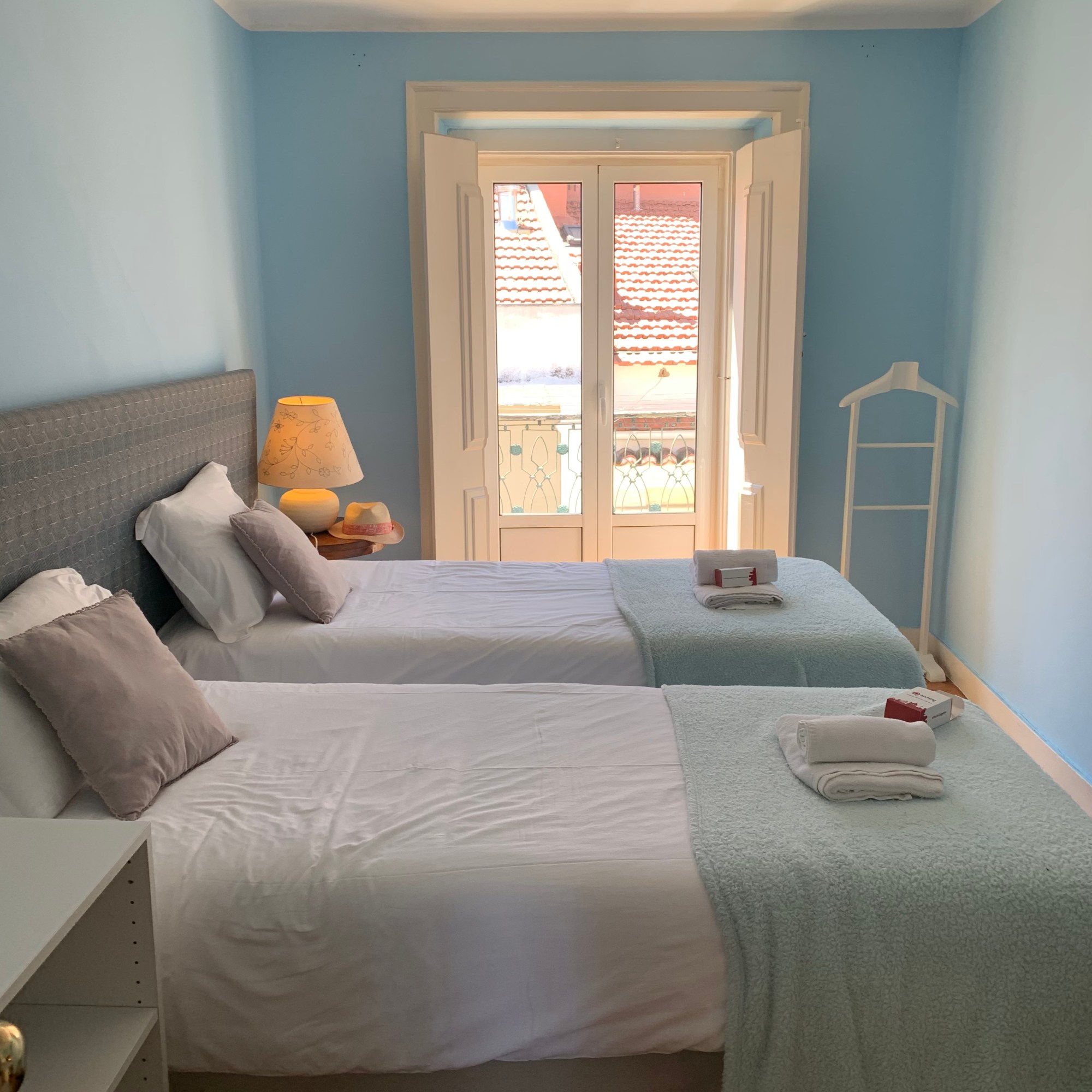
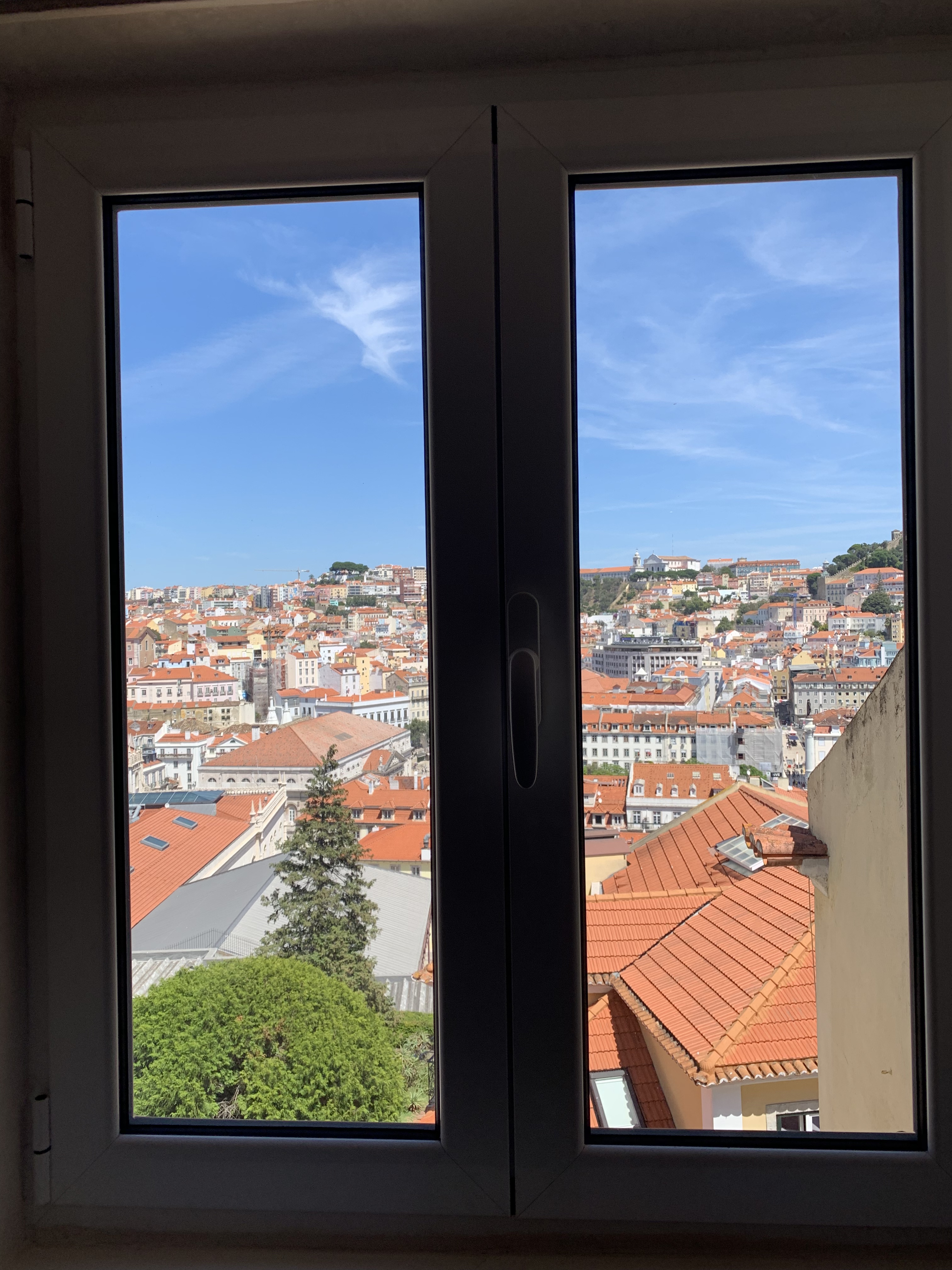
We gathered our stuff and made our way to our apartment, sitting most of the way up the hill in Chiado, on the 4th floor, with incredible views out over the district and the Castelo de Sao Jorge beyond. It wasn’t really until we were ensconced in our apartment and had thrown open the windows to let in the view and afternoon breeze that we started to appreciate the city.
Lisbon is actually the second oldest European capital, after Athens and has, like most other places on the Iberian Peninsula, been through Roman, Germanic and Moorish hands before coming back to local ownership in the 12th century. The city went through a golden era in the 16th century as Portugal hit its straps and ran around the world discovering new countries, establishing trading posts and generally getting rich. Unfortunately, in 1755 the city was hit with a massive earthquake that flattened most of it and killed about 40,000 people.
Following the earthquake, the remains of the city were basically pulled down and it was reconstructed pretty much from scratch, and it has to be said that they did an incredible job.
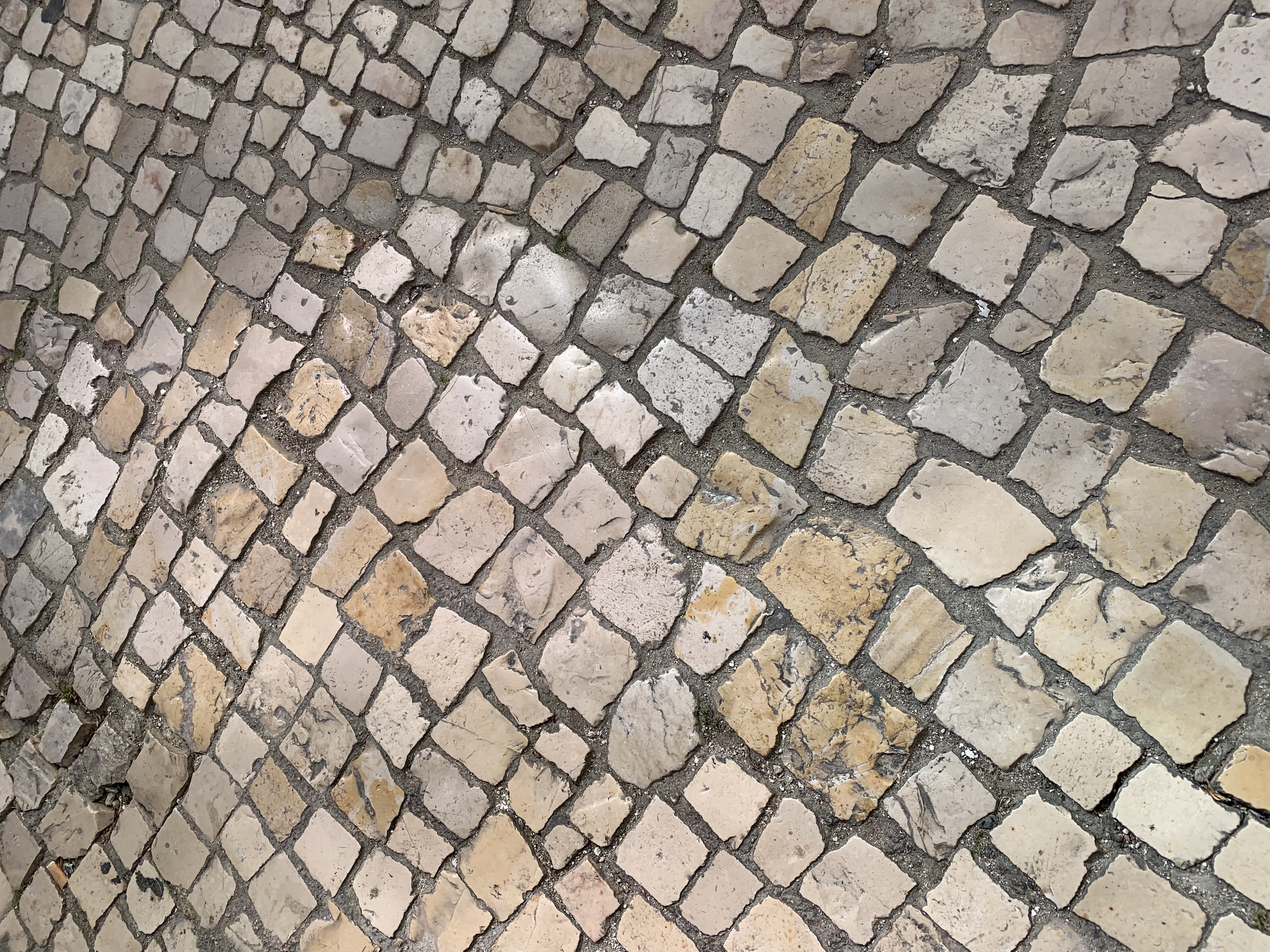
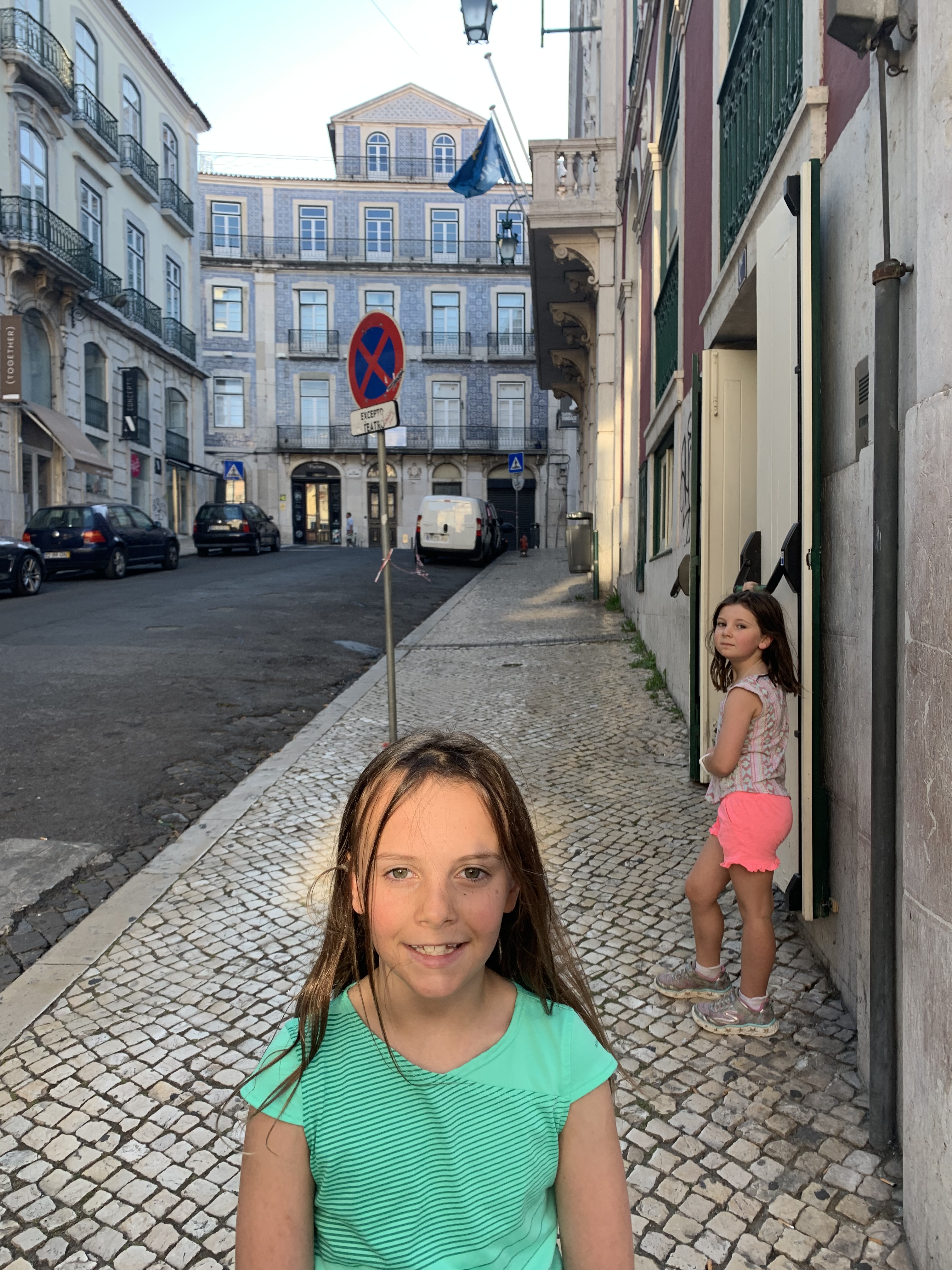
Many of the buildings are reminiscent of Paris or Barcelona, but often more colourful (and frequently covered in beautiful tiles rather than paint). There is a certain uniformity to the old town that adds to the congruence of the place. Stairs climb where the hills of the centre get too steep, tram tracks interlace the cobblestone streets, jousting with cars in impossibly tight roads. Small alleyways open out into perfect courtyards and squares, often shaded by majestic trees. Sidewalks are generally marbled cobblestone (very pretty but treacherous in havaianas), wine bars are seemingly everywhere, supermarkets are not. Peeling paint reminds us that Portugal is by far the poorest country in western Europe, but only seem to add to the appeal of the place. Whilst there is no doubt that the place is crawling with tourists, they are absorbed more easily into the city compared to somewhere like the Algarve.
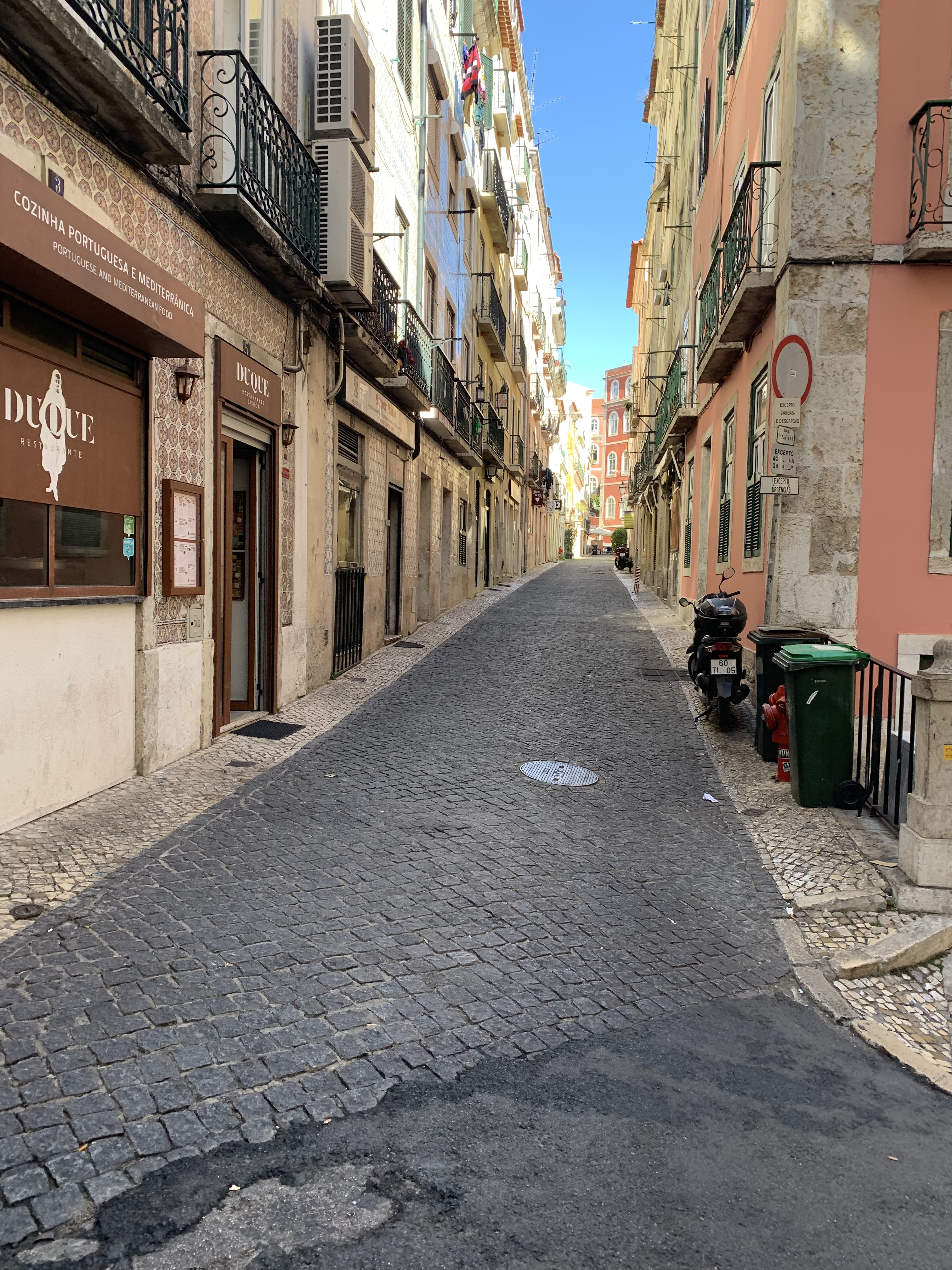
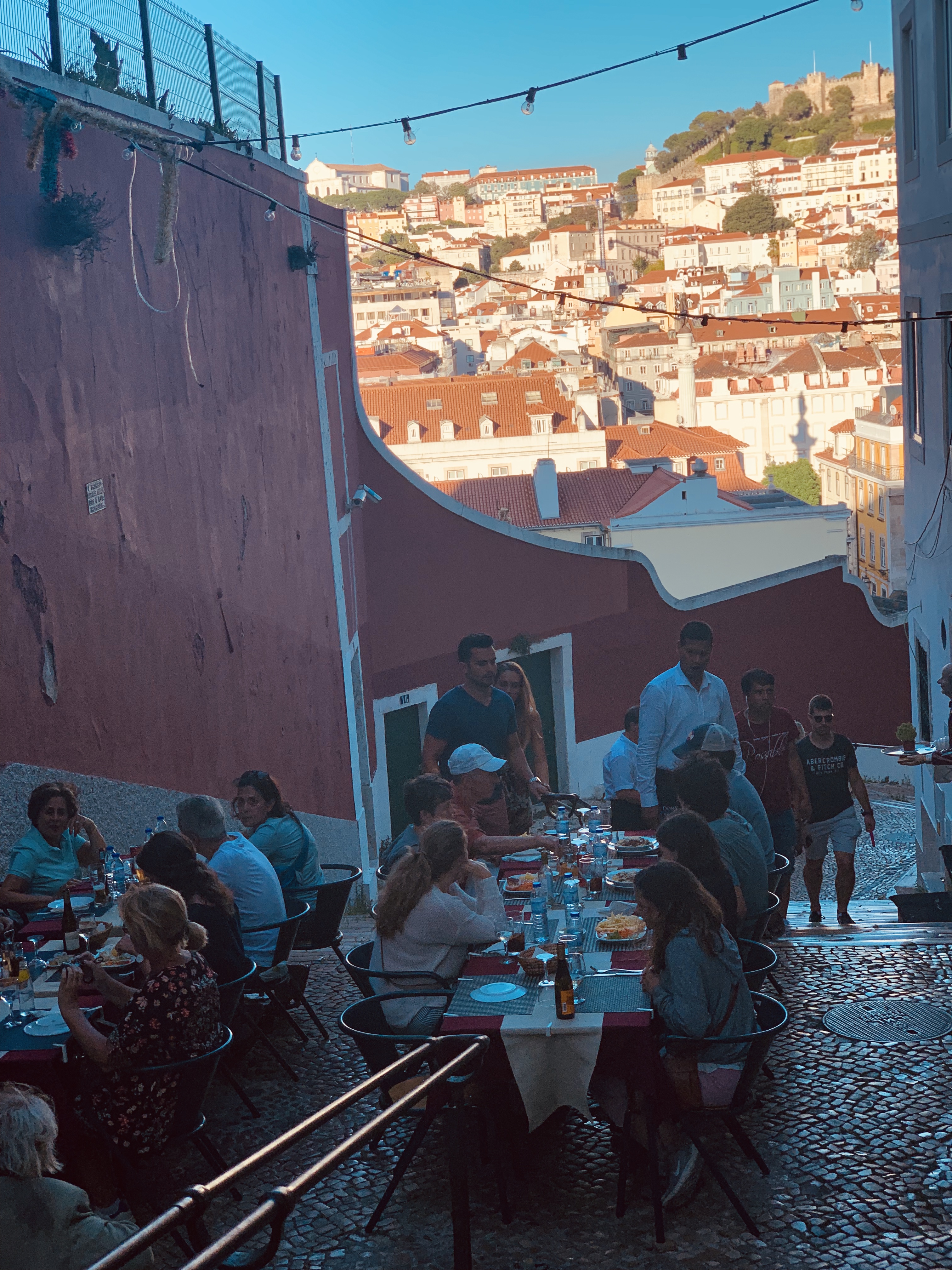
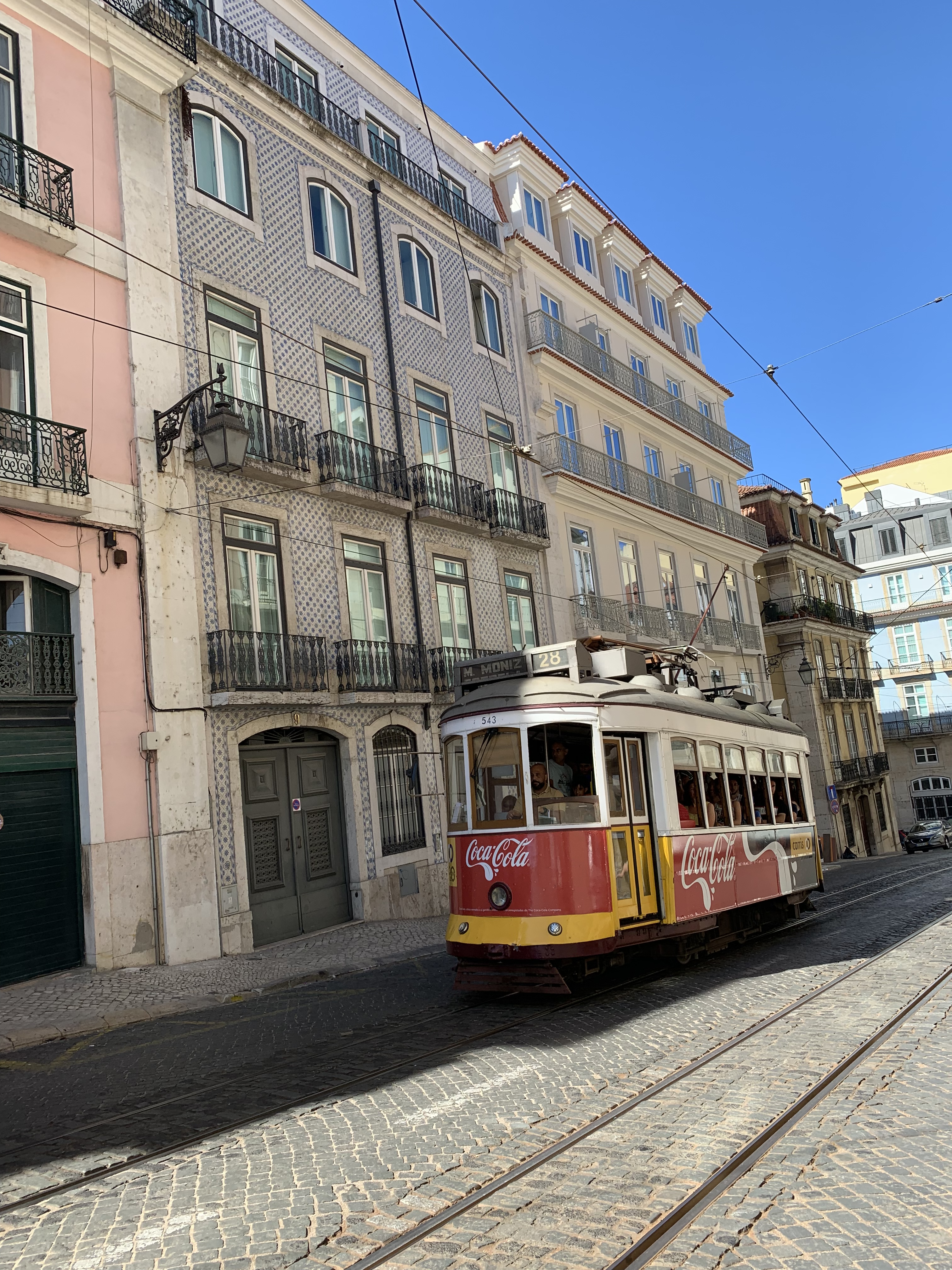
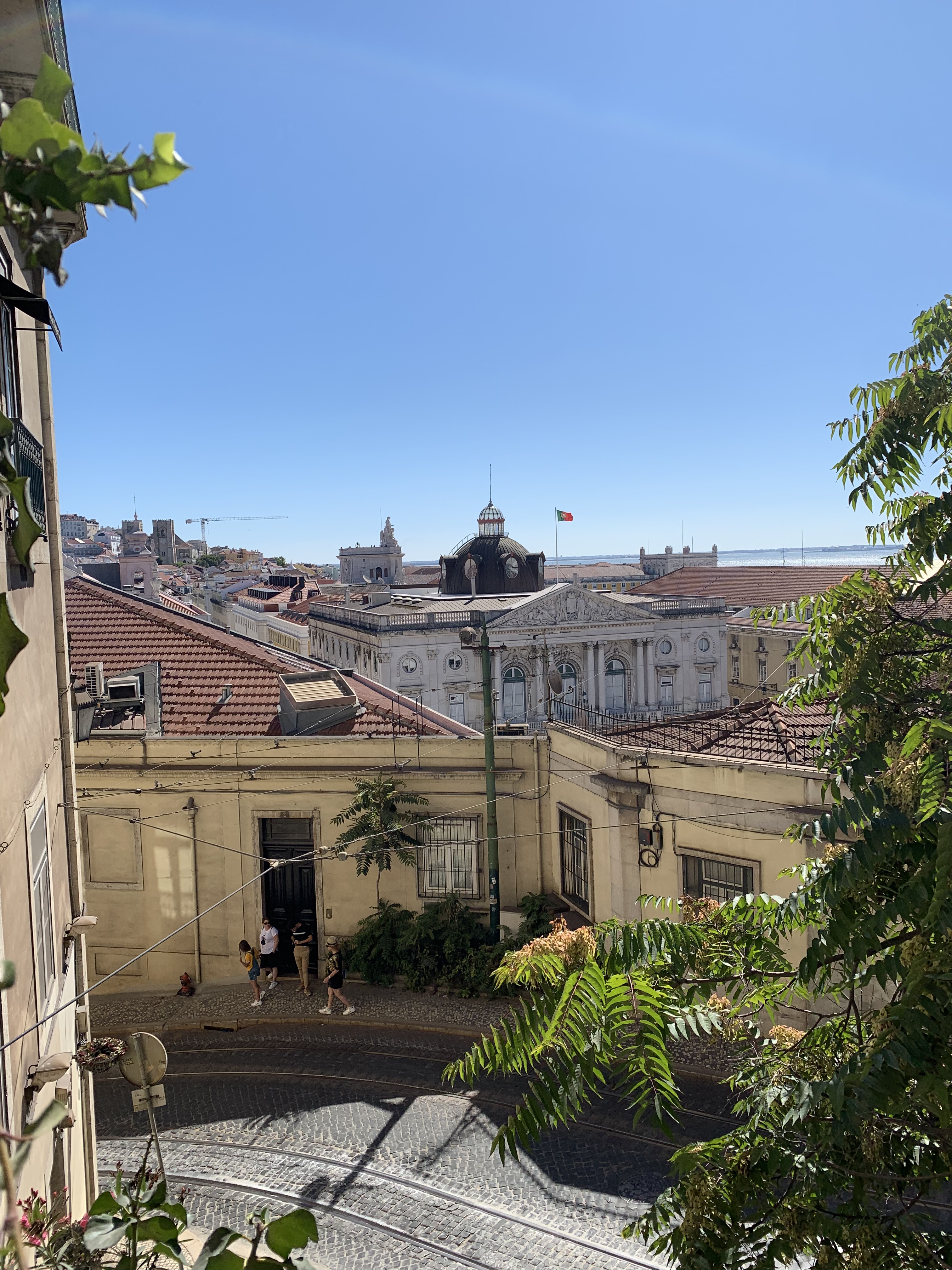
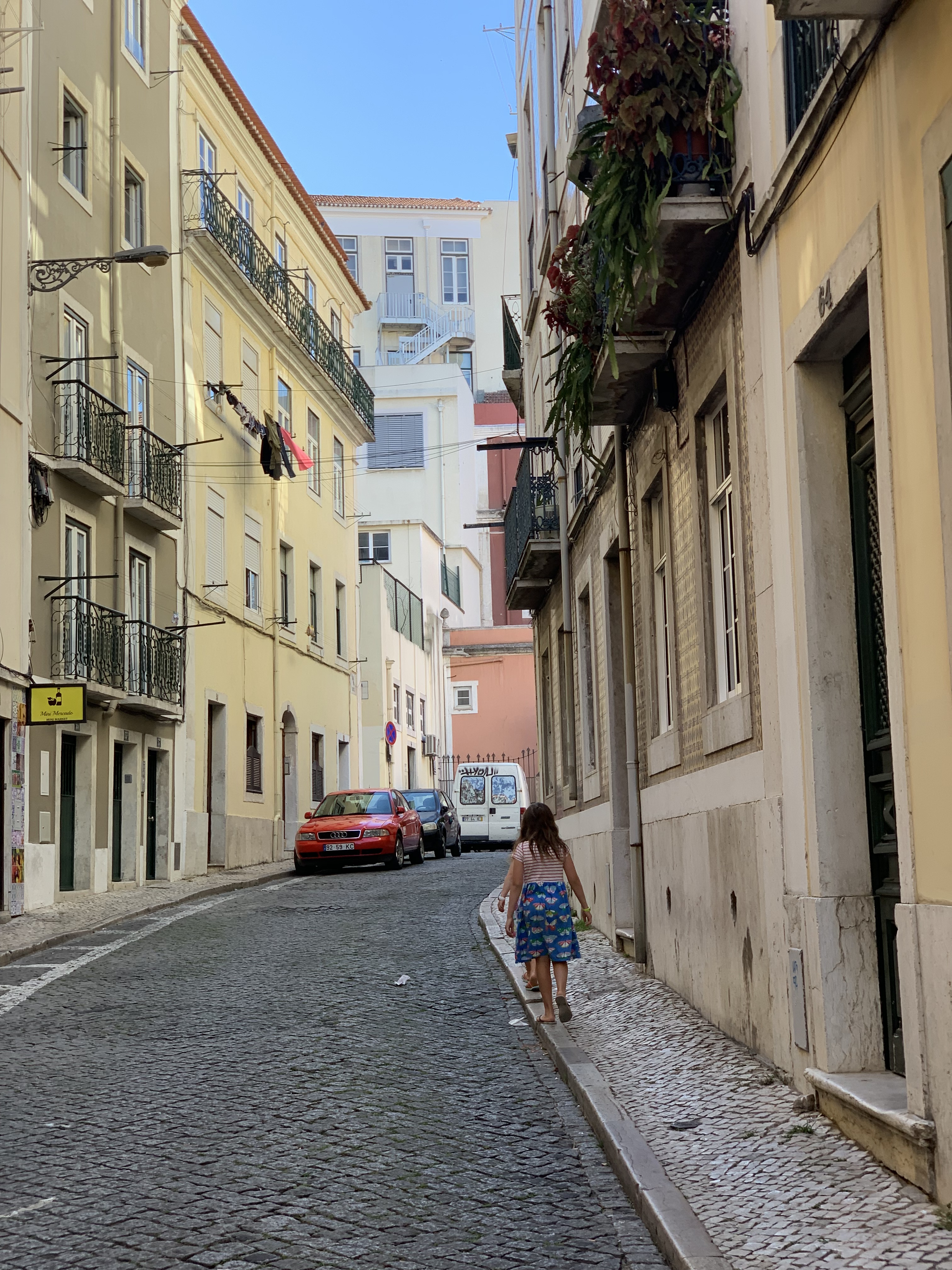
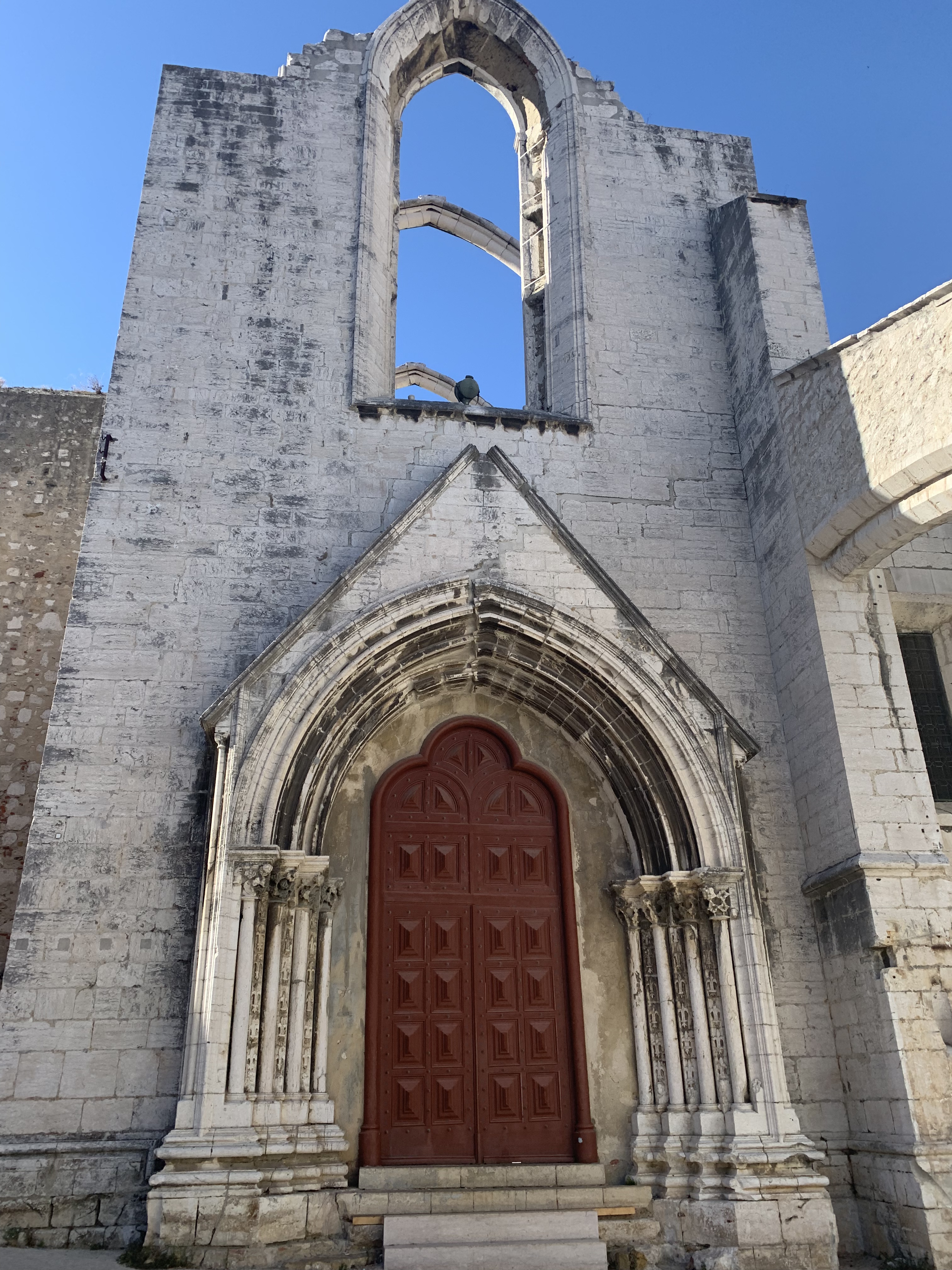
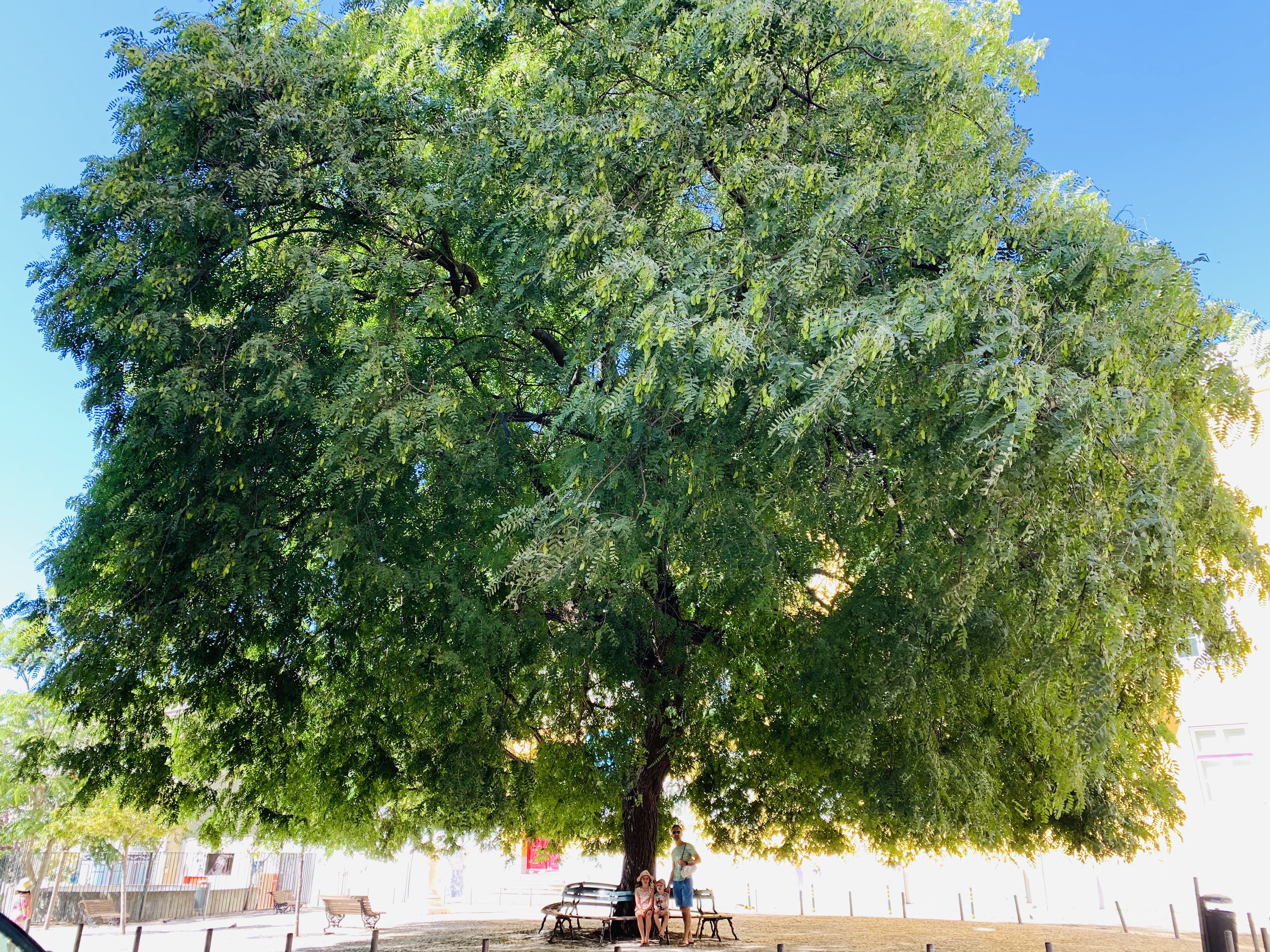
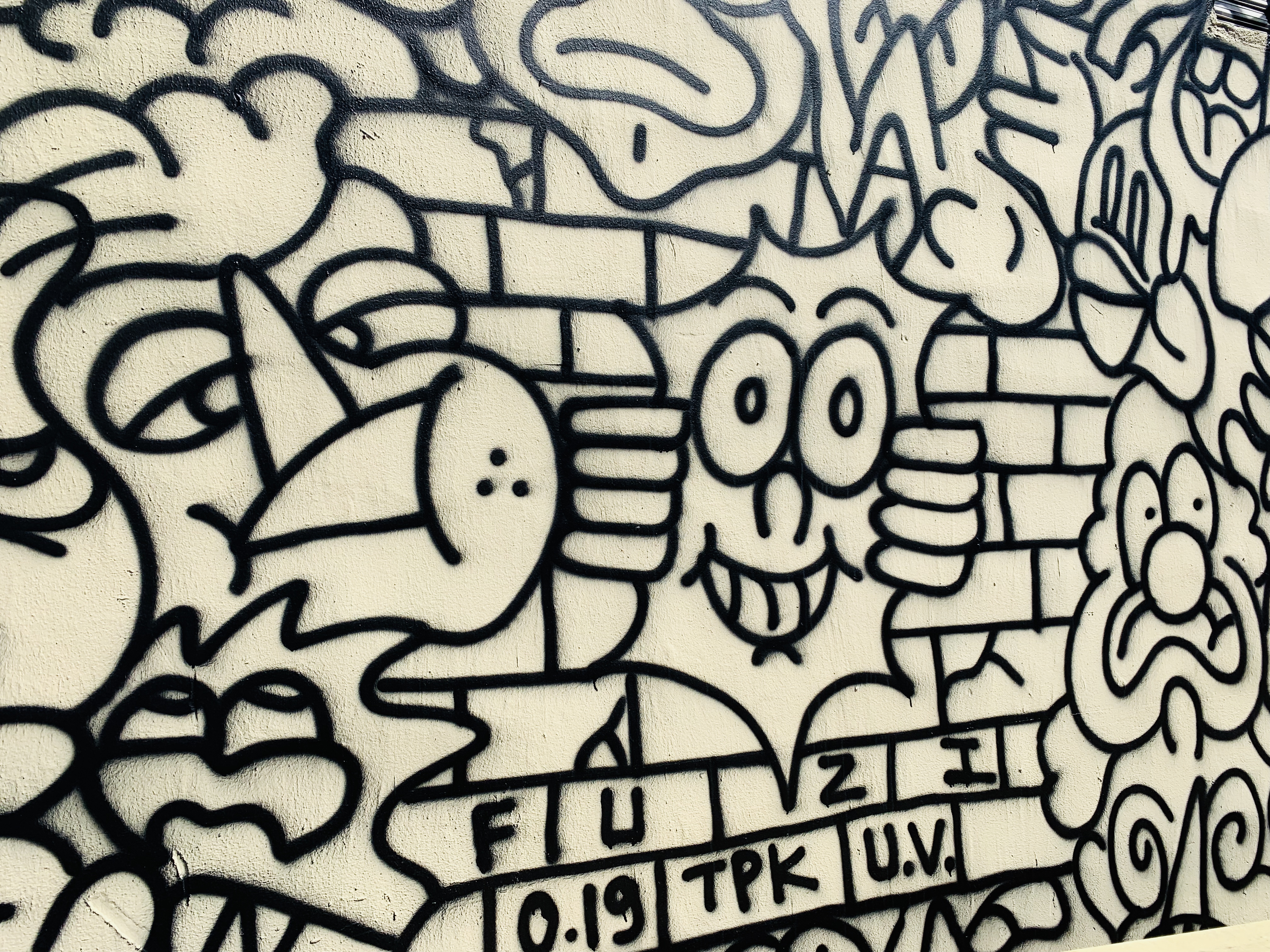
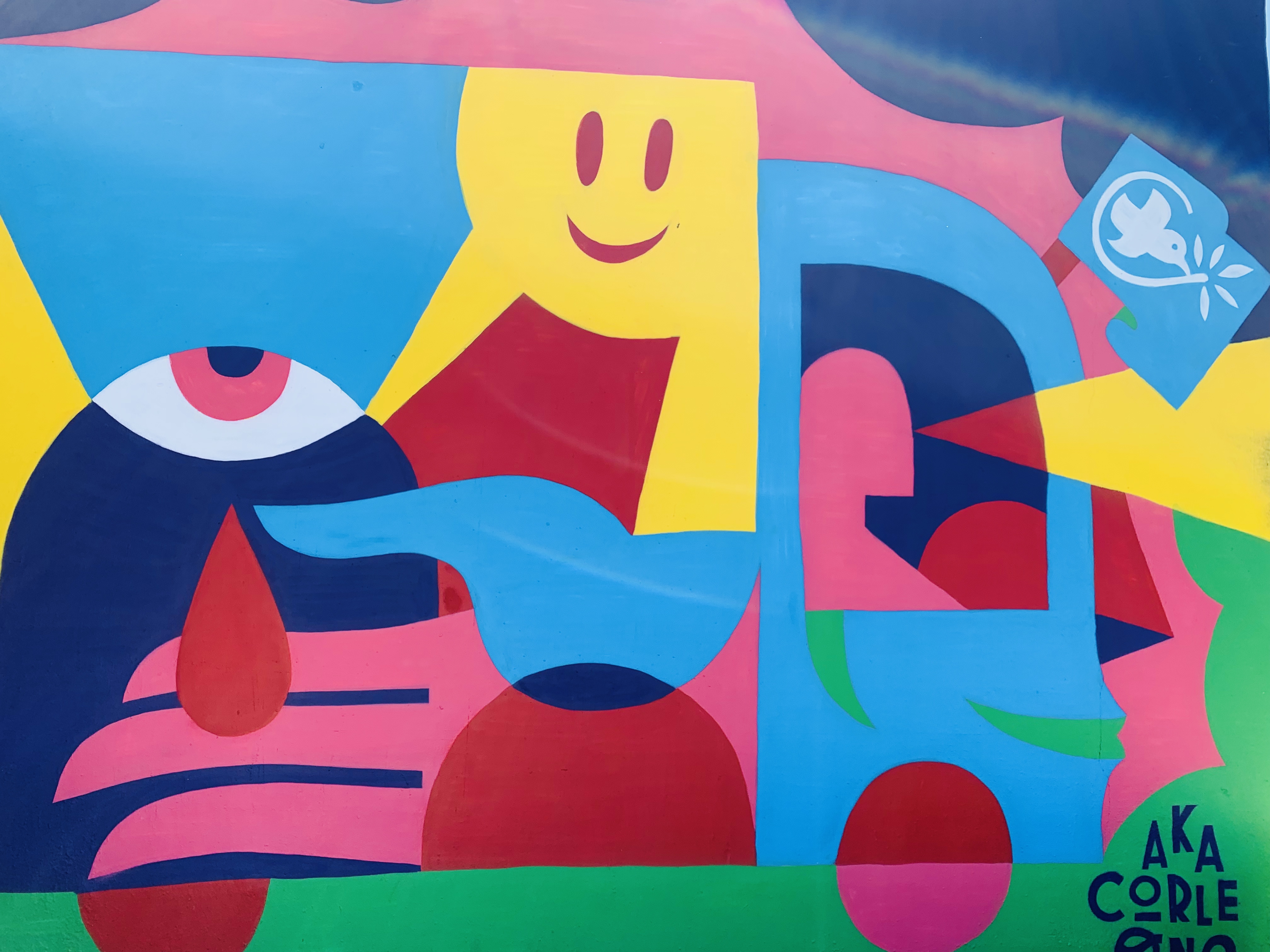
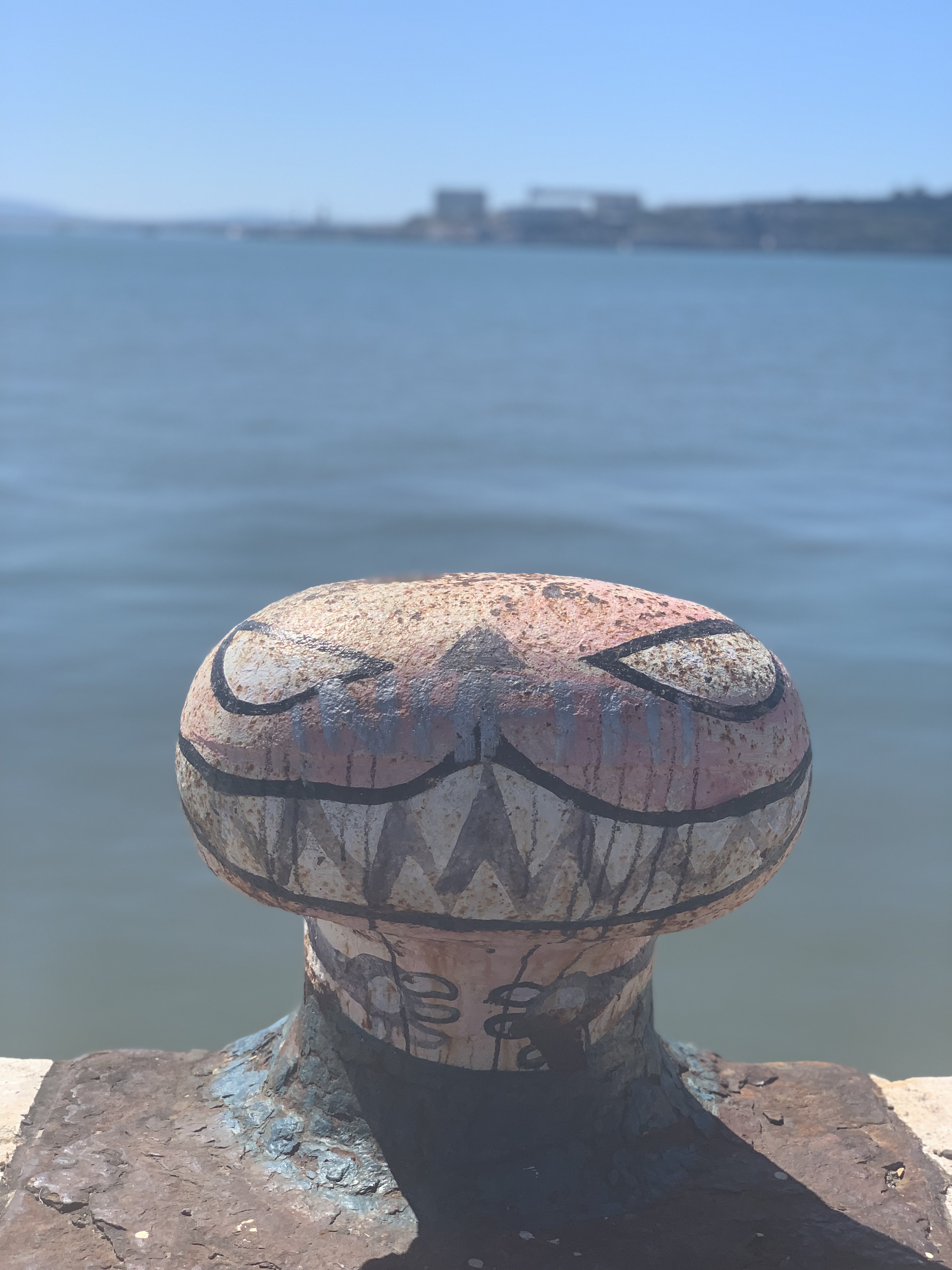
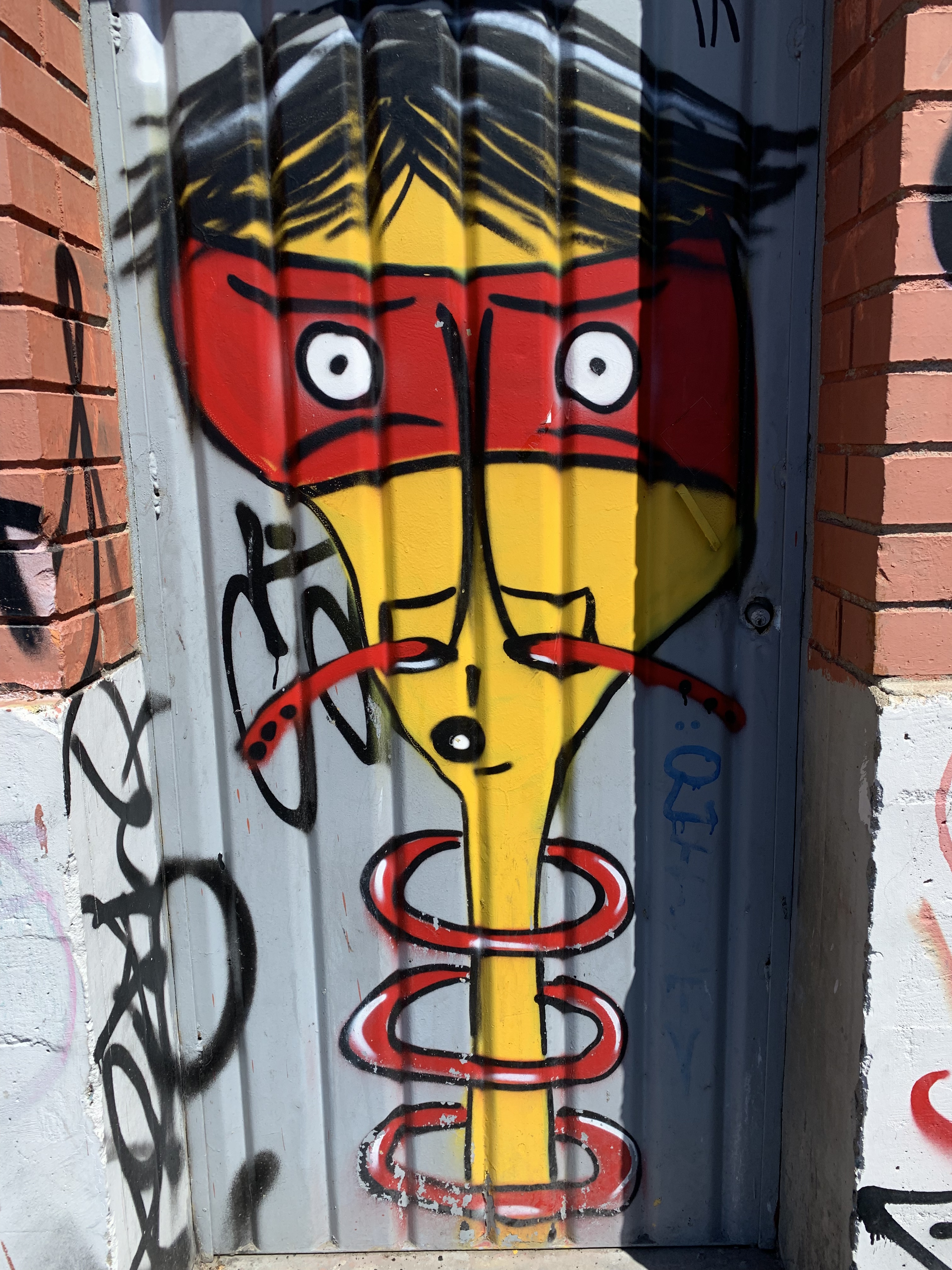
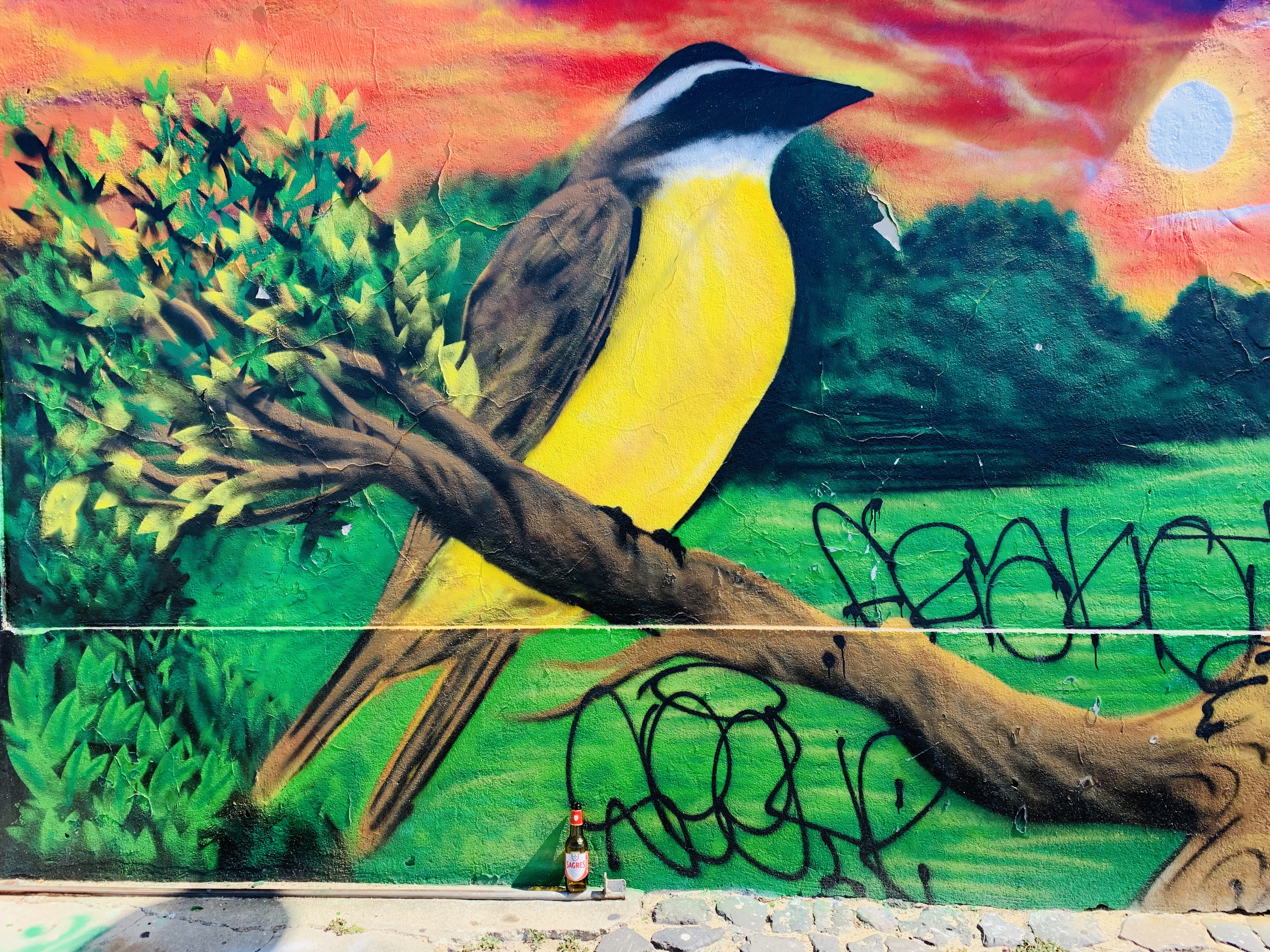
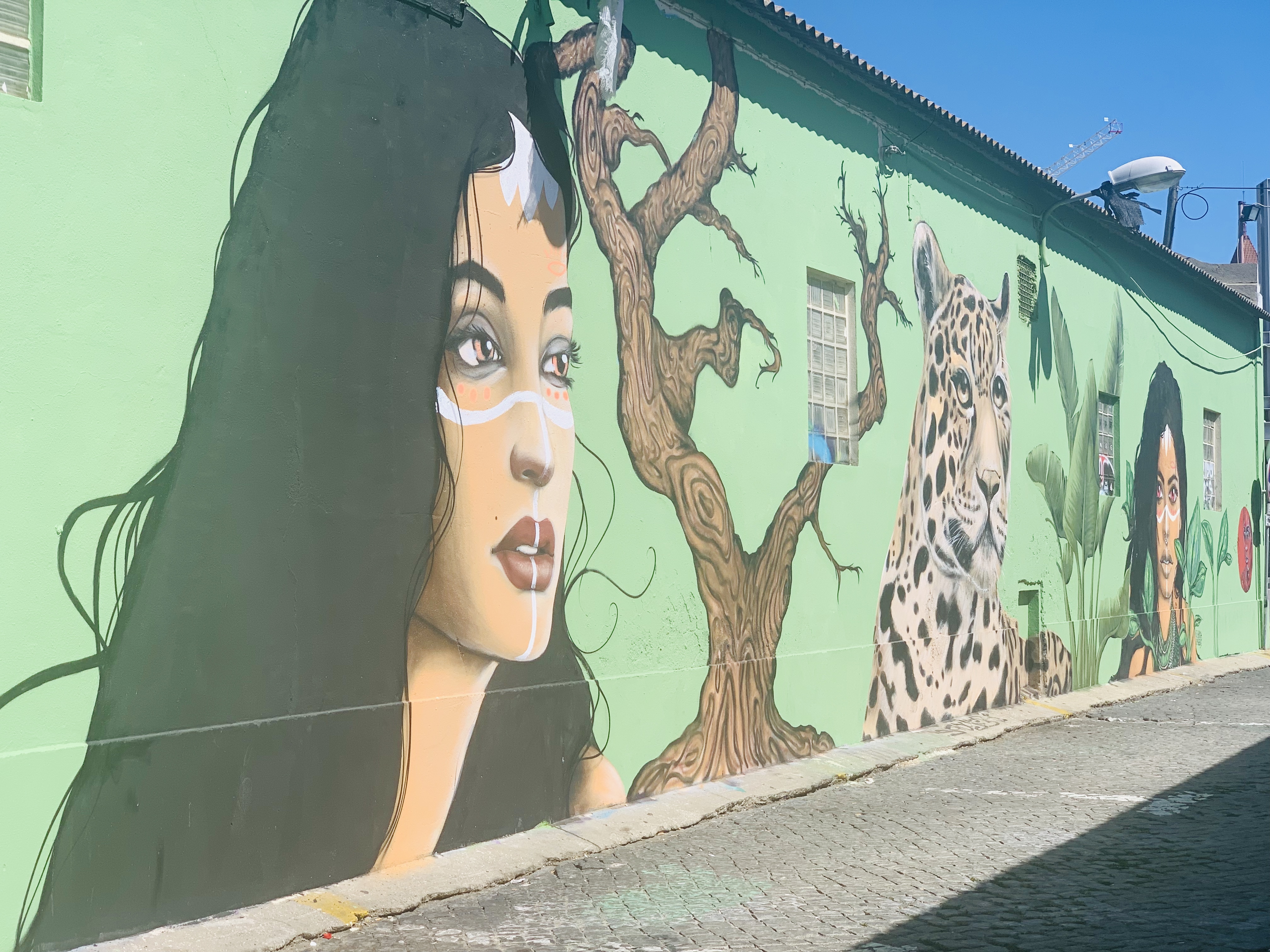
We loved it, and immediately wanted to explore, jump on a tram, get lost in some alleyways, take a wine bar crawl.
We headed out to explore the nearby Praca do Rossio (down about 300 stairs), back up to Igreja de Sao Roque, exploring the narrow streets and squares in between. Sena’s little legs were powering, without complaint. She could not have done this 4 weeks ago. She was getting stronger.
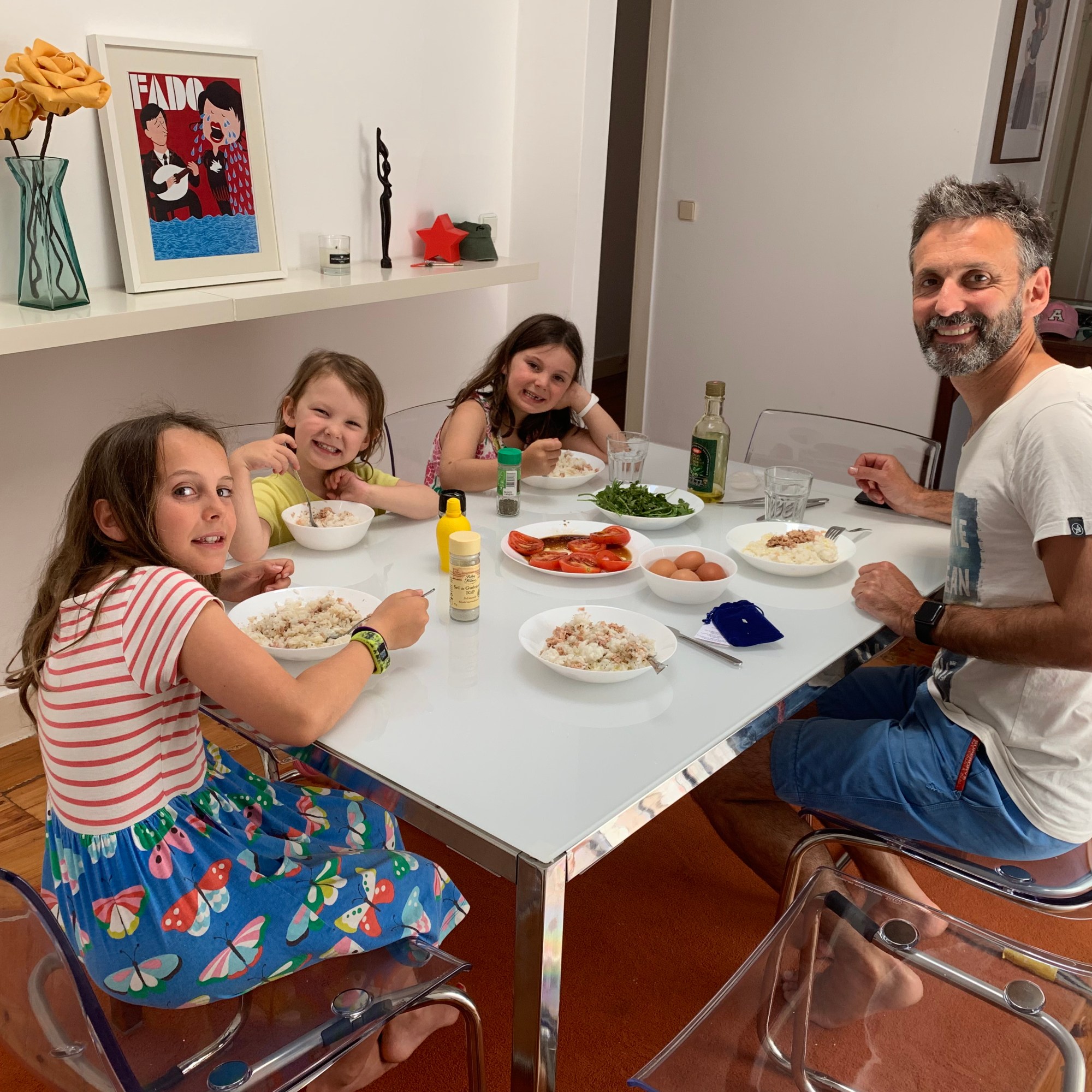
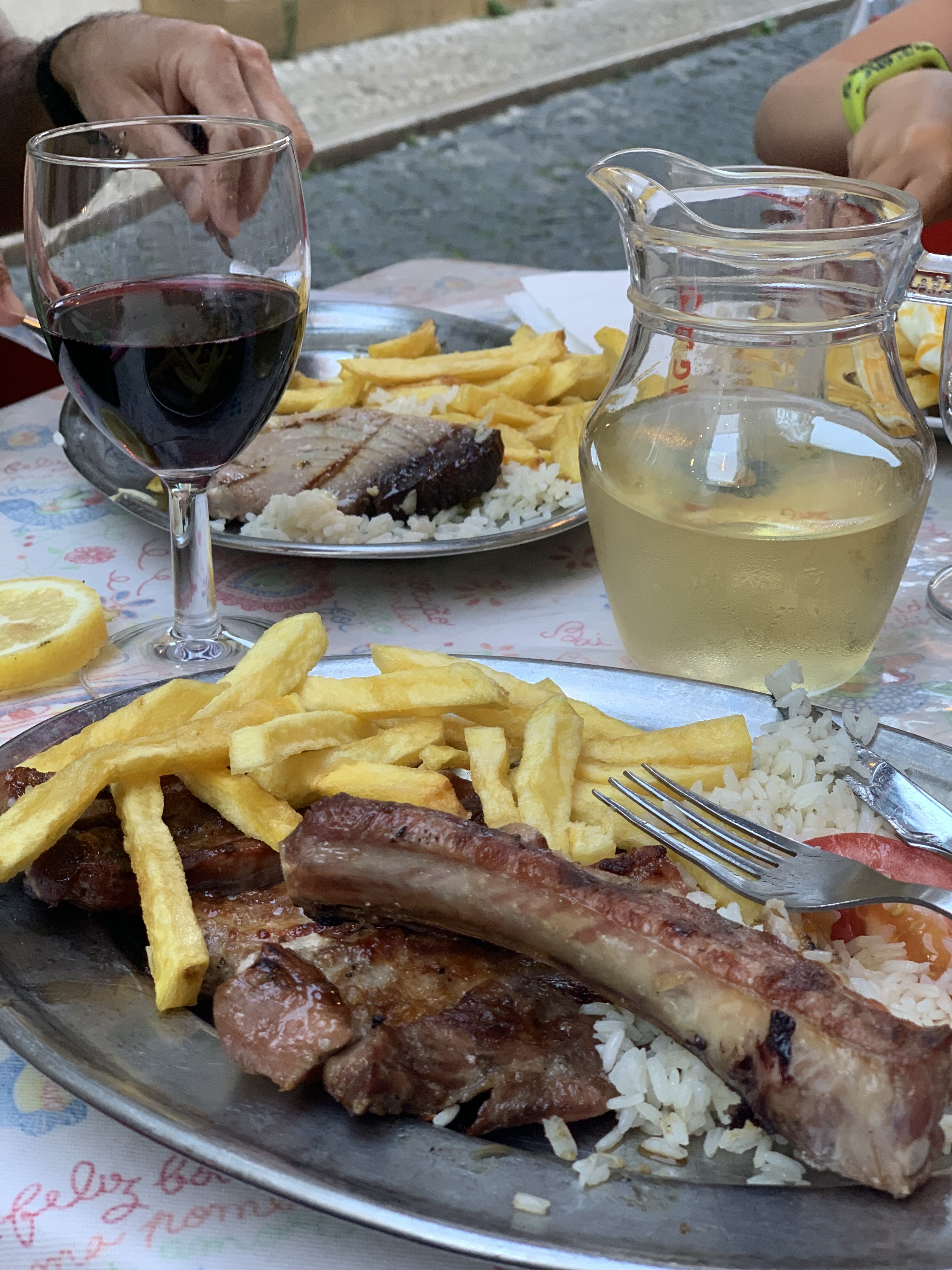
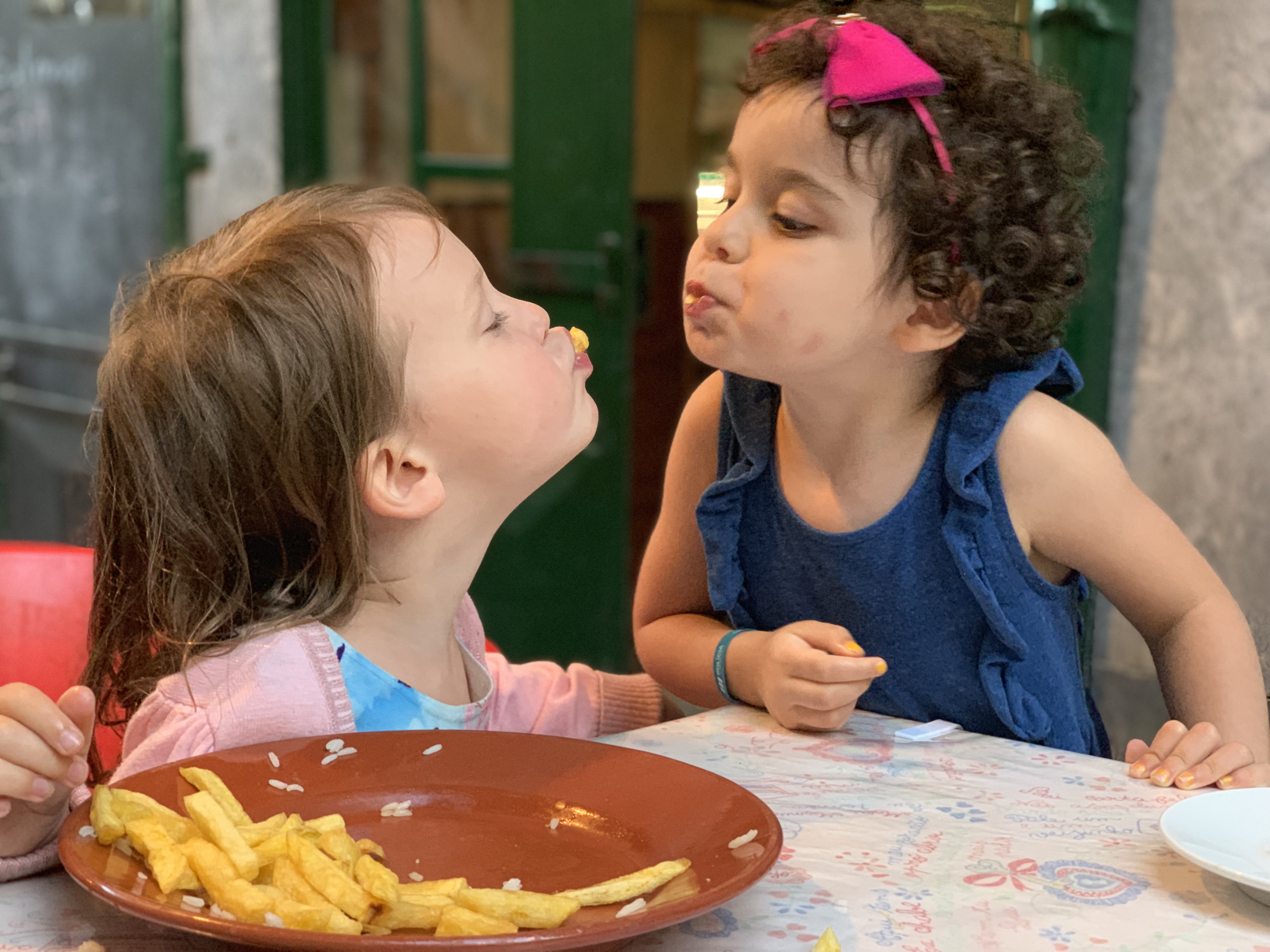
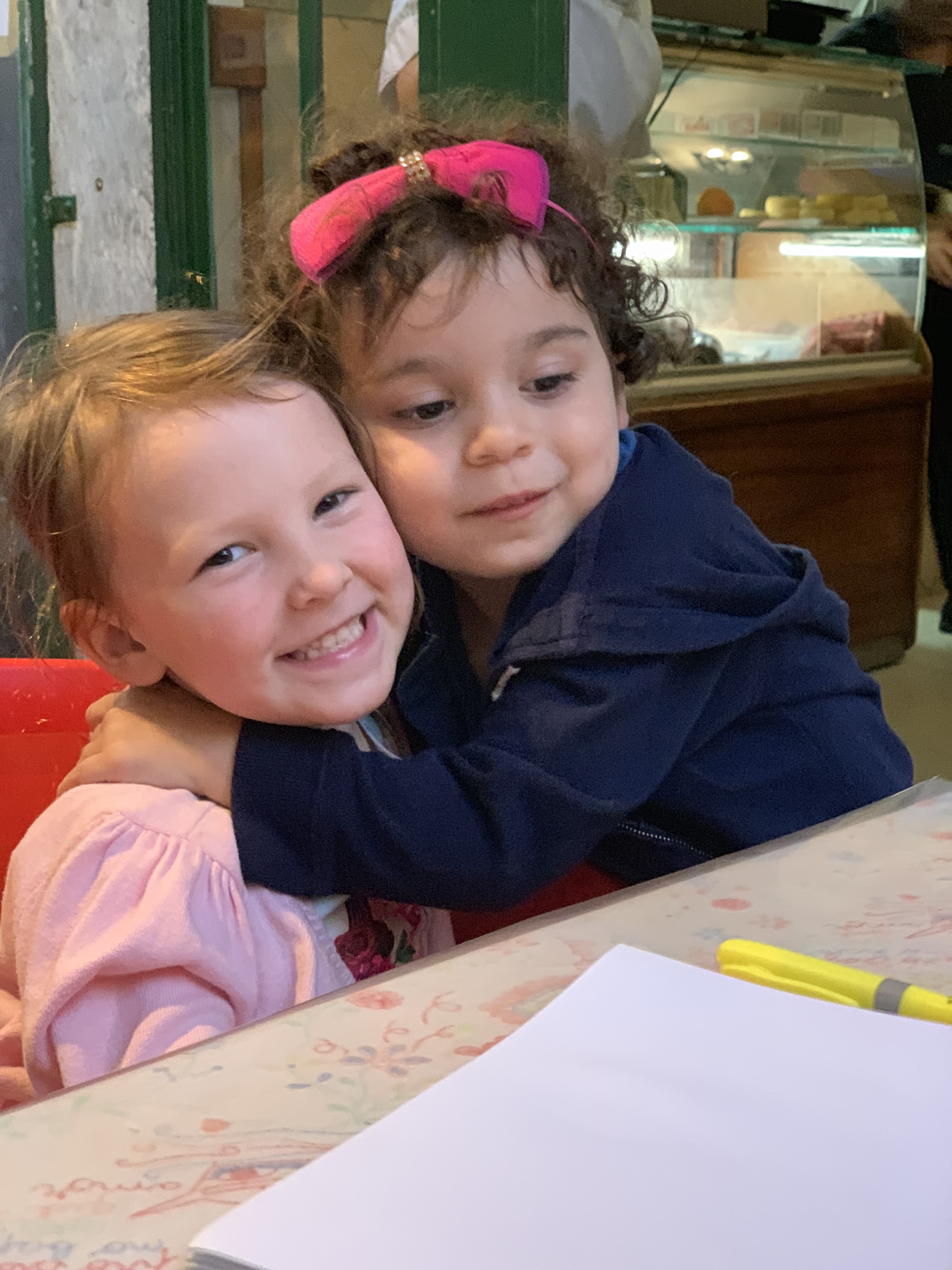
Dinner was a local alleyway restaurant which basically BBQed your choice of protein and served it up with rice and chips. Simple but good. As was the wine. We made friends with a local guy and his 3 year old daughter, who was soon co-designing a masterpiece with Sena. Good times and a great start to our time here.
The following morning run club hit the streets for hill climbs, with Portuguese tarts the well earned reward. Our first local taste of these culinary marvels… yum.
Fresh off the success of the Alhambra, we then decided to hit Sintra, with pretty much zero planning or preparation. Brave or stupid? We would find out.
Our 5 minutes of research had told us to pre-purchase tickets and leave the car at home. We headed to the nearby Rossio train station and boarded the train to Sintra, a 40 minute train ride away. The train was rammed, a clear indication of things to come. From the packed train, we jumped on a similarly packed bus to get from the train station to the Pena Palace, the Disney-esque Castle that sits atop the second highest hill in Sintra.
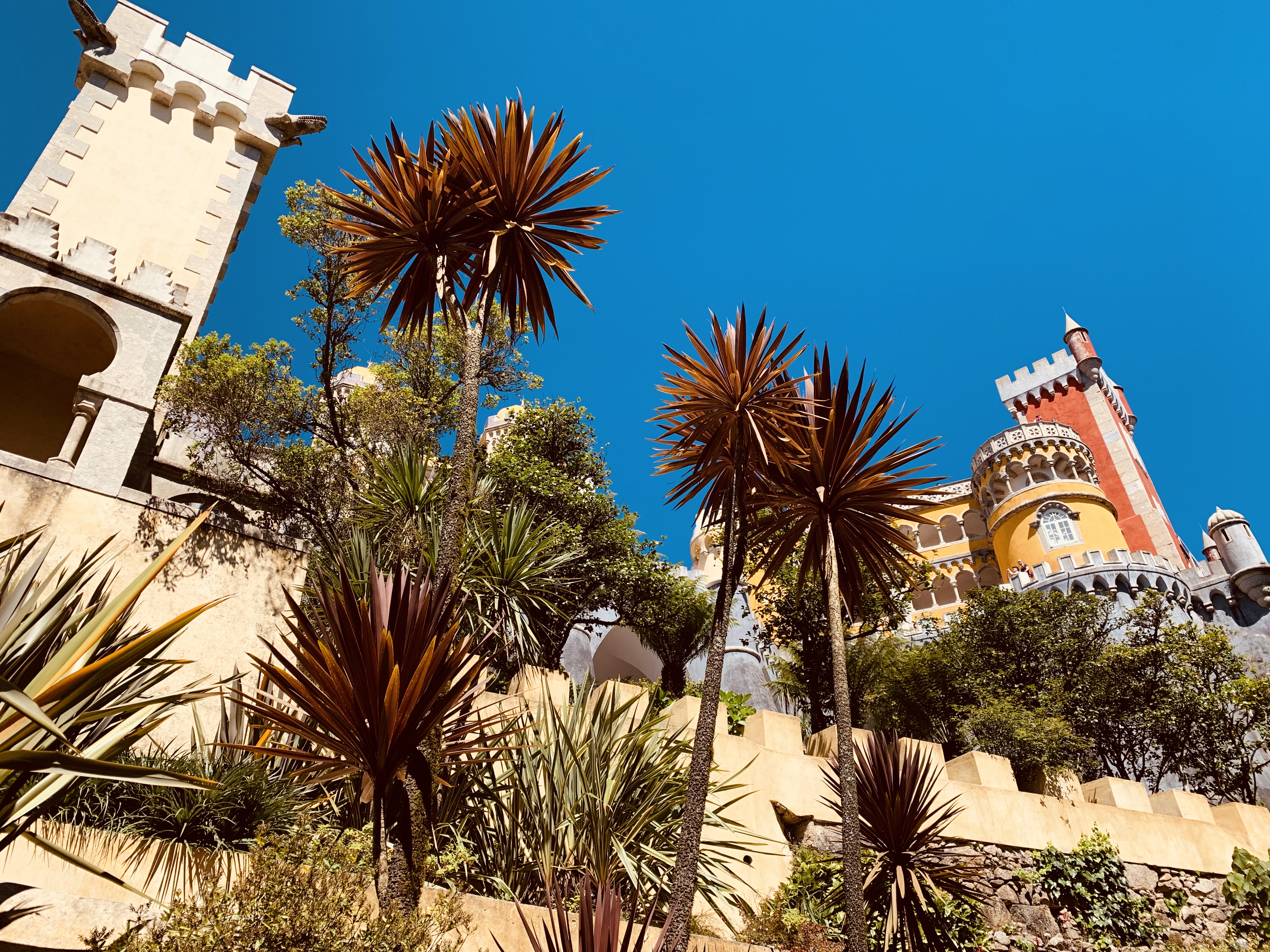
Whilst there has been a fort and monastery on the site since the 12th century, the Pena Palace was not constructed until the mid 19th century when the whole site was purchased by the Portuguese royal family.
The bus ride did not disappoint, either from the number of people on it (reminiscent of the Tokyo metro in peak hour), the views as we wound our way through the old town of Sintra (climbing into the forests and getting sneak peaks of a number of the sites found around the town), or the traffic once we got above the old town… and stopped. And sat. And crawled our way ever so slowly to the top of the hill and to the Palace, all the time being grateful for the fact that we had left the car at home.
More people and more crowds greeted us at the Palace as we made our way into the ticketed area of the palace and grounds and up through the lovely forest paths towards the castle. As the castle started to peak out through the trees, we could see what all the fuss was about. It really is as amazing as the pictures – probably the prettiest castle we’ve ever seen. And the most crowded, as the line for entrance into the palace rooms snaked down another path almost to the bottom of the hill. It had hours written all over it, and, let’s face it, our kids don’t queue.
We made a half hearted attempt at waiting, just to test the velocity of the line (waaaaay not fast enough) before realising that Sena would be driving before we gained entrance. A brief reconnaissance uncovered that access to the castle walls could be gained without the 2 hour+ queue, so we discarded dreams of seeing the inside (we’re not massive fans of 18th century interiors to be honest) and instead mounted a conquest on the palace walls.
5 minutes later we were standing on the parapets of the castle, looking down over the forests to the Atlantic Coast beyond, the sun sparkling off the distant ocean as the wind whipped around us. As we made our way around the castle walls we checked out the views of both the surrounds (more sublime forest and water views) and the castle itself (beautiful brown/red, yellow and natural stone walls) and played in the guard towers.
Sometimes there’s a reason why ridiculously crowded tourist spots get ridiculously crowded… (because they’re amazing) … and some are impressive enough for the experience not to be ruined despite being overrun!
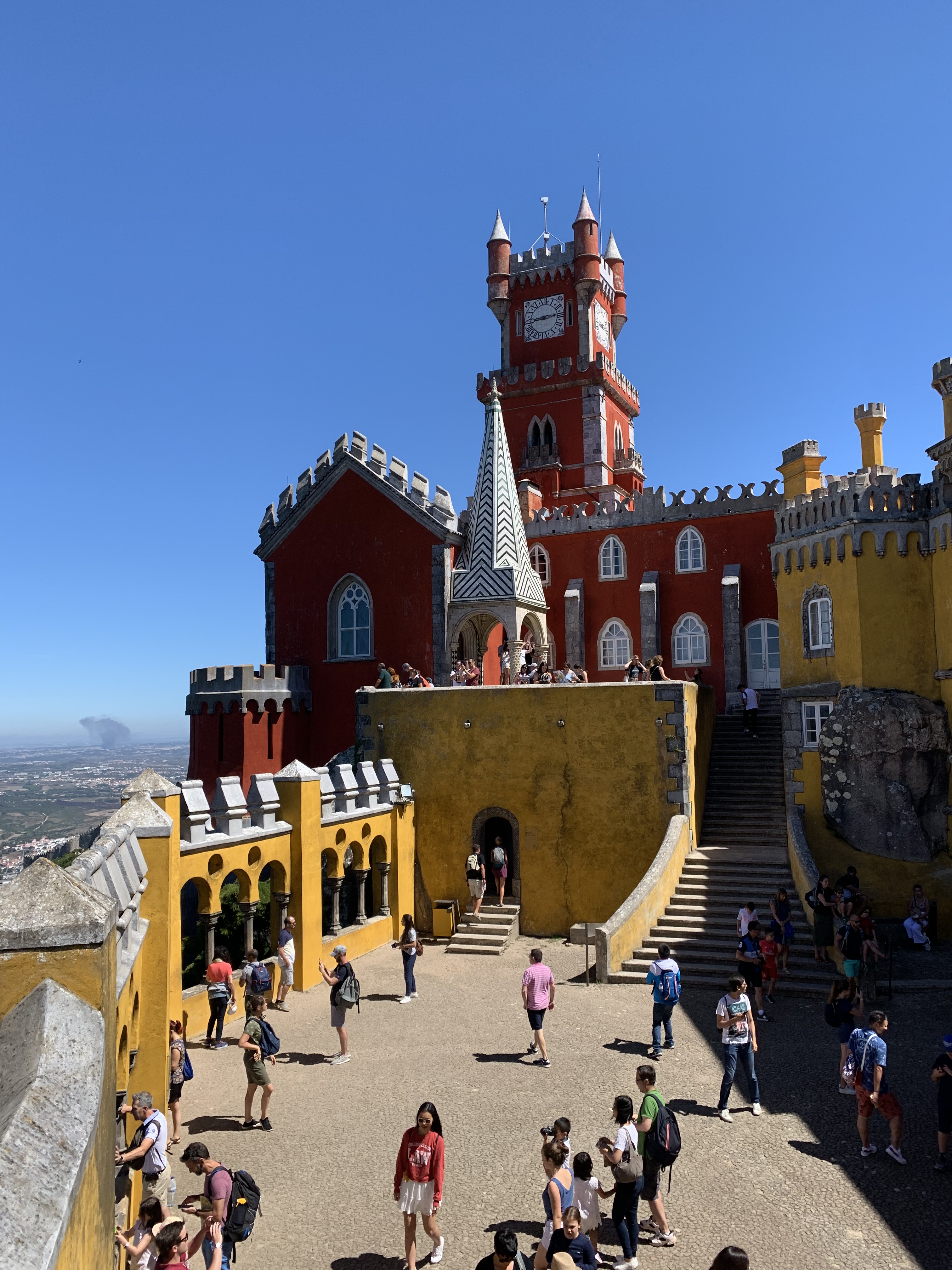
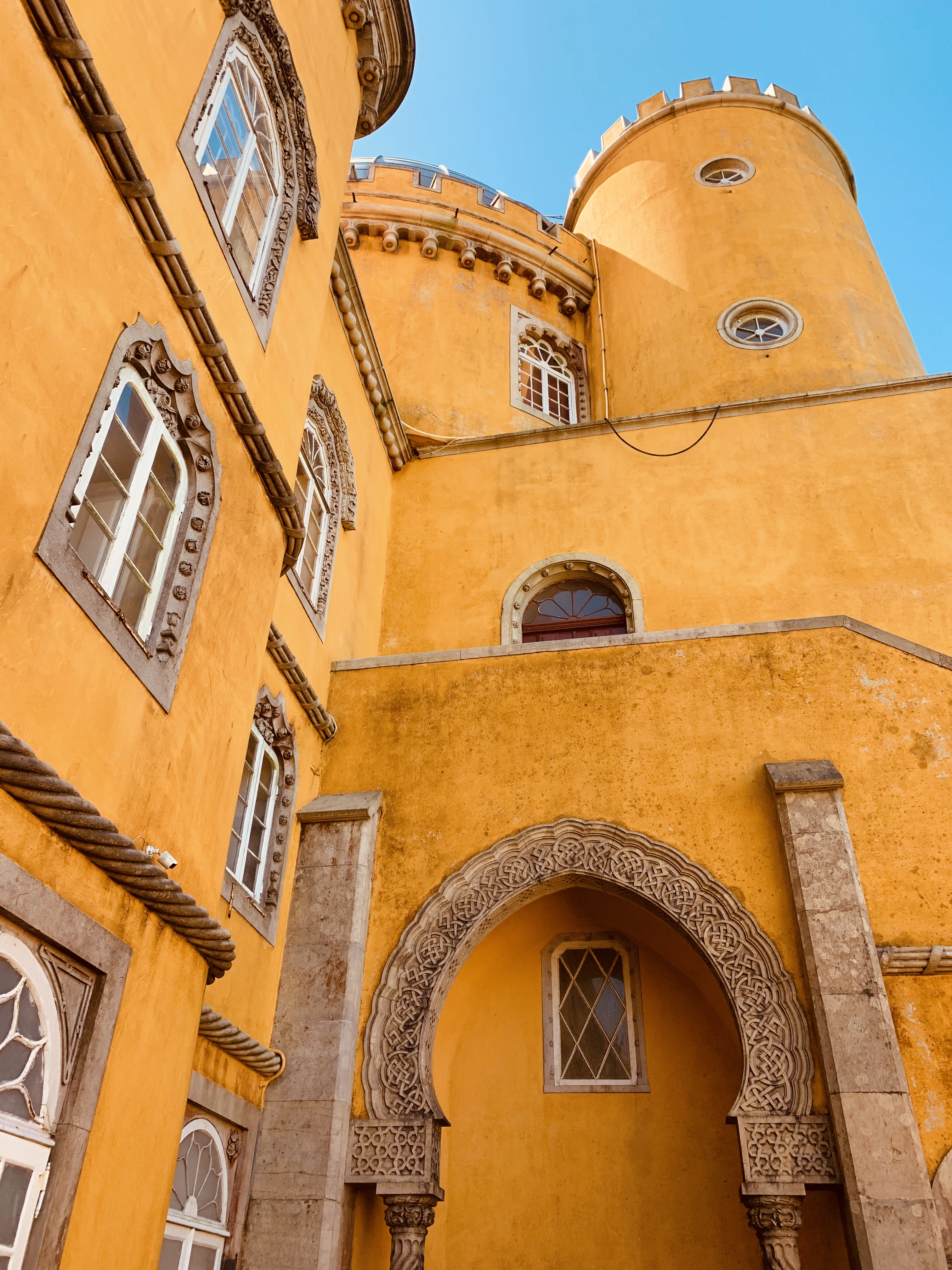
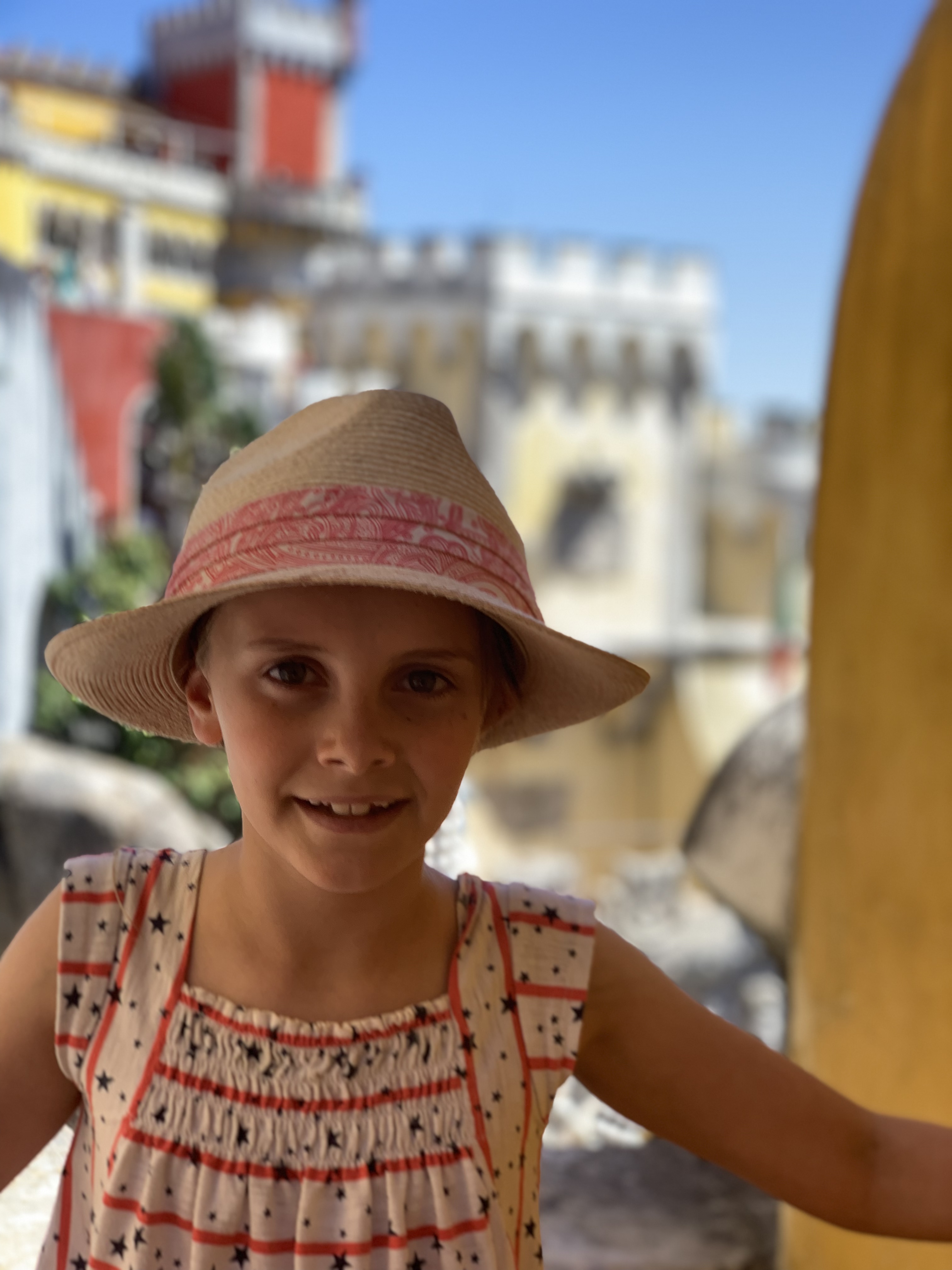
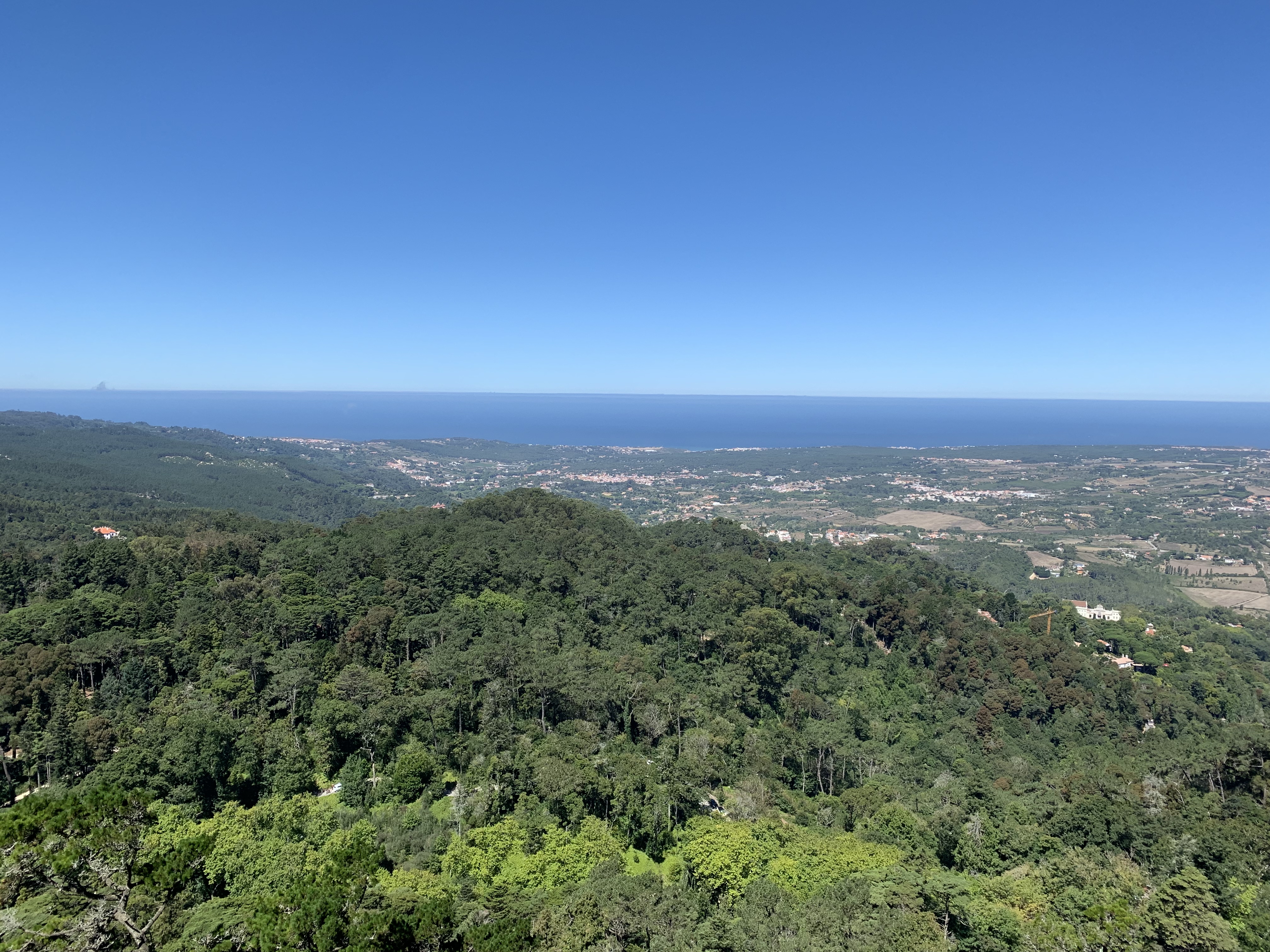
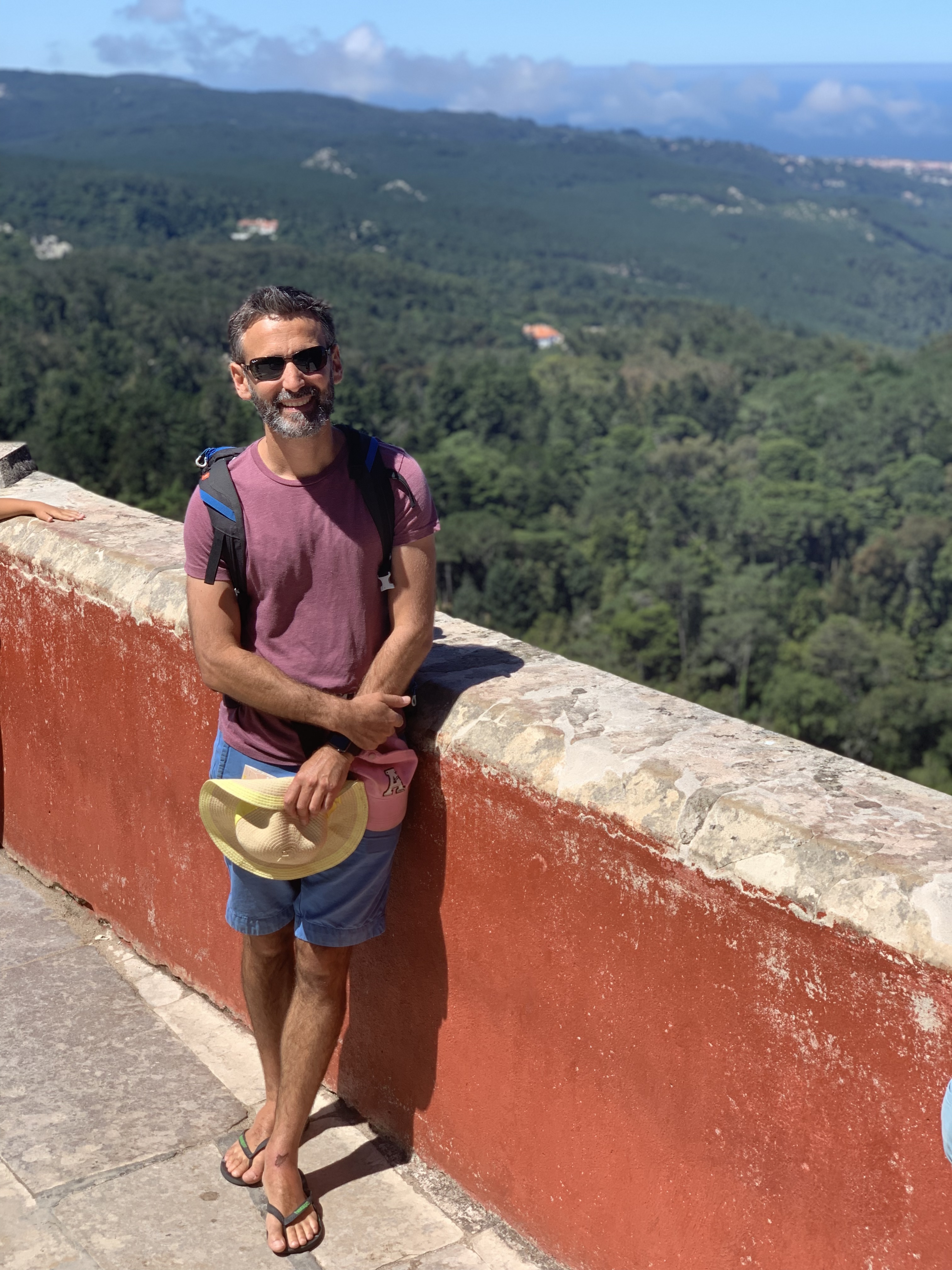
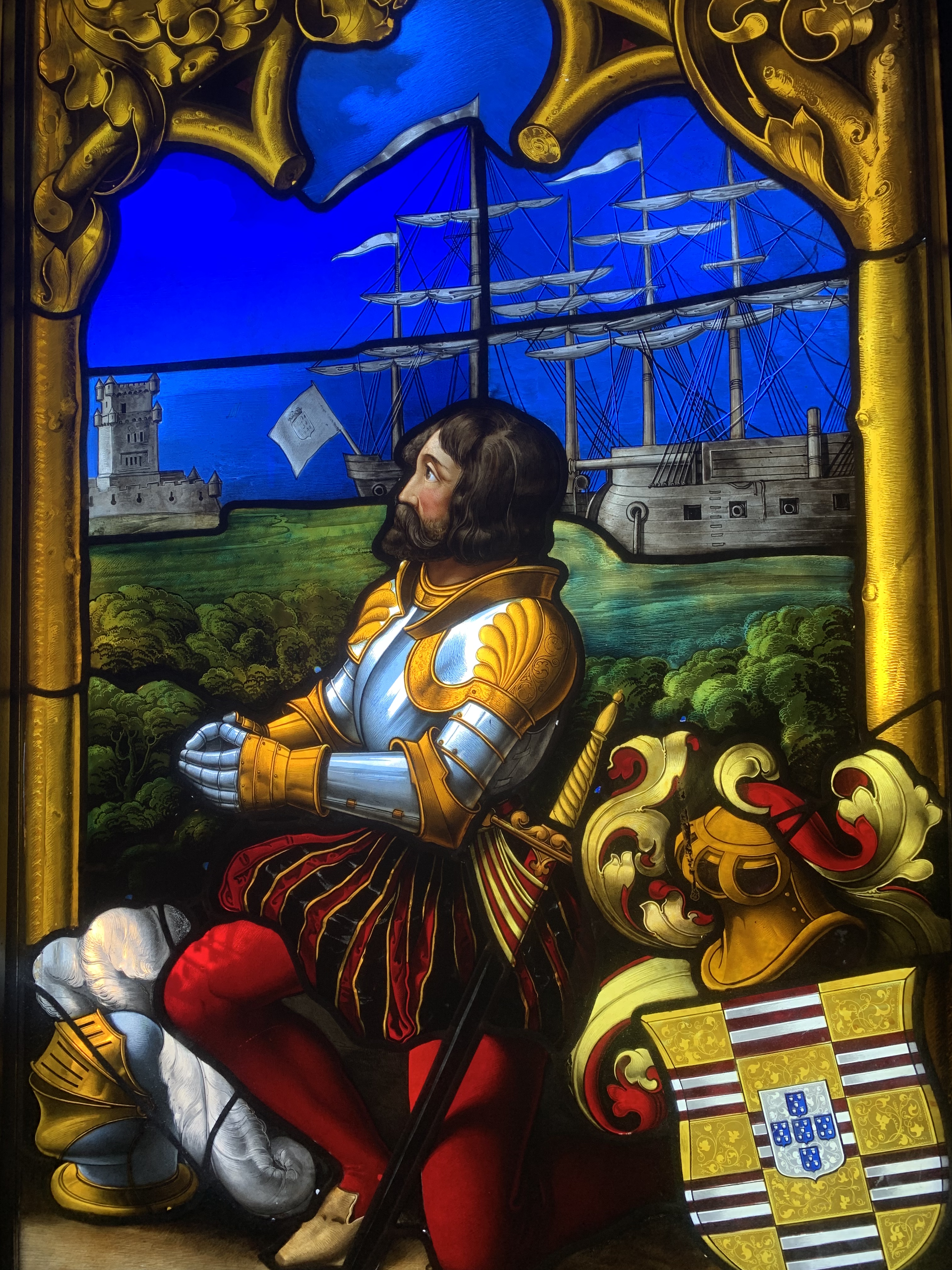
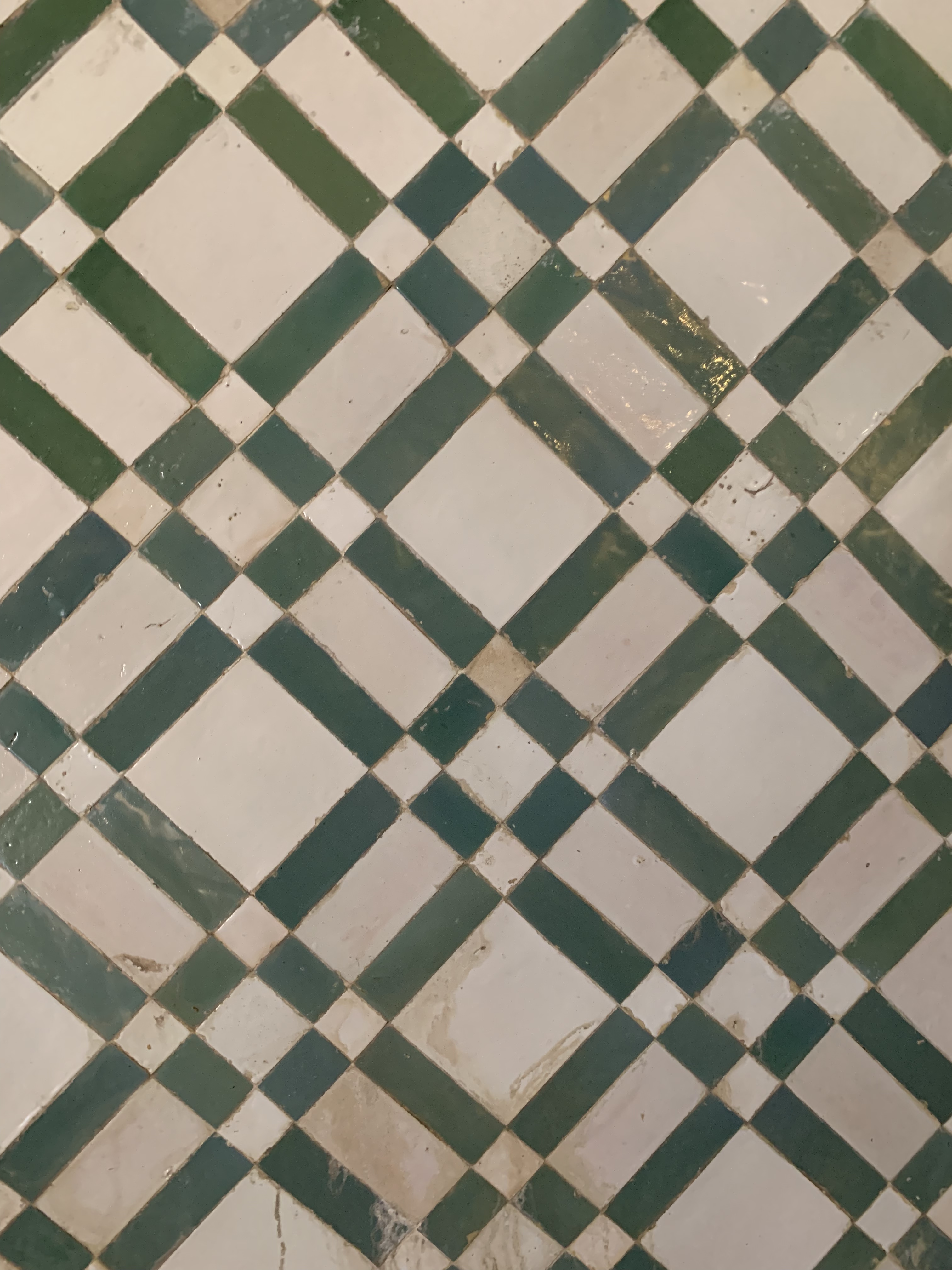
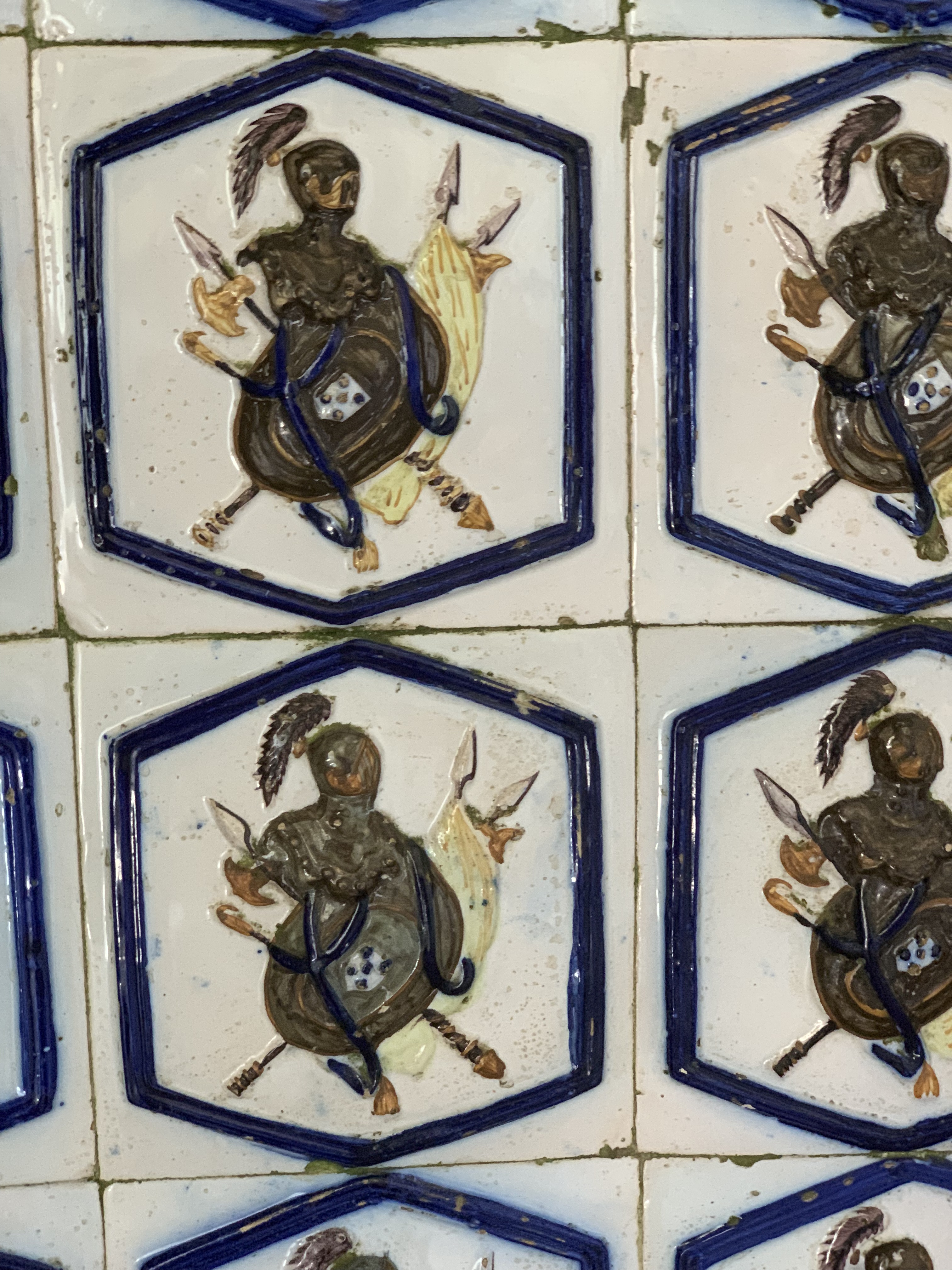
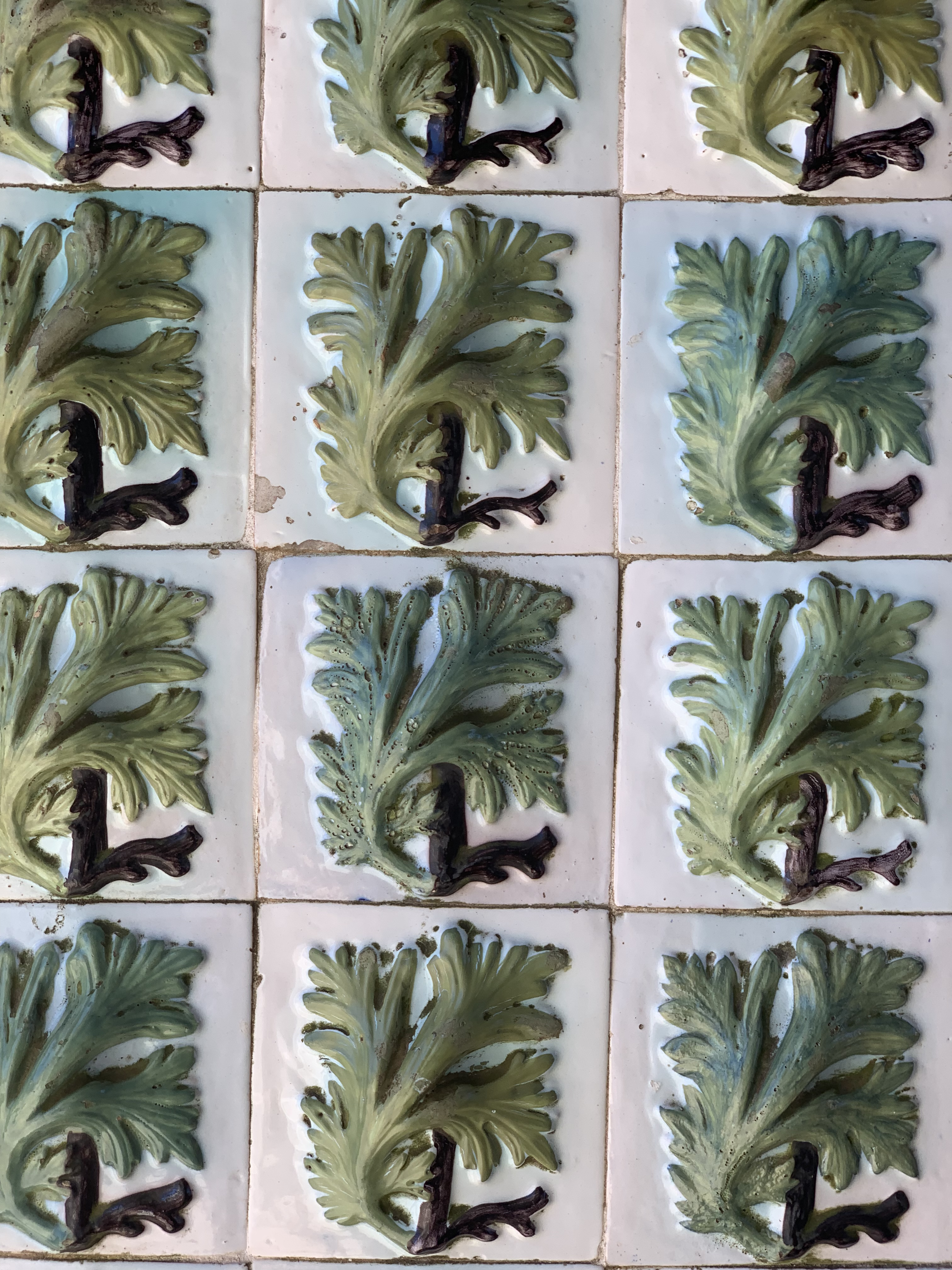
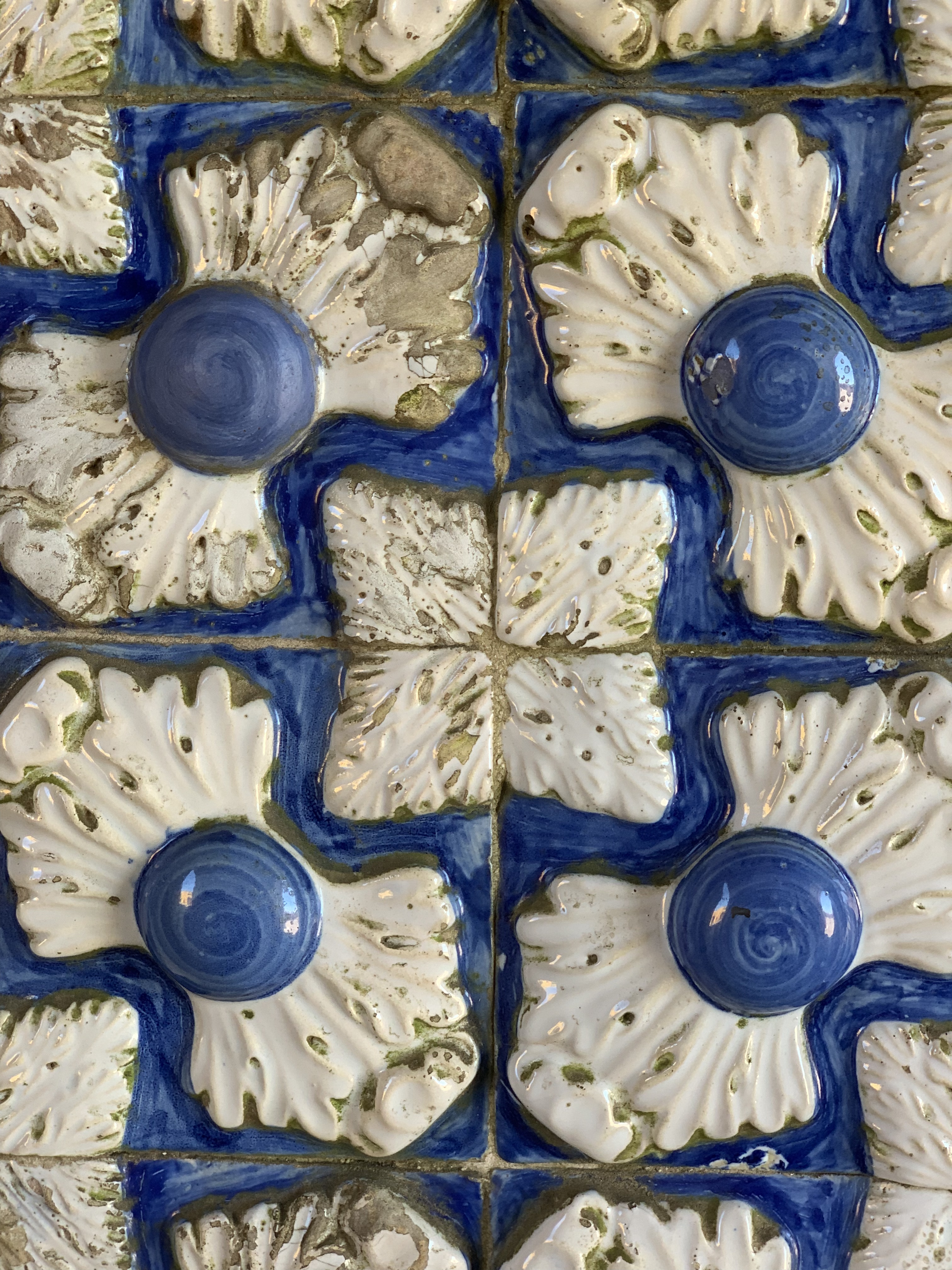
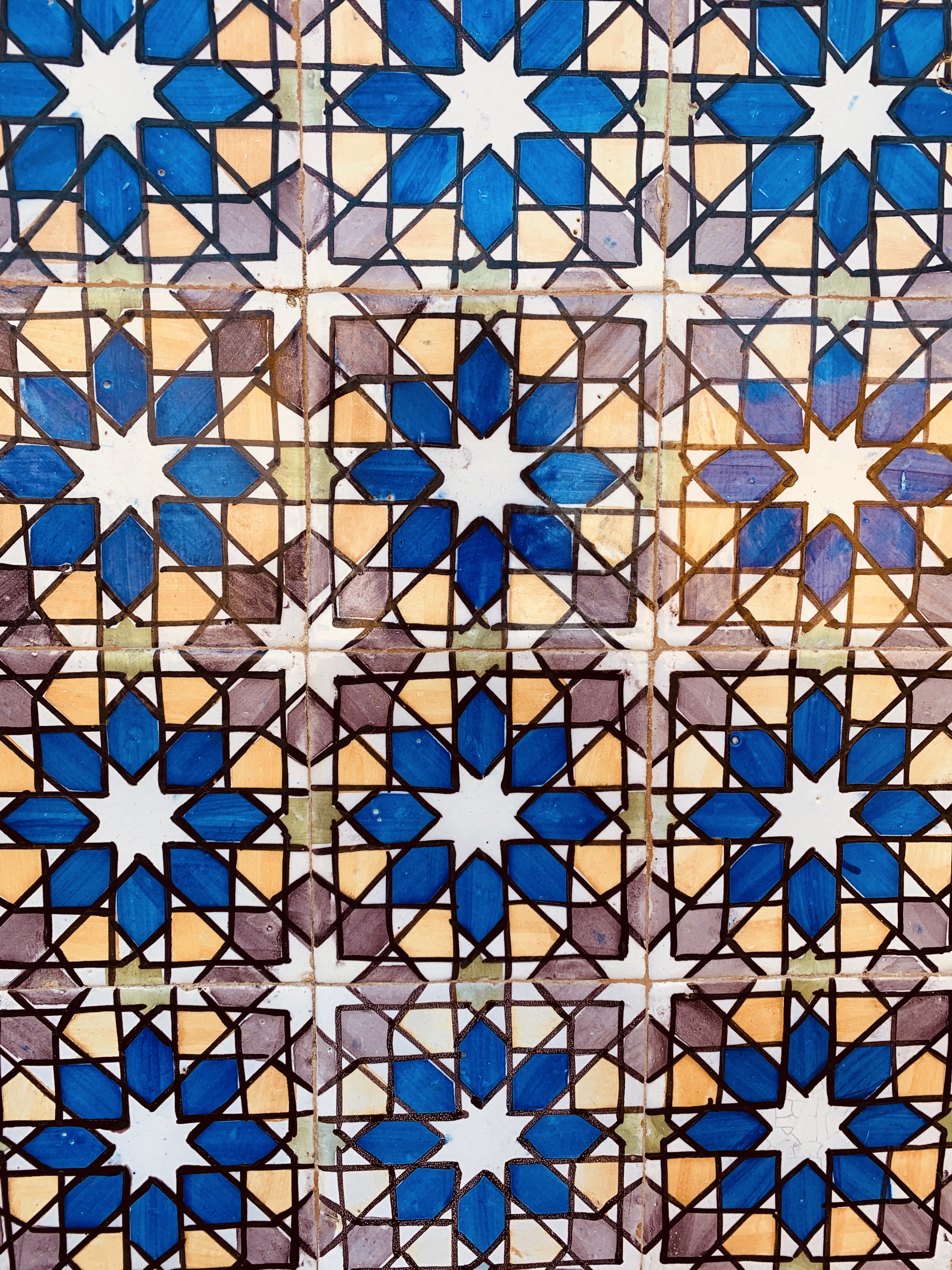
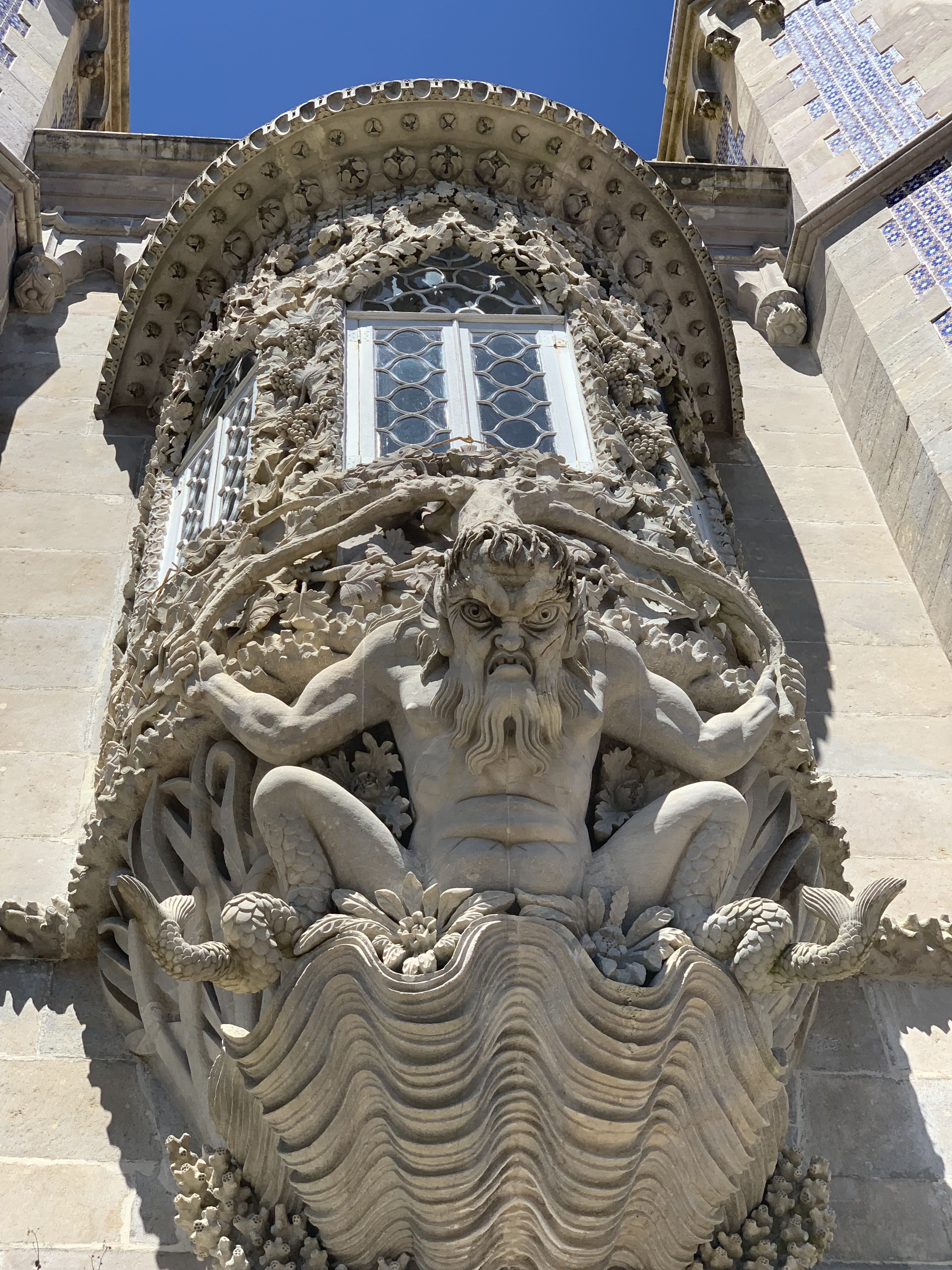
(External) exploration complete, we made our way down from the castle, noting that the front of the line for the interior seemed to comprise largely fatigued looking senior citizens with long beards and grubby clothes (we’re sure they were young and clean when they joined the line). The average age seemed to get younger as the line continued down the hill, and tempers were clearly fraying in the midday sun.
We made our way around the ever growing queues and down another path to explore the forest a bit further. We spent a really pleasant hour or so wandering around, making our way through the trees (and away from most of the crowds) to hang out with ducks and swans by some pretty ponds, before heading out of the park and back into Lisbon.
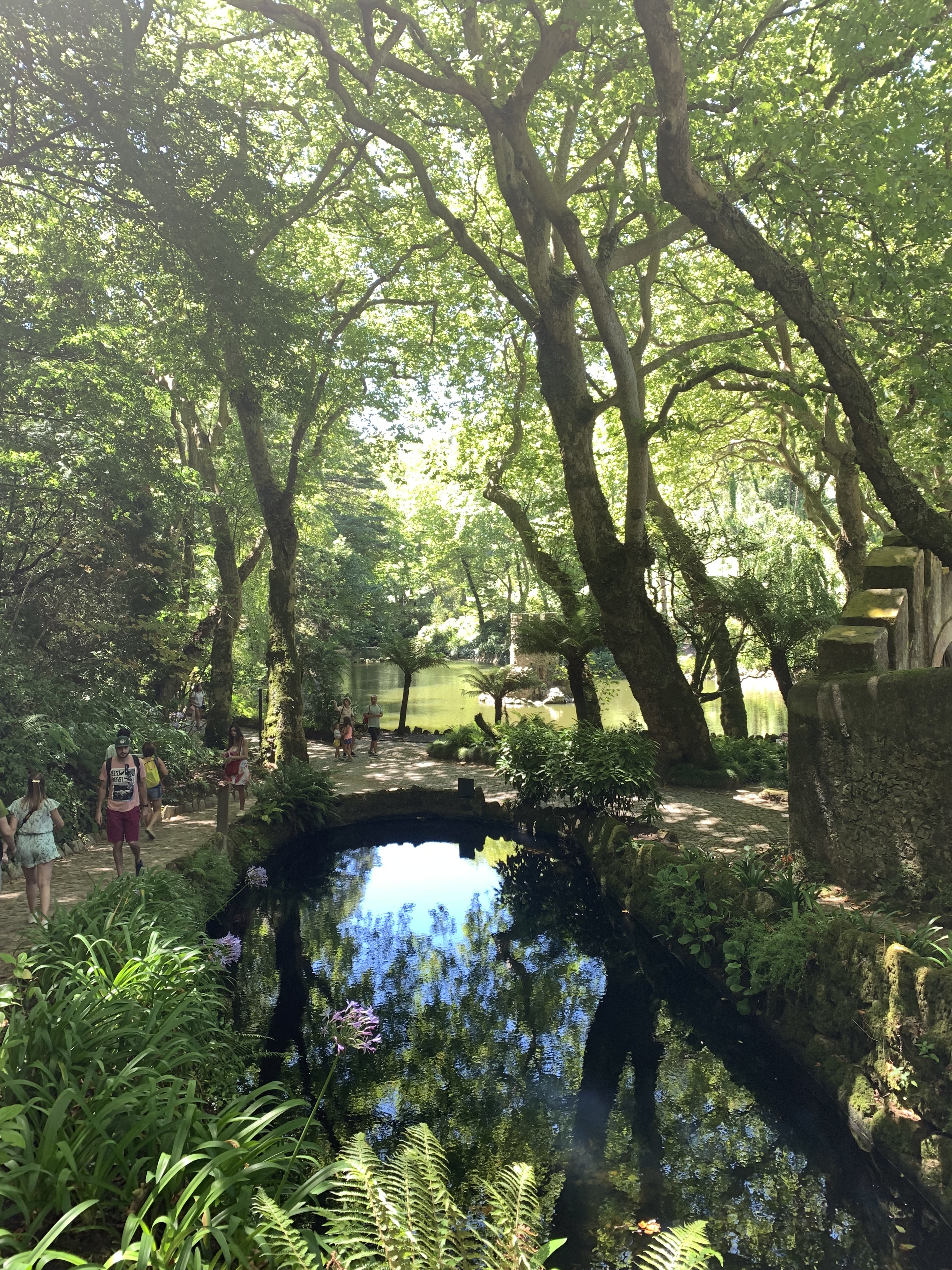
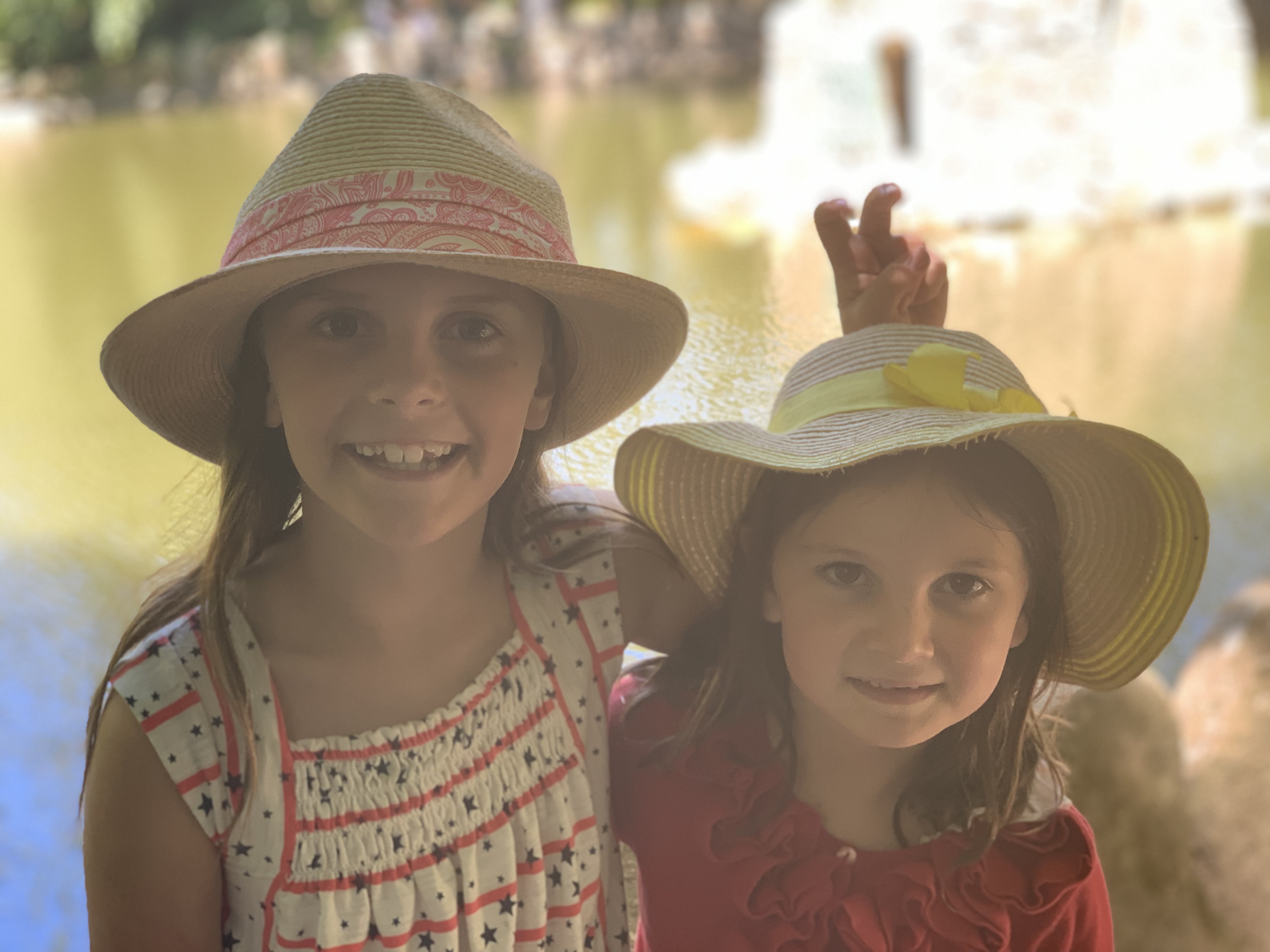
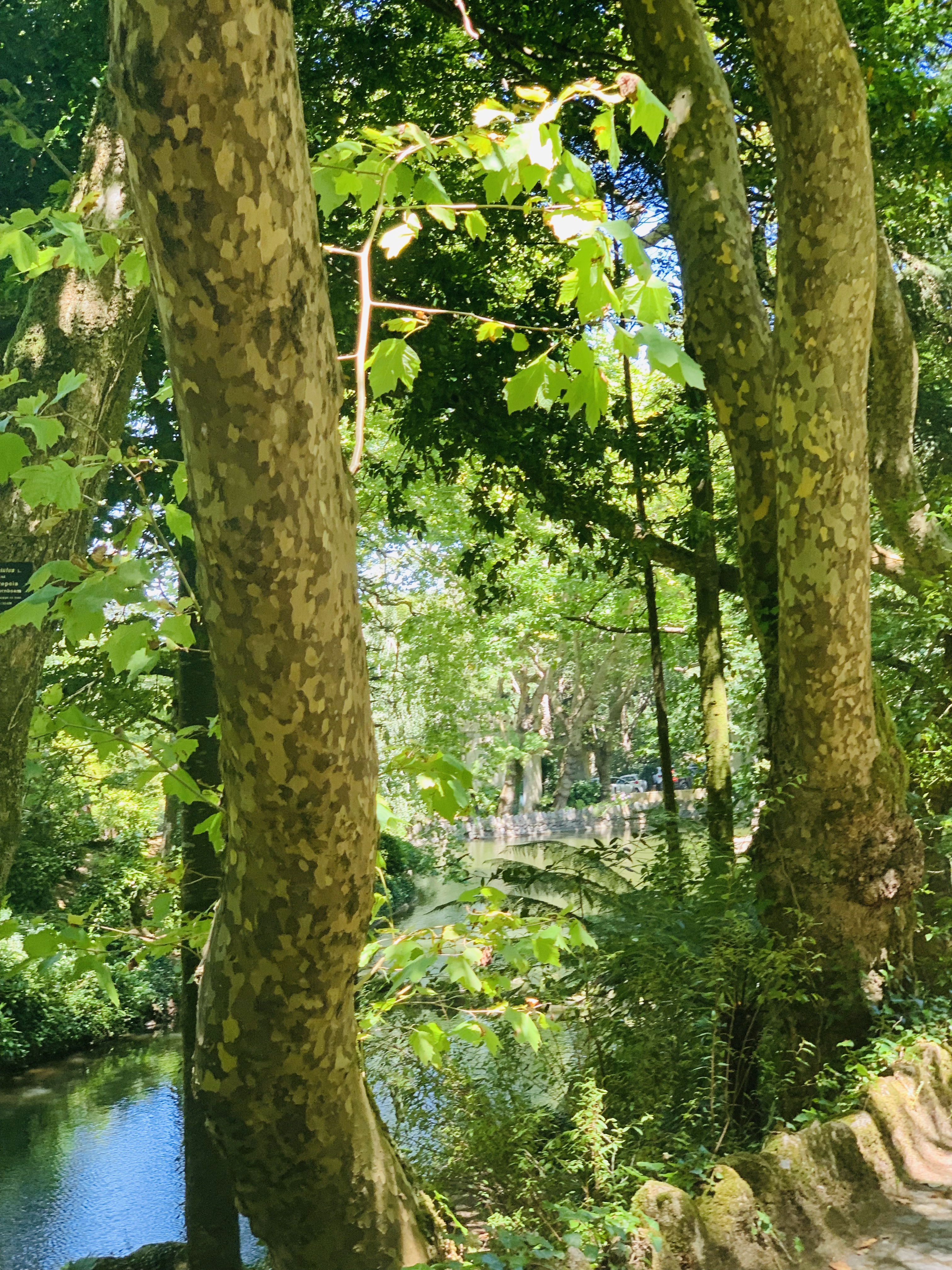
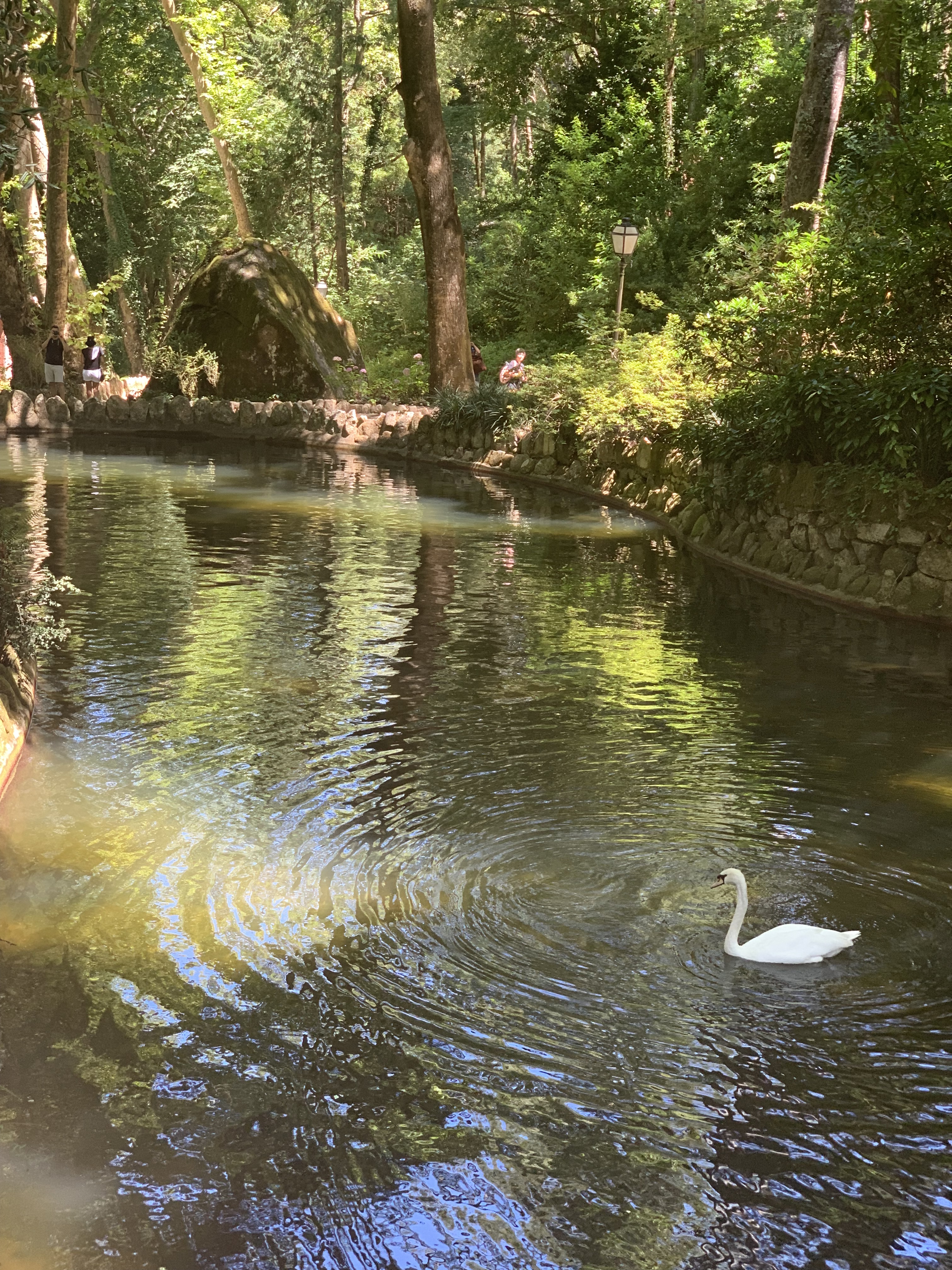
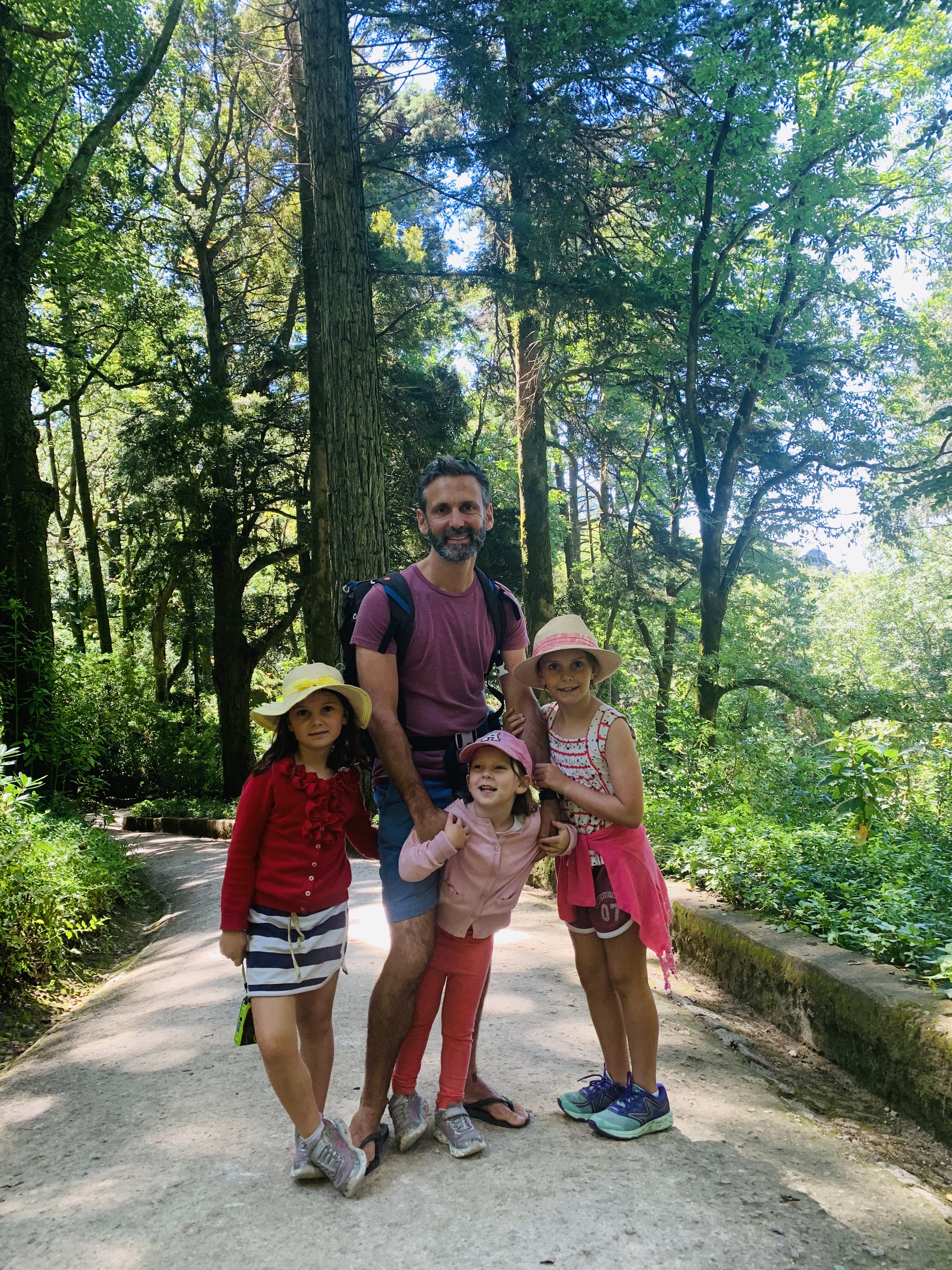
Considering our complete lack of preparation or planning, we had (more or less) escaped unscathed and enjoyed the experience. Would we go back? Definitely – but probably only on an overcast looking Tuesday morning in November (rather than high summer!)
That night we had the chance to catch up with our friends Dee and Nick who, after spending almost 20 years in London, had decided to relocate to pine scented beaches of Cascais (just outside Lisbon) to raise their 3 young kids. We hadn’t seen Dee since Liz’s birthday in Barcelona (and even longer since we’ve seen Nick) and we were excited to see them, have a night out without the kids (sorry girls, we love you but…) and also enjoy a night out without the need for a sketch pad or Uno deck.
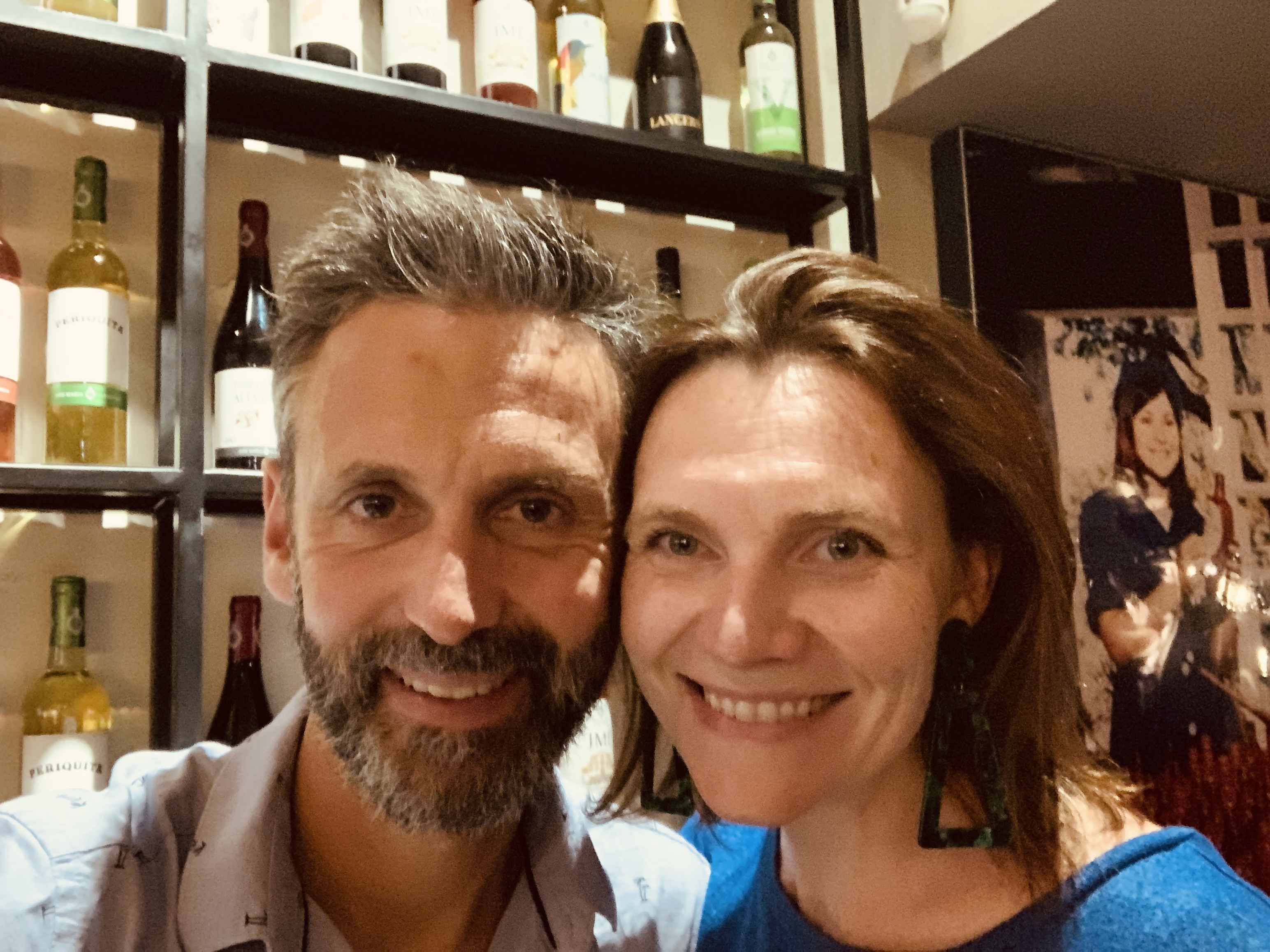
We met at a great wine bar (By the Wine) just south of Praca Luis de Camoes for pre-dinner drinks and then on to an incredible dinner at La Taberna da Rua das Flores – certainly the best meal we’ve had whilst here and one of the better ones ever. It was great to catch up with Dee and Nick, with much of the conversation being around the joys and challenges of moving a young family (in their case, 4 year old twins and a one year old) into a new country/language/culture and leaving everything that is familiar behind.
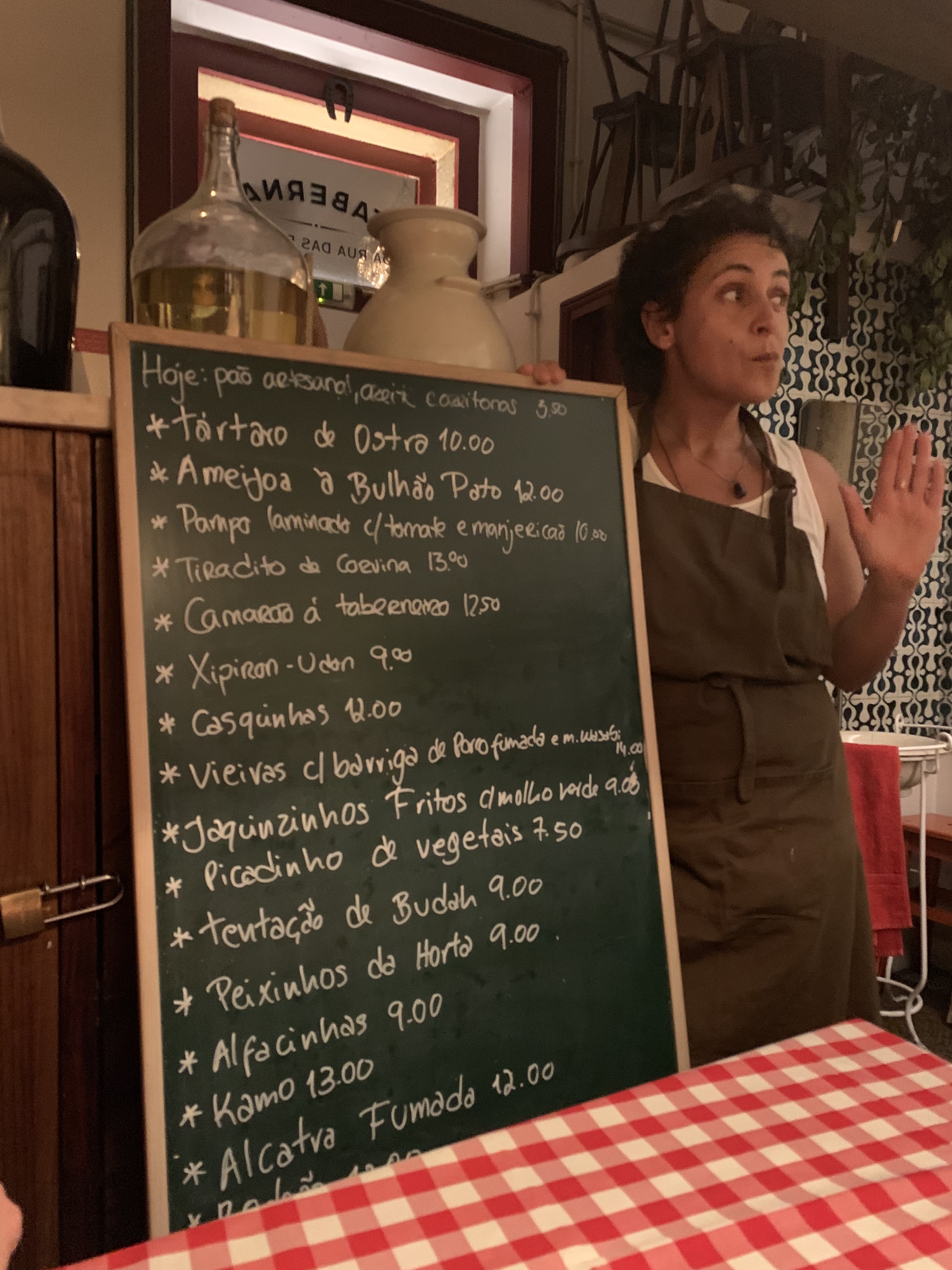
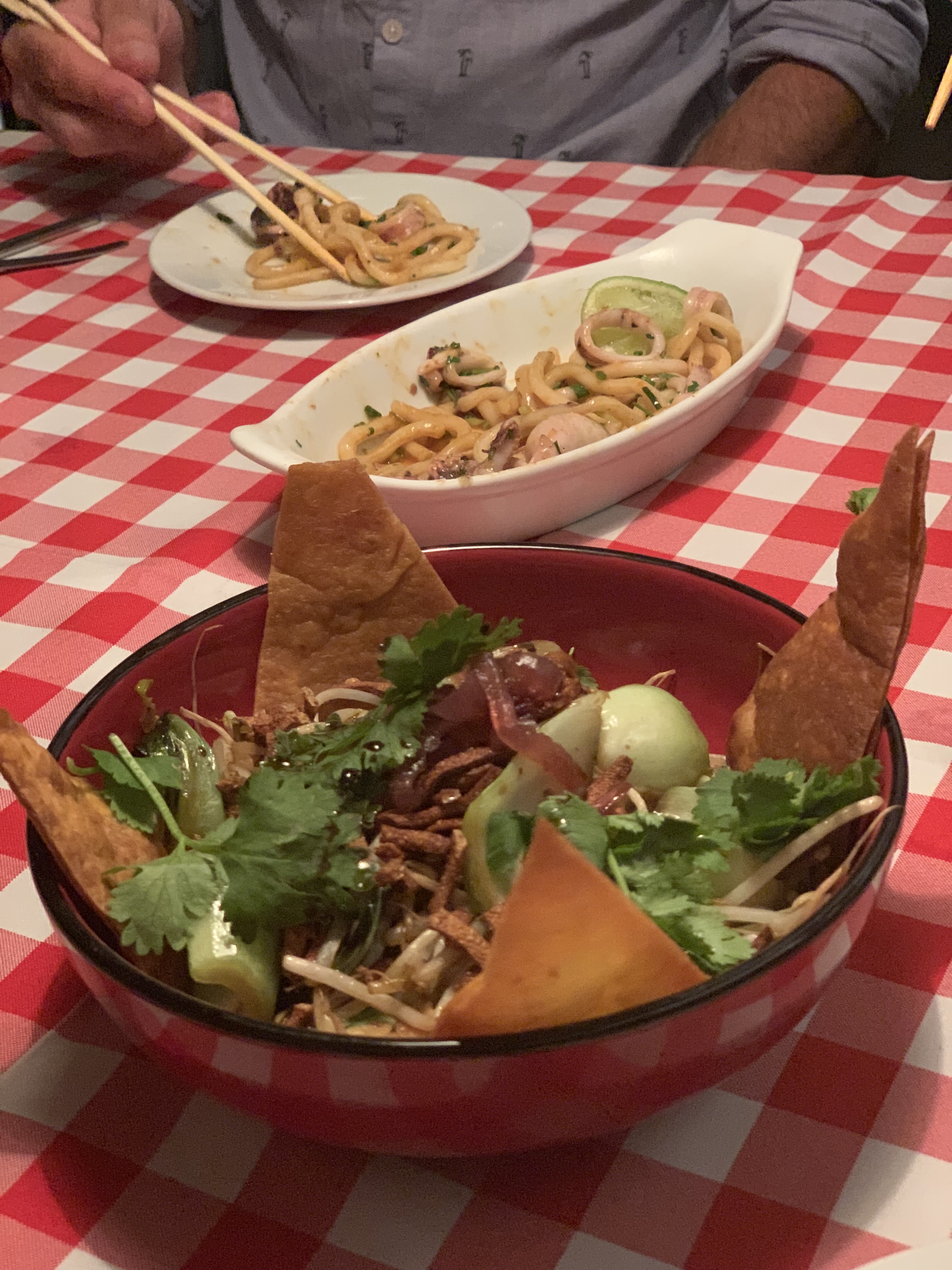
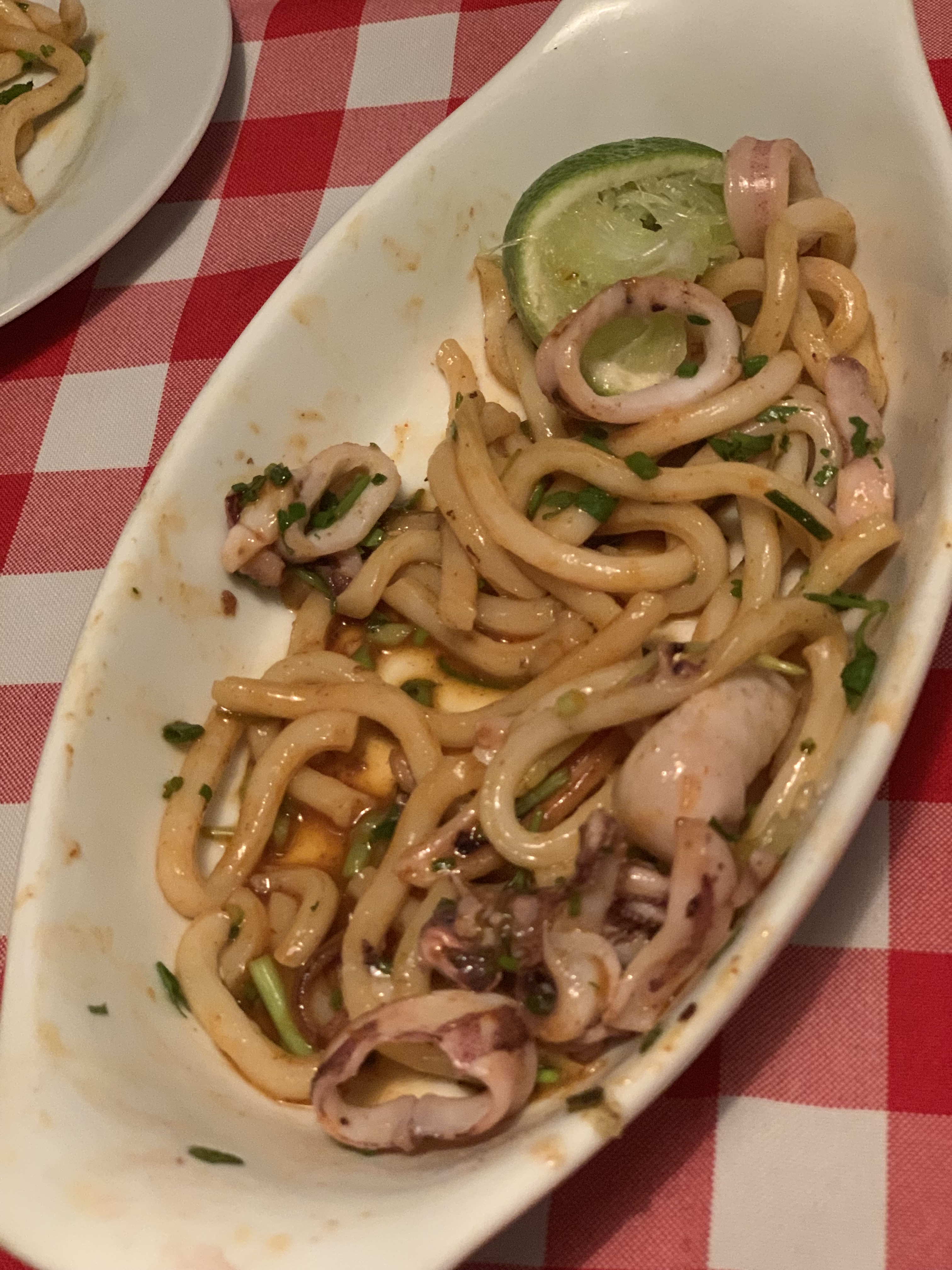
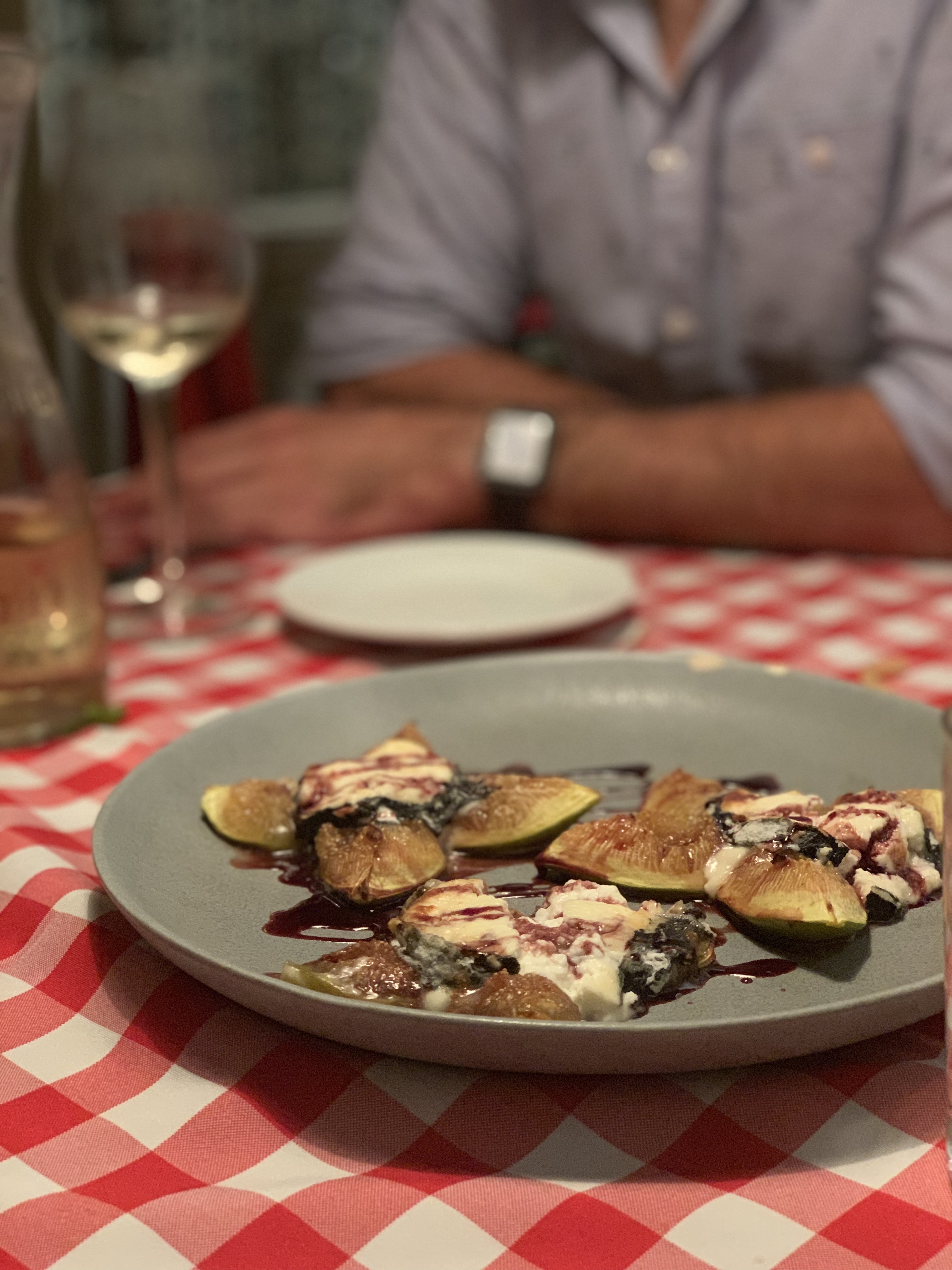
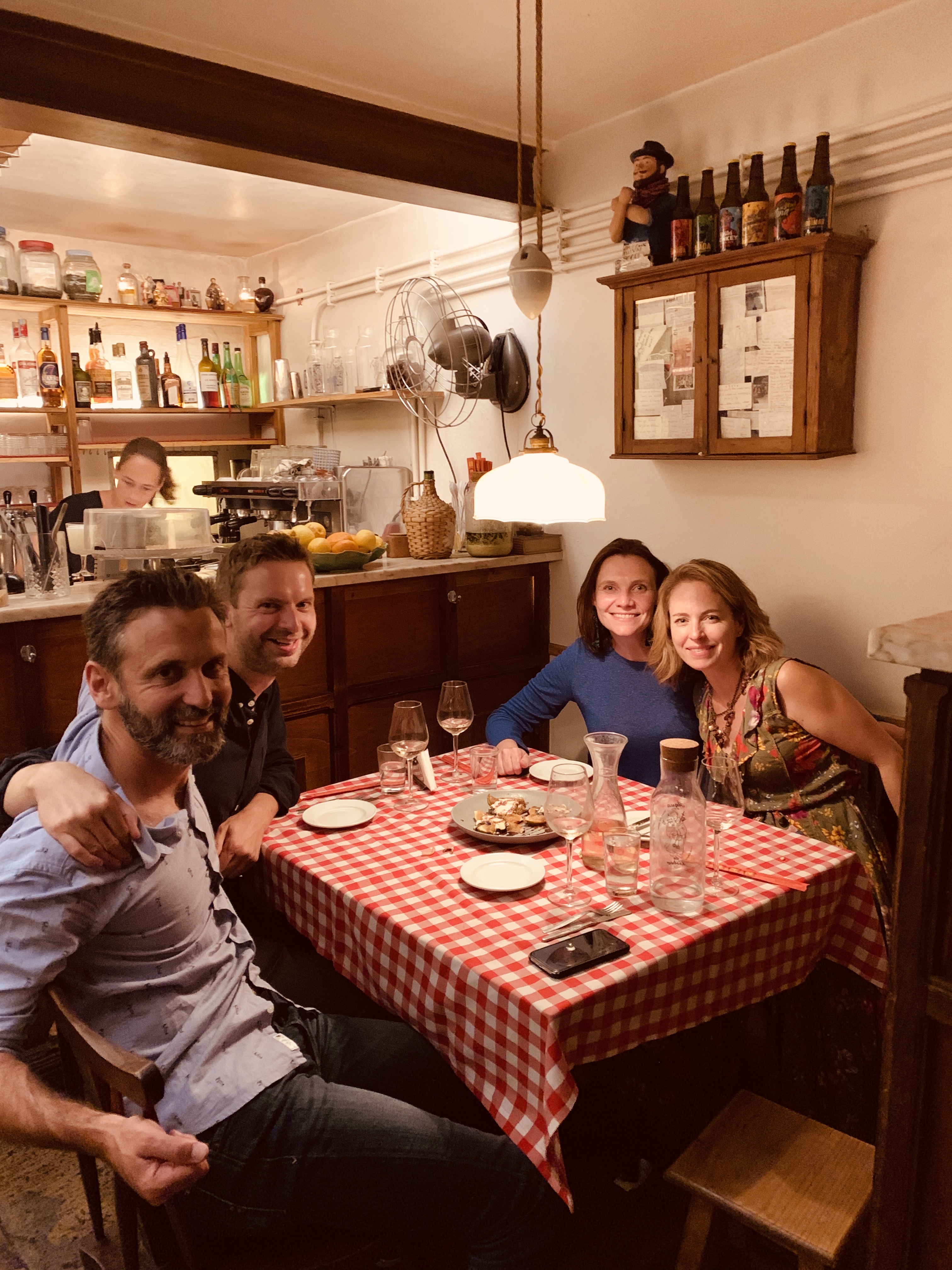
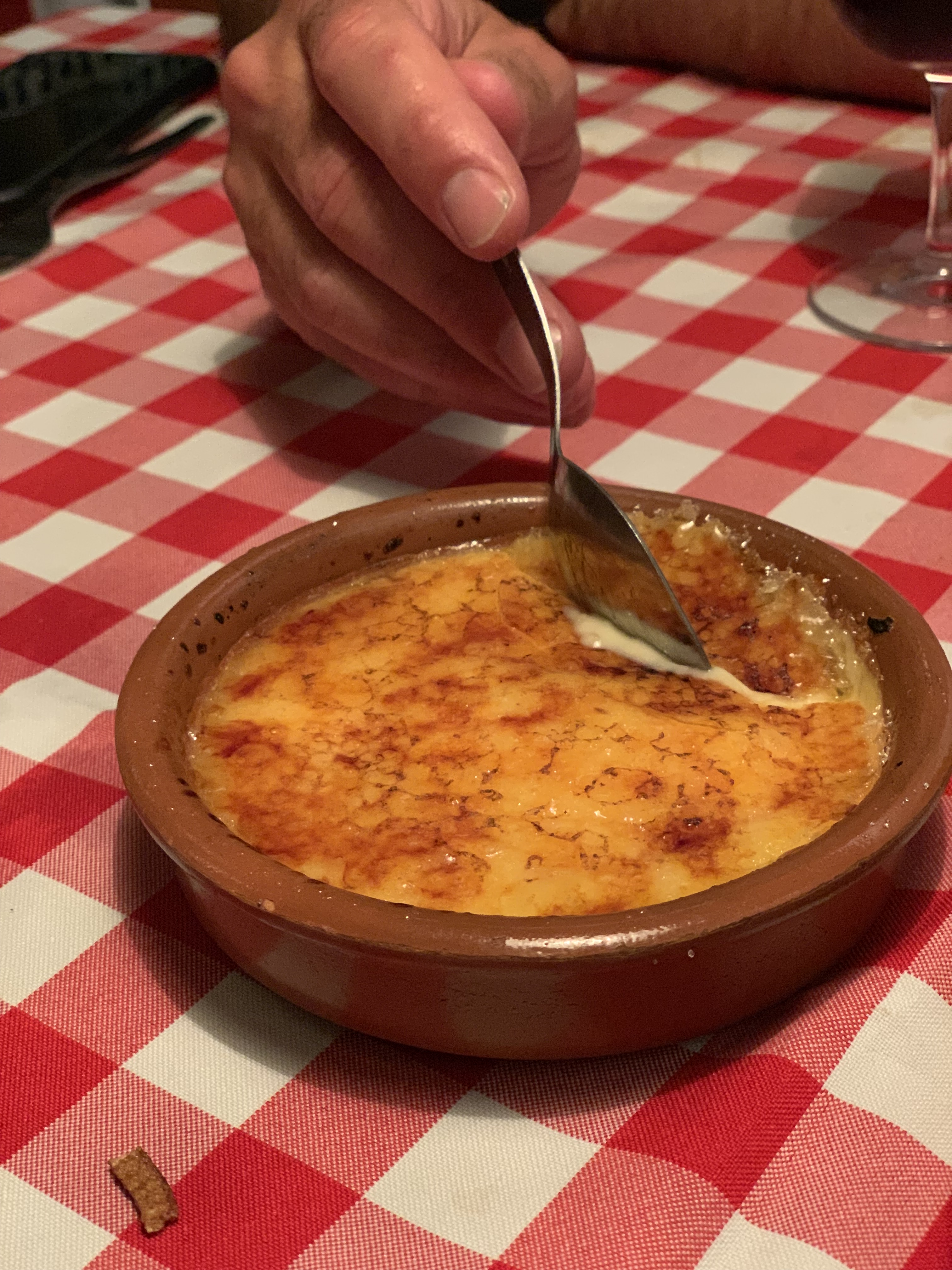
Lots of people talk about what these guys have done, but to see someone pull it off (and with a certain amount of style, to be fair) was pretty inspirational. Only 3 weeks in, London is closed down, furniture was being built as we drank (thank you Ikea men), kids, cars and food were sorted. These guys were good. How did they make it look so easy? They even managed to clean, fresh, ironed clothes and beautifully styled hair.
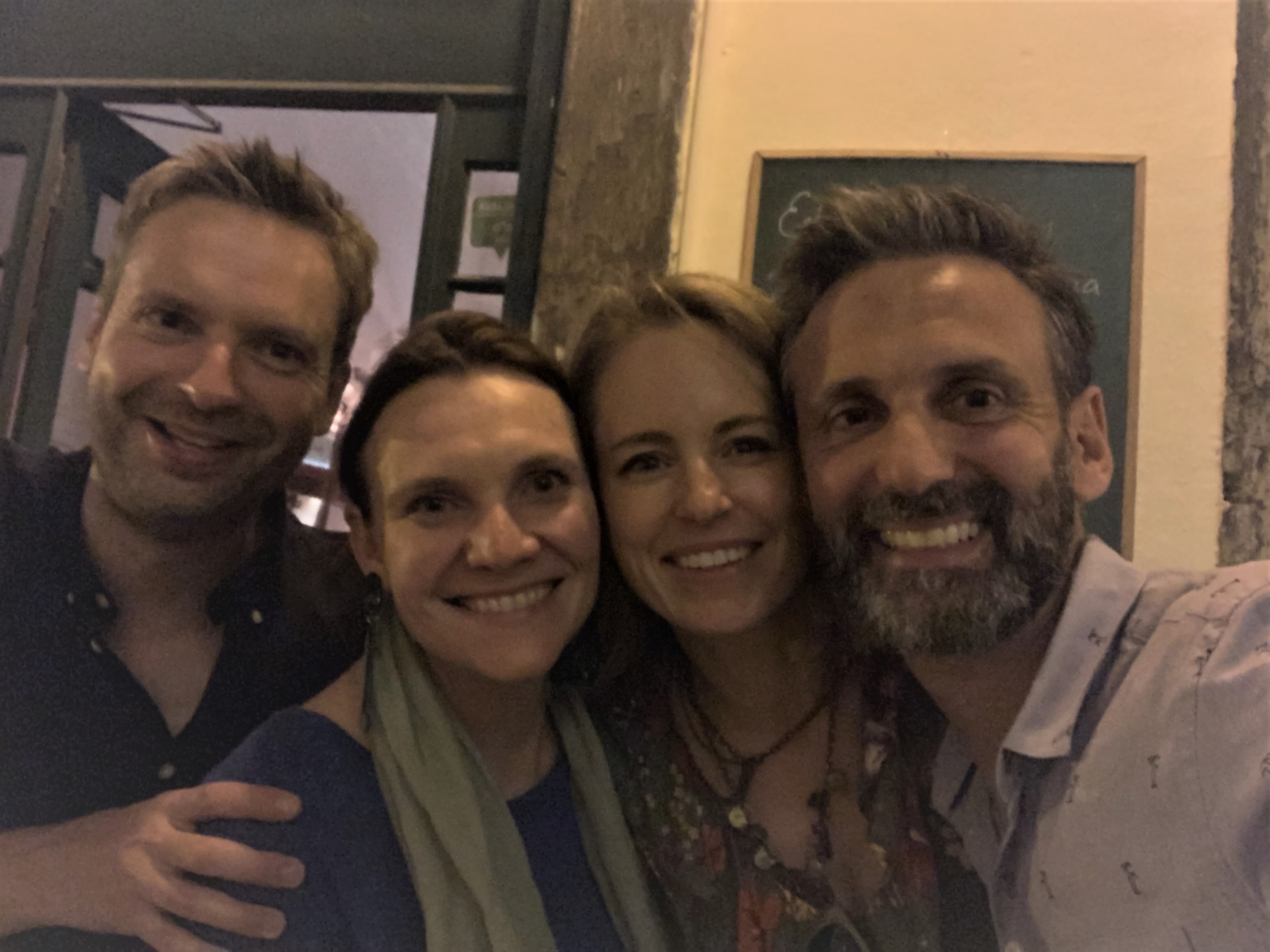
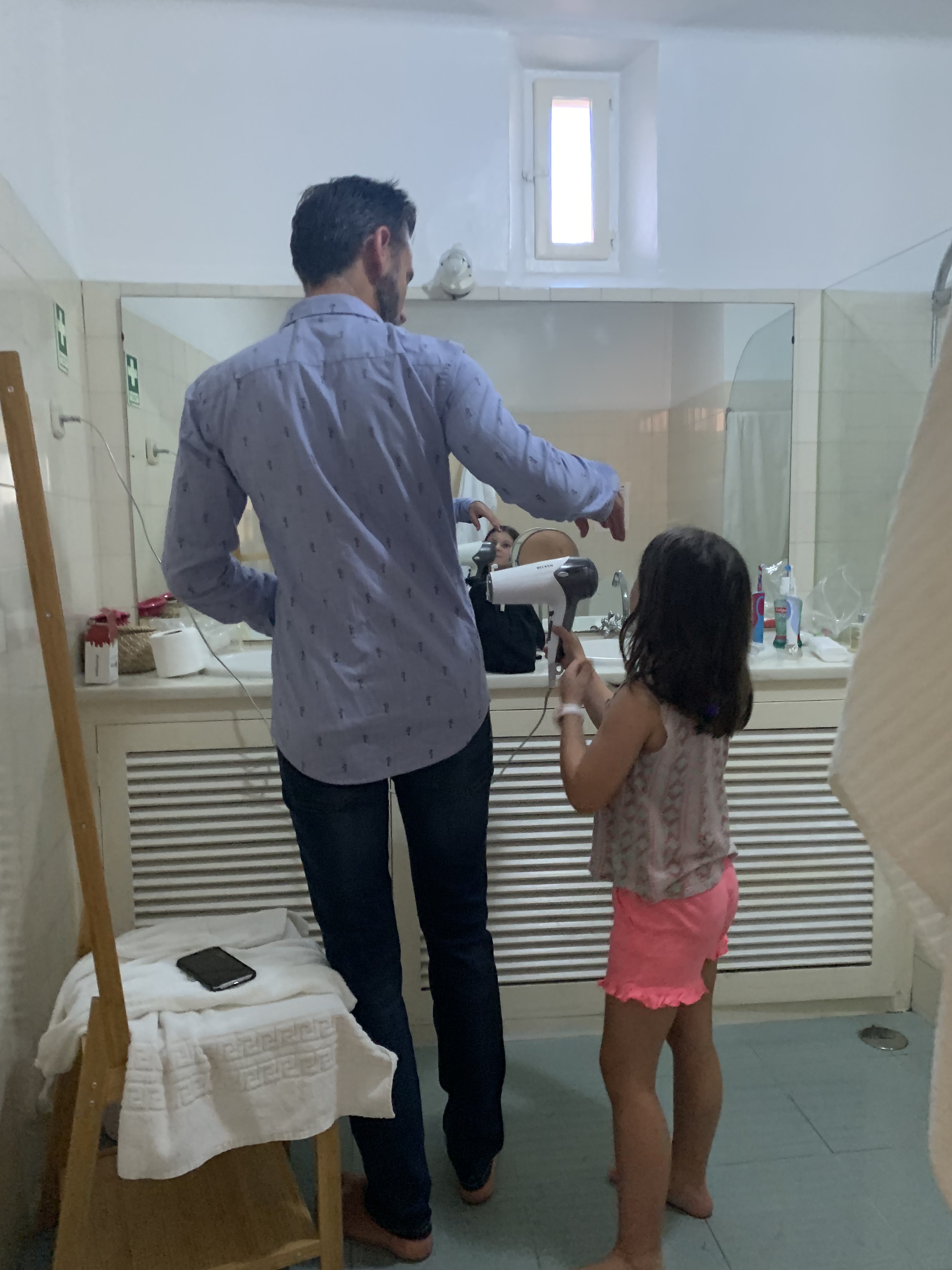
(Side note – we could be seen blow drying our clothes (whilst we were wearing them) before we heading to the restaurant that night to try and get at least some of the creases out. This, plus the inevitability of trainers and the impact of 5+ weeks on the road just reinforced the image that Ant (at least) had slept in a dumpster the night before. We’re all class.)
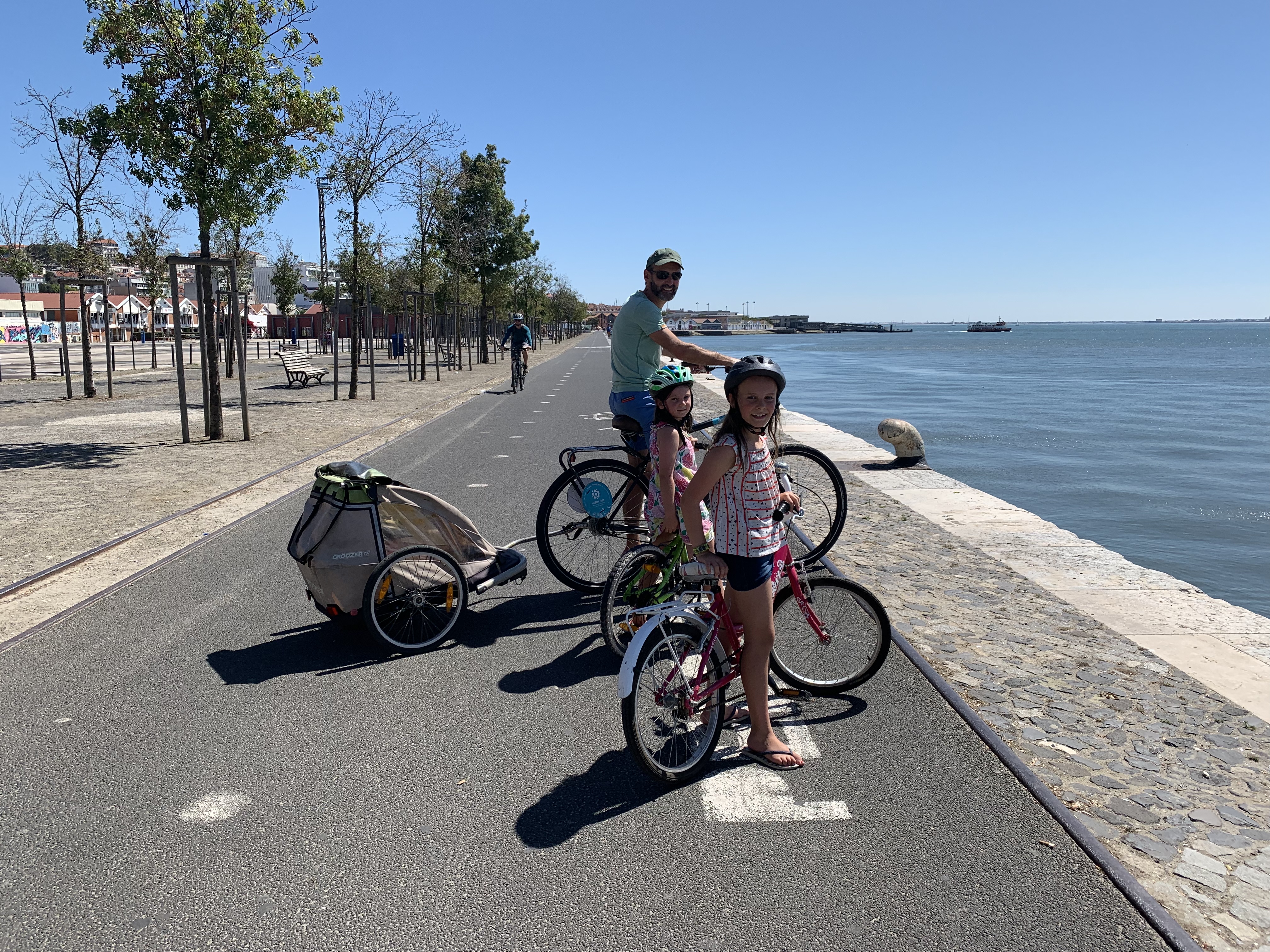
The following day was spent furthering our exploration of Lisbon, initially by bikes and then by the (apparently world famous) Tram 28. We made our way down to the Tejo River in bright sunshine and procured ourselves a number of bikes (this time including a trailer for Sena) and made our way up towards the Golden Gate (lookalike) bridge in the direction of Belem, before looping around back to the Praca Commercial (which, along with Praca Rossio) form the two main squares of central Lisbon.
Tired legs were rewarded by a cold drink on the water before we went to battle all the other tourists in Lisbon to ride the ‘famous’ Tram 28 – one of several 1930’s style trams that make their way around the narrow, steep streets of the capital (seated capacity: about 20; standing capacity: probably 50; number of tourists at any given time: around 300; number of very grumpy Lisbon locals trying to go about their day: about 5).
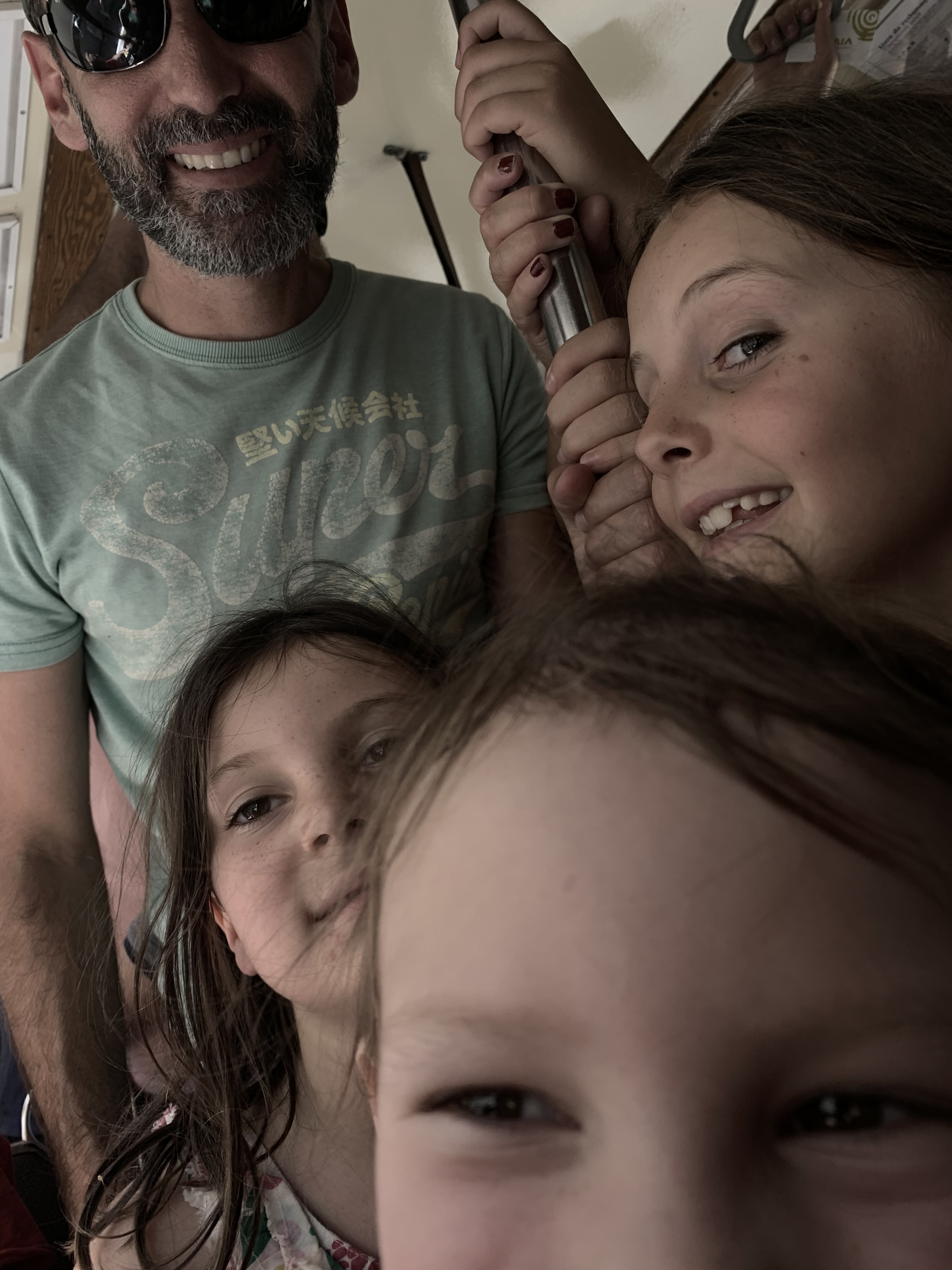
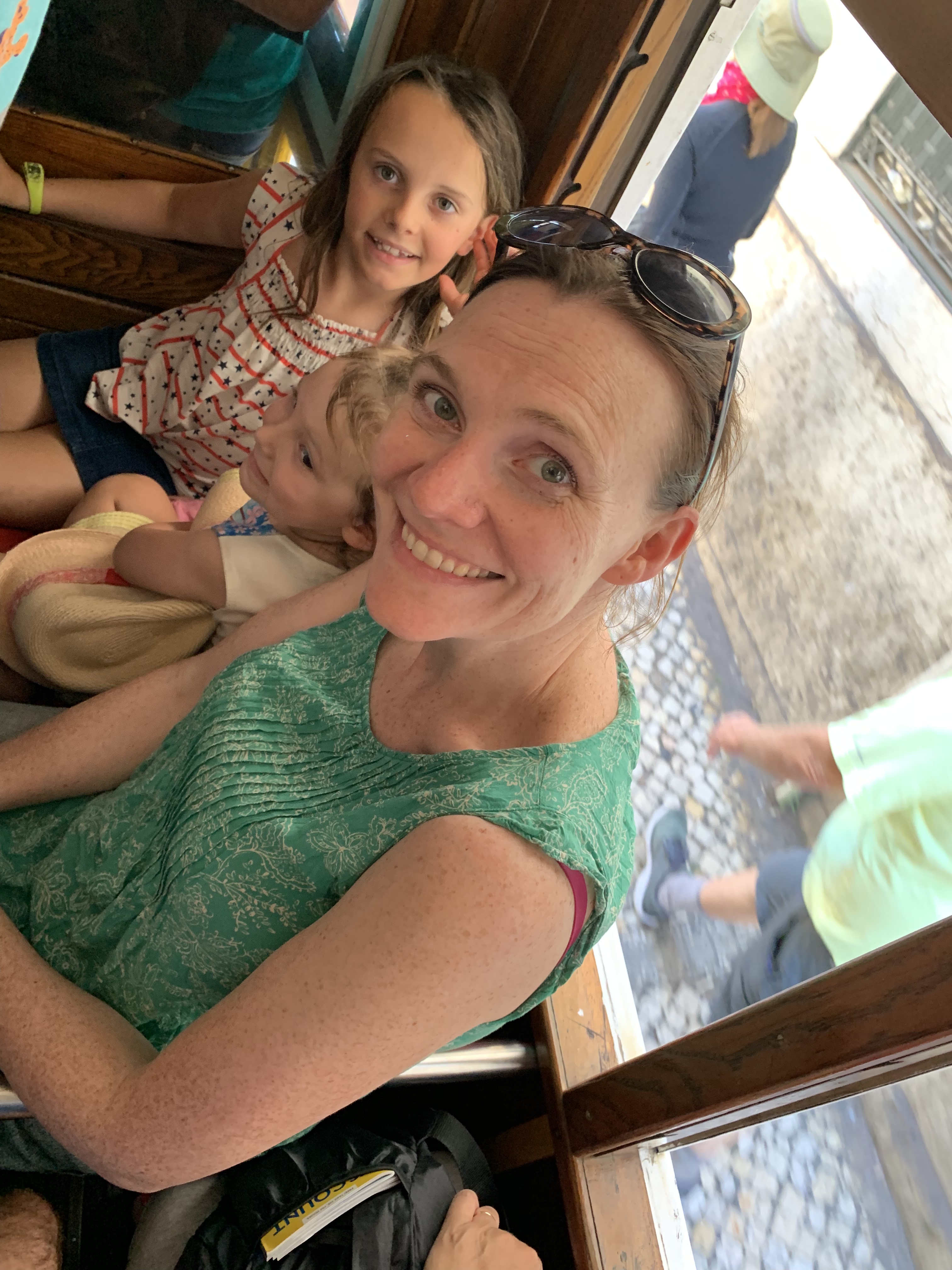
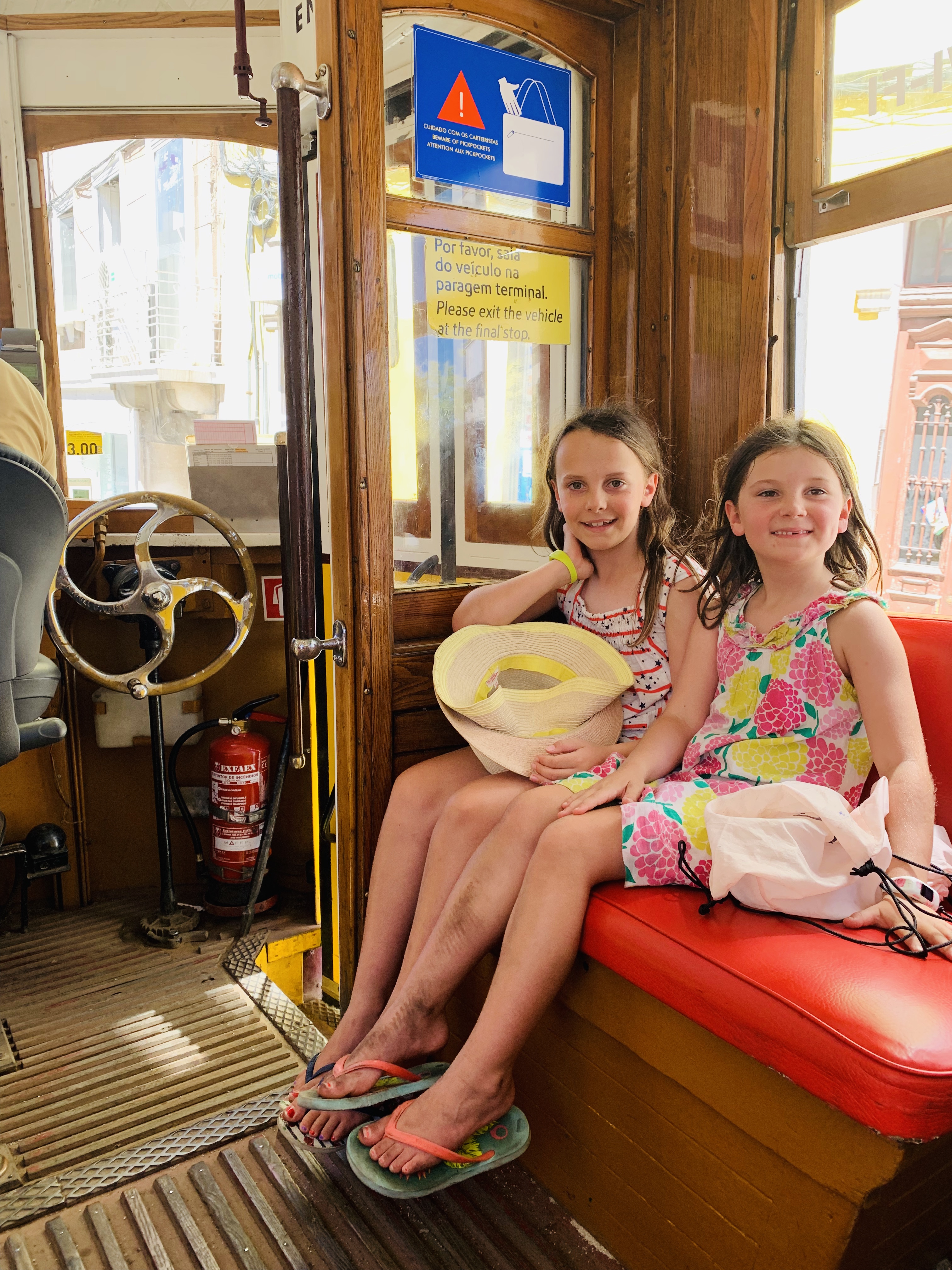
We were not optimistic about getting on a tram, having heard about its popularity, but we thought we’d give it a crack. Surprisingly, we managed to squeeze on at the first attempt in downtown Baixa, less surprising was that it was absolutely rammed to capacity, with people literally hanging out the windows. We rattled our way down through central Lisbon, before climbing up into the Alfama district and some amazing views over the city and the river beyond (some even comparing to the views from our apartment). The girls enjoyed the trip, particularly when they managed to get a seat by the window (and out of the german family’s armpits).
The later afternoon was spent having a late lunch/early dinner and homework at home before heading out for some early evening snacks, drinks and ice cream and back home for a movie night.
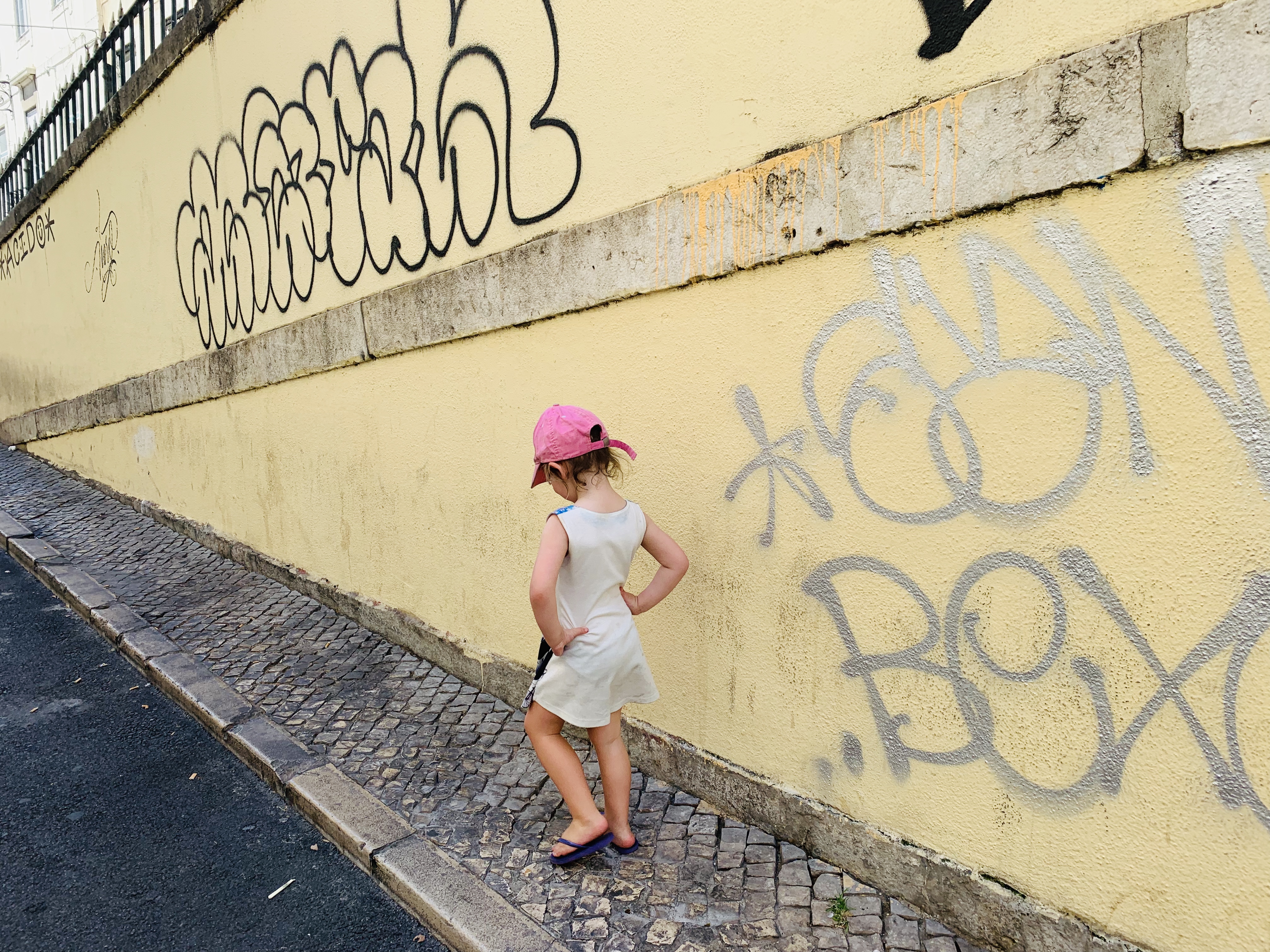
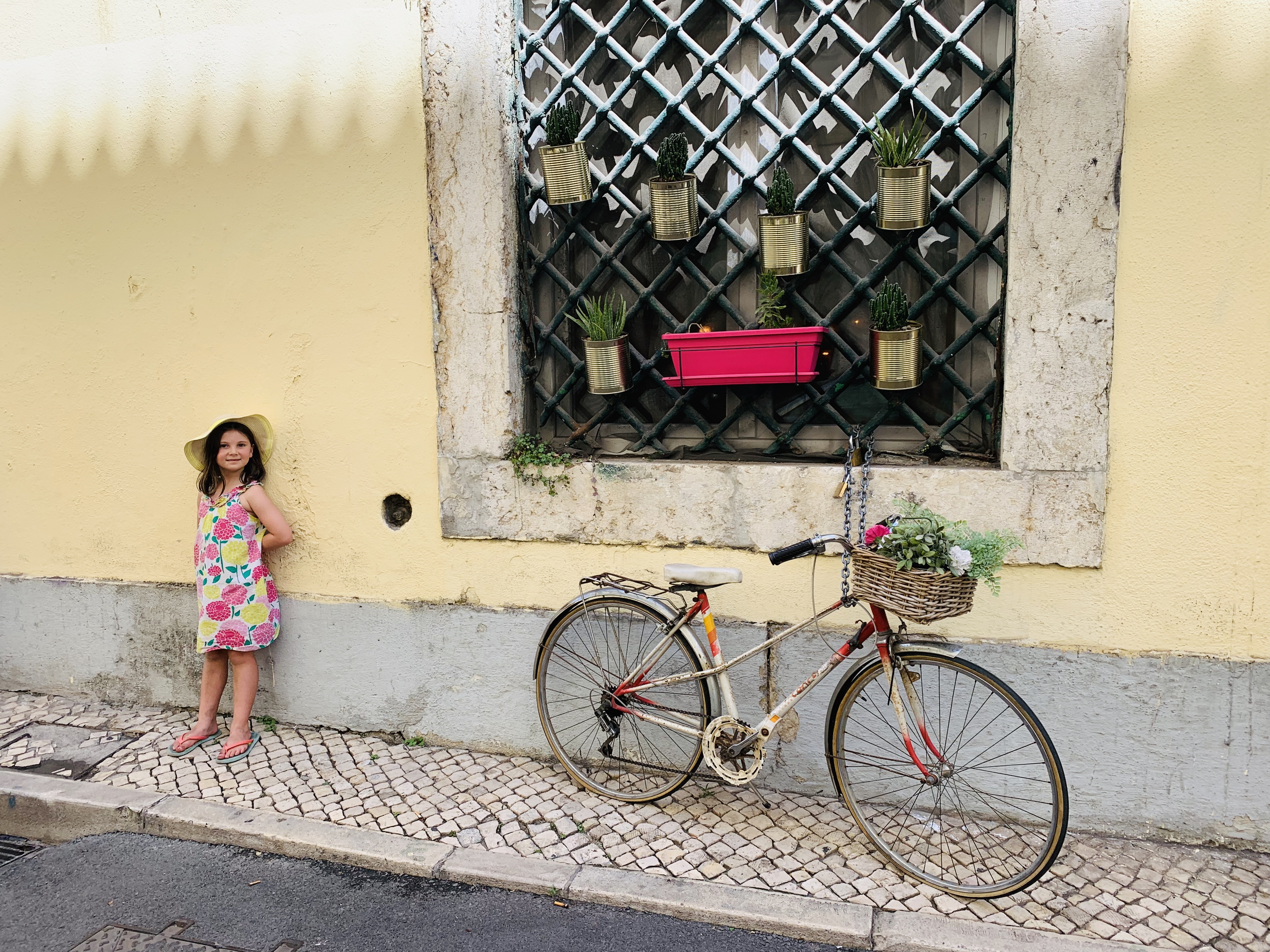
Our last day in Lisbon dawned bright and sunny. Run club headed out for one last tour of this amazing city before we made our way up our 4 flights of stairs for the final time (each time we climbed up, we reminded ourselves that we were in a 4th floor walk up in Aix too. We were going to be either very fit or just camping in the reception area by the end of our time there).
We packed up our house, said goodbye to the views and made our way out of Lisbon for the final time. (Navigating the city on the way out is so much easier once we have our bearings!)
We were going to swing by Cascais on the way to Porto, primarily to see Dee again and meet the kids, but also to check out the beaches. On the way there, we stopped at Belem to see the beautiful Padrao dos Descobrimentos (the main thing that Ant remembers from his first time in Lisbon with Jeff and Adam 25 years ago). This monument, constructed in 1960, celebrates the glory days of Portuguese exploration commencing with Henry the Navigator. It’s very grand and impressive, a bit communist in style, but also very powerful and beautiful.
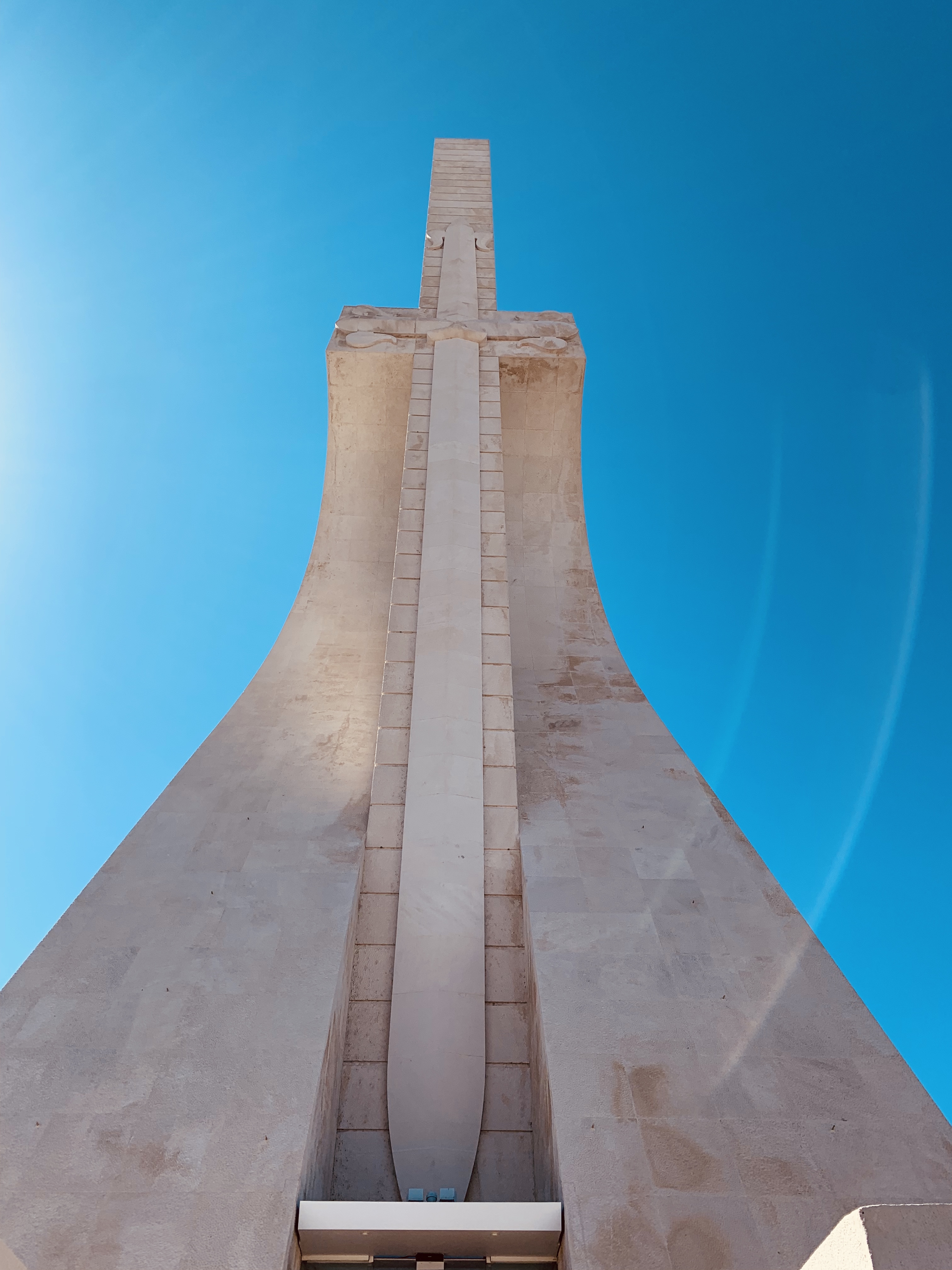
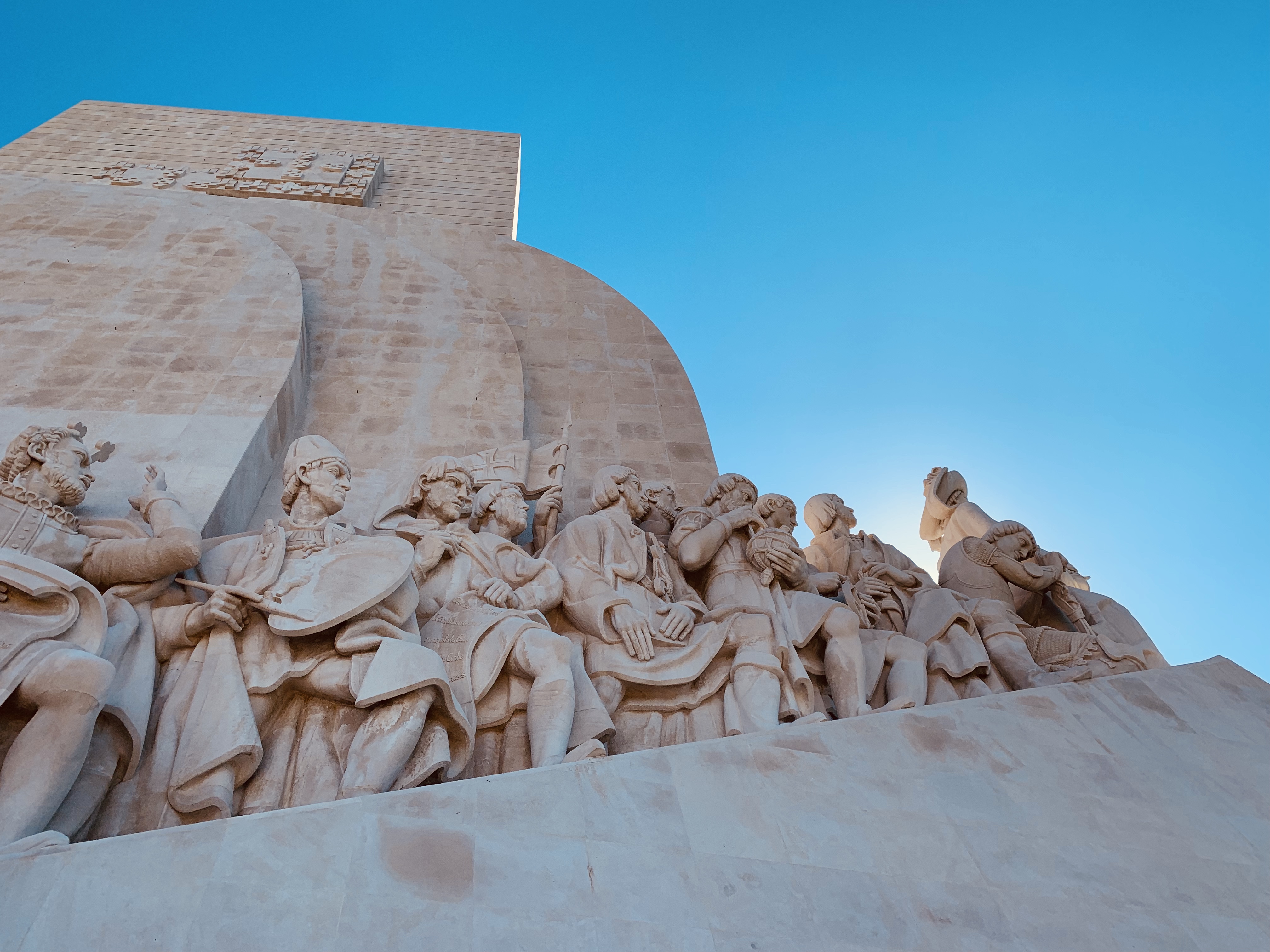
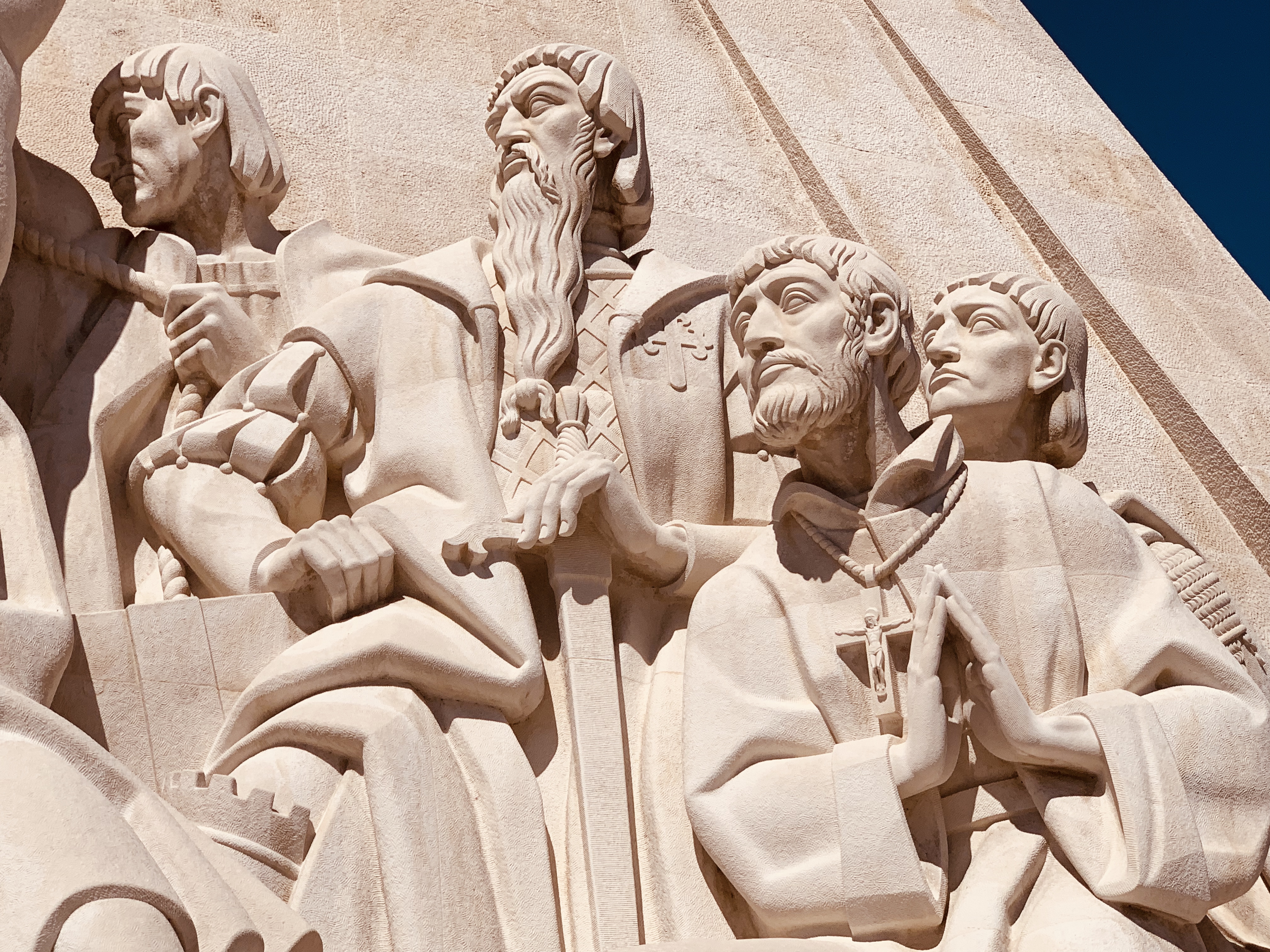
The kids were less impressed with the monument than they were with the powered scooters for hire in the area – and they all enjoyed zipping up and down the riverside paths with Ant (somewhat unstably) at the helm.
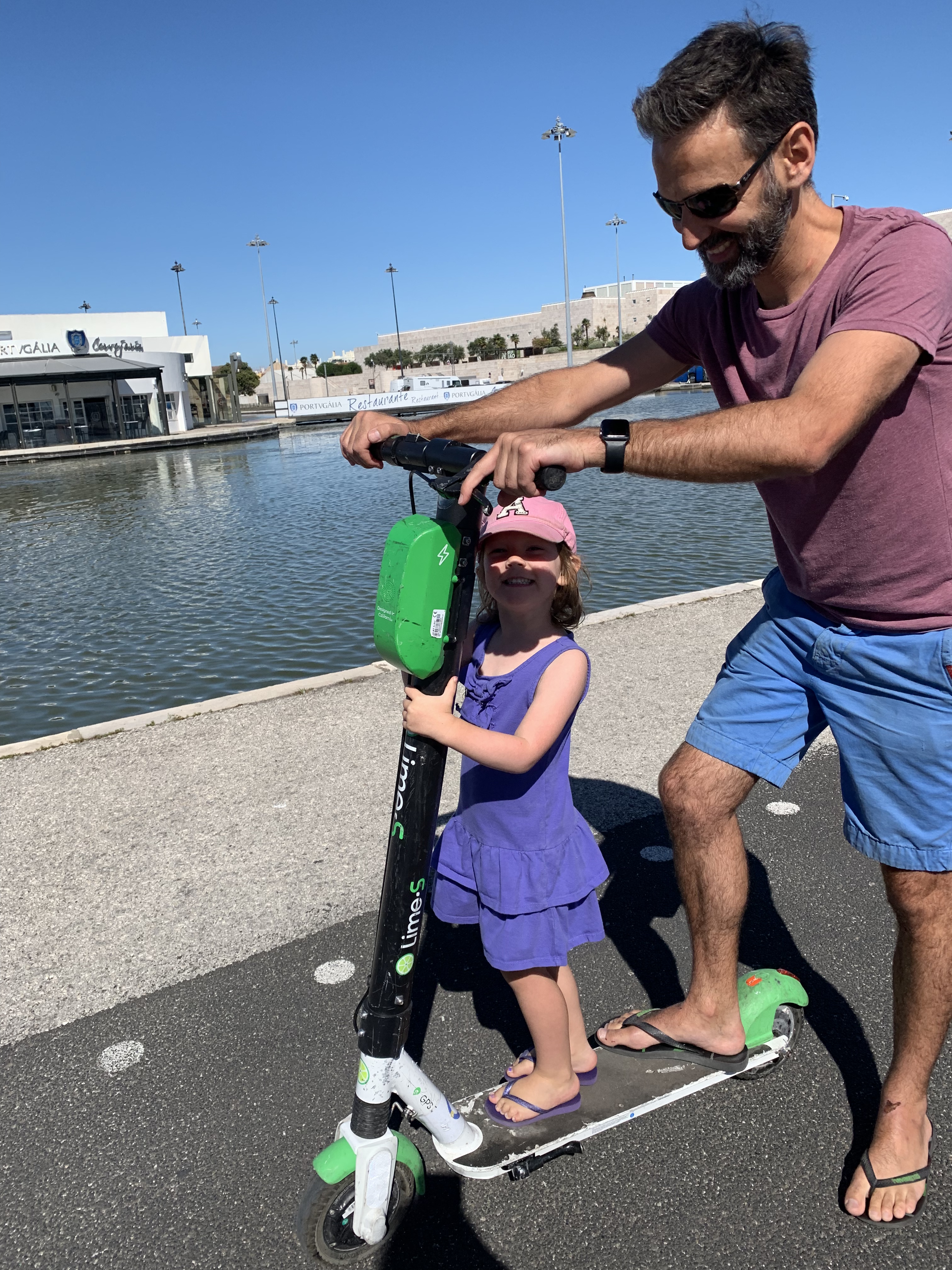
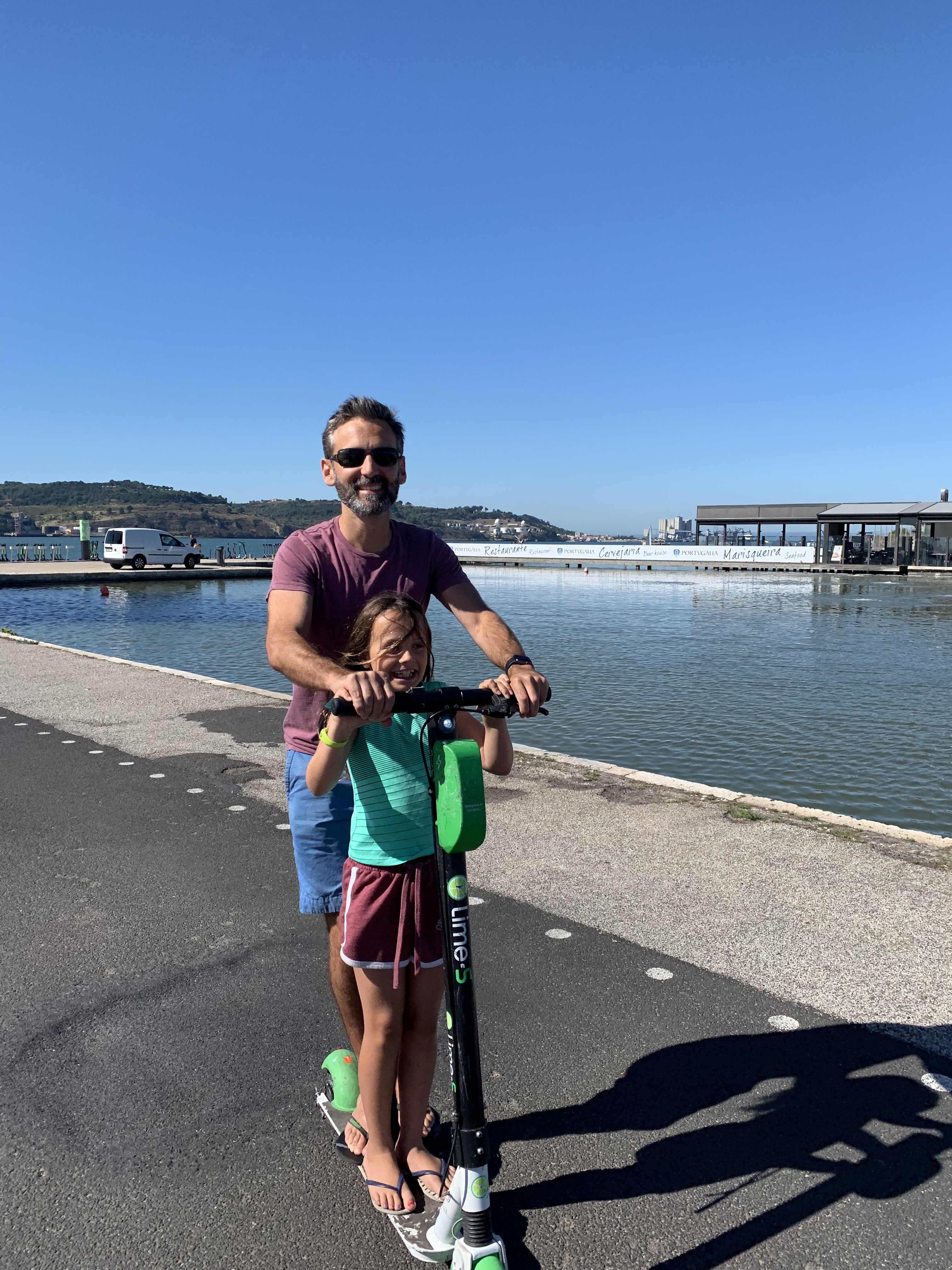
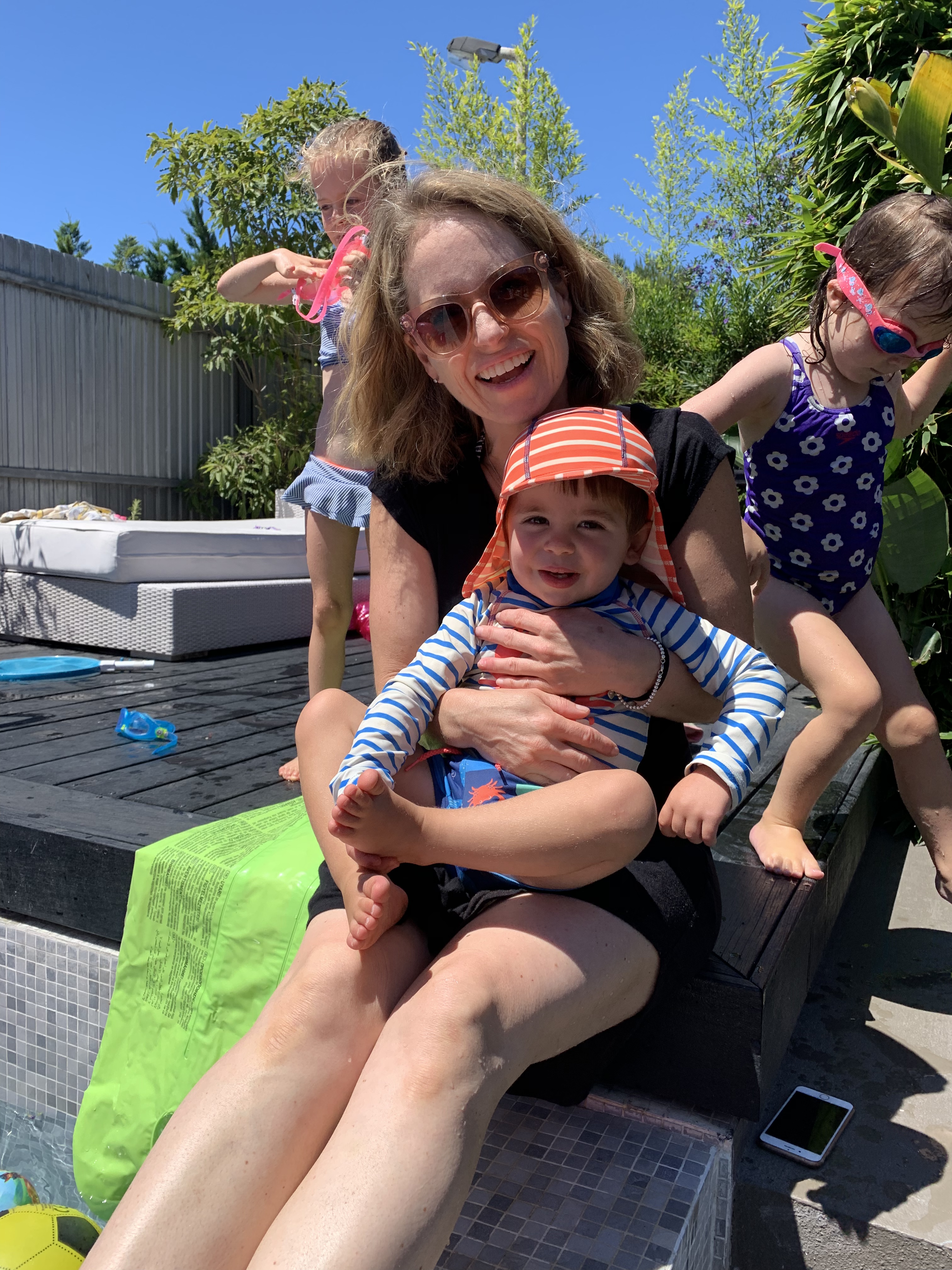
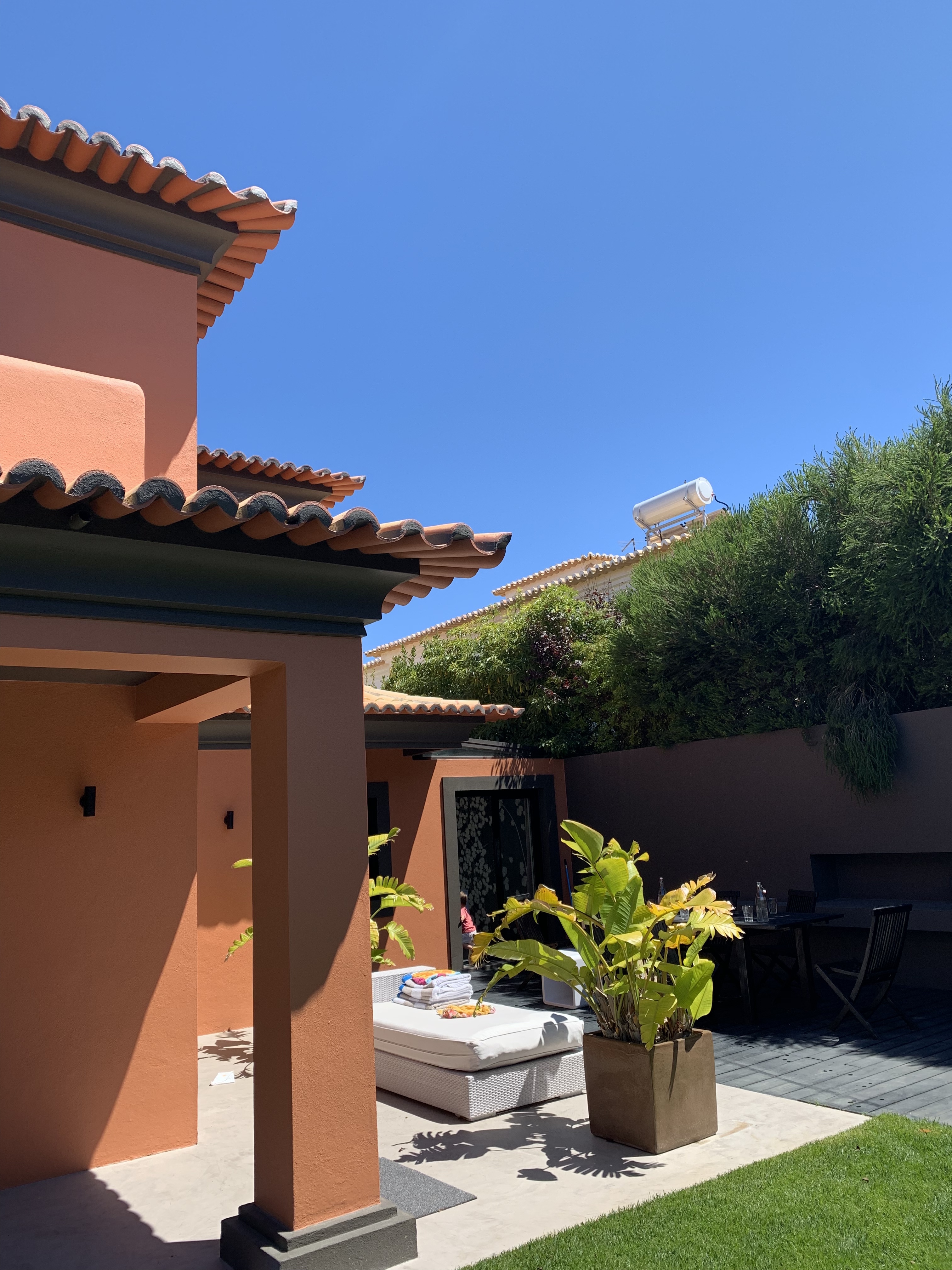
From there we had a quick stop at Belem Tower (which Jessie pronounced as cursed from 200 yards) and then continued on to Cascais. It was lovely to be able to spend more time with Dee and the kids, see their new house (designed and built by the WAG of a then-footballer, complete with ‘dance’ area (pole now removed) in the main lounge), enjoy a great lunch and hit the pool before hitting the road again for our final stop in Portugal… Porto.
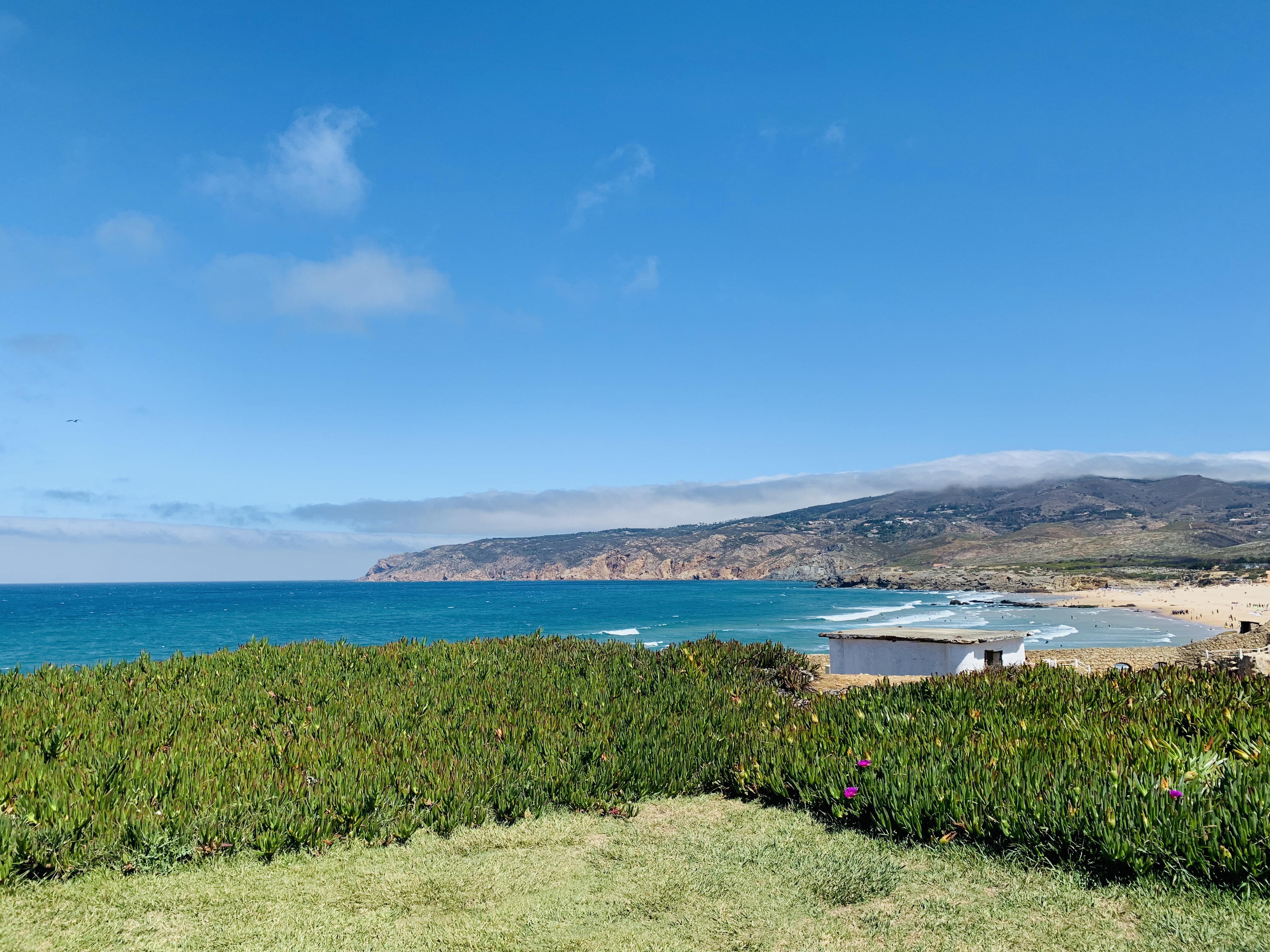

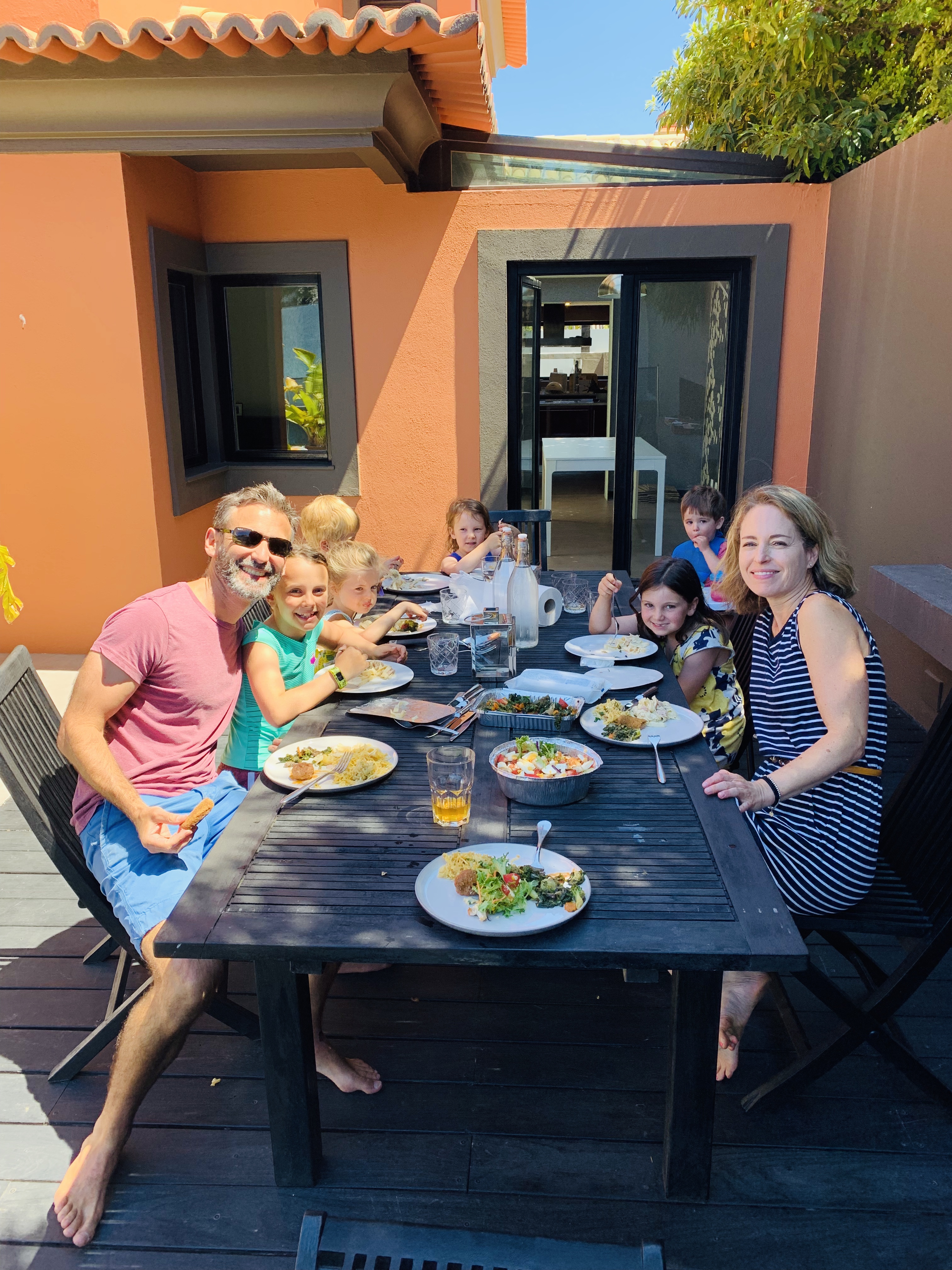
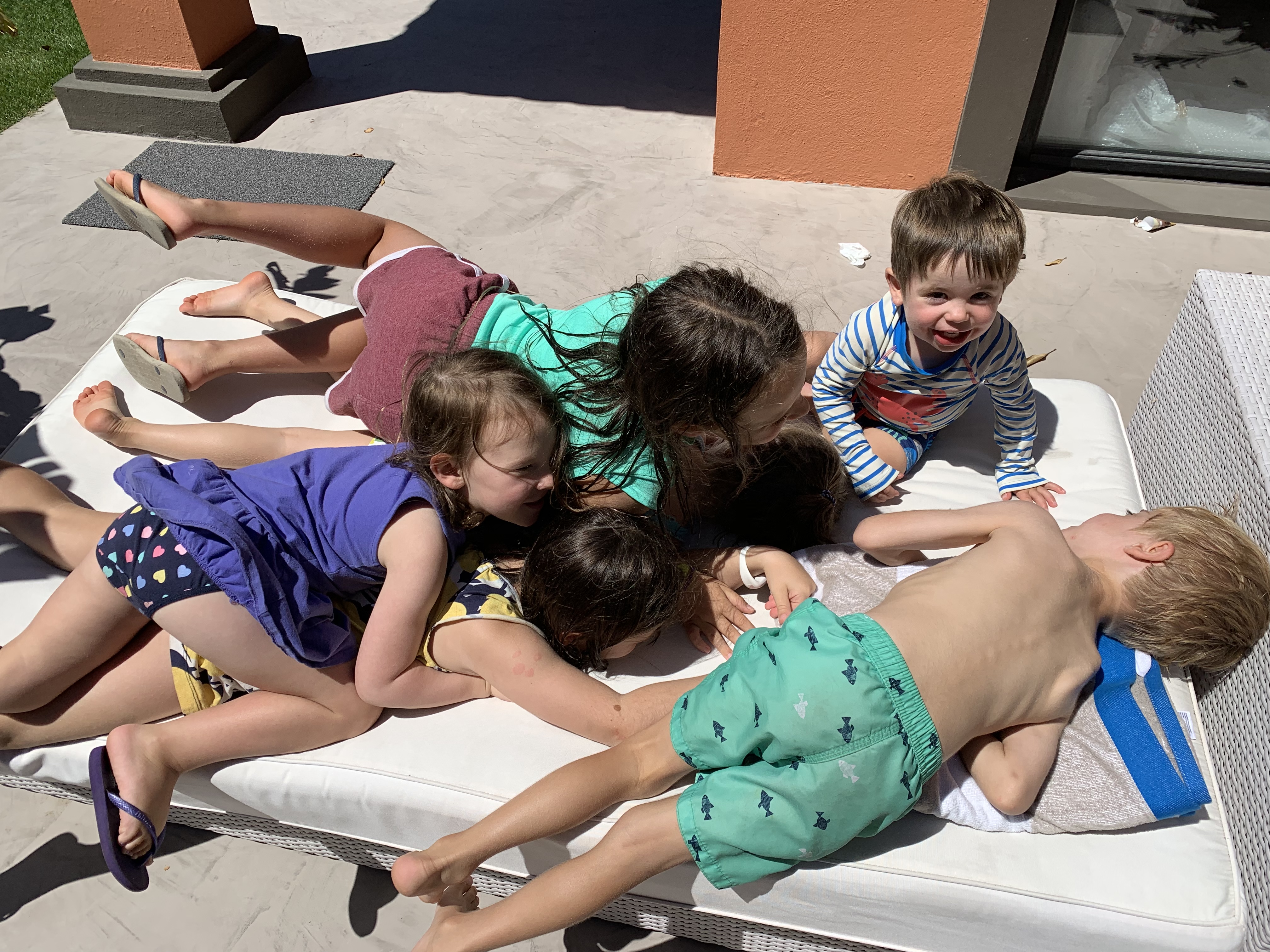
We were very conscious that our Iberian trip was starting to reach its final stages. We were super excited that we would soon be reunited as a family (we would be meeting Bonnie in less than a week) and build our base and new (if temporary) life in France…. But we were also trying desperately to slow things down (time was now officially flying) and make sure we made the most of this (wonderful) part of the trip.
As we heading north towards Porto as fast as our trusty Duster would take us (not really that fast at all) we pondered…. Dacia limited how fast we travelled the auto-estrada by restricting the quality of our trusty Duster. How could we limit the speed with which we travelled through this year, but without limiting the quality of our experience? We quickly referred this to the philosophers and concentrated on staying on the road.
 Joseph Family Adventure