21 October – 3 November 2019
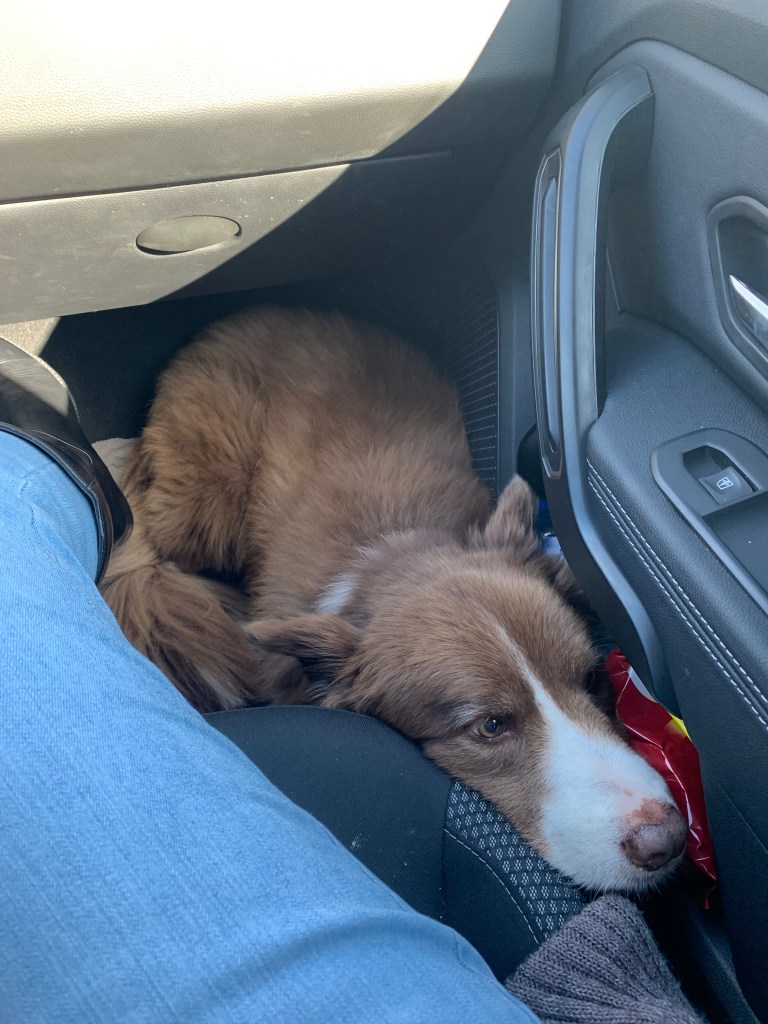
On Monday morning we said our goodbyes to Matty, Alie, Dan and Dulce, packed the car and hit the road north to the Dordogne region, about 600 kms away and just east of Bordeaux. Its trips like these that make you appreciate how big France is. Not Australia, sure, but to spend the day hammering up the autoroute and only get about a third of the way up the country was surprising to us nonetheless. Much as we’ve loved having a base in Aix and getting a bit settled here, it felt good to be on the road again. Car packed to the brim, kids fighting in the back, dog switching between ‘thank you for bringing me’ eyes and ‘get you foot out of my bottom’ eyes, trying to avoid crazy French drivers… we had missed this (and it’s only been 8 weeks).
We made our way out of Aix in the pouring rain (yes, it does rain here as it turns out), first south and west towards Barcelona before heading north towards Bordeaux. The drive itself was uneventful and unremarkable at first, before the fields made way to forested hillsides and villages of the Périgord.
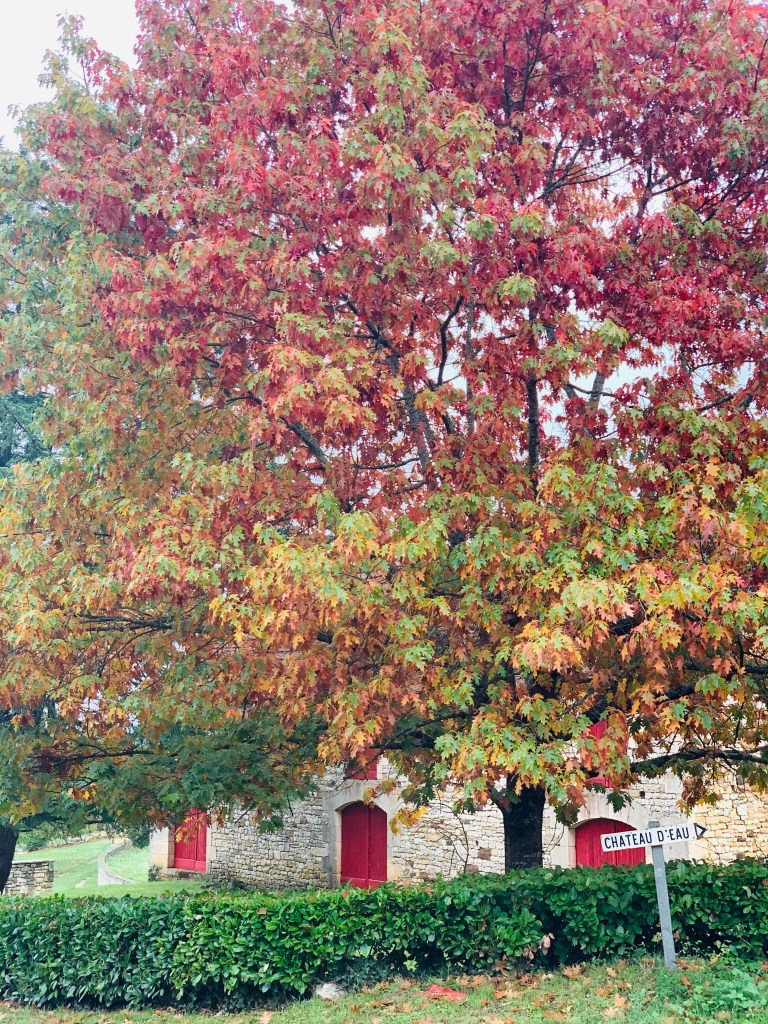
The Périgord region is famous for being the epicenter of the 100 Years War (between England and France) in the 14th and 15th century, the site of some of the best cave paintings in the world at Lascaux, being spoilt with numerous stunning hilltop villages overlooking forested hillsides and the beautiful Dordogne River… and being a really bad place to be a goose. Or a duck. It is the home of fois gras, goose giblet salad, duck à la everything and goose fat everything. No one can accuse the French of wasting any part of the animal.
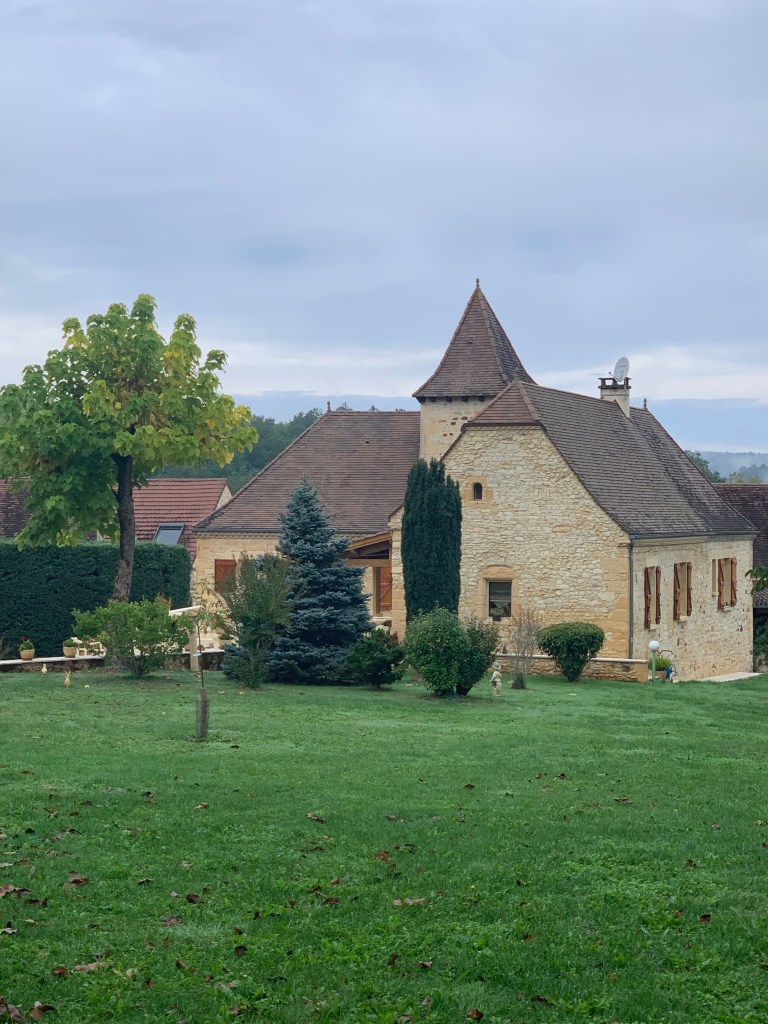
We had booked some ‘holiday park/Smurf Village’ style accommodation for the 5 days we were there and had visions of playing tennis, cricket, roller blading and hanging out in our cottage around various sightseeing trips. We arrived at the Village de Montmarsis, just outside the medieval village of Gourdon to find… no-one. Completely closed up post summer. It was also hard not to notice that there was literally no french anywhere on the property. Everything was in Dutch. It was like Holland had invaded the Dordogne and just not told anyone.
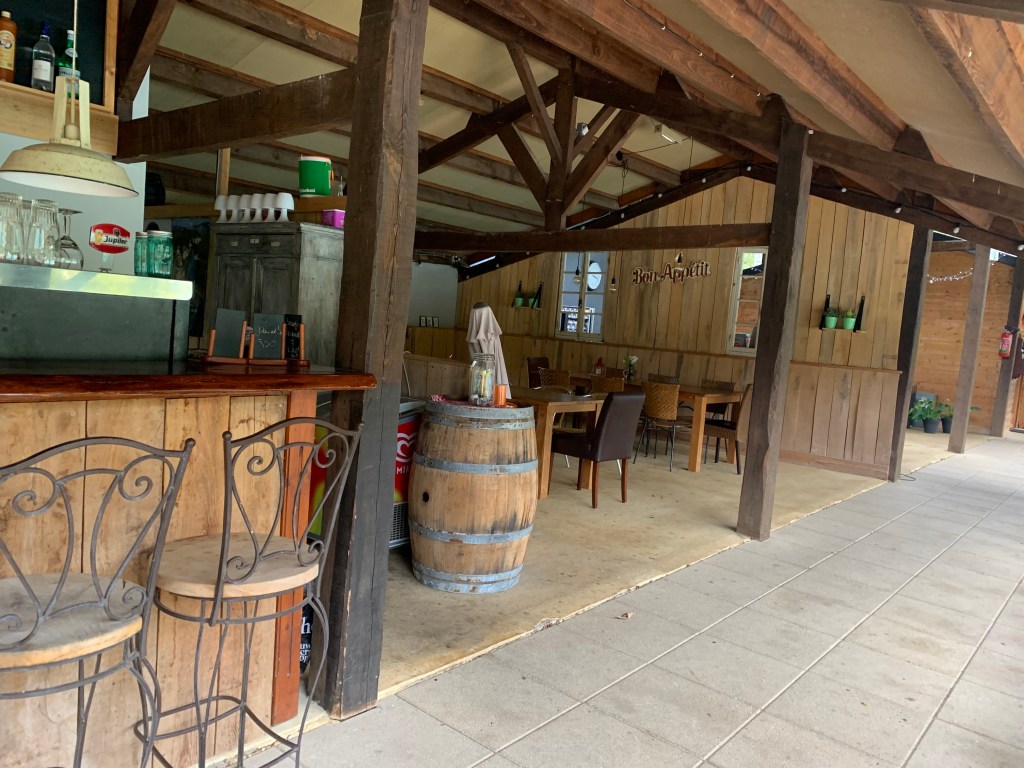
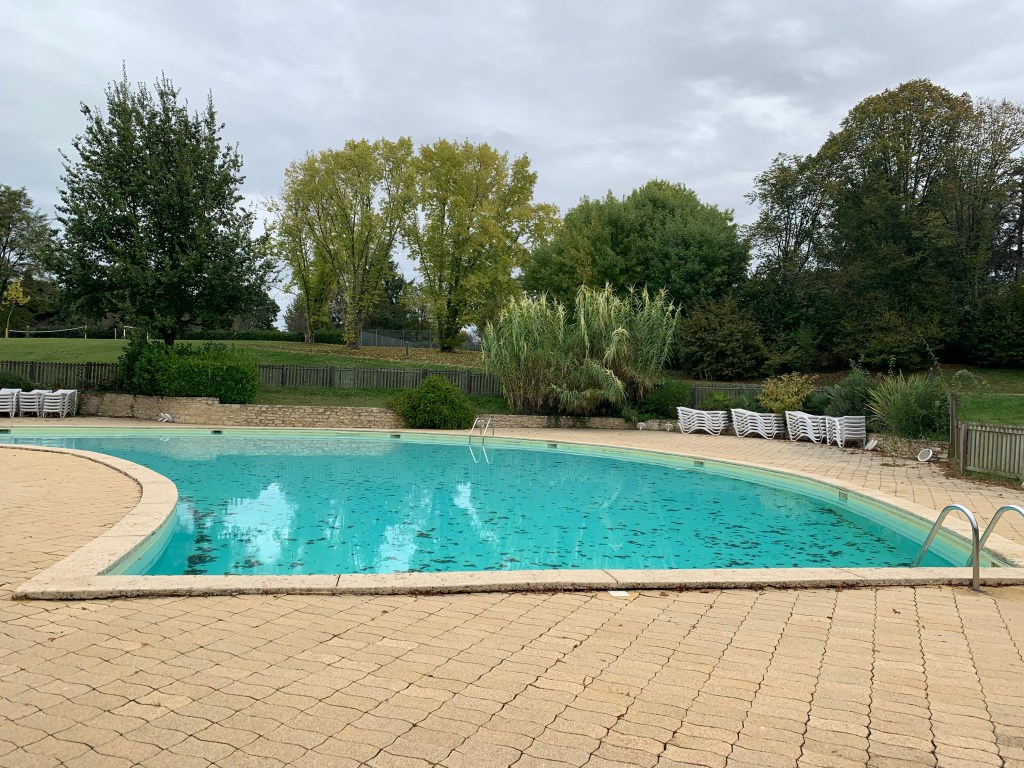
Still, the place was lovely – 60 odd cottages scattered around wooden grasslands with views over the area, a tennis court… and a pretty (if disturbingly green) swimming pool and shut up bar. This place had no plans to be open until next summer.
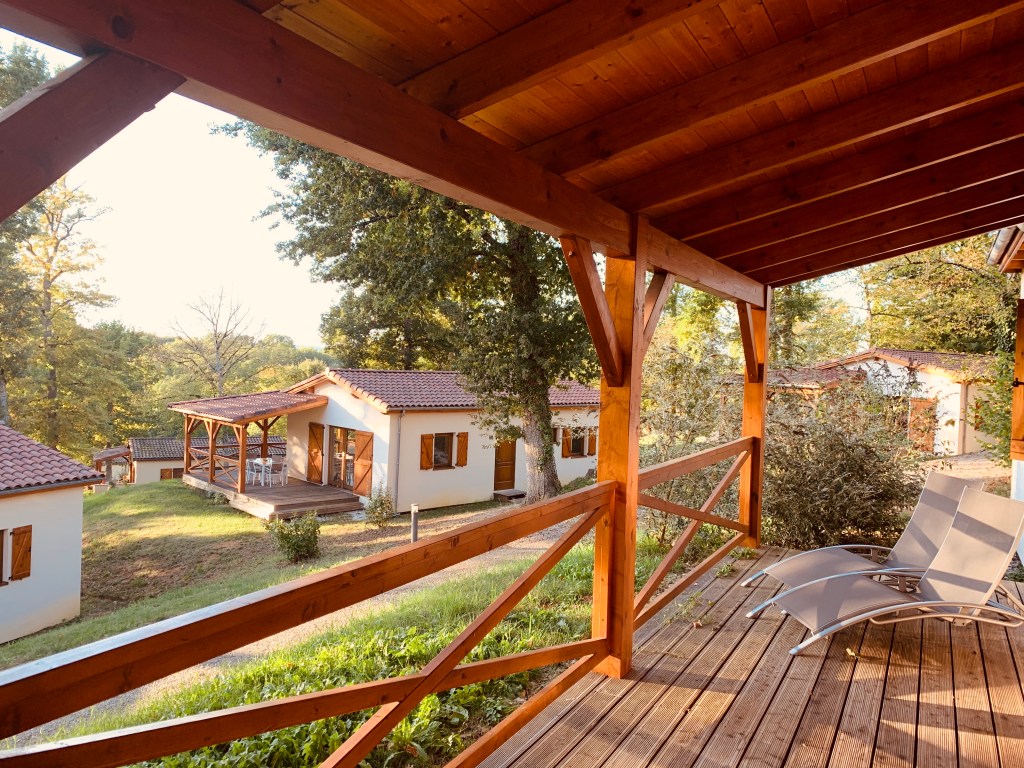
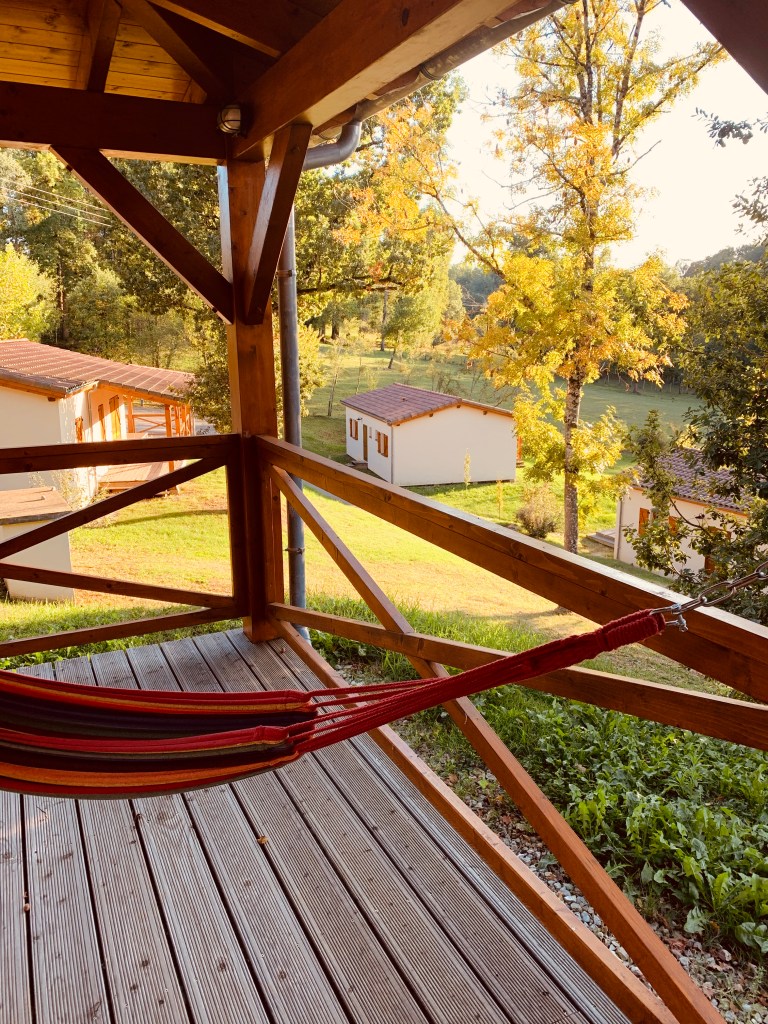
We started calling around. Eventually spoke to someone who sounded both confused and concerned. We were informed that the Village was shut, but the owners would be there shortly to meet us. Our hosts eventually arrived and, extremely apologetically, kindly agreed to open up a cabin for us for the week. Problem solved and potential disaster averted. (Side note: it’s interesting in Europe how things run to a definite rhythm. This place is already booked solid through June, July and August next year, but will close again in September; they would not consider opening during October school holidays. This is not a period when things are open.
We made ourselves at home in a lovely little bungalow nestled in some (somewhat wet) trees and then headed into Sarlat for an explore and dinner. The suggestion of looking around a mediaeval town had Jessie in mutiny in the back of the car on the way there (an attitude which was undoubtedly spawned by the fact that the kids had watched 5 hours of brain melting rubbish on the ipad in the back of the car on the way to the Dordogne).
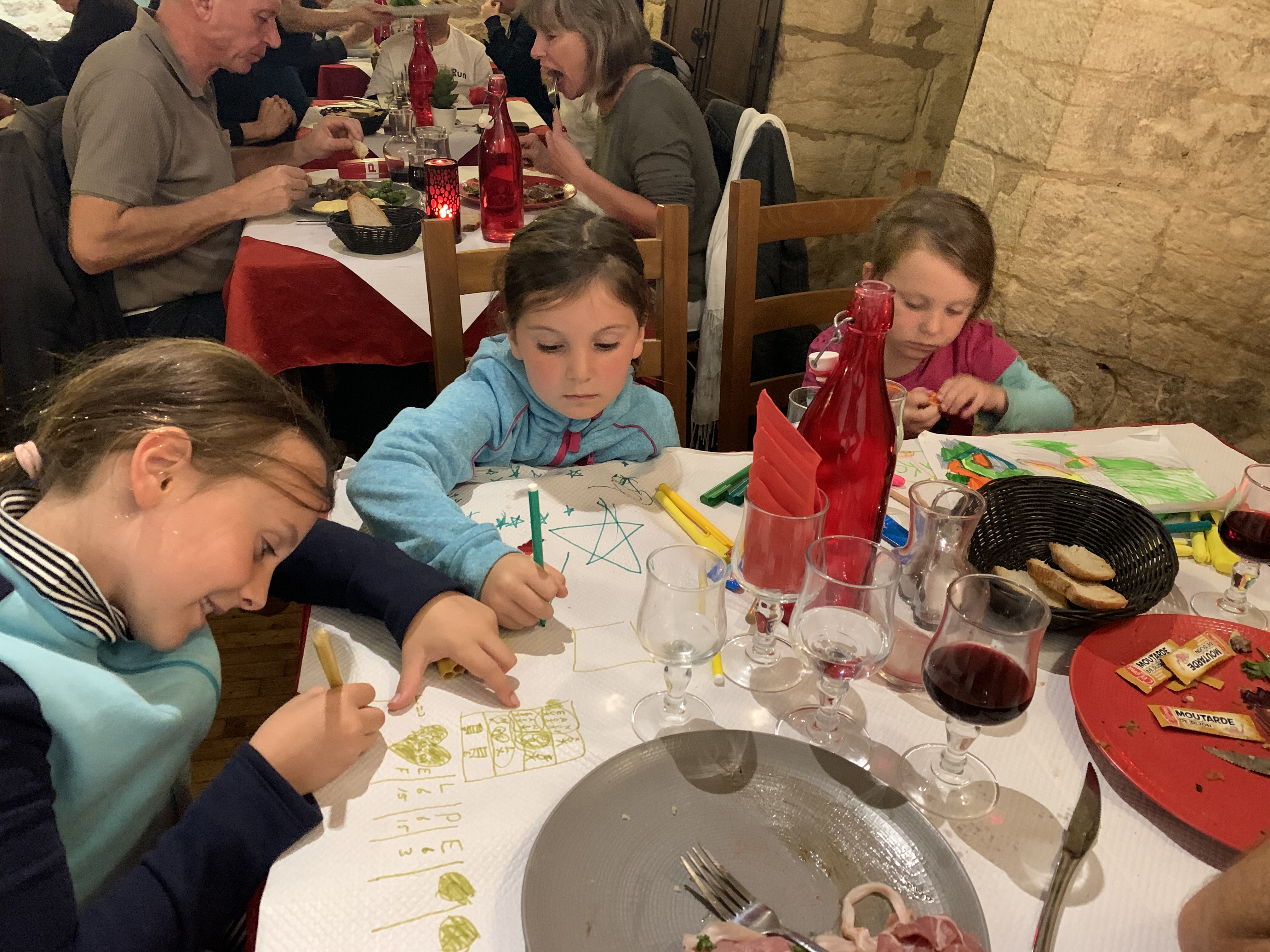
(Side note: The kids don’t get to watch much TV, but when they do its a bit like we’ve given them crack… and they get very grumpy when it is subsequently taken away. When we first arrived in Europe almost 4 months ago we had to train them not to need an ipad to sit quietly at dinner. After a few noisy attempts, reading, playing UNO or drawing became the norm. Watching an ipad on long car trips has been the last unconquered bastion, with the expectation being that, as soon as we get onto an autoroute, said device will be delivered. And grumpiness inevitably resulted – either because we didn’t give it to them, because they couldn’t agree on what to watch, or because we got to where we were going and had the audacity to take it away. We would need to confront this head on… but not today).
Rant over.
We arrived in the beautiful town of Sarlat just as the sun was setting and the famous street lamps were firing up to light up this beautiful 14th century town. We wandered around the old streets and alleyways in the, appreciating the dusklight and the fact that we had the place almost to ourselves (whereas 6 weeks ago it would have been crawling with tourists like Disneyland). It’s an incredibly beautiful and special place, provided you can get there outside of tourist season.
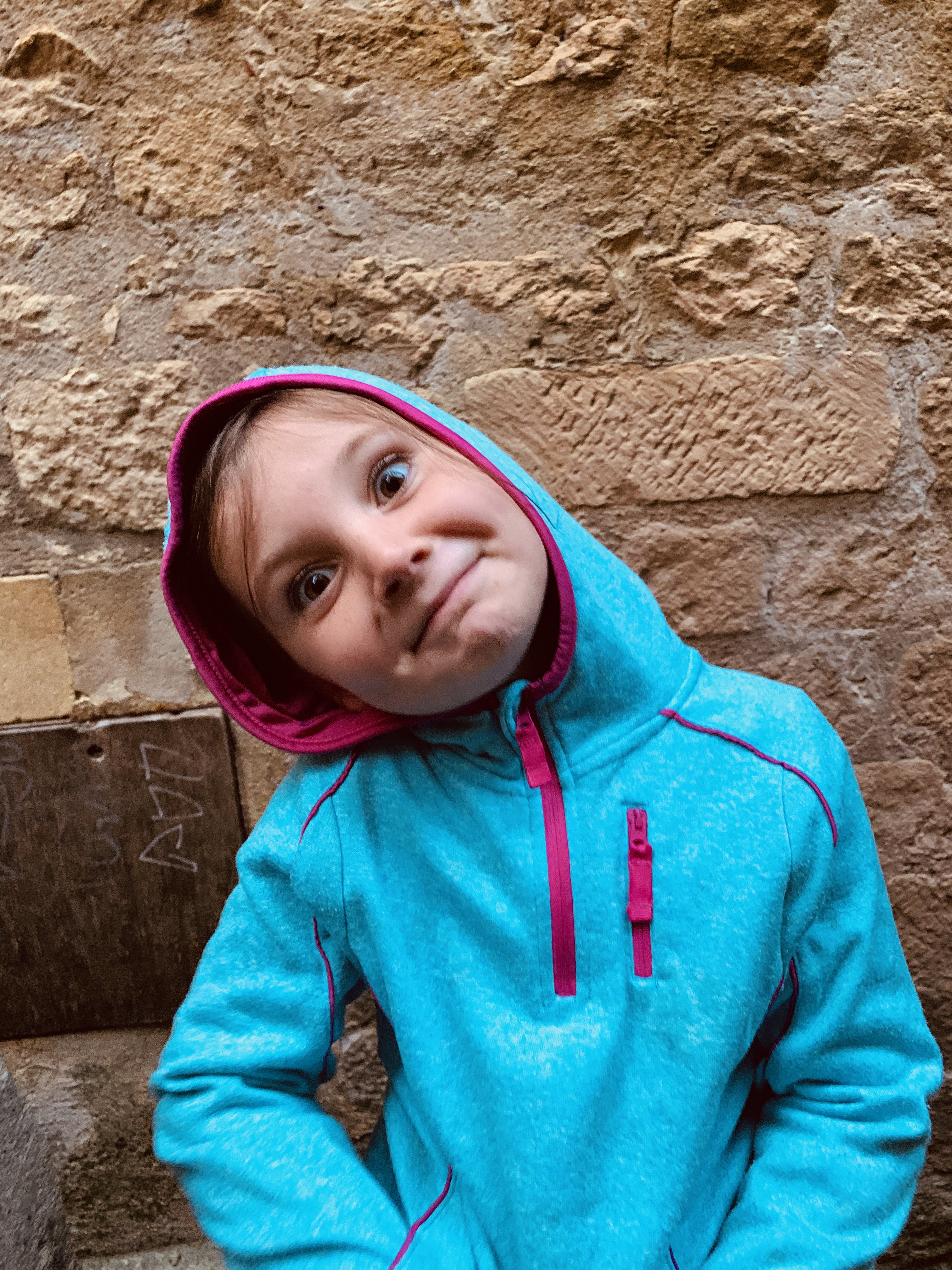
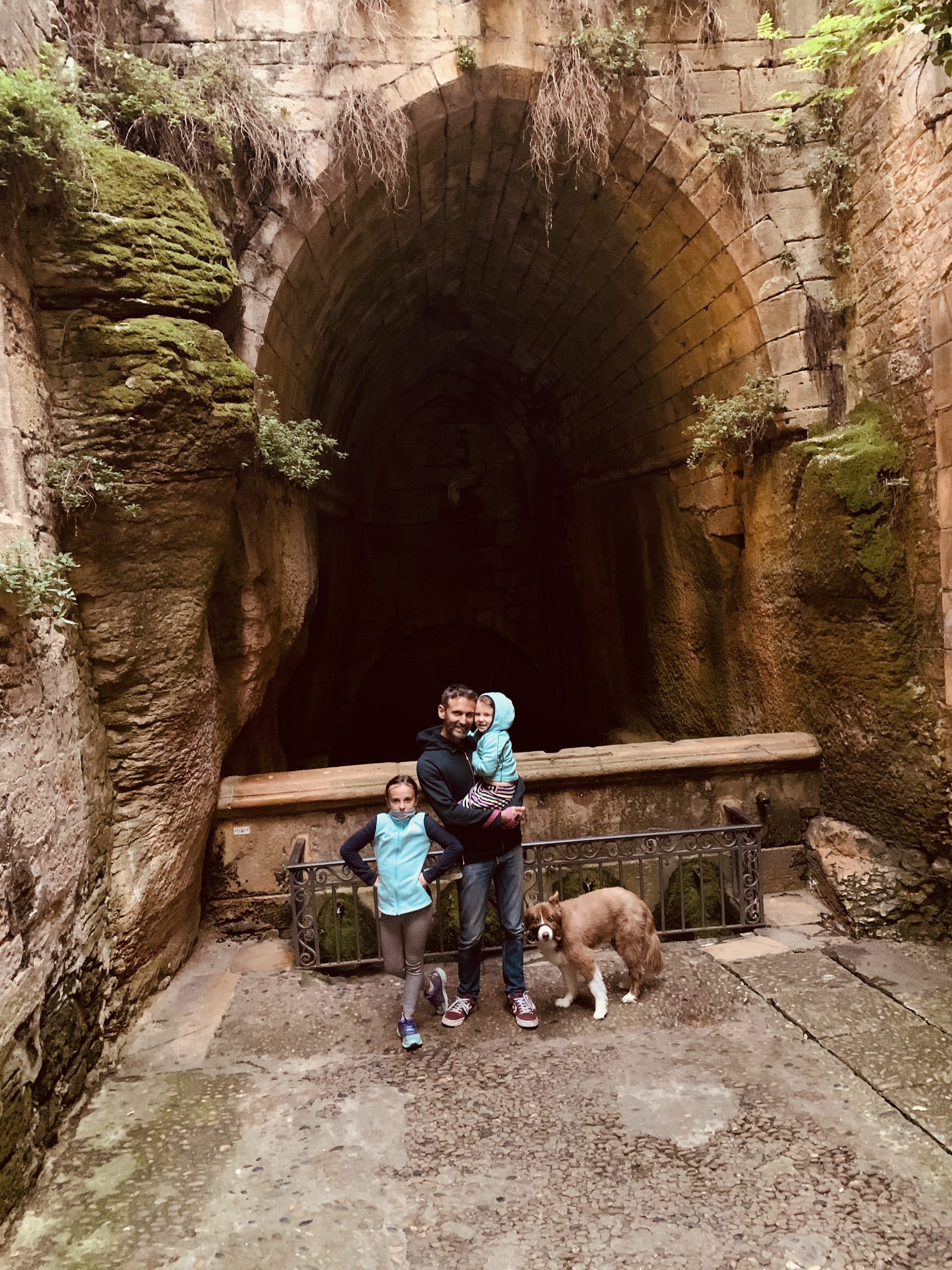
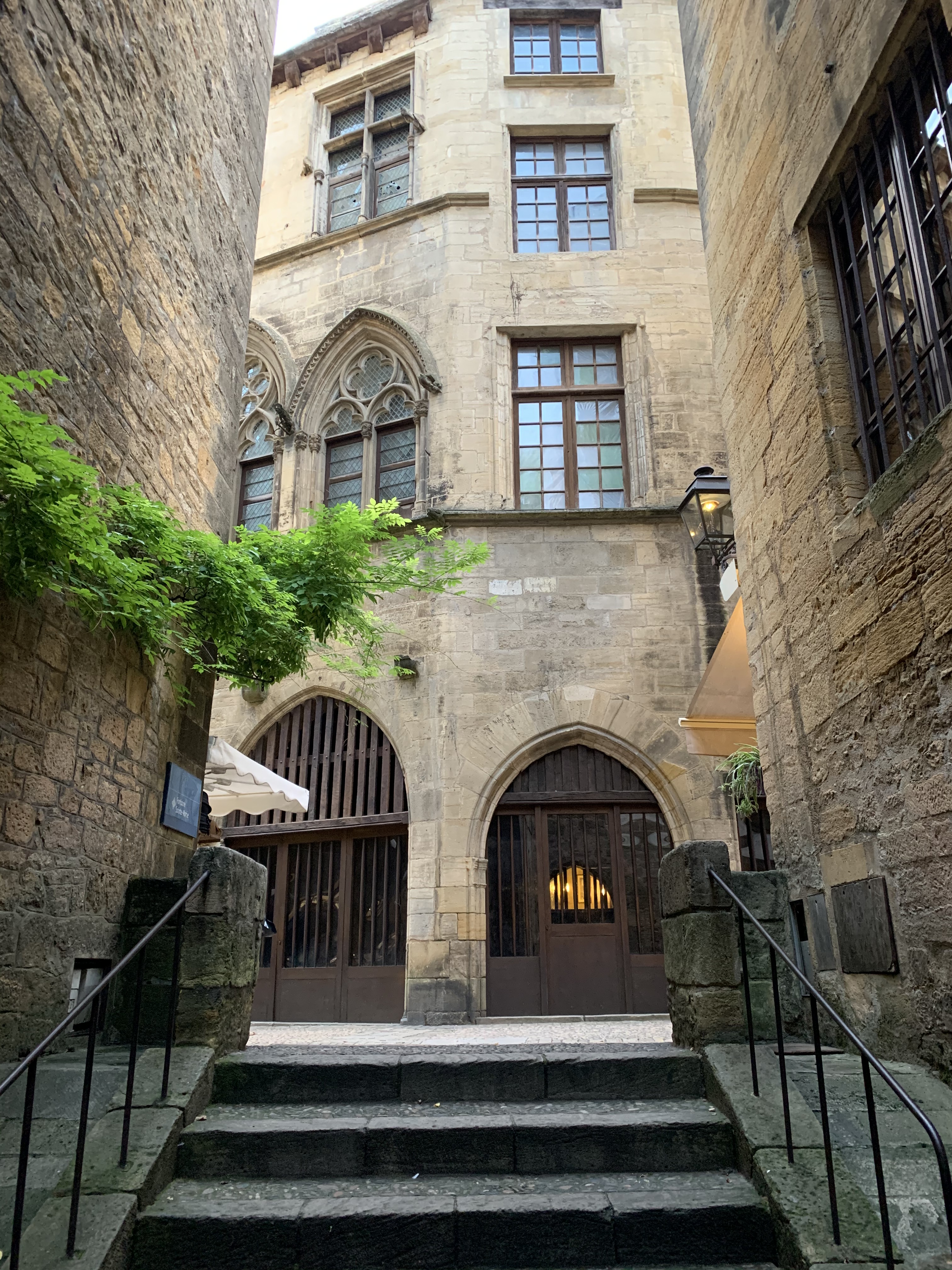
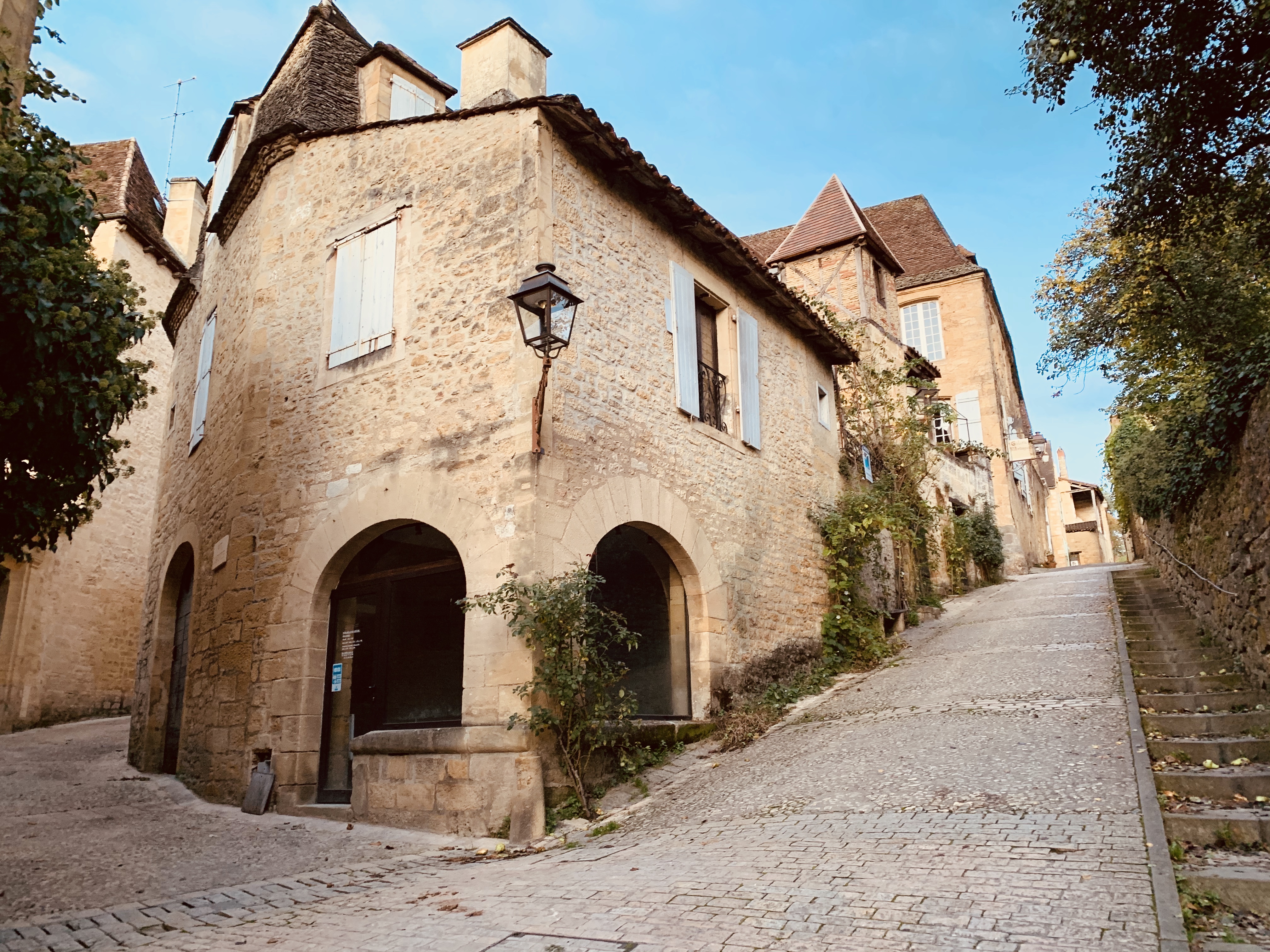
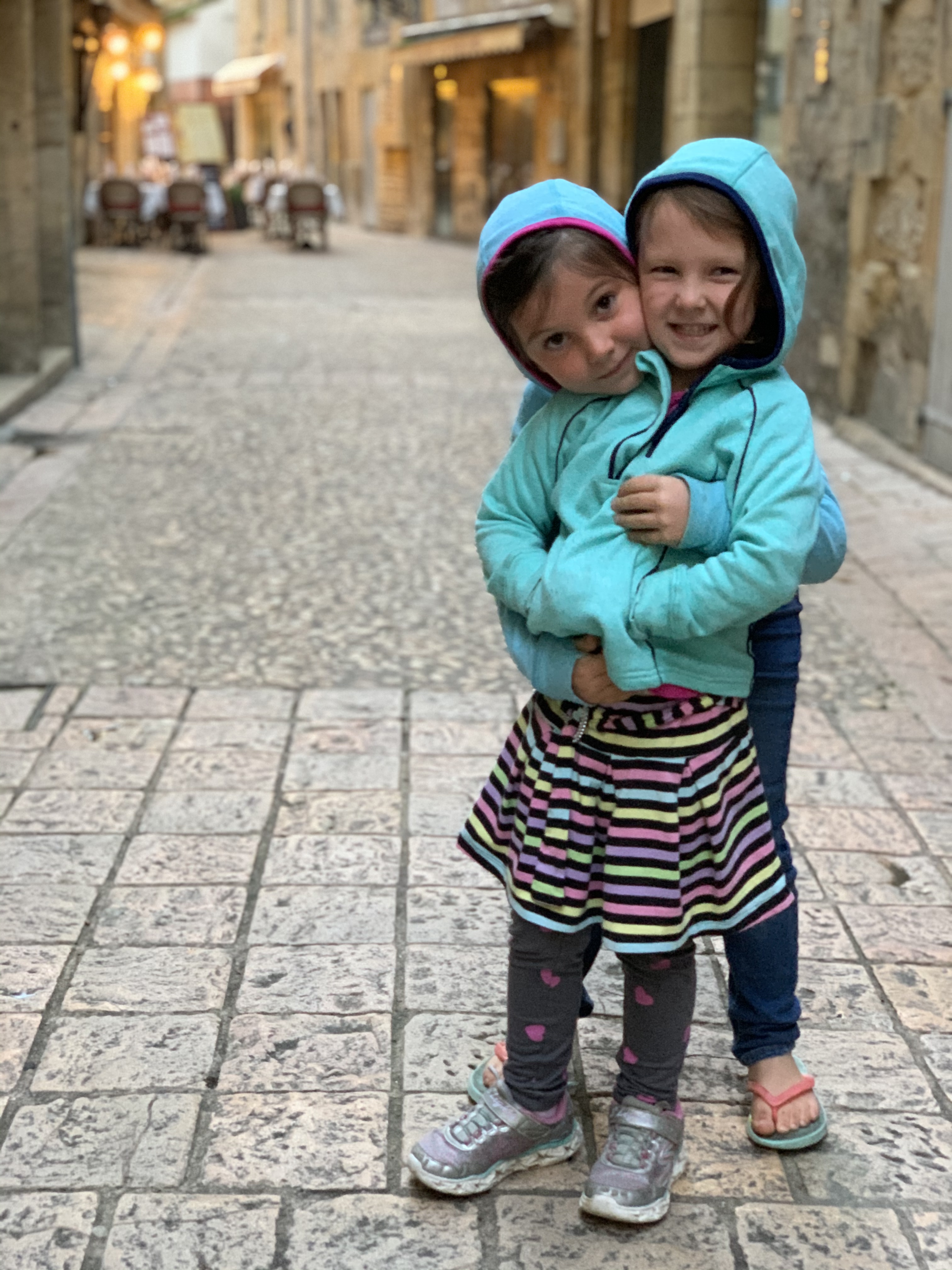
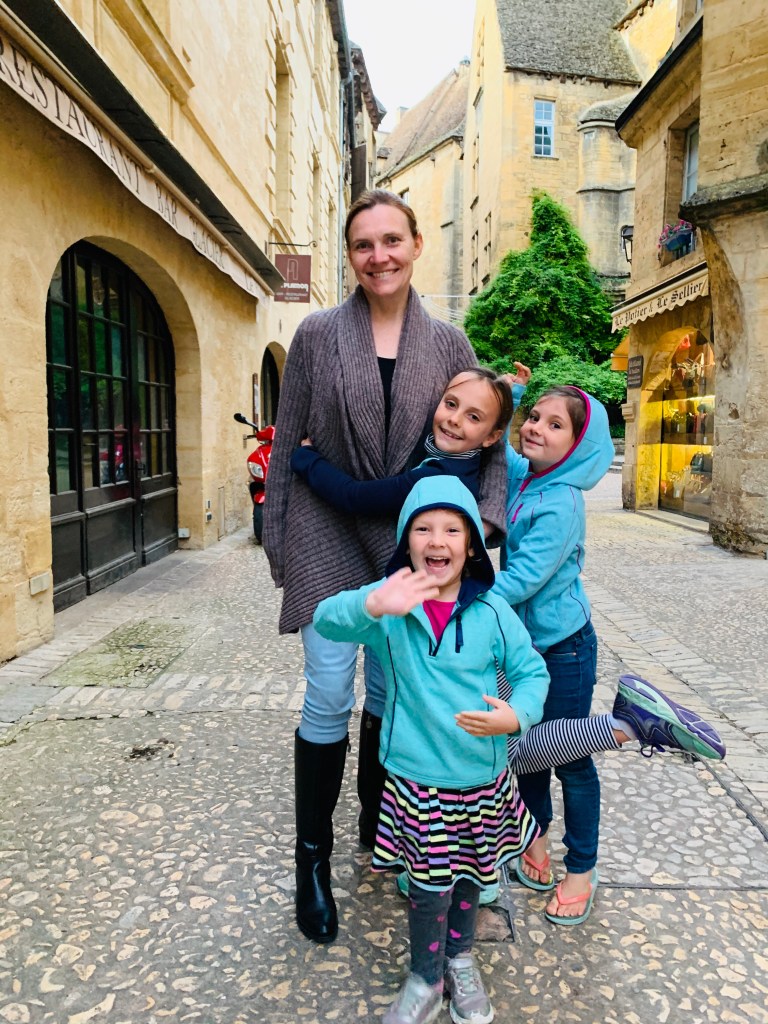
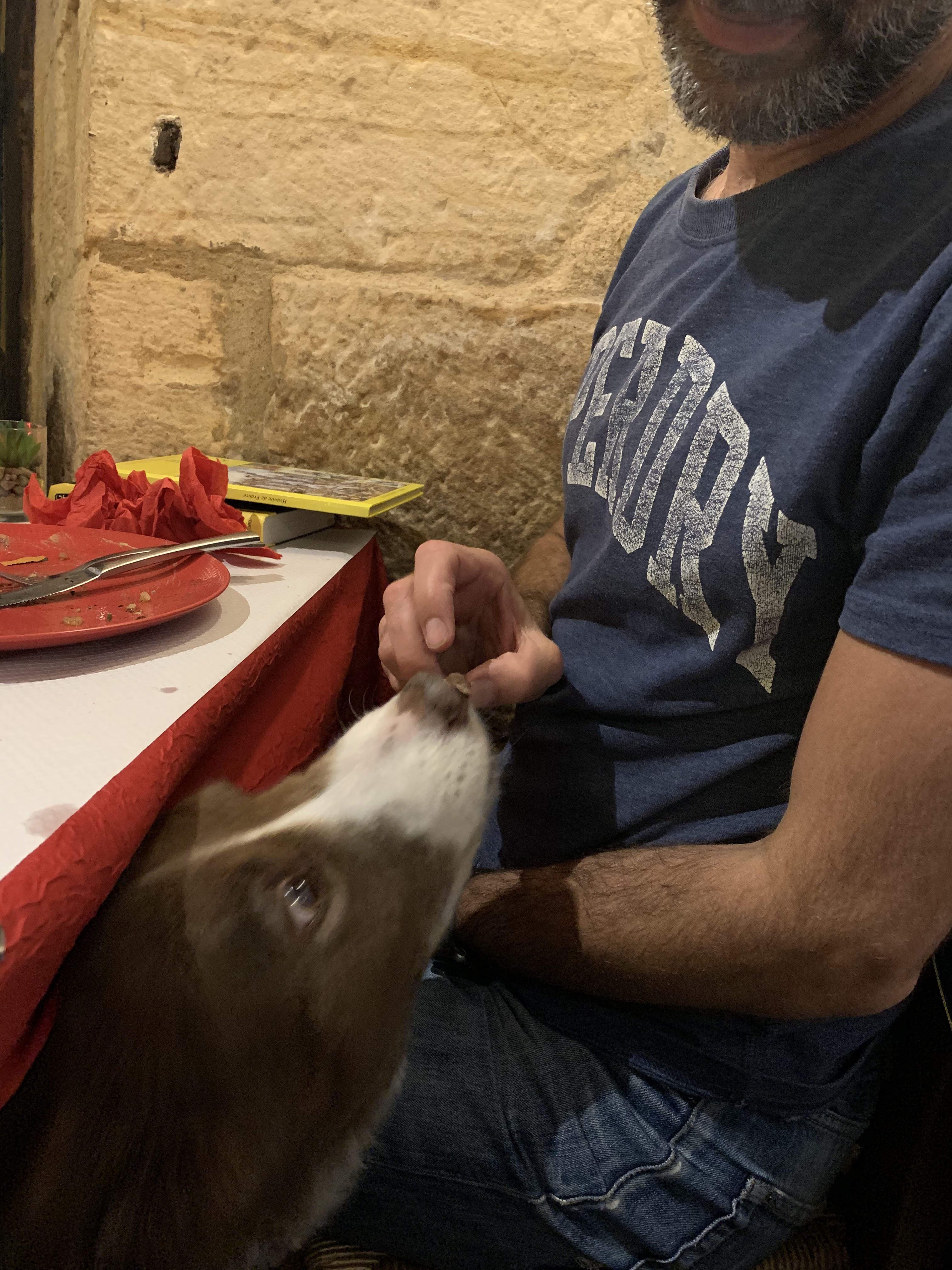
Eventually the desire to explore further was overtaken by the demands for nourishment and we started looking for a restaurant. Many places were closed as it was outside the 4 month ‘high season’ for the region (making us wonder how we could find a business that only needed to operate for 4 months of the year to be profitable). The ones that were open all had identical menus of ‘traditional’ local cuisine … all showcasing the fact that one can – and should – eat absolutely all of the duck or goose after you’ve force-fed them grain and enlarged their livers for your fois gras. Not really our thing but we managed to eat around the local cuisine (one of the very few times that we would do this) and have a lovely dinner, with Bonnie lying happily under the table (the fact that he is welcome in restaurants is still a bizarre novelty for us), awoken only when Sena dropped her chocolate ice-cream which almost landed on his head.
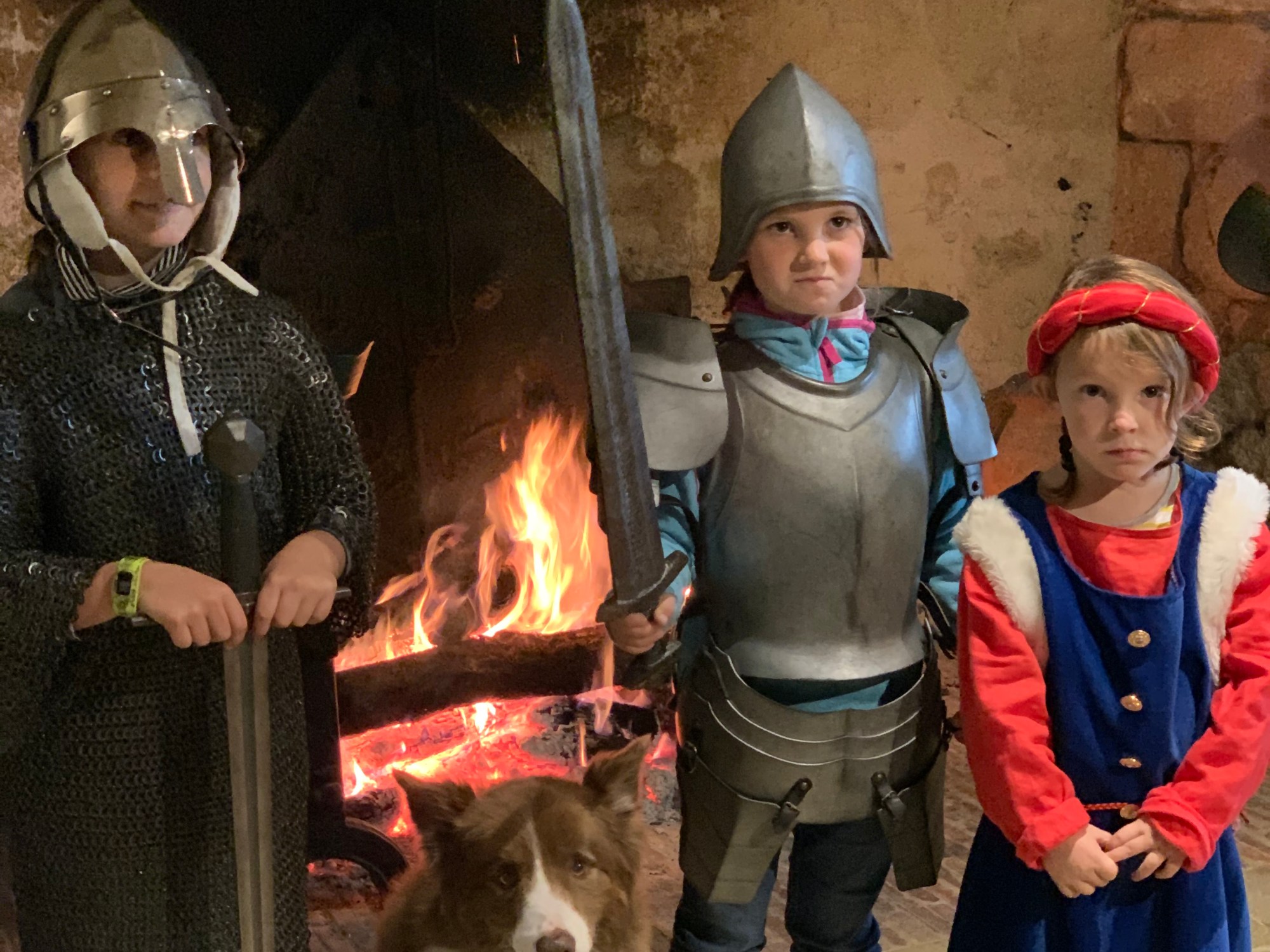
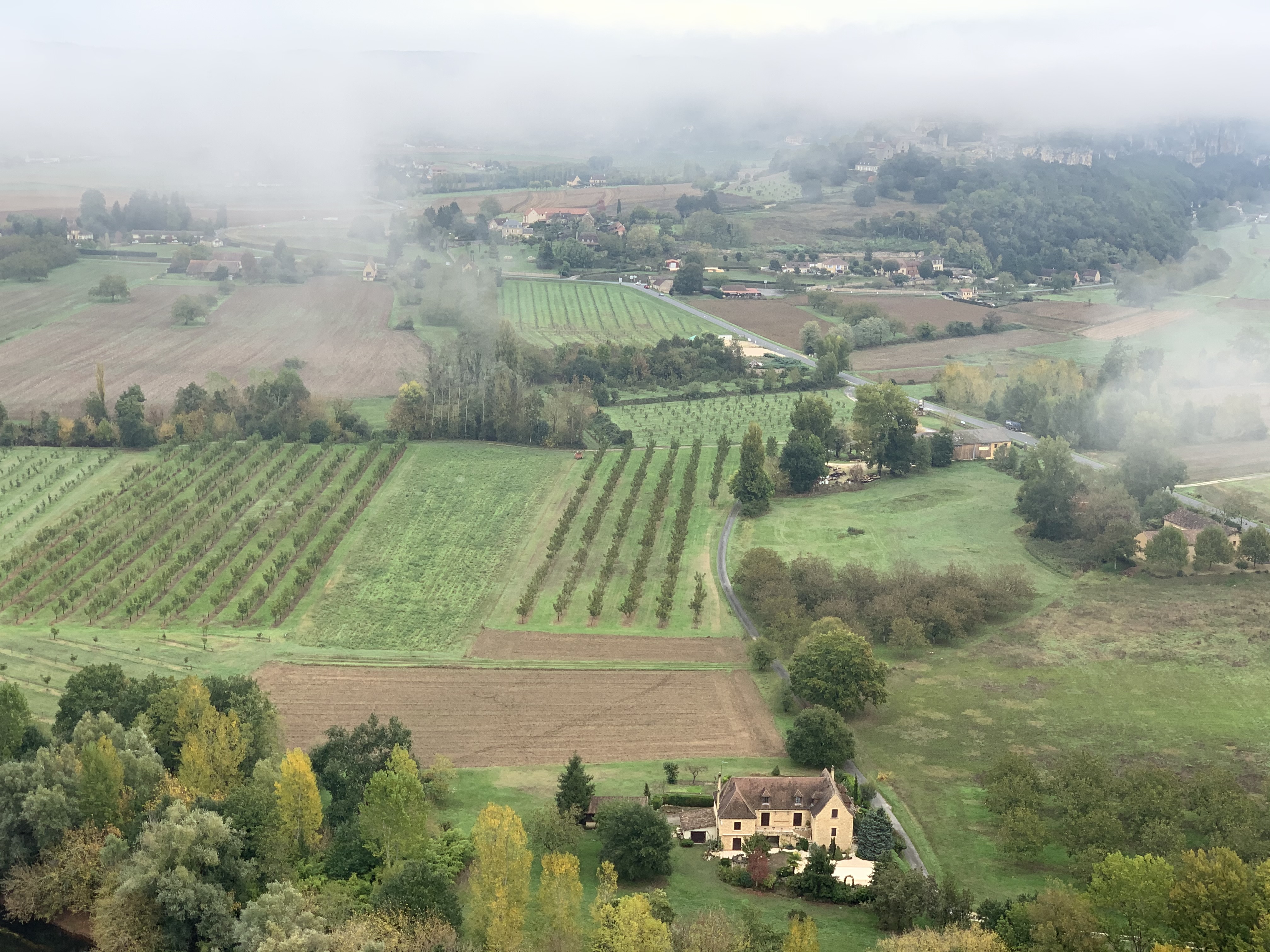
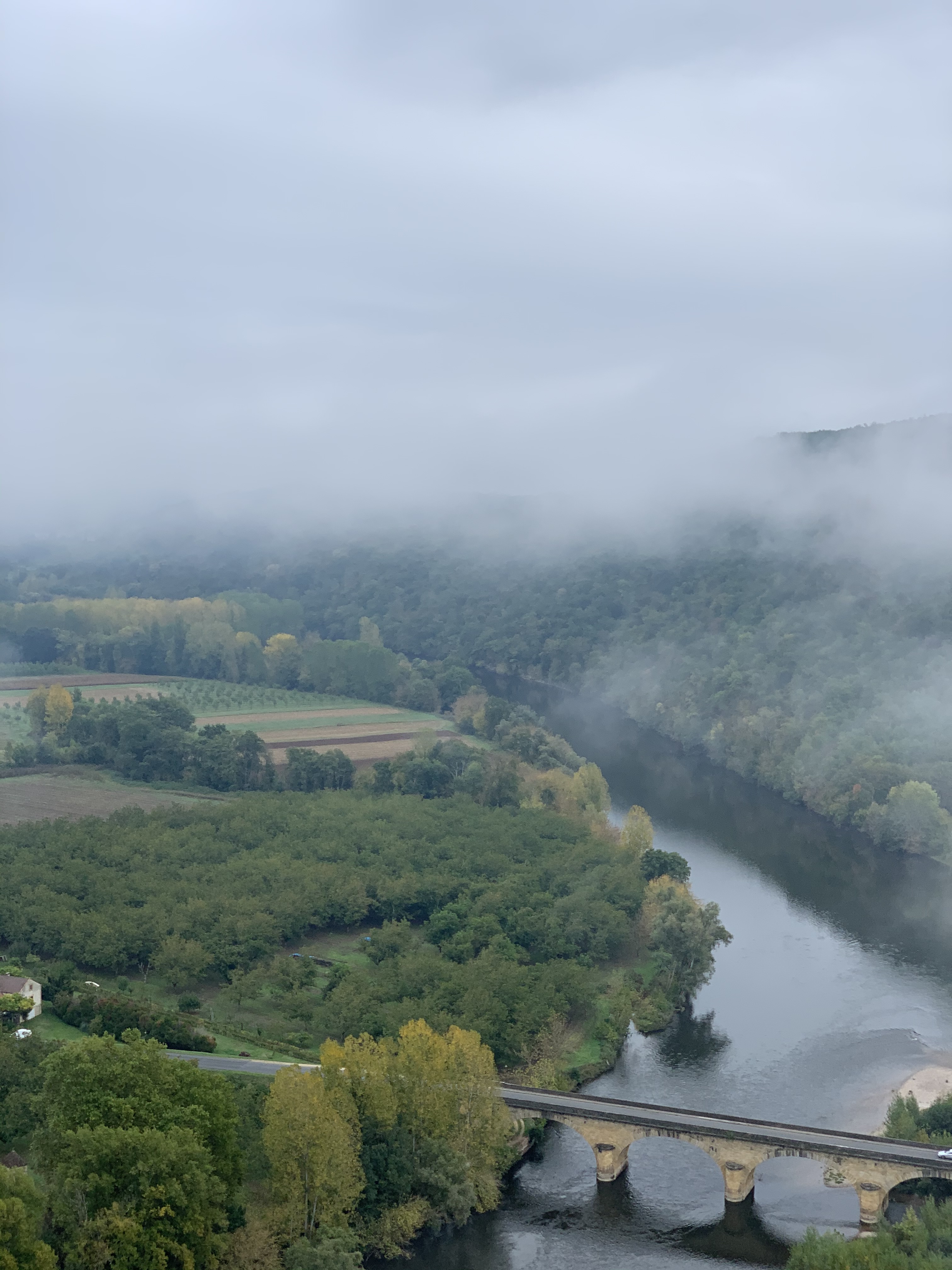
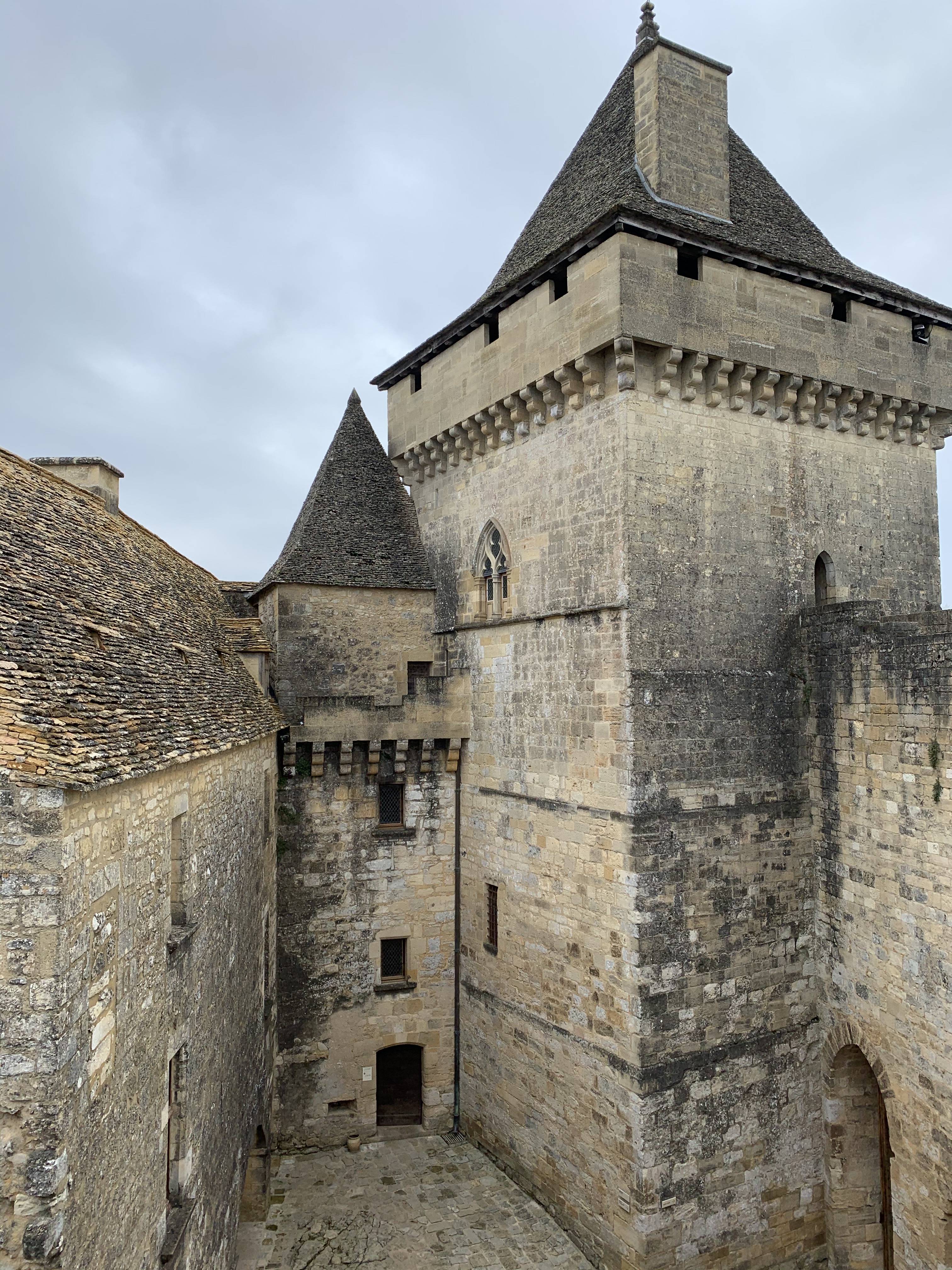
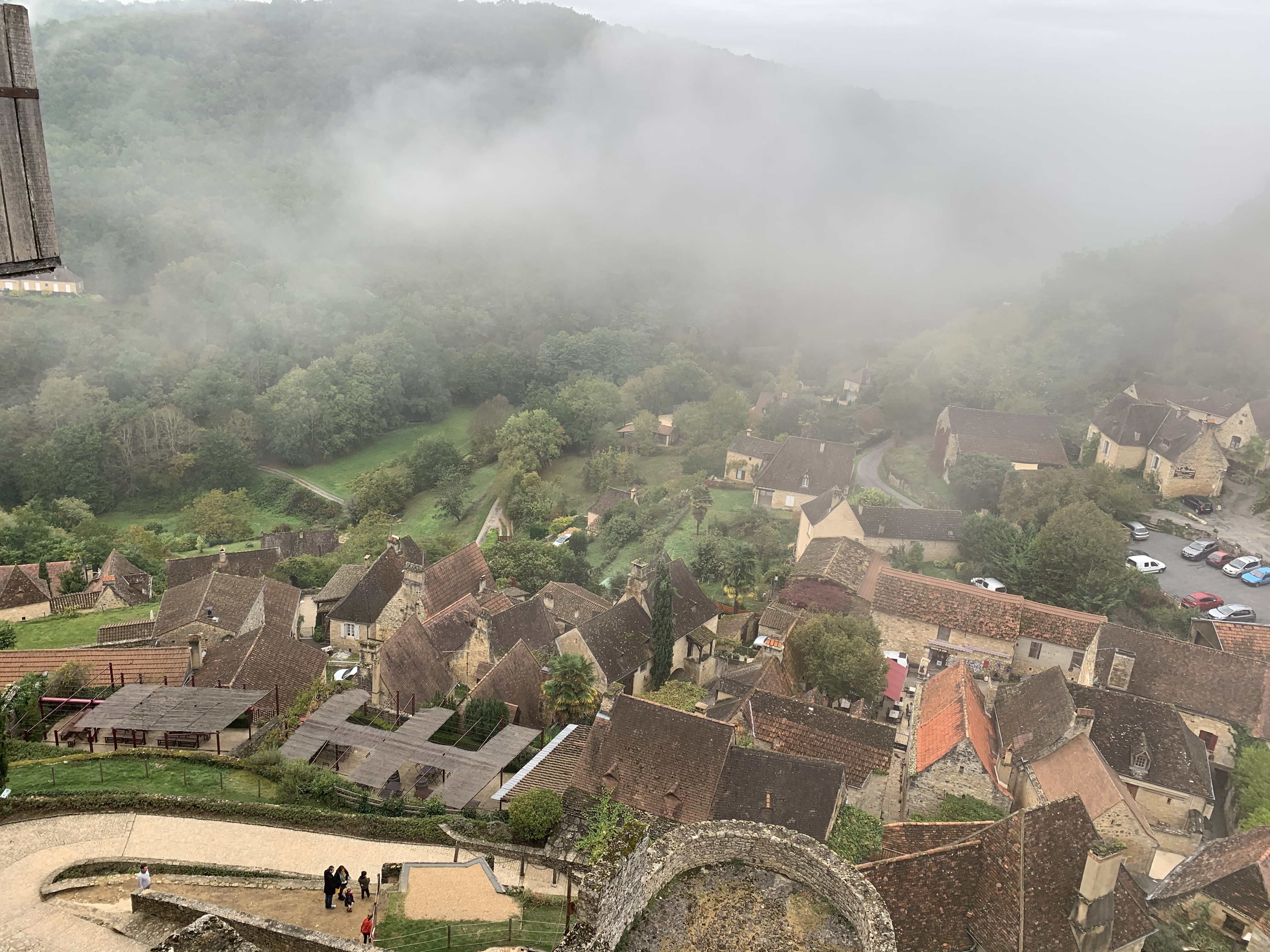
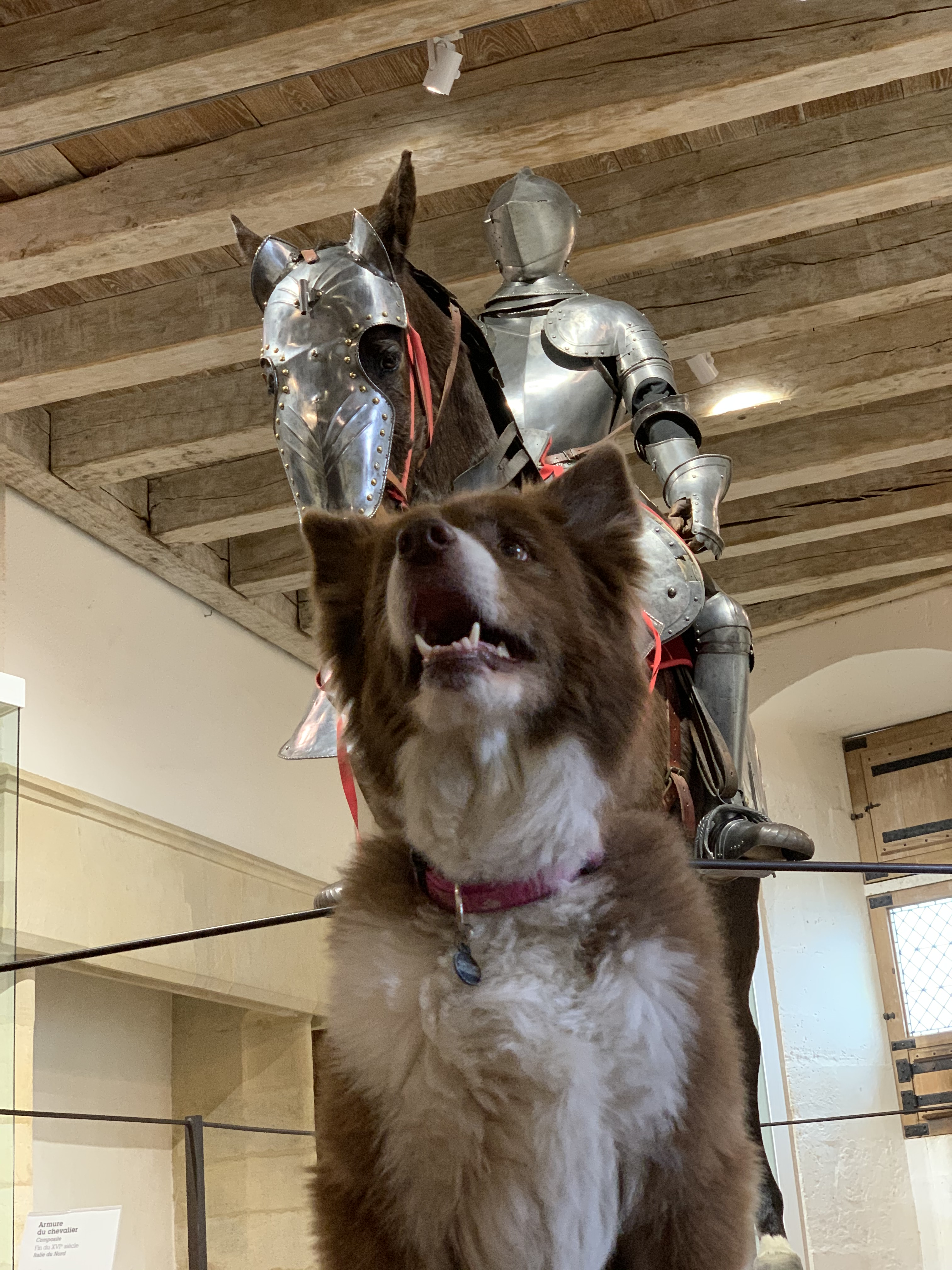
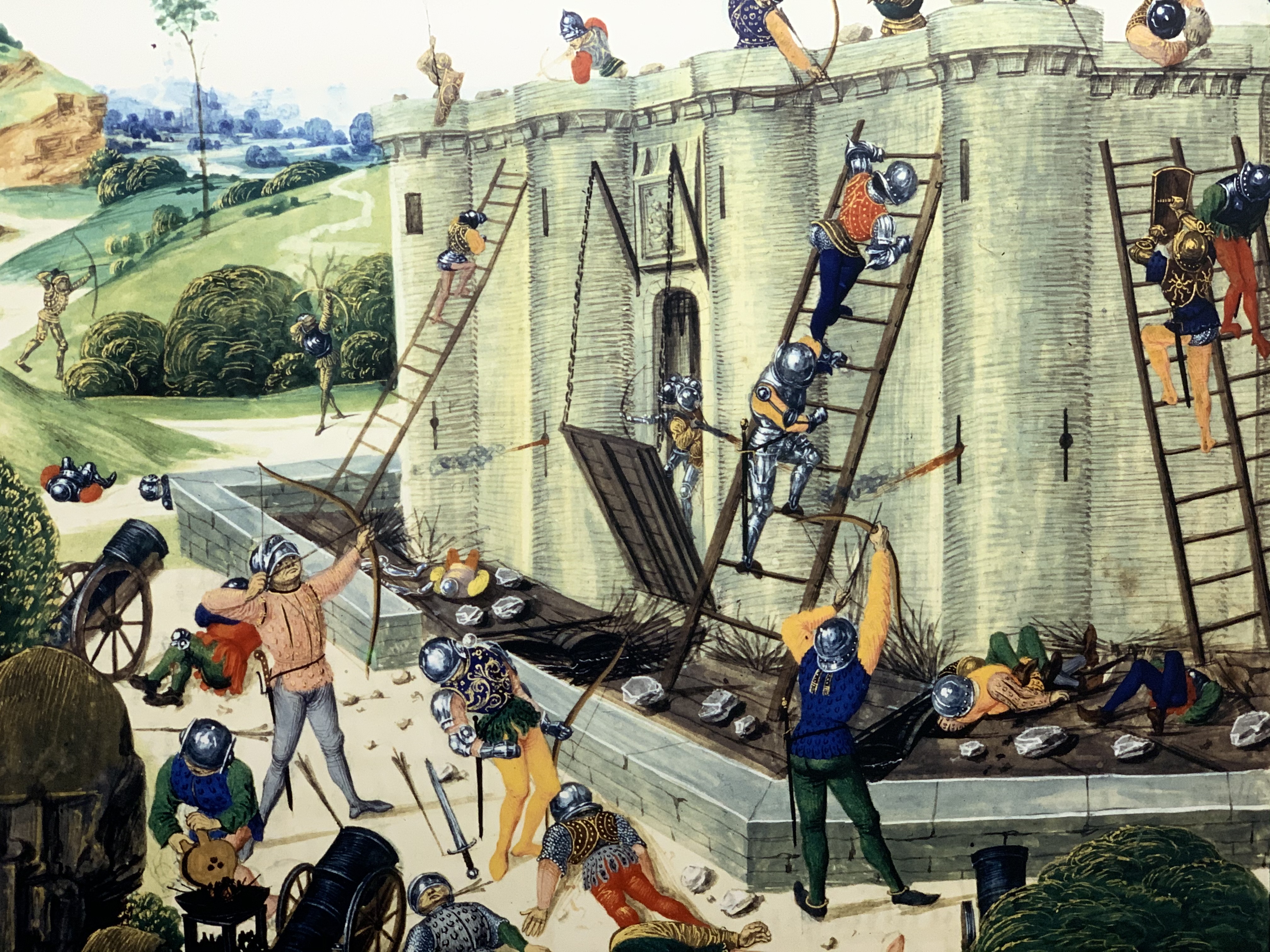
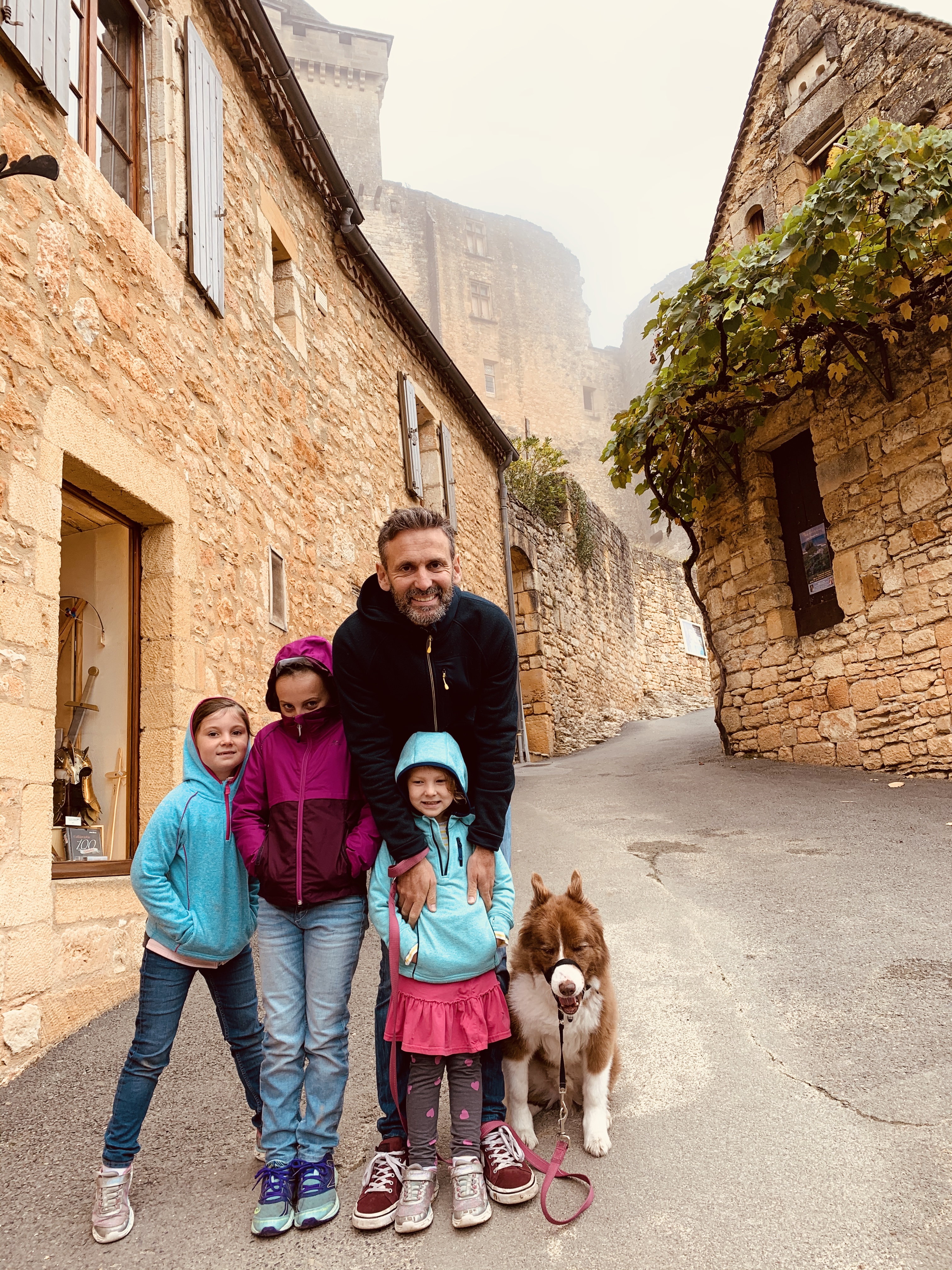
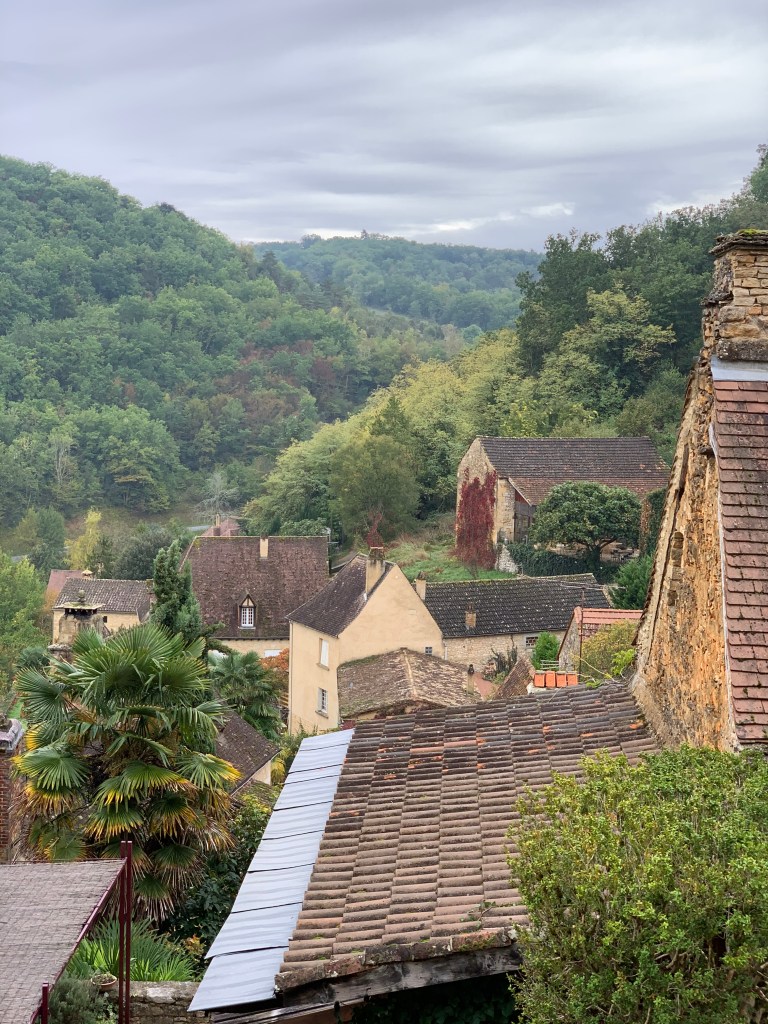
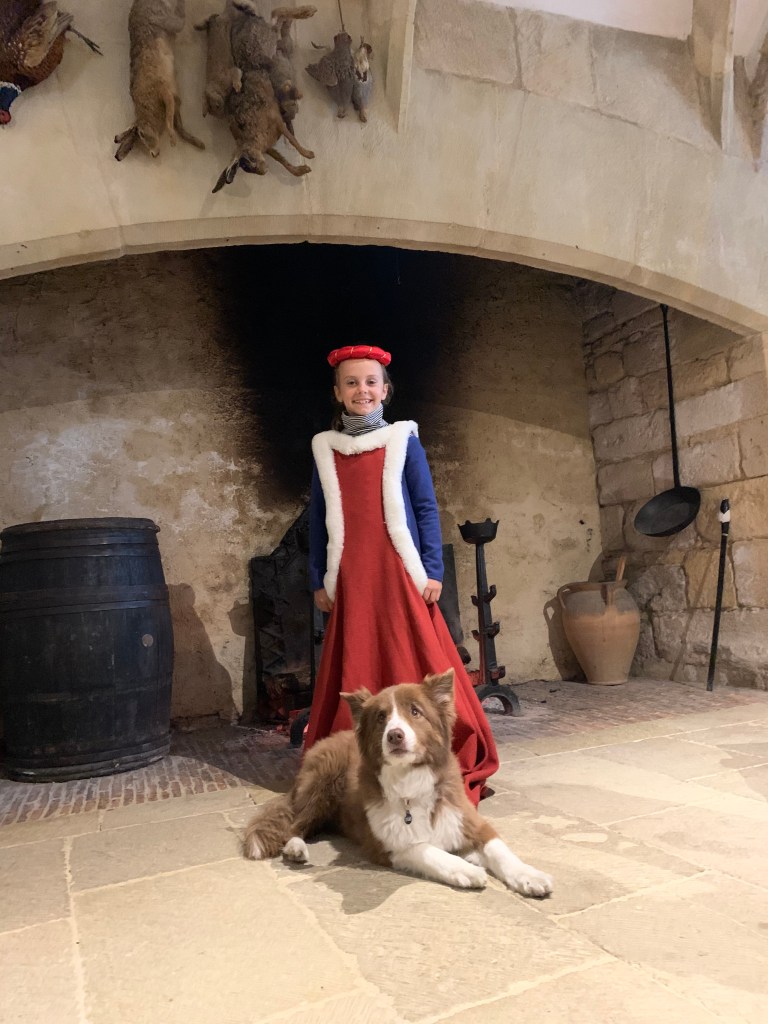
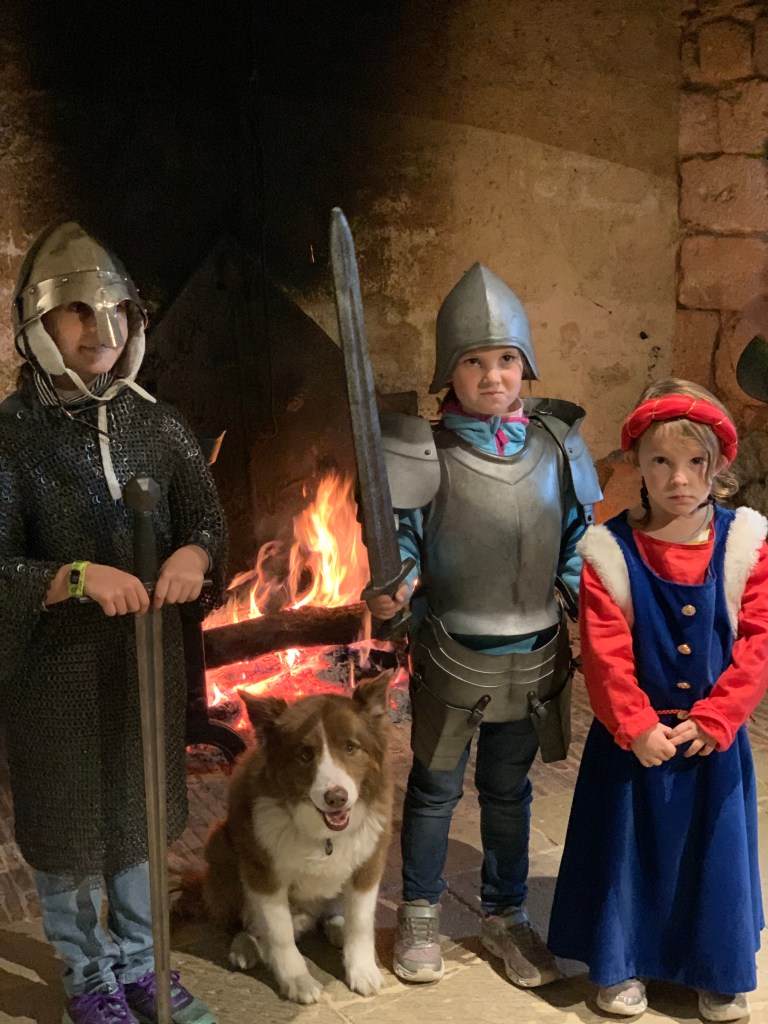
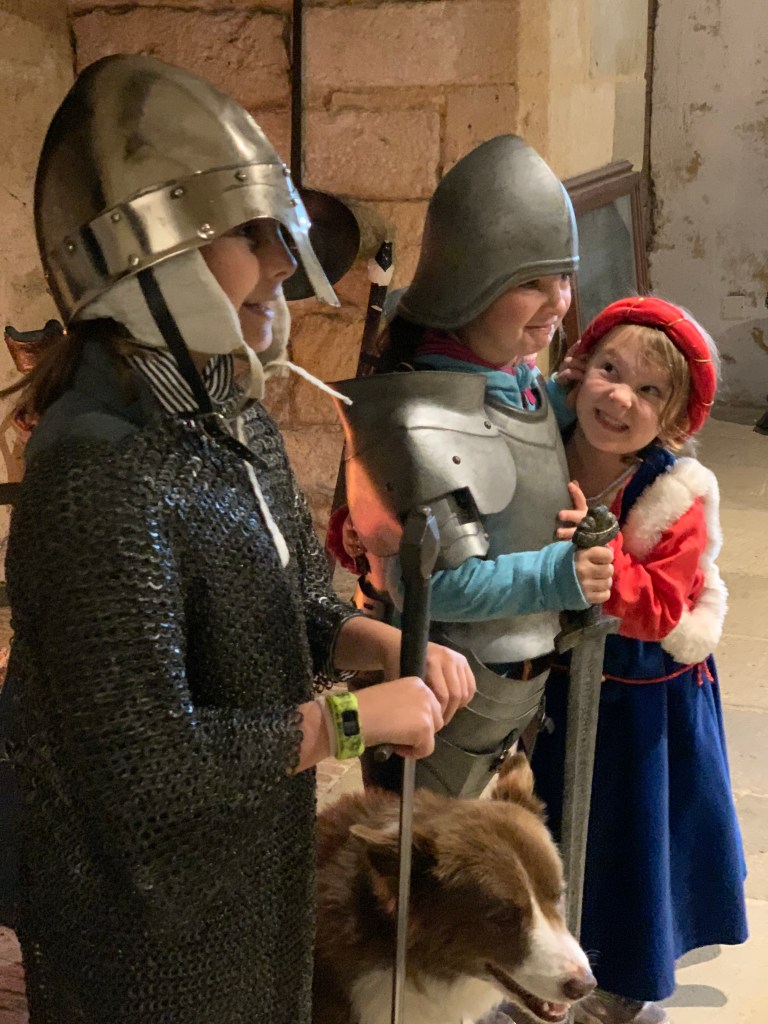
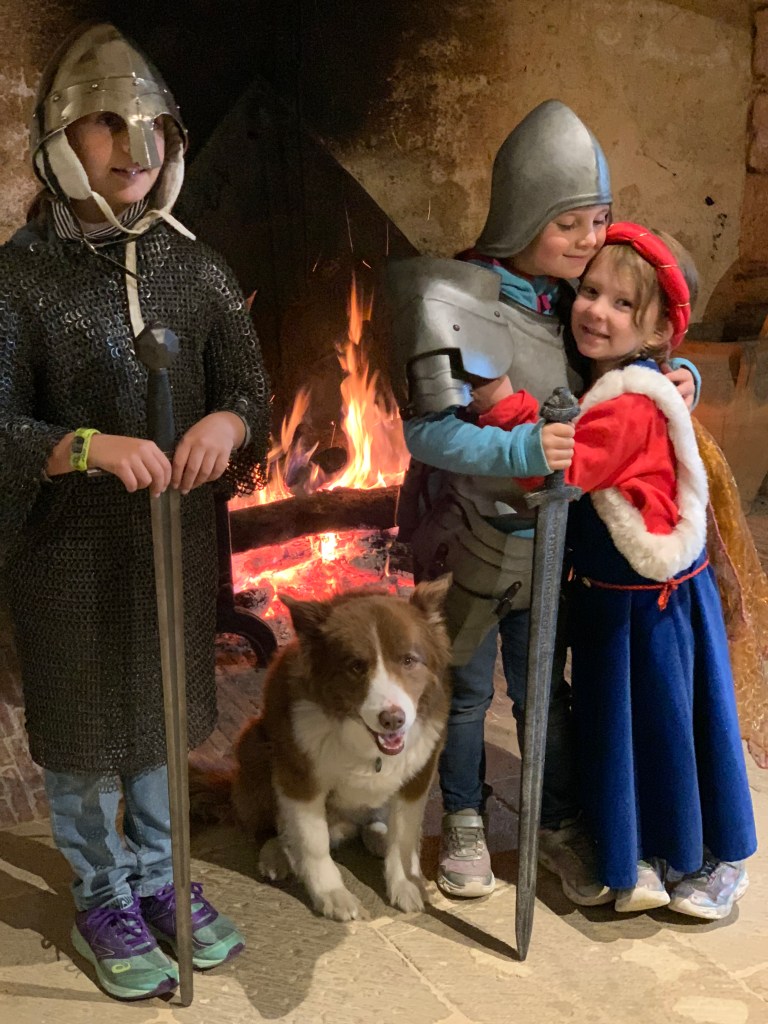
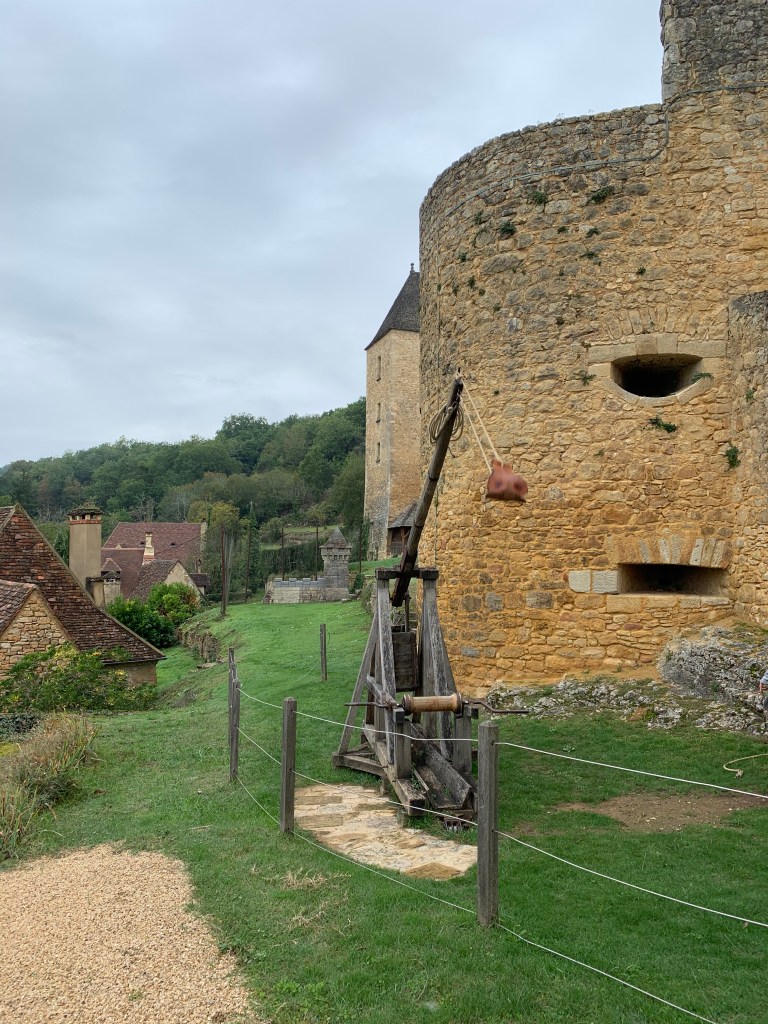
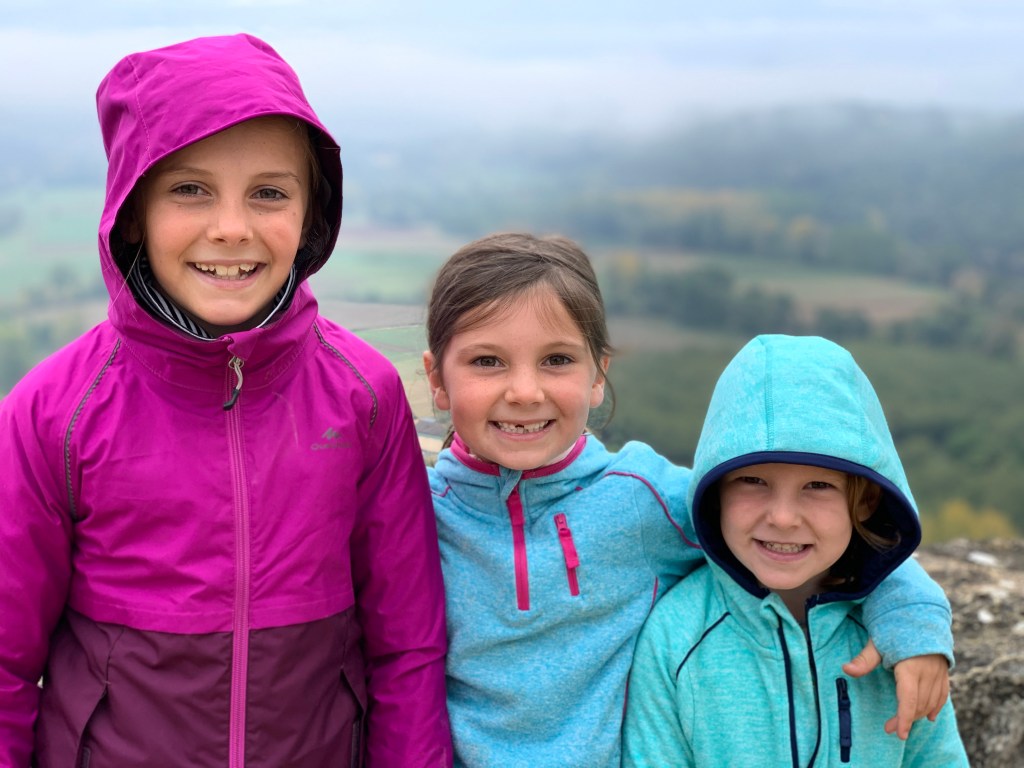
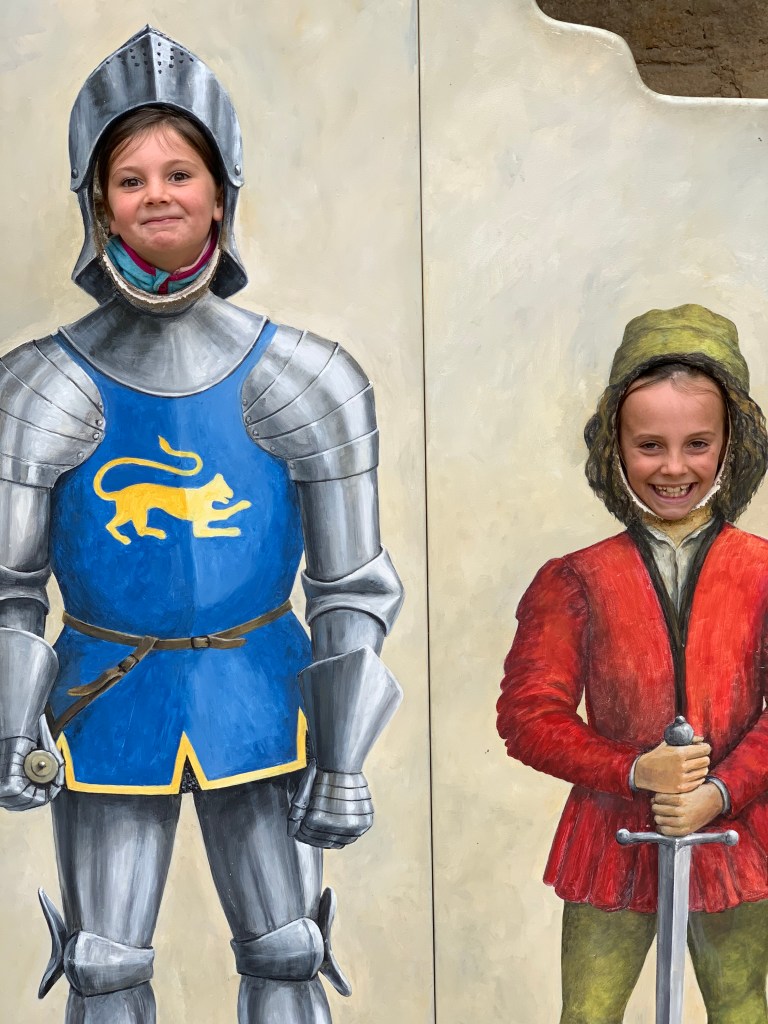
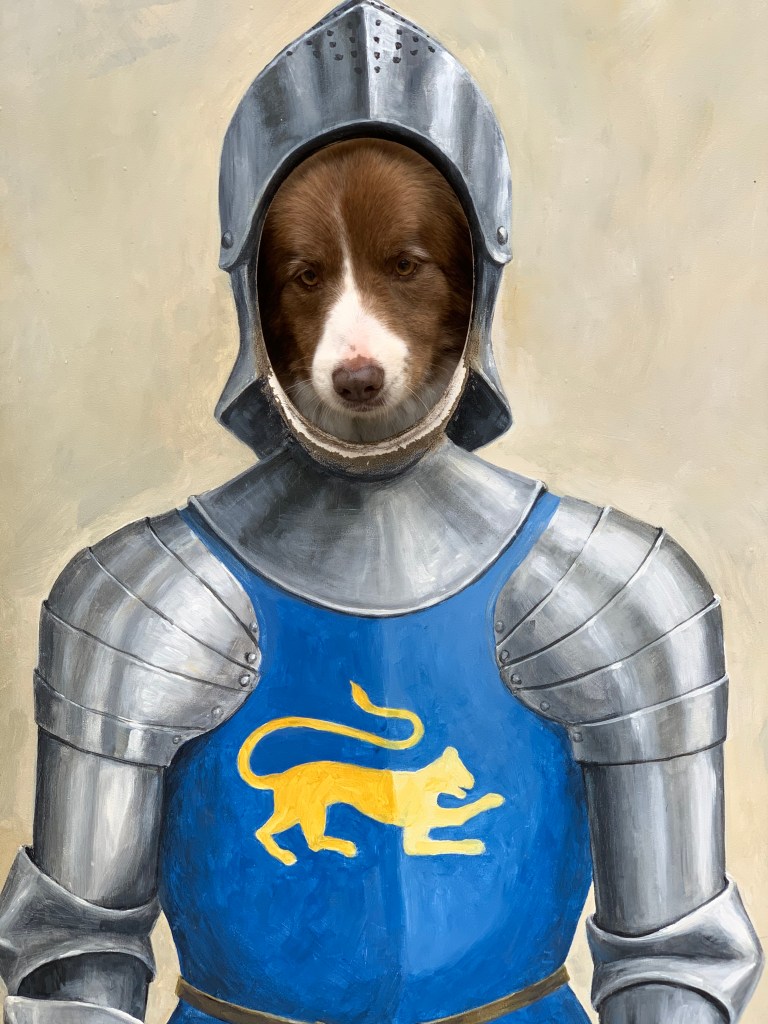
The following day we ventured out to Castlenaud-la-Chapelle, an amazing hilltop fortress overlooking the Dordogne River. The weather today was not fully cooperating, and when we arrived the fortress was shrouded in mist. The fortress was originally built in the 13th century and played a large role in the 100 years war. It then fell into ruin in the 17th and 18th centuries before being restored … and is now the home of a medieval warfare museum. It’s not just a medieval castle, it is fully decked out with siege engines, functioning trebuchets, armour and outfits for kids to try on and an onsite blacksmith. Despite some fairly vocal initial misgivings expressed by some of our children on the drive to Castelnaud, we had a fantastic time exploring the site, getting dressed up in medieval attire, firing trebuchets and imagining what it would have been like to attack or defend such an amazing structure (interestingly it fell a number of times during the hundred years war). Oh, and making Bonnie pose for slightly inappropriate photos. It certainly didn’t hurt when the sun burned off the mist towards the end of our visit and we were treated to our first views of the Dordogne River and the countryside beyond.

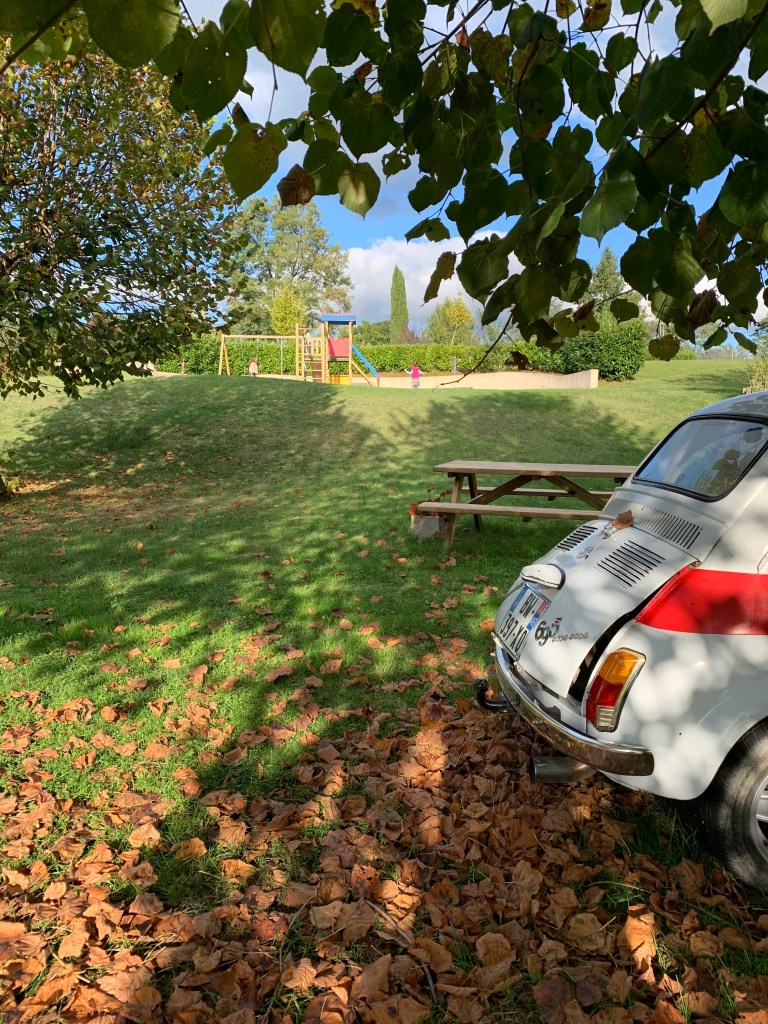
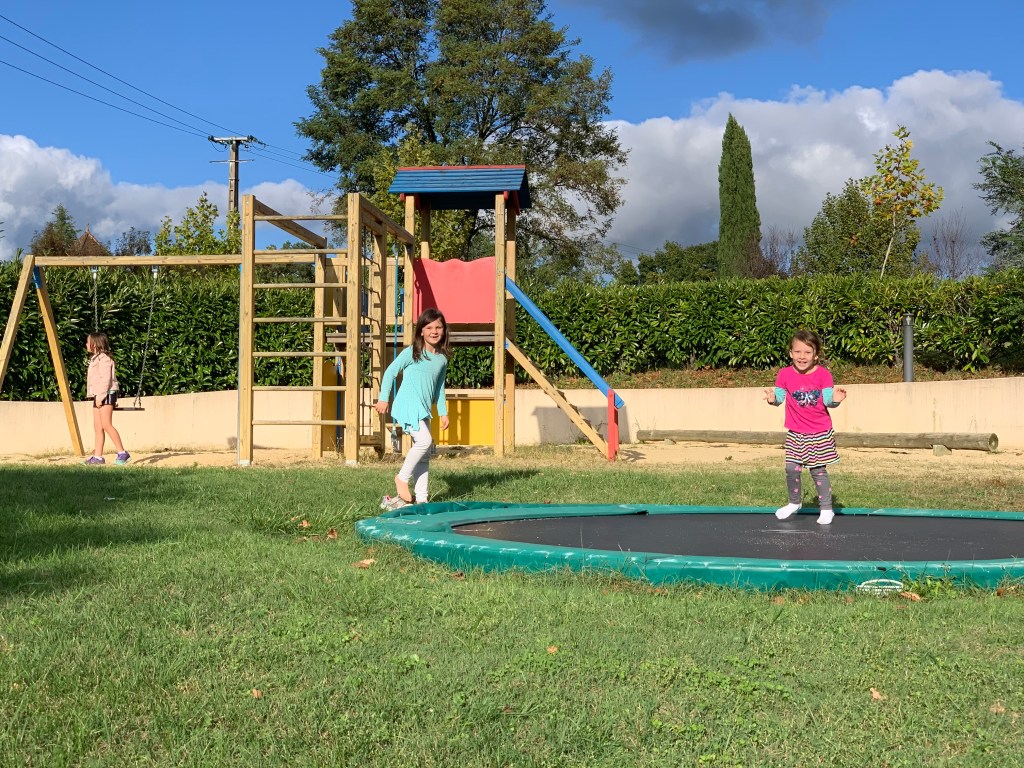
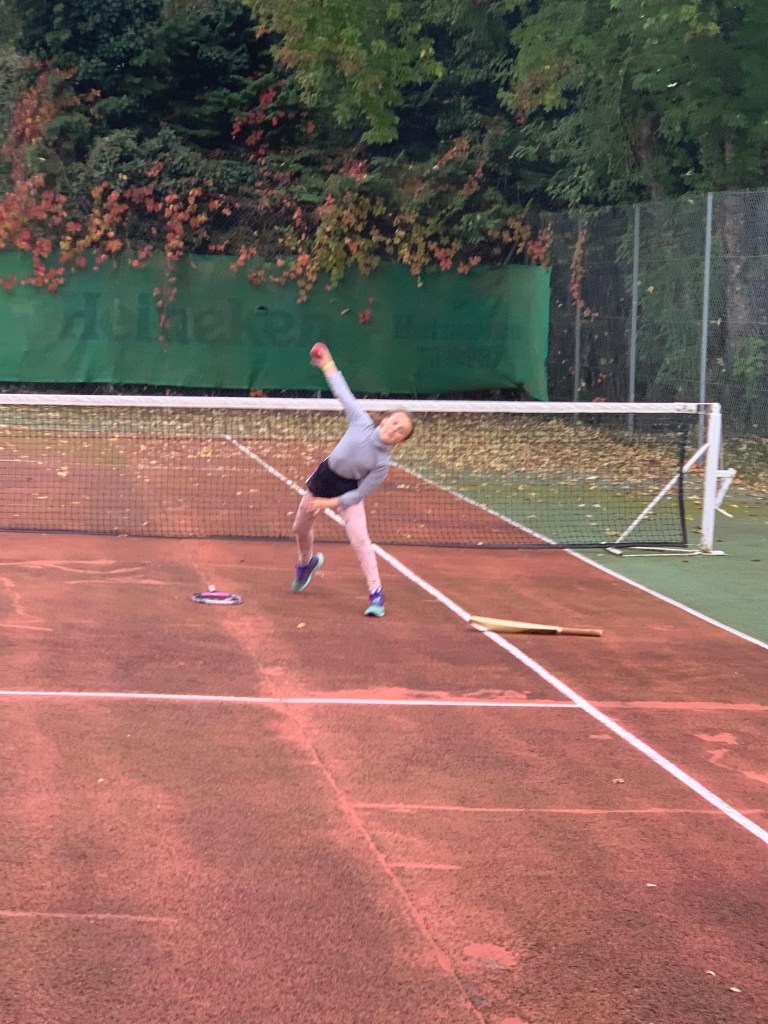
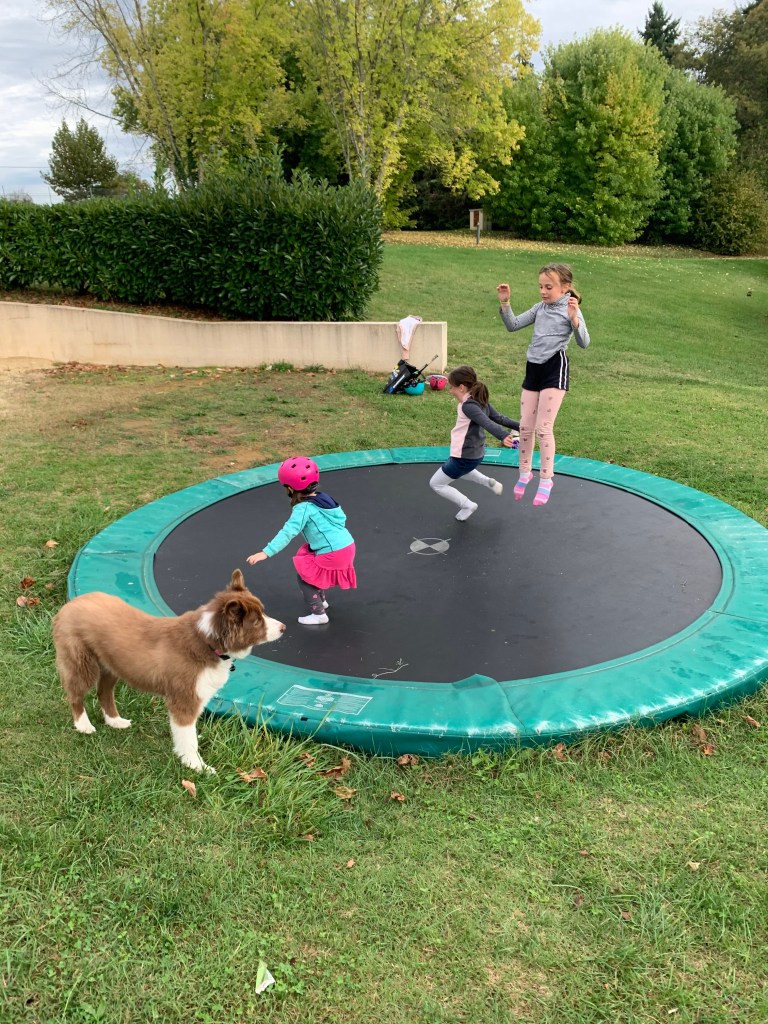
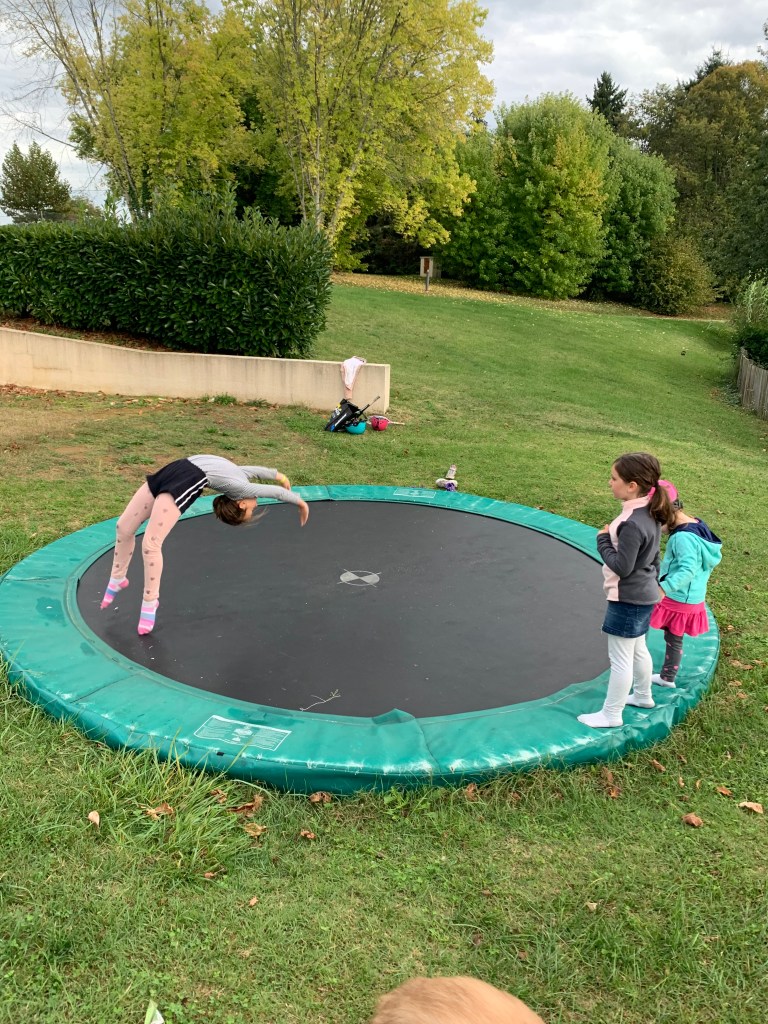
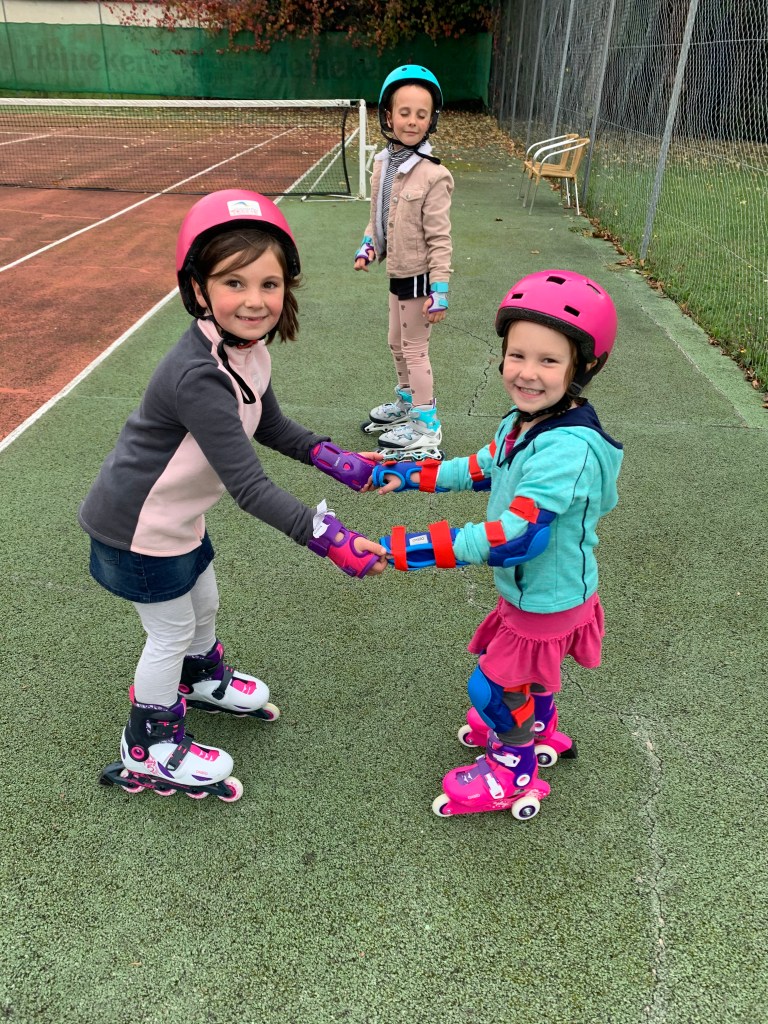
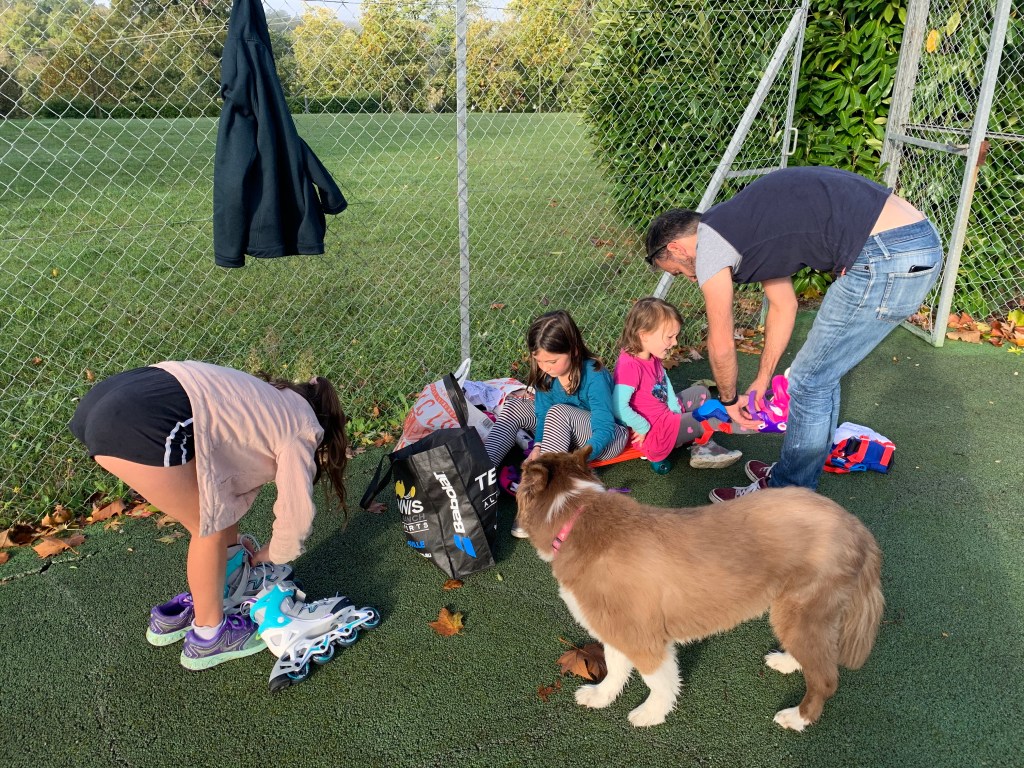
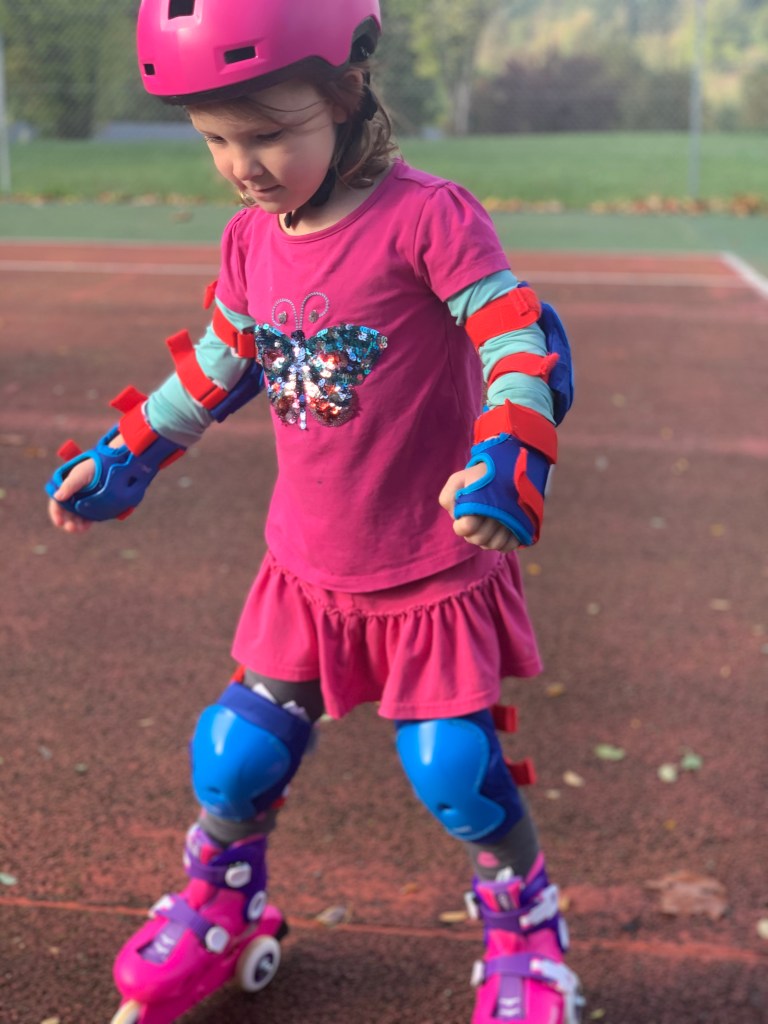
Following our successful trip to Castelnaud, we returned to own little piece of Holland where we spent the afternoon playing cricket, tennis and rollerblading on the tennis court and jumping for hours on the trampoline. (Side note: I can’t remember the last time – holidays or not – that we took the time to do something so simple as spend hours jumping on a trampoline. We are normally rushing to do the next thing, whatever that might be. It was really lovely to not have anywhere else to go or anything else to do… so trampolining it was. Side note 2: jumping for an extended period of time on a trampoline when you’re more than 10 is tiring. Seriously.)
Wednesday arrived and the plan for the day was the Lascaux Caves, the best known example of paleolithic cave painting in the world. The site dates back to around 17,000 years ago and was discovered by a 4 local kids and their dog in 1940. The site was open to the public from 1948 to 1963, however the tourism damaged the art to the extent that it was decided to close the caves up again. From there, the French painstakingly reconstructed both the cave structure (to within 2cms of the shape of the original structure) and the art (using the same materials as the original) 200m away from the original. This copy was opened in the 1980s and still welcomes visitors today.
We broke the news to the kids that we would be spending the morning looking at prehistoric art in a series of caves. They were somewhat intrigued but not completely convinced. Luckily the success of yesterday meant that they gave us the benefit of the doubt – even if it meant venturing out into the very rainy morning.
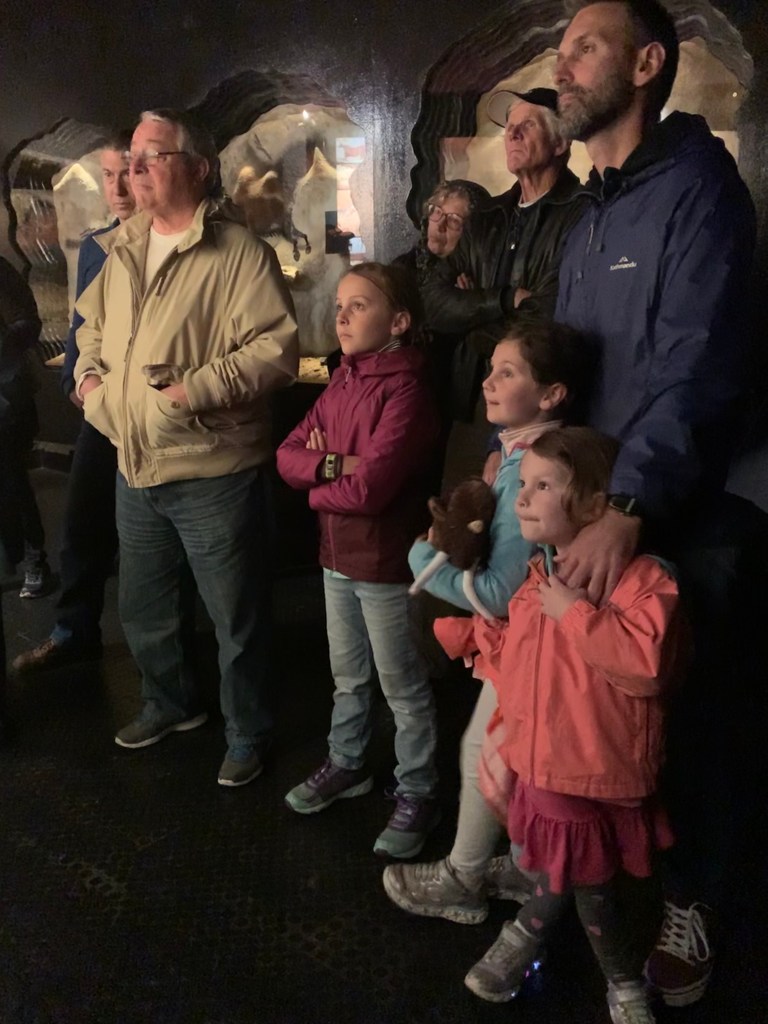
Visits to the site are guided, and we were incredibly lucky to have as our guide a Frenchman who literally wrote a book (the book?) on Lascaux (I guess if prehistoric cave art is your passion, there are not too many better jobs). The start of the tour tells the story of the discovery, closure and cloning of the original cave, the second part focuses on the incredible paintings in the caves themselves.
They are absolutely mind blowing. Incredibly beautiful and sophisticated, often multicoloured and often using the natural lines of the cave to emphasize and/or augment the actual drawings. They vary in size from quite small to enormous, and generally depict large animals – particularly horses and aurochs. There is only one human depicted and they have a bird’s head.
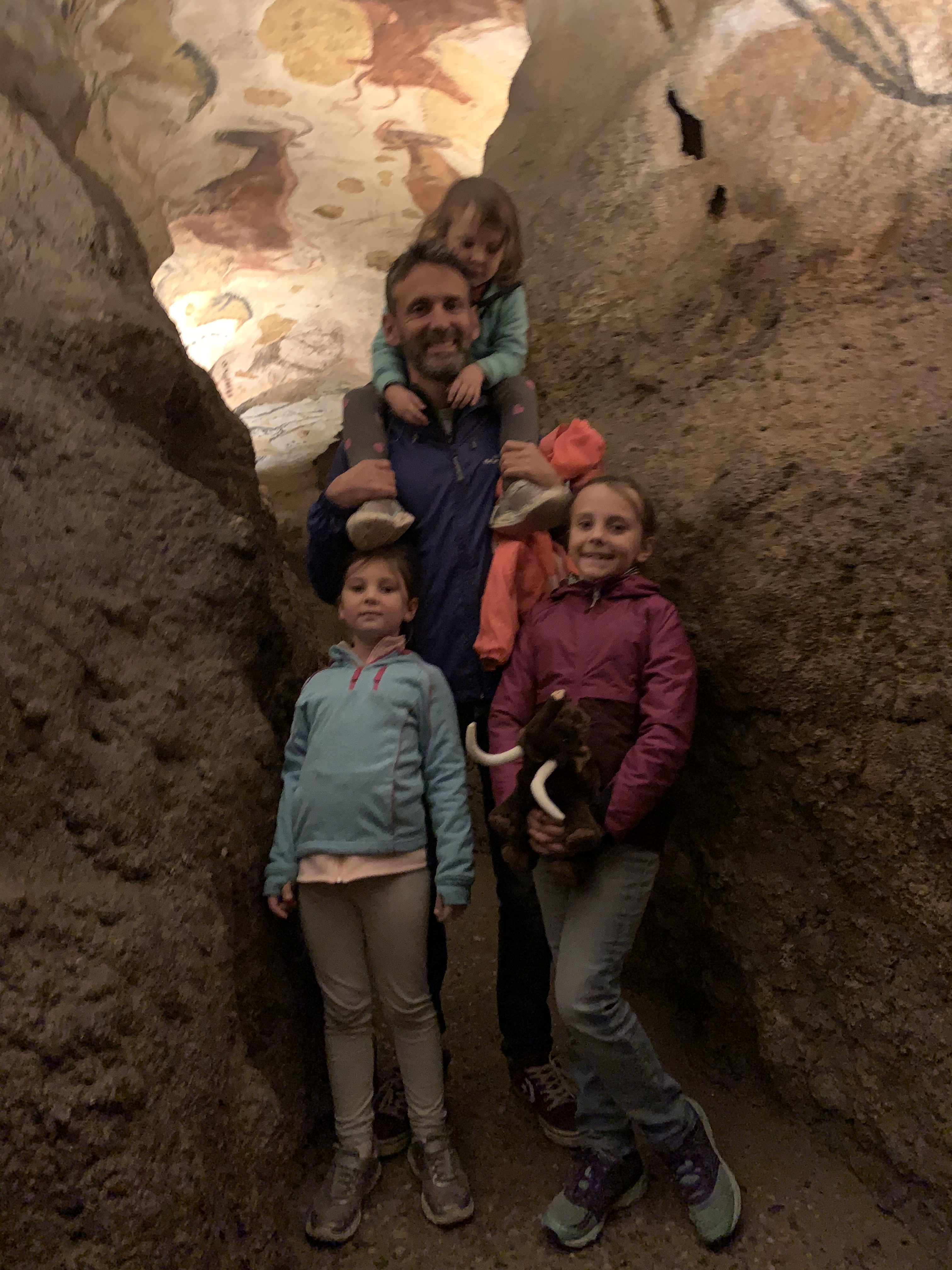
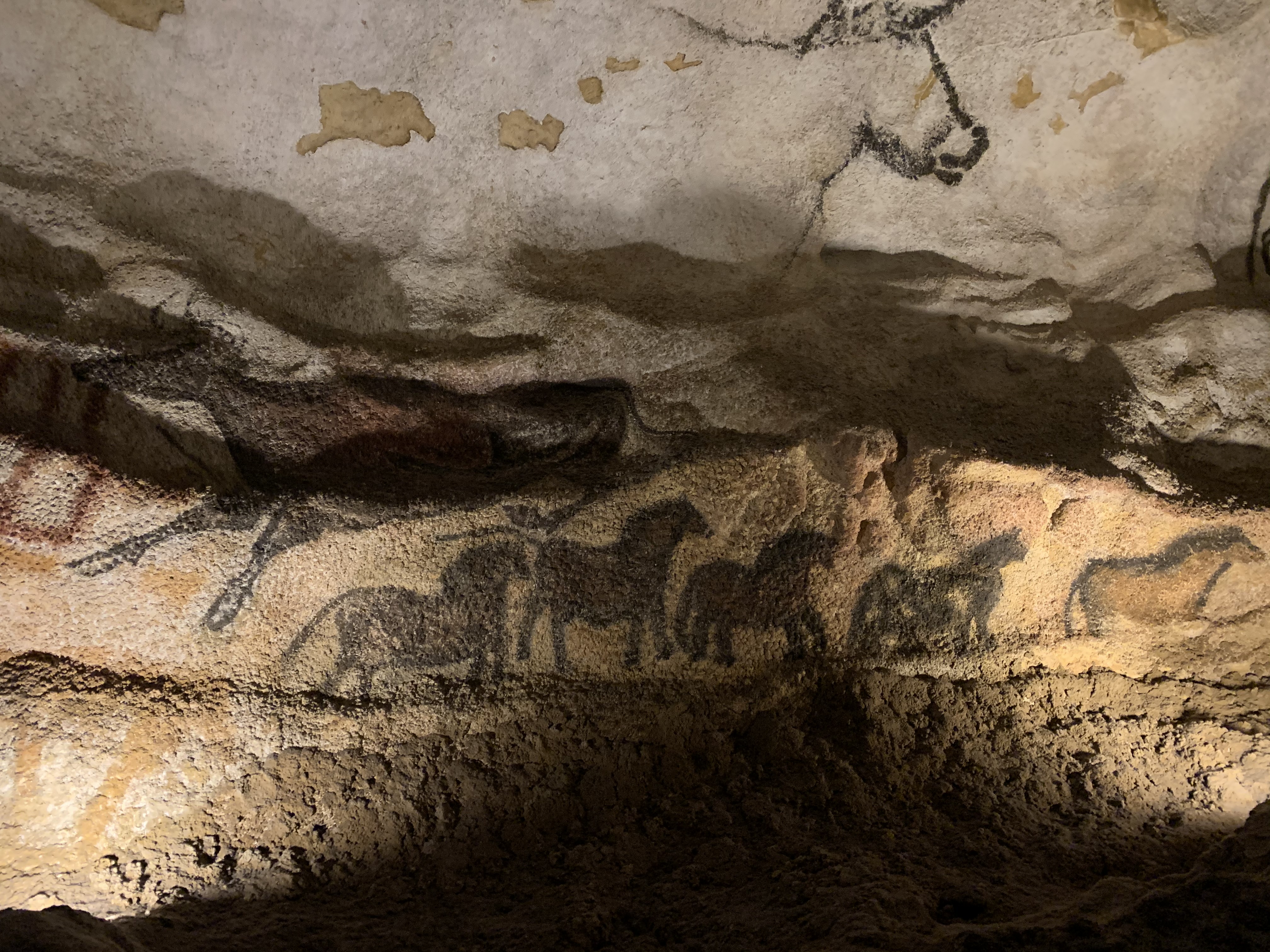
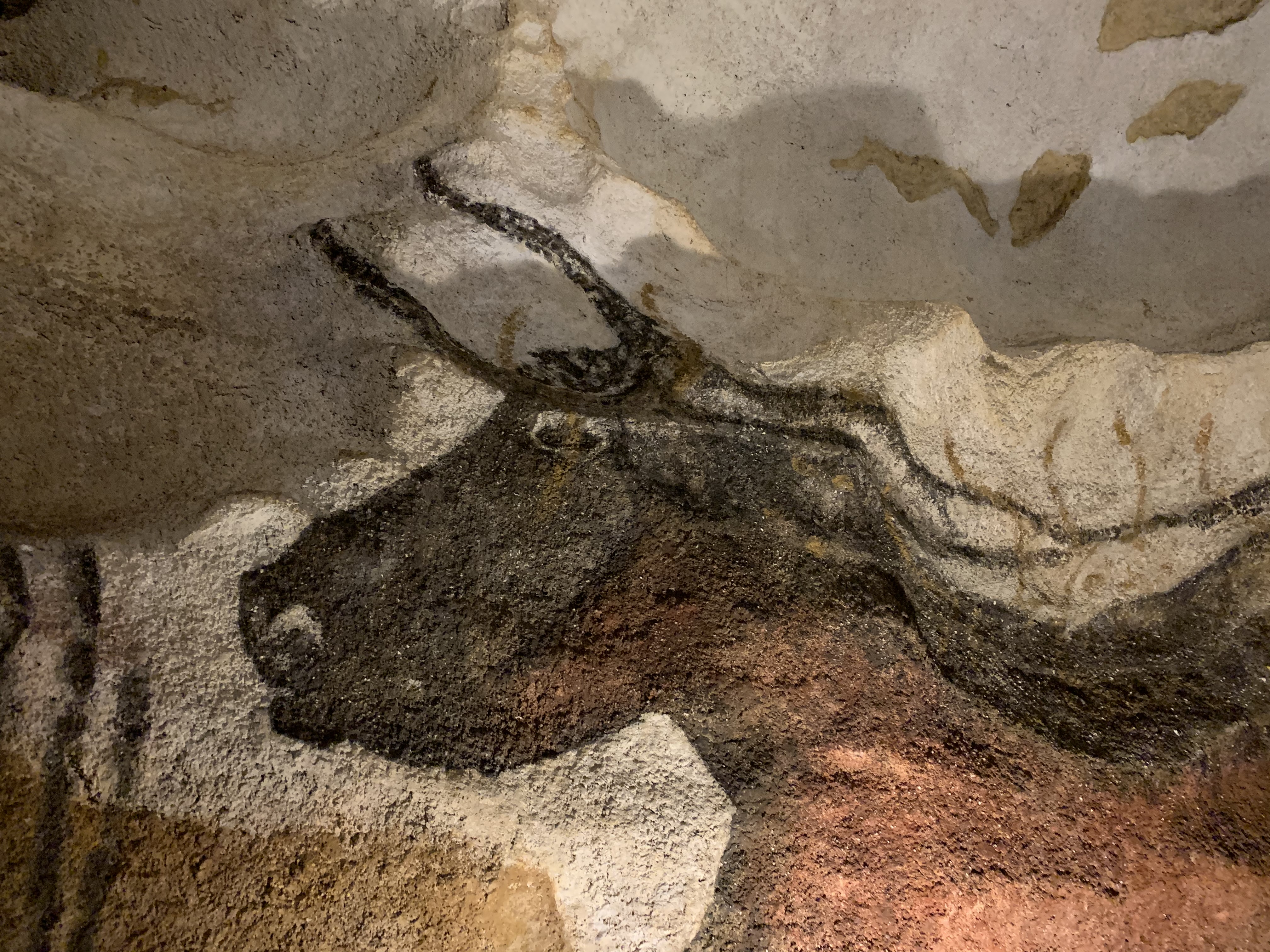
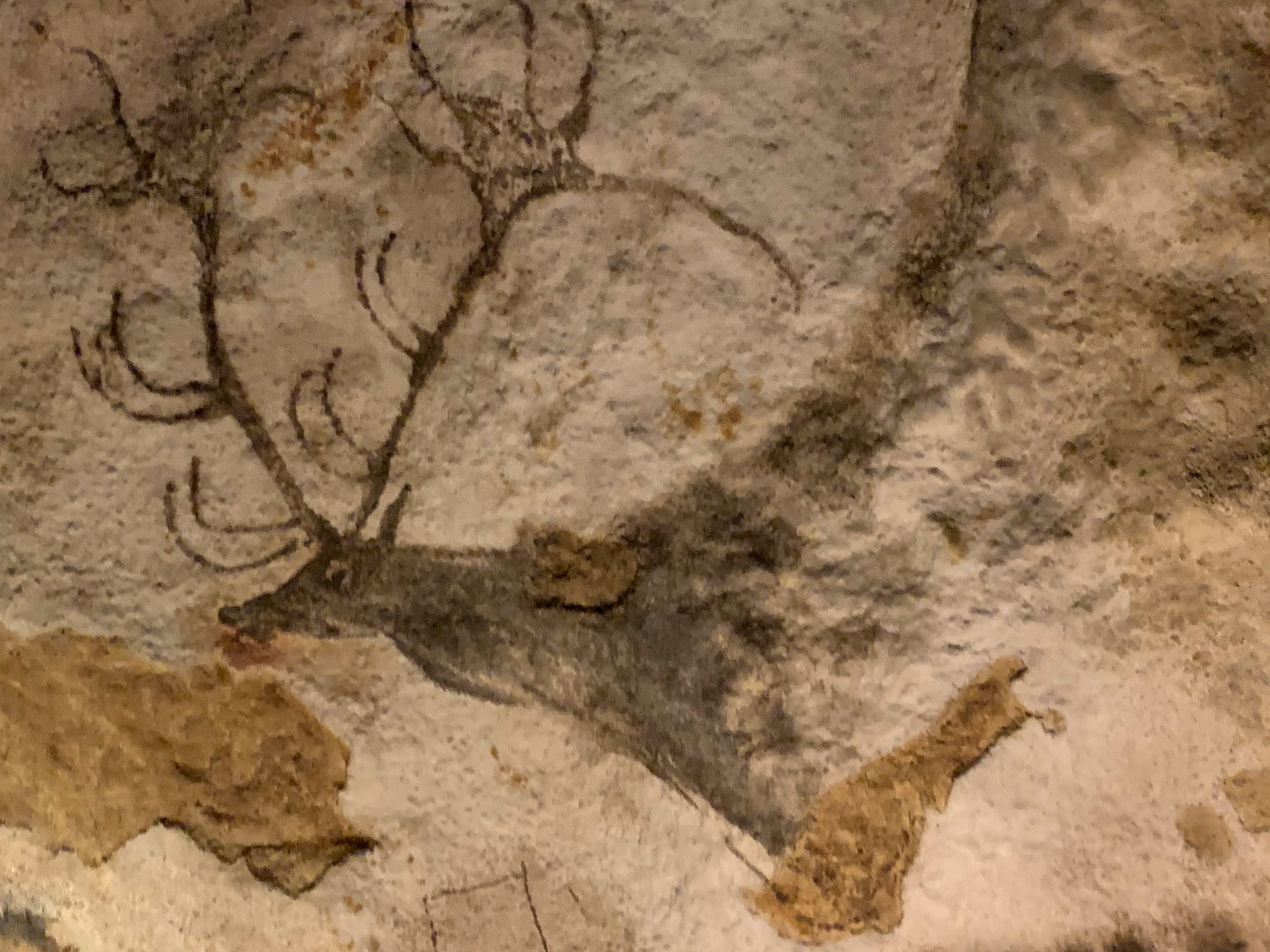
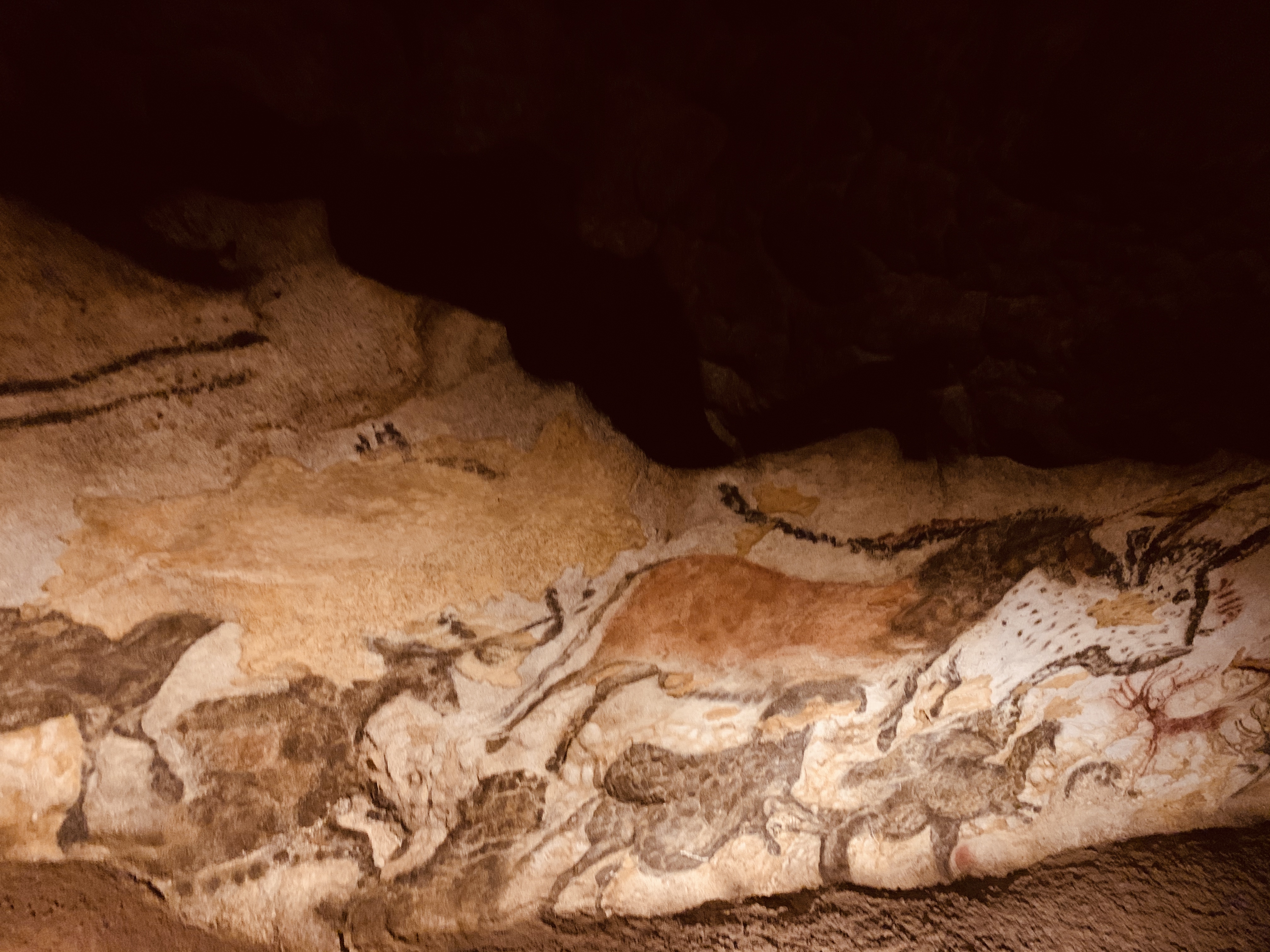
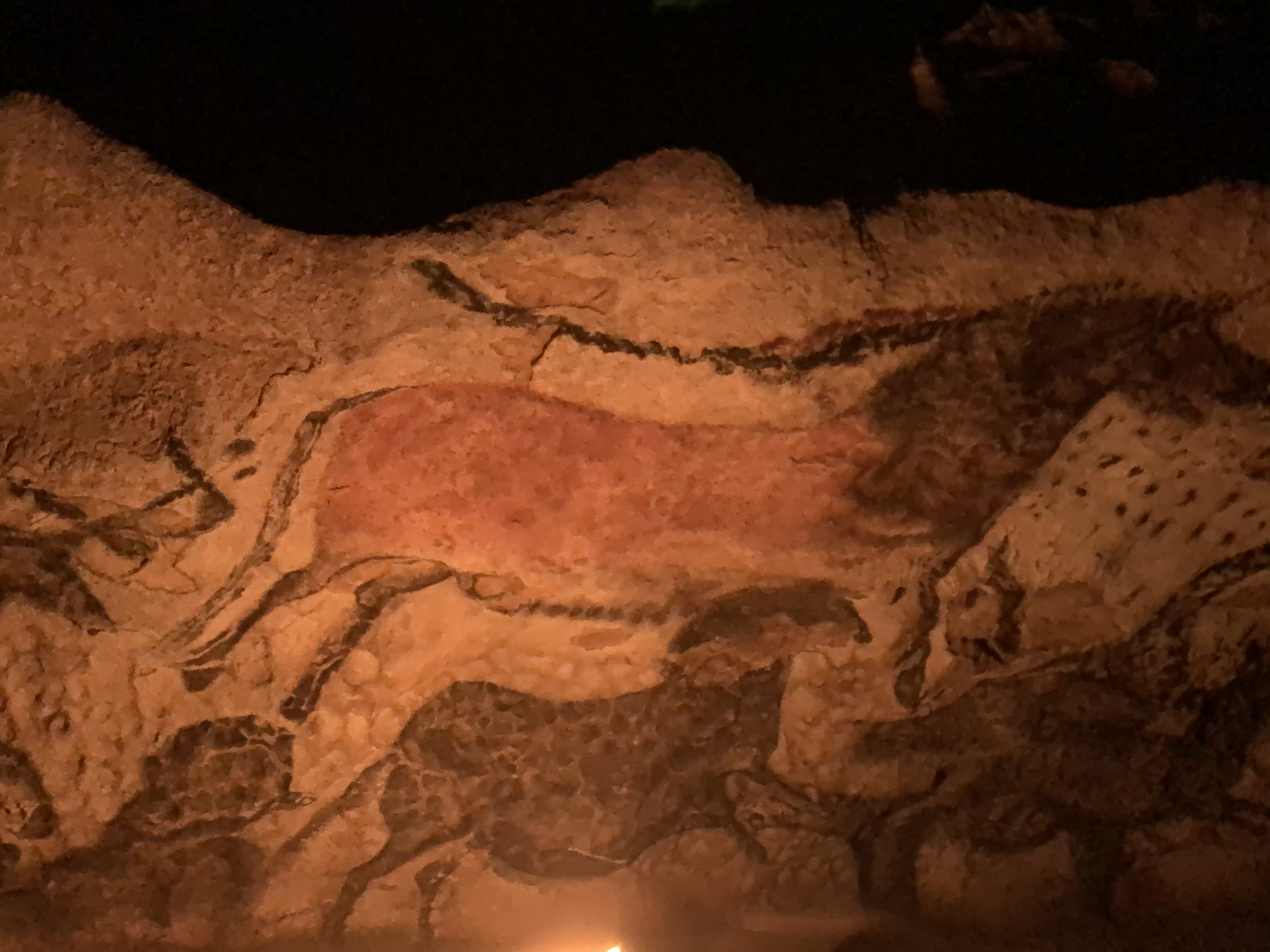
The kids were entranced, as were we. It’s such a special place, particularly when shown off by such a great guide.
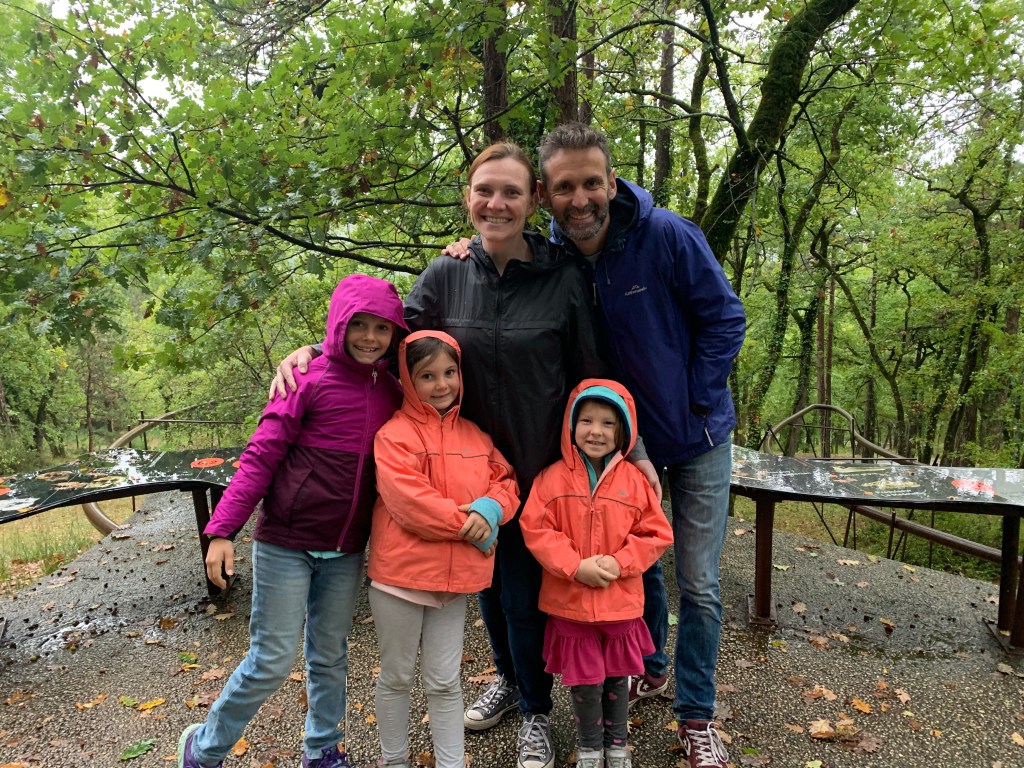
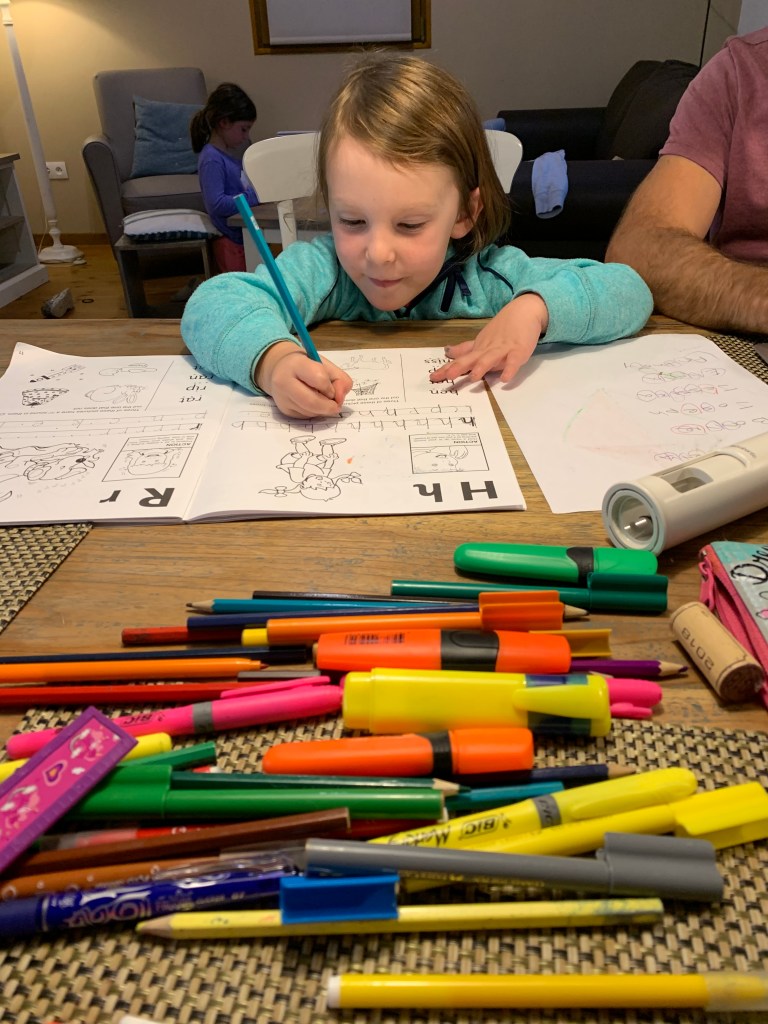
By the time we left the caves, the weather had really set in, so we made our way back to the Smurfen Dorp and enjoyed a quiet afternoon of homework (yes, they set holiday homework here) and, when we got a break from the weather, rollerblading and trampolining.
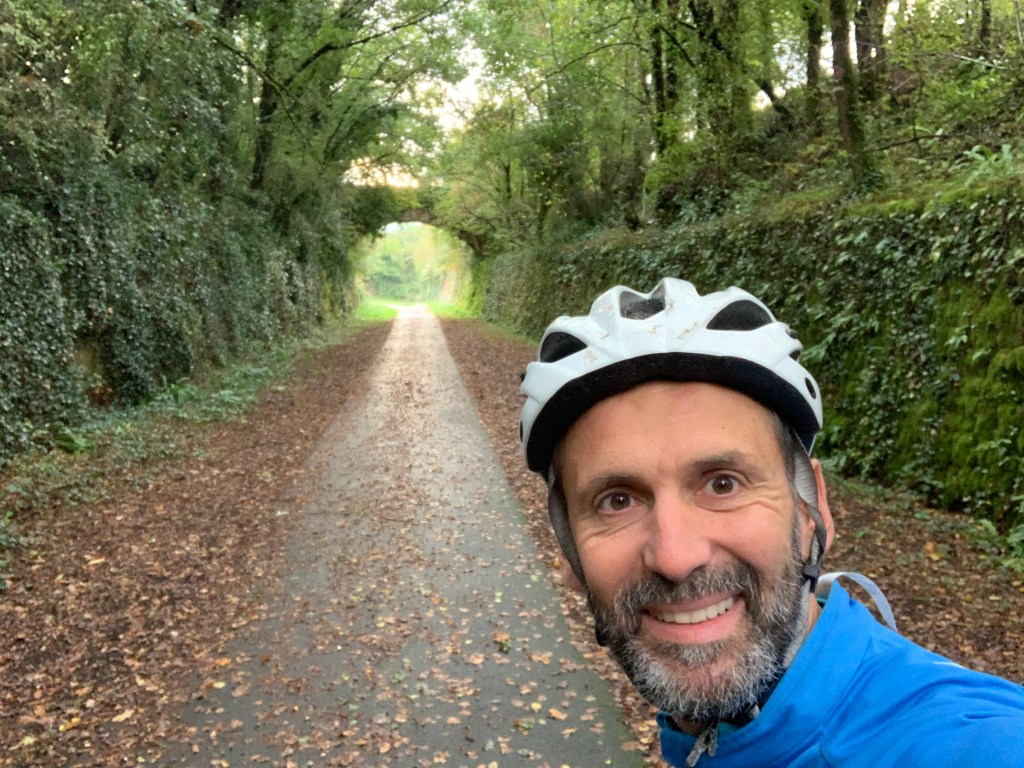
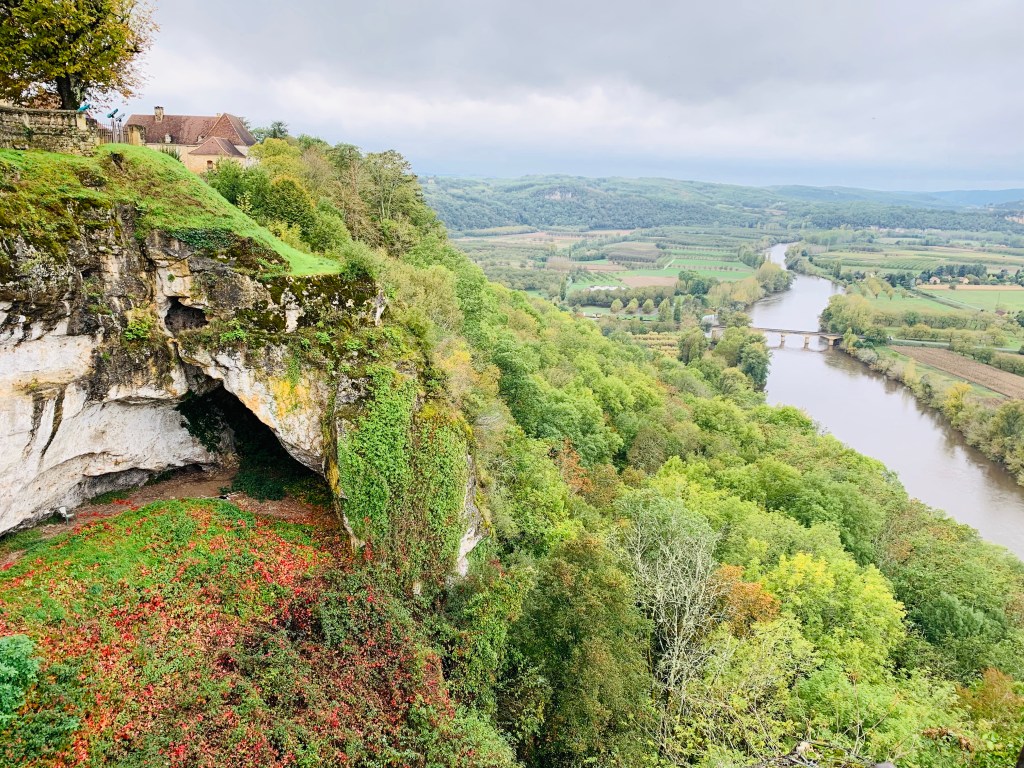
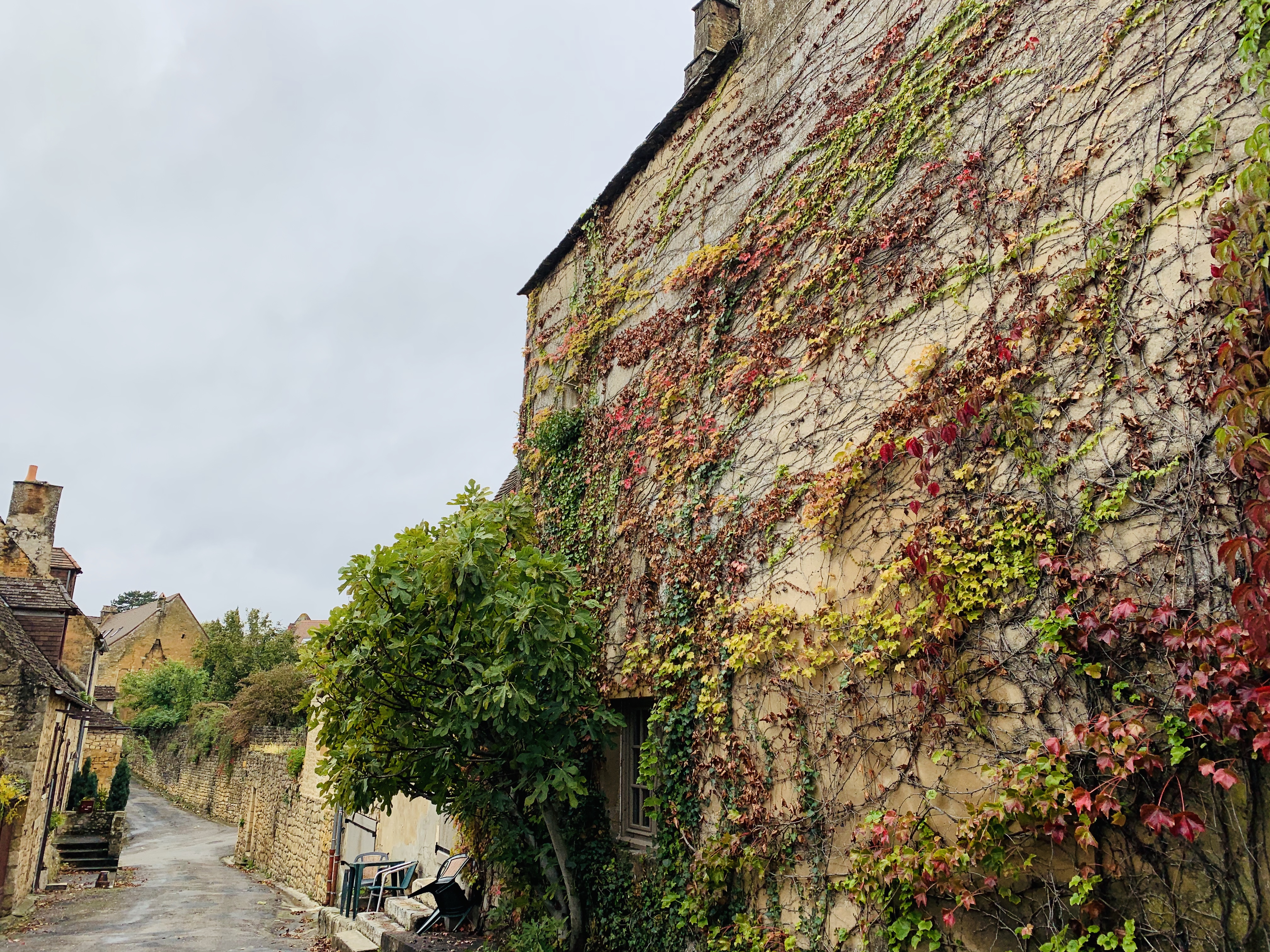
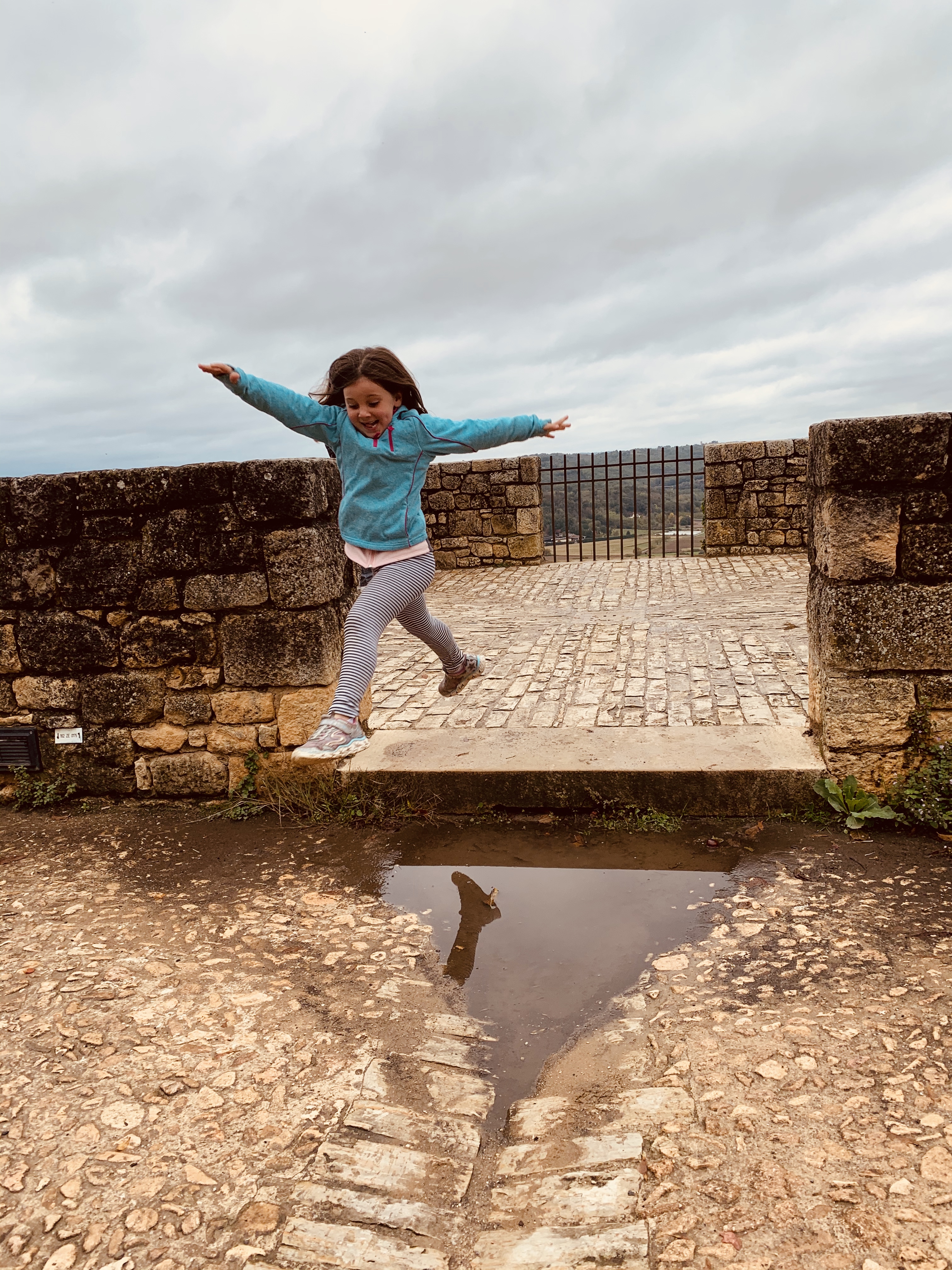
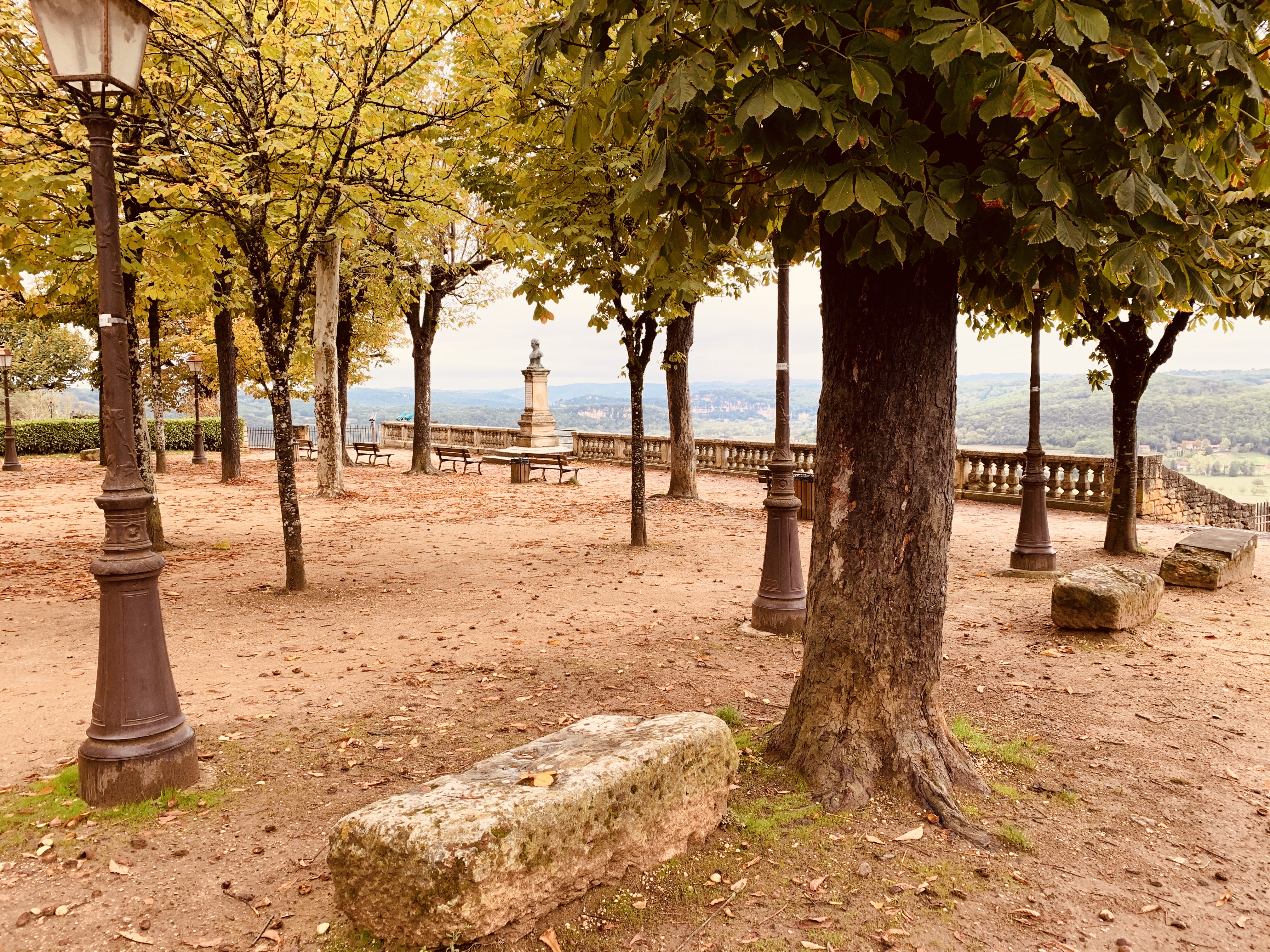
Thursday was our last full day in the Dordogne. Anthony started the day exploring the region by bike, trying out the much vaunted cycle route along the river from Sarlat. Unfortunately the storms from the previous night had knocked some trees down over the route effectively turning a 60km ride into a 20km one. The remainder of the day was spent playing around our Smurf Village (initial plans to go kayaking down the river were stymied by the 11 degree temperatures and showers) and then exploring the nearby village of Domme – another stunning hilltop village which has been perched on cliff tops overlooking the Dordogne River since 13th century. Very pretty but not a huge amount going on.
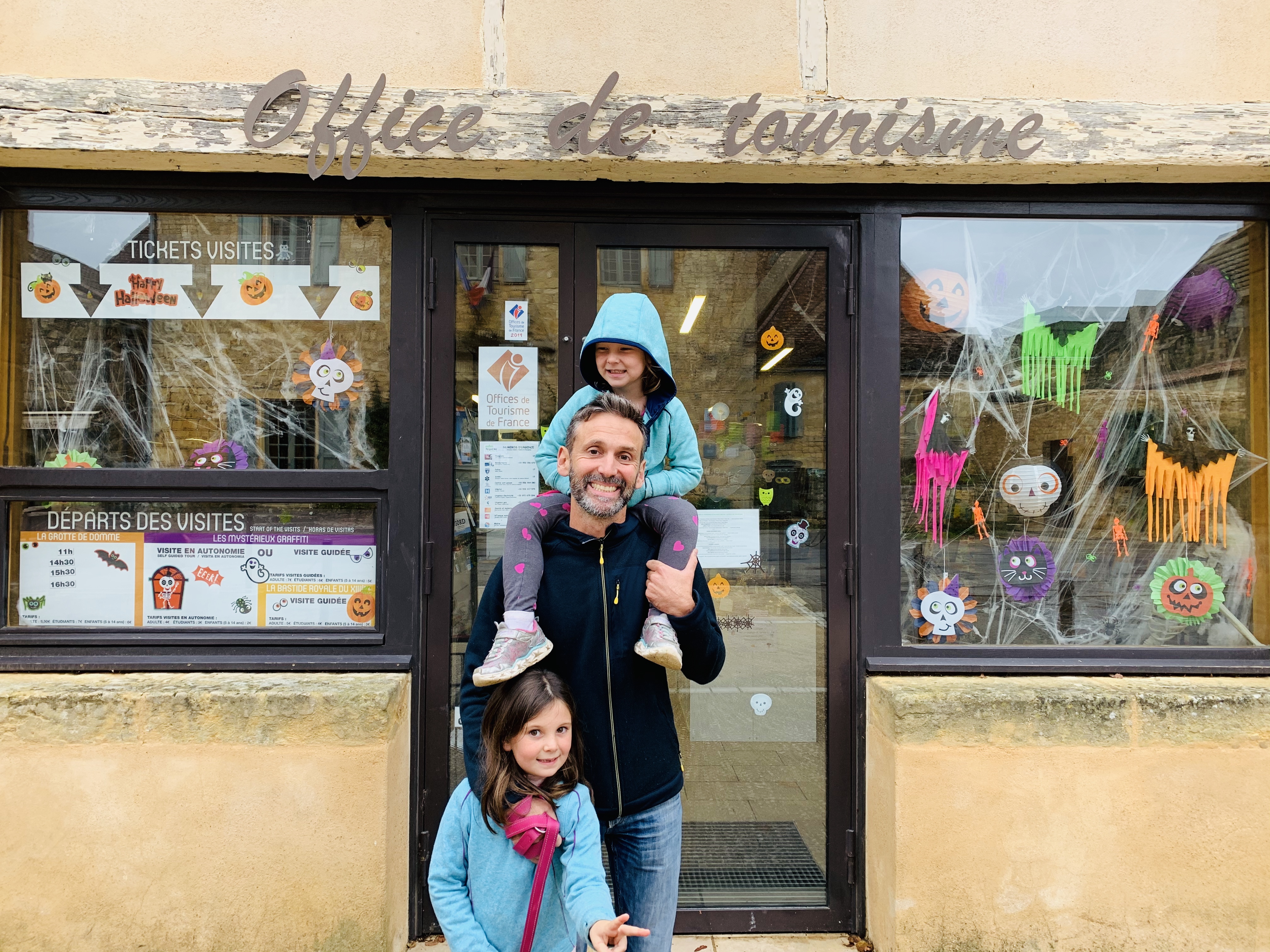
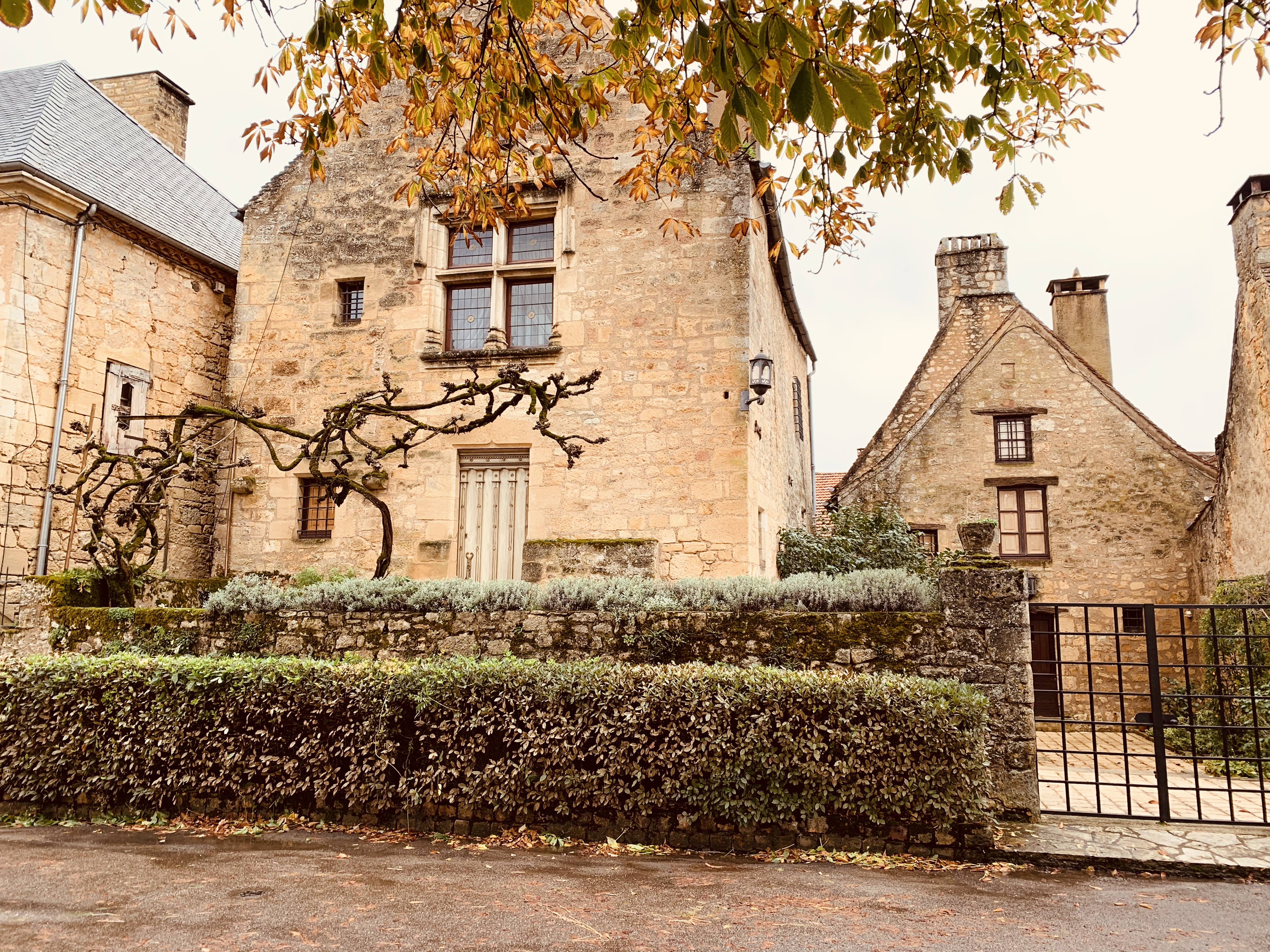
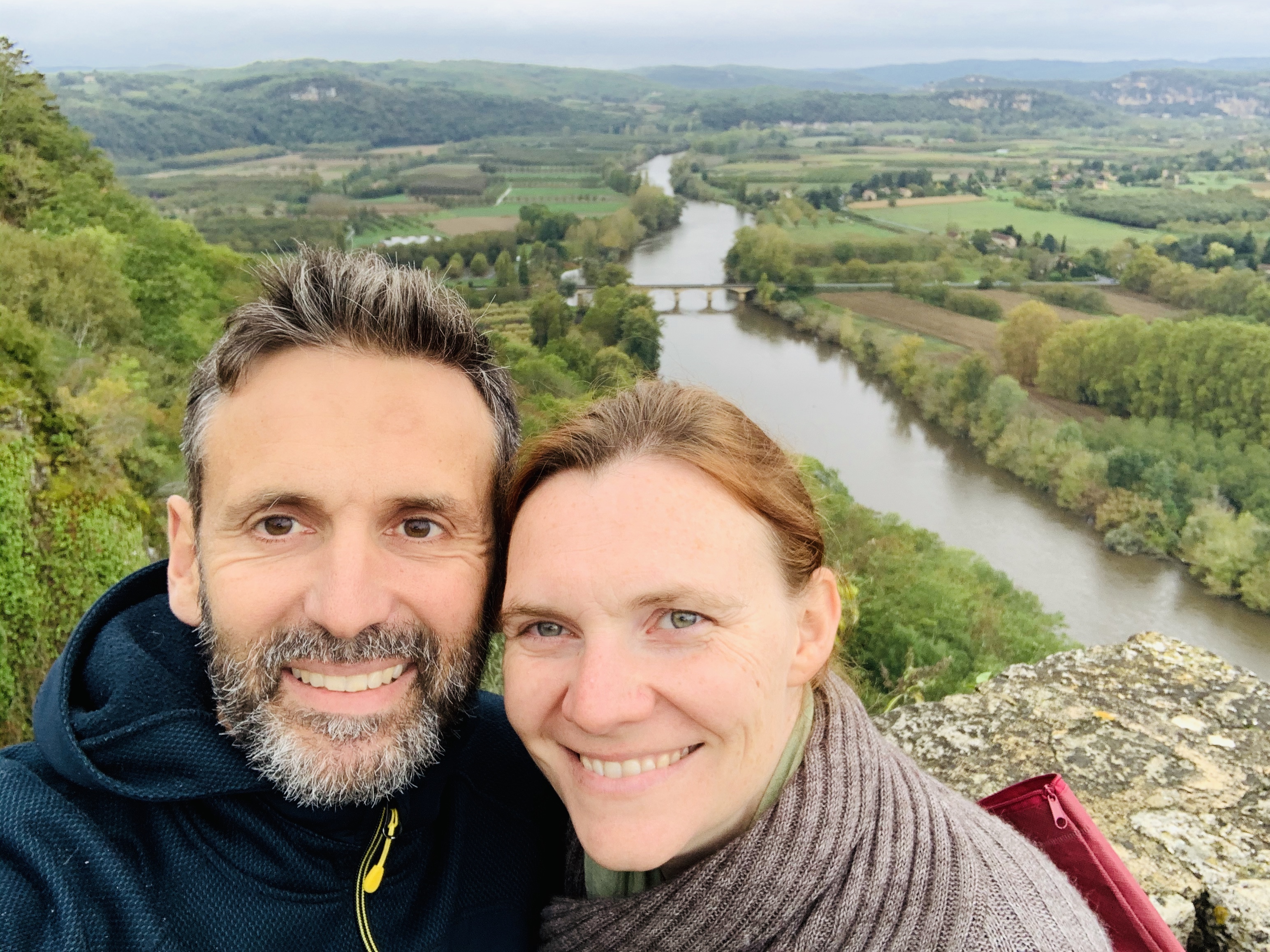
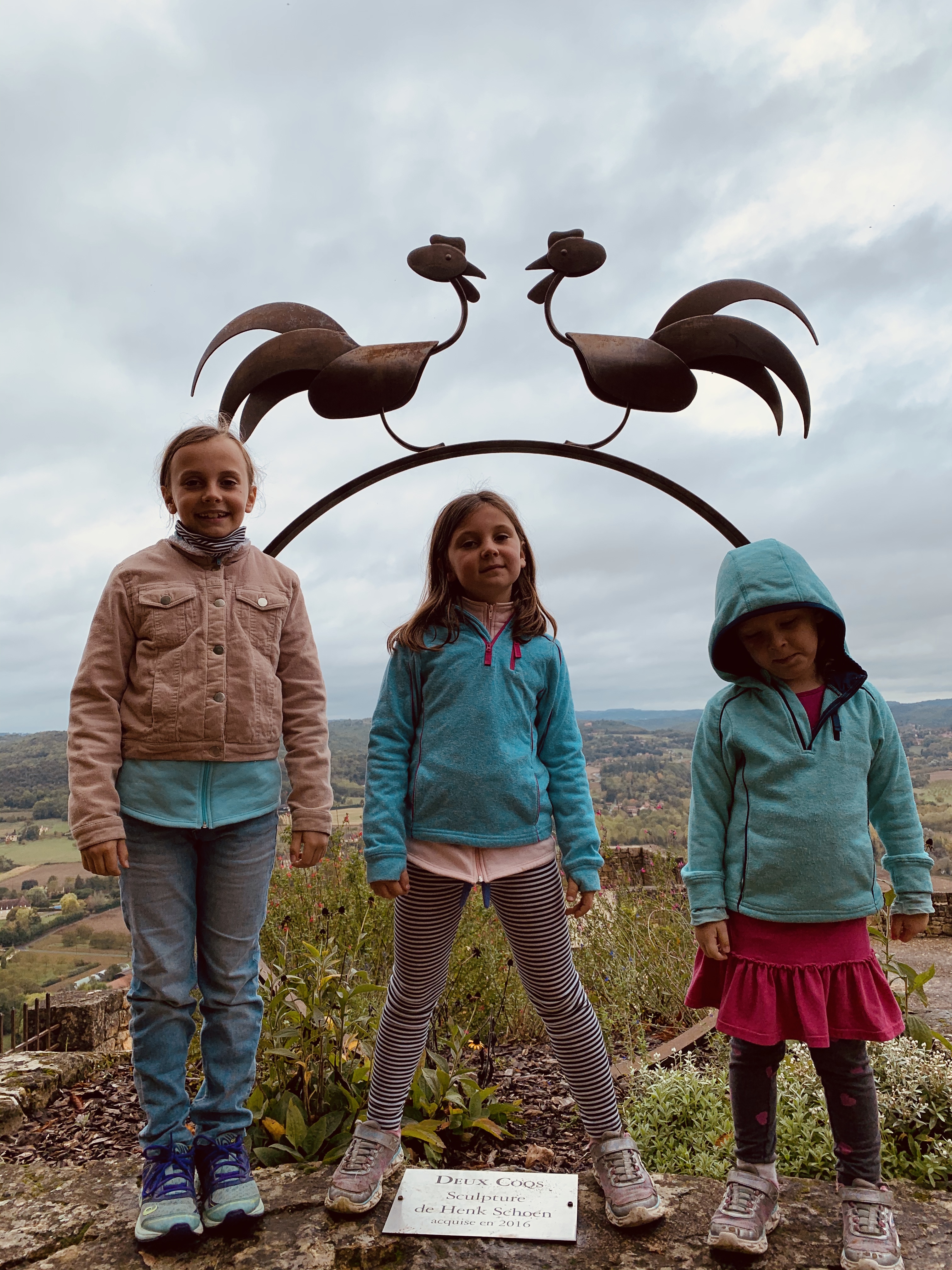
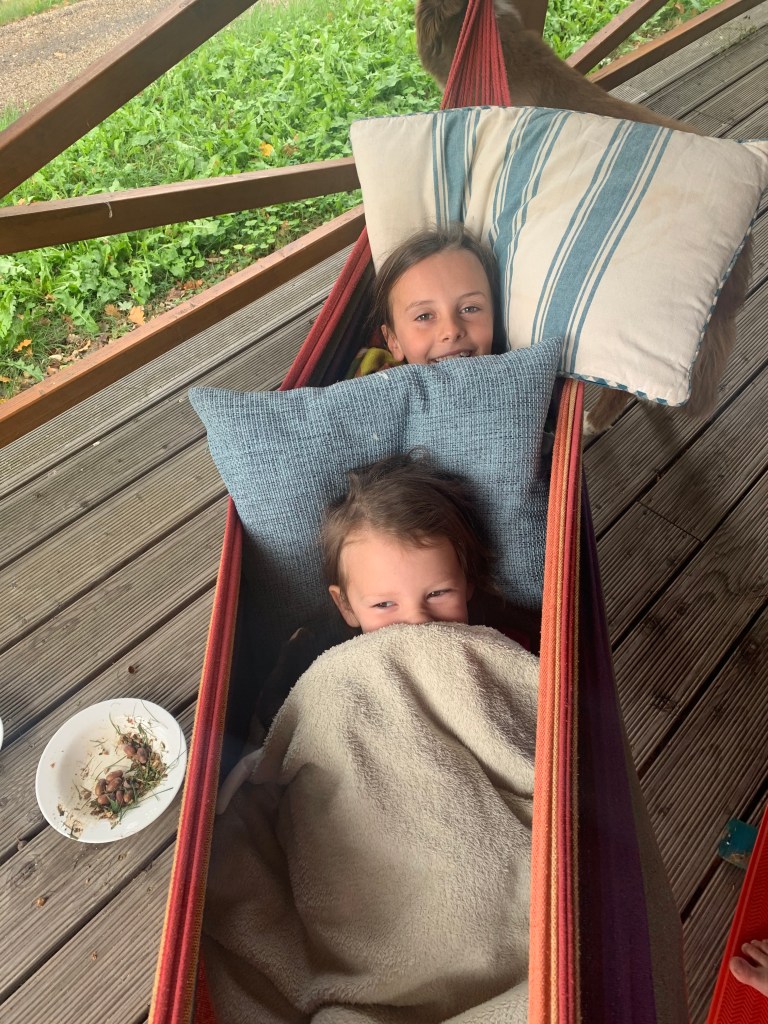
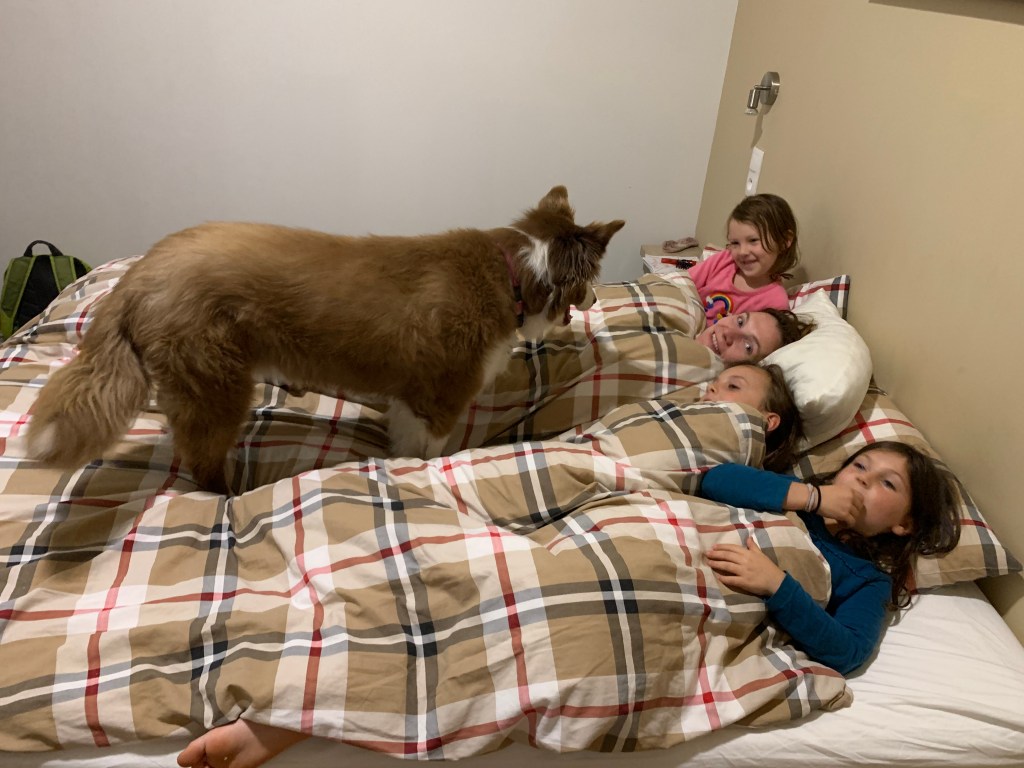
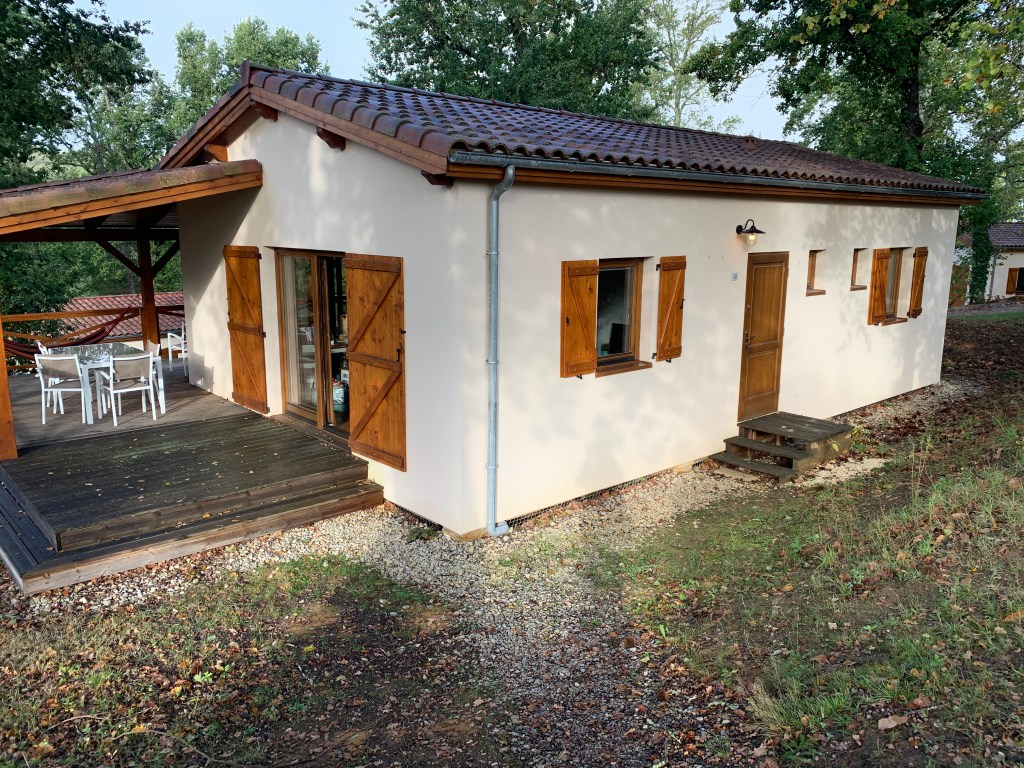
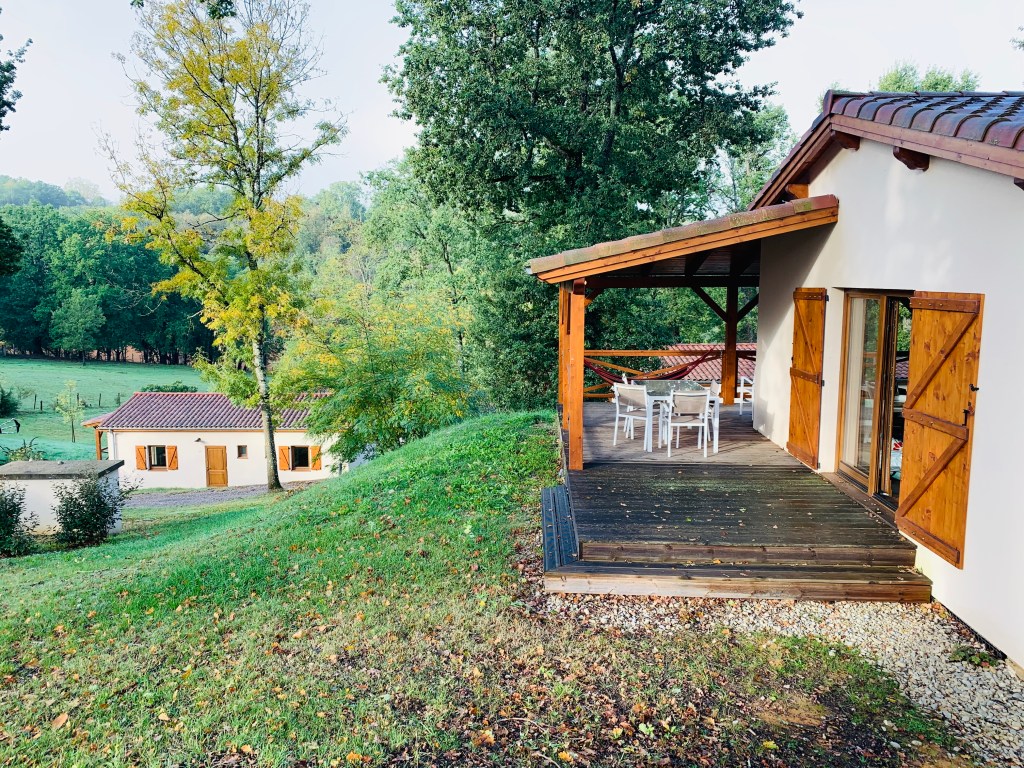
On Friday we packed our things, said a sad goodbye to our wonderful cabin and the much loved smurf village and made our way back towards Aix. We loved our time in the Dordogne and would be really keen to go back …
On the way home we pulled into the incredibly city of Carcassonne, halfway between Gourdon and Aix and a UNESCO world heritage site due to its amazing, restored citadel protected by 2 sets of city walls and a dry moat complete with drawbridge. The site itself dates back to celtic times (3500 BC) and was an important Roman site – however the current structures date from around 1000.
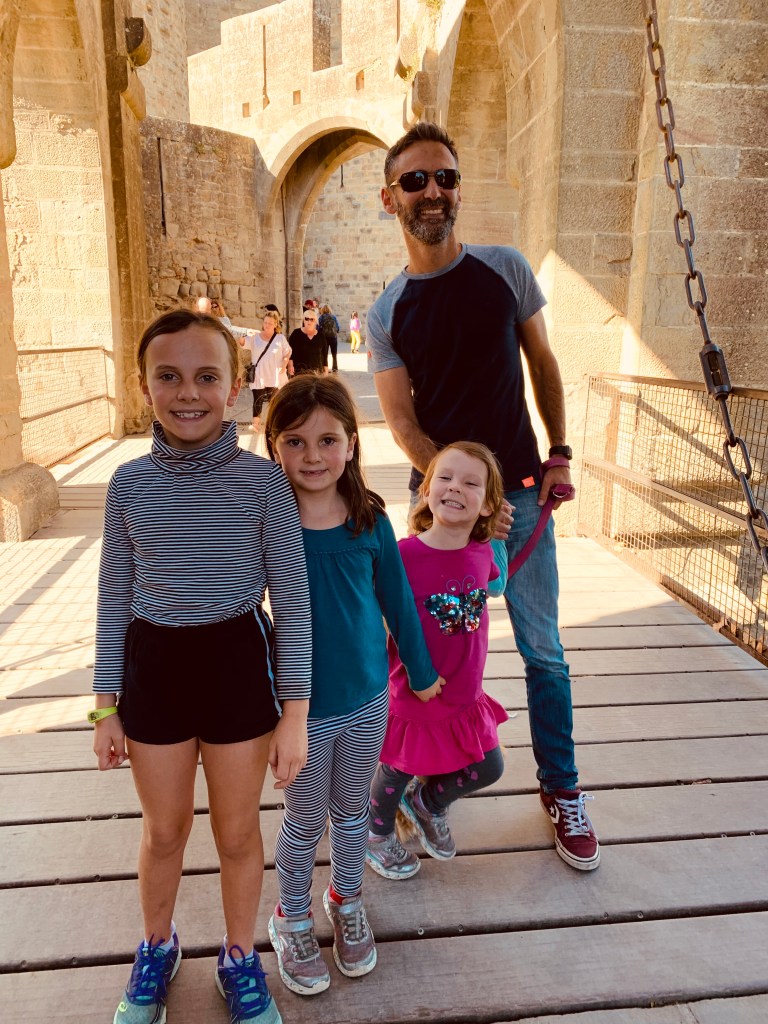
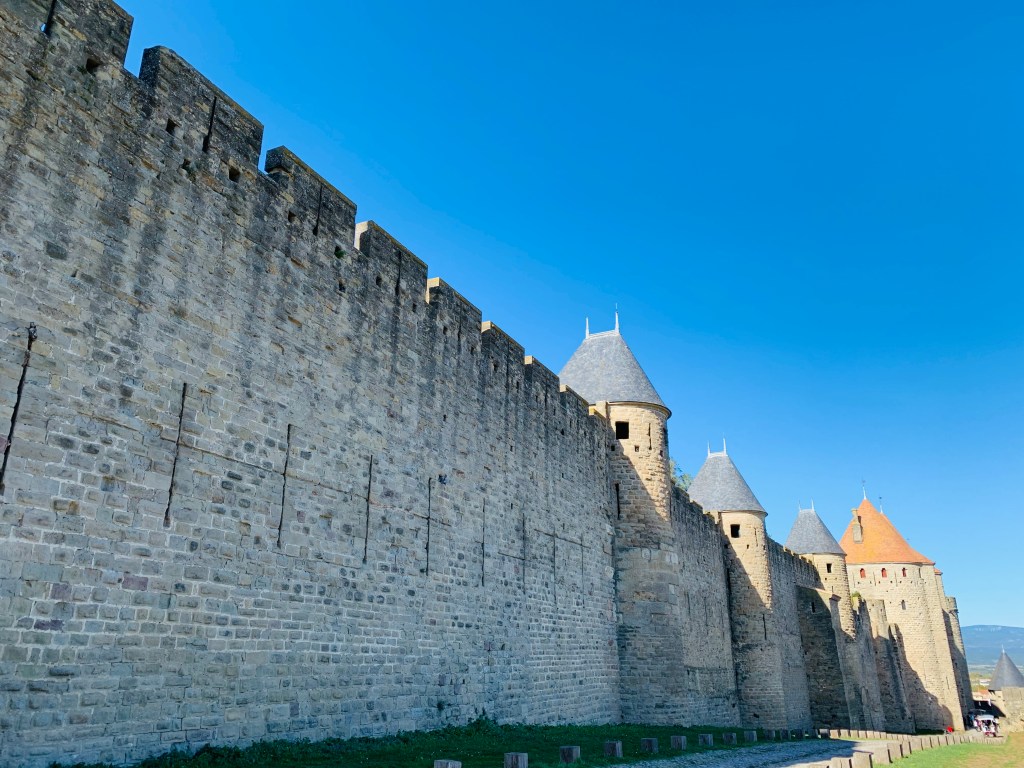
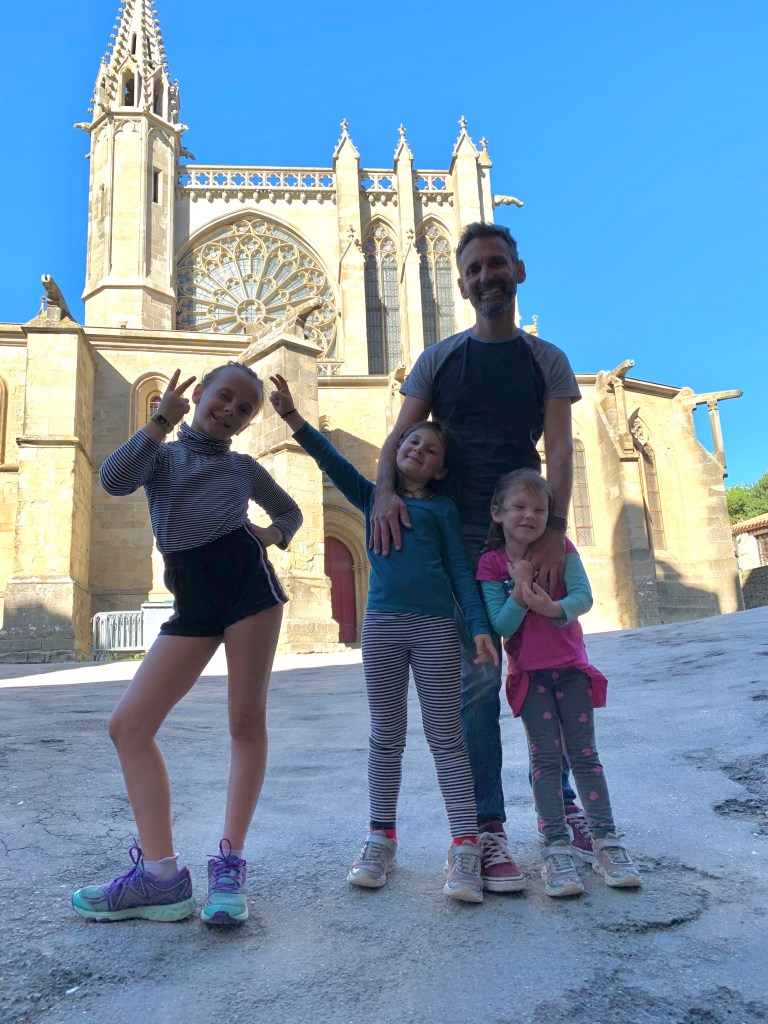
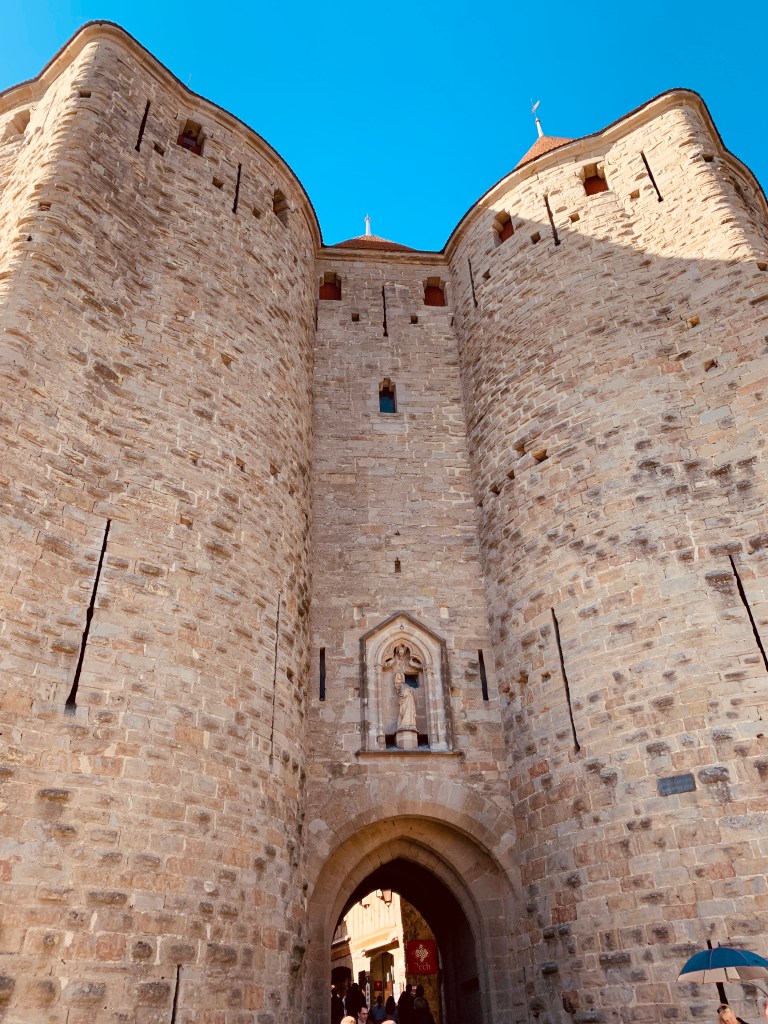
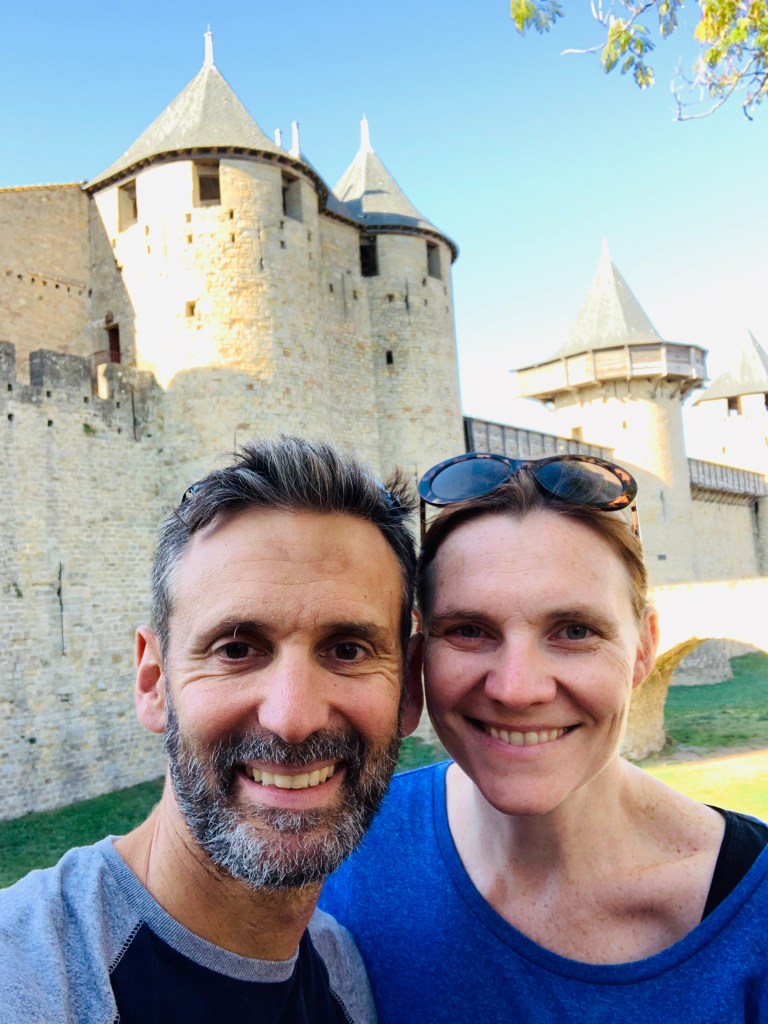
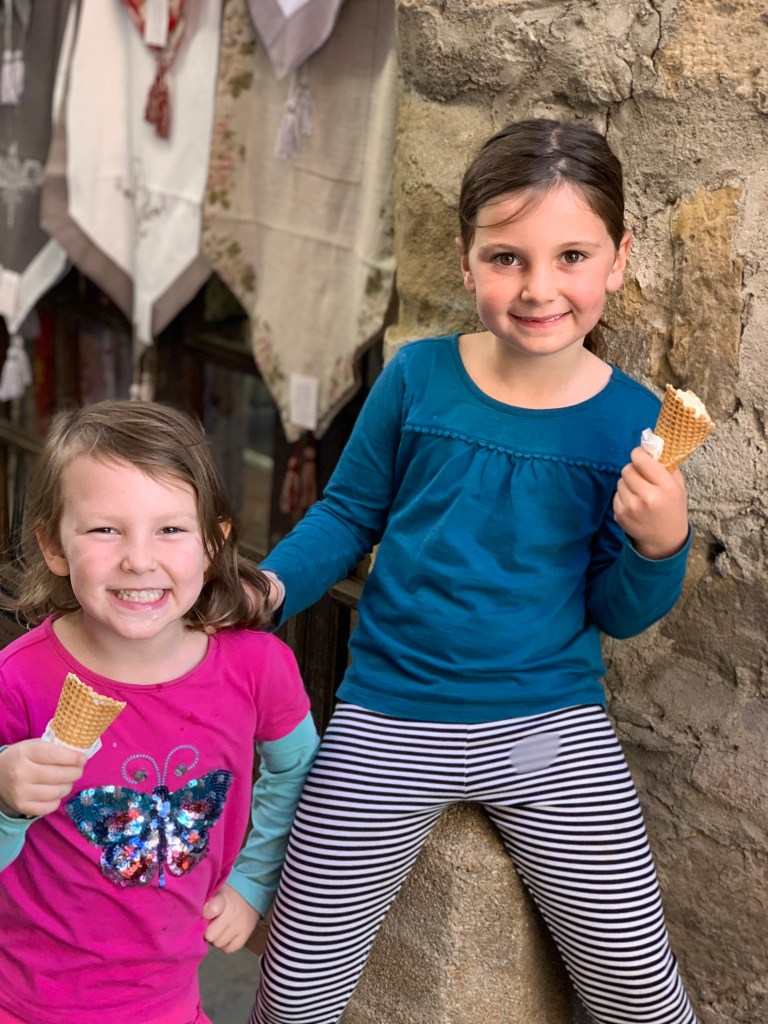
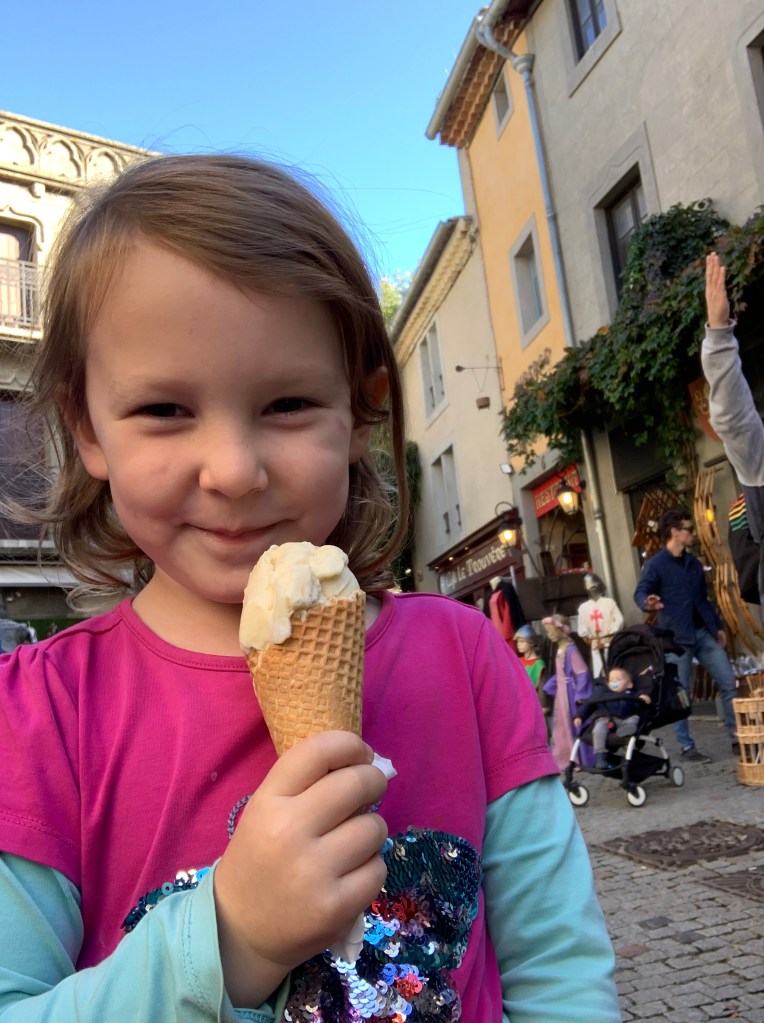
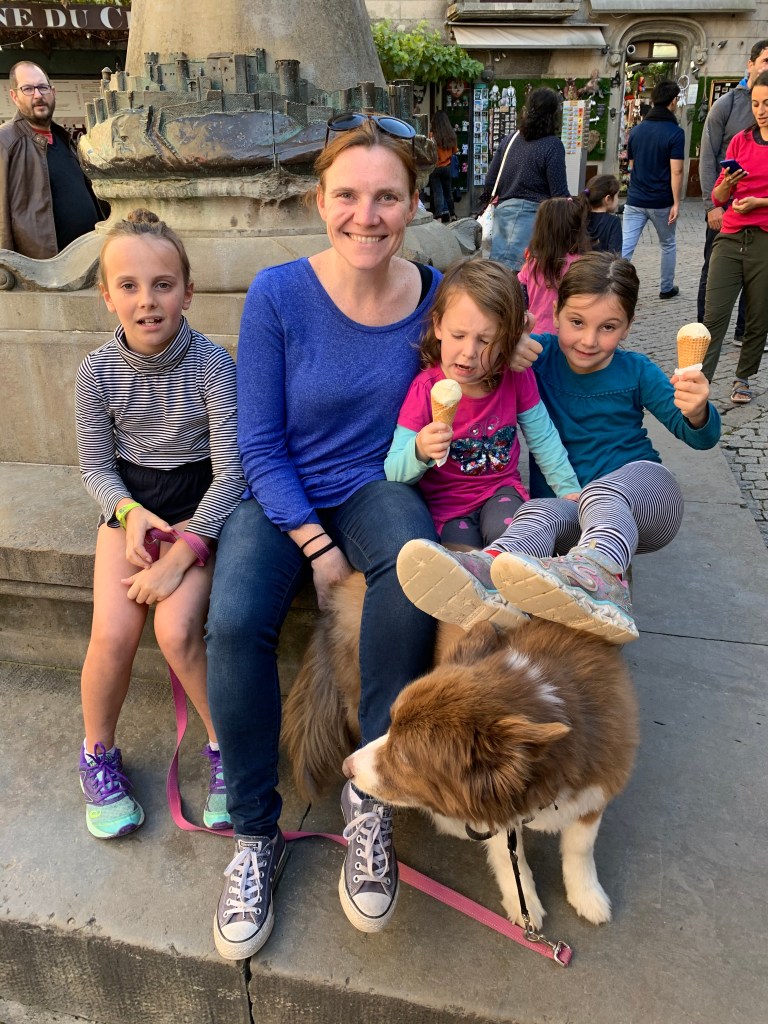
Whilst we only had a couple of hours in Carcassonne, we really enjoyed walking around the walls and exploring the church and streets of the old town. It was great for the kids to be able to get a view of how life would have been living in a walled town, and of course how easy it would be to defend such a place against horses and arrows!
It was a great finish to an awesome (if slightly damp) couple of days.
On the way back to Aix (while the kids were in the back drooling incoherently into their 5th hour of ipad watching) we talked about holiday plans for the rest of the year. Our initial thinking was to keep the kids in French speaking areas for the entire year, to give them the best possible chance of learning French. If we were to be honest with ourselves, the only French they spoke all week was with us (even the staff in the Smurf Village spoke only Dutch and English) and so it would make very little difference if we were holidaying in France, Italy or anywhere else… so some of our roughed out plans for next year might end up changing a little!
Conversations then meandered to life in Aix, and our propensity to learn and improve our language skills whilst here, and the very scary realisation that we are one third of the way through our year away.
Whilst we are living in France, it would not be true to say that our experience is one of ‘total immersion’ like some exchange students experience when living with host families. No matter how much French the kids get at school, they are still coming home to us. And English (except for mandated ‘French time’ which is exceptionally hard to pull off and is inevitably met with significant protests).
We made some choices when we were planning the year to send the kids to an international bilingual school, on the basis that it would help them have an enjoyable and positive experience this year. Tick tick. We also knew that it would slow down their language development, as half their schooling remains in English and most of their friends speak very good English. Our plans have played out as expected – the kids are really enjoying school but their level of proficiency in French at the end of the year will be interesting to see. Regardless, the fact that they are having a positive experience remains the most important thing.
For us, it is actually a bit the same. Without living in a French household, working or studying in French, our main exposure to the language is via language classes and social interactions. If our social interactions are limited on a particular day, or happen to be with English speaking friends, we can easily go through the day without much more exposure to the language than we would have had doing classes in Sydney.
This (incredibly obvious) realisation has reinforced even further the criticality of those French speaking social connections that we have made and are looking to expand…. But also made us acknowledge the likely limitations on our language development whilst we are here. This is not another exchange year where we live in French speaking host families, are fully immersed in school and have to learn to connect and survive. Our choices have made this a much gentler experience – the fact that we are here as a family, that we live in such an international community, that the kids go to an international school – and whilst learning French is an important part of what we are doing, it is not the most important part, and never was.
We are here to spend time as a family, to live shared experiences, experience new challenges and to ‘put a marker down’ to stop time going too quickly. And on that basis, we are both extremely pleased with how things are playing out.
 Joseph Family Adventure