19 – 21 August 2019
We made our way up from Porto to Vigo, the Duster’s tinny sound system blaring out music from Kids United and Angele – two French speaking groups that Noemie had got us on to. The kids singing along happily in the back, absolutely no idea what they’re singing but getting many of the words out all the same, loving the songs.
If you’d asked them to listen to non English speaking music 2 months ago you would have been scowled at.
The girls were excited to be going on a boat (assuming that boats=junk food in the same way as happens during twilight racing in Sydney). We were excited too. This was a bit of a test for us, the first time we had sailed as a family, the first time we had slept on a boat. The first time Sena had sailed full stop. A test to see whether this was something we would consider as a future standalone holiday.
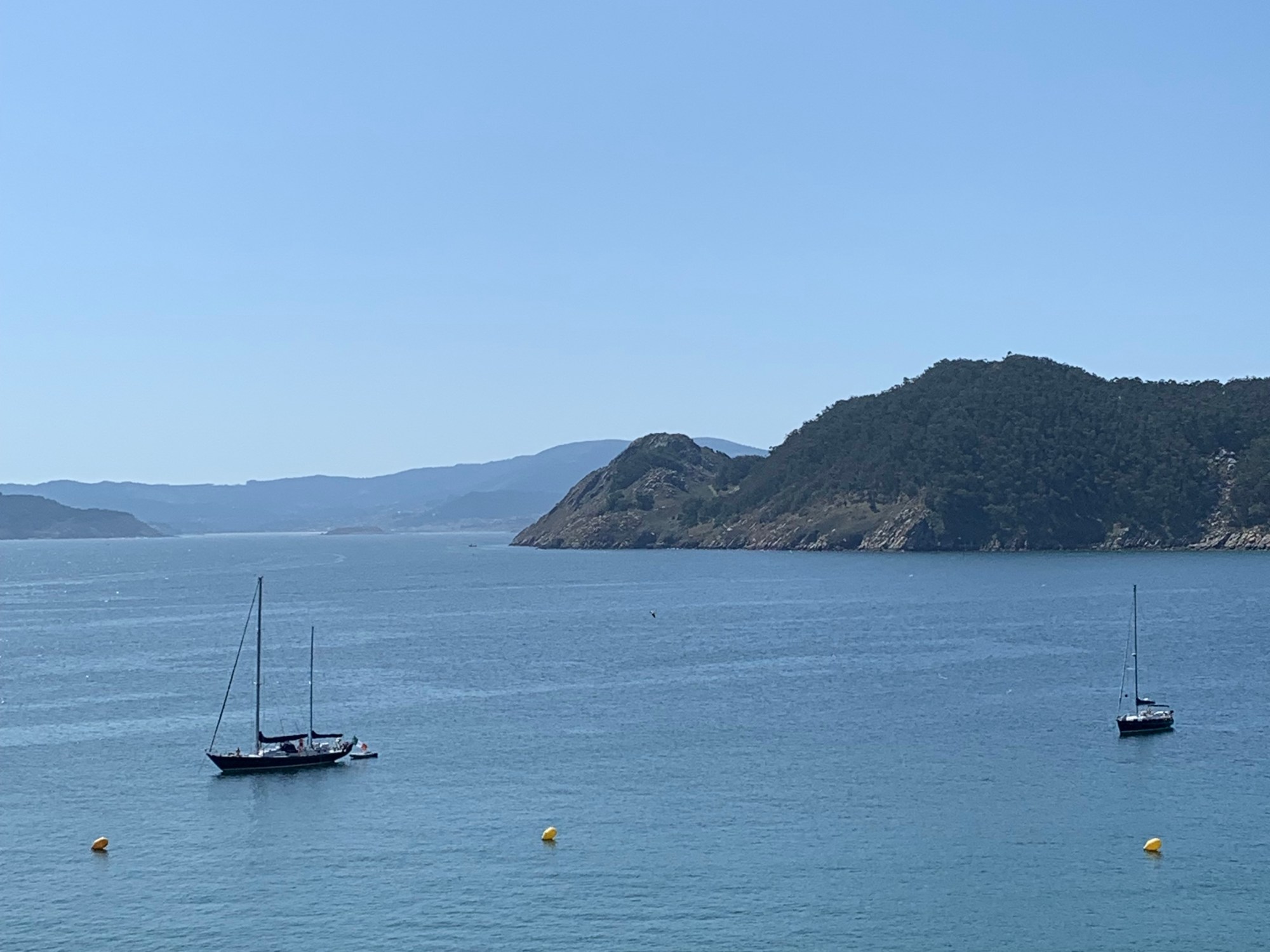
We pulled into the marina at Santradan, near Vigo (the largest fishing port in Europe) which sits on the mouth of the Vigo River. The river itself is guarded by the Cies Islands, said to the ‘Galapagos of Europe’ and our destination for the next couple of days.
We met our skipper, Carlos and his boat, a wonderful 40 foot cruising Jeanneau, which would be our home for the next 2 days. Carlos spoke Spanish, some French and very little English, but looked pleasant enough, if a little concerned about the kids on his boat. (The boat was 20 years old but looked brand new and immaculately cared for (now). No matter how hard we tried, there was no way it was going to look like this when we left. We immediately felt guilty, even though nothing had happened, yet.)
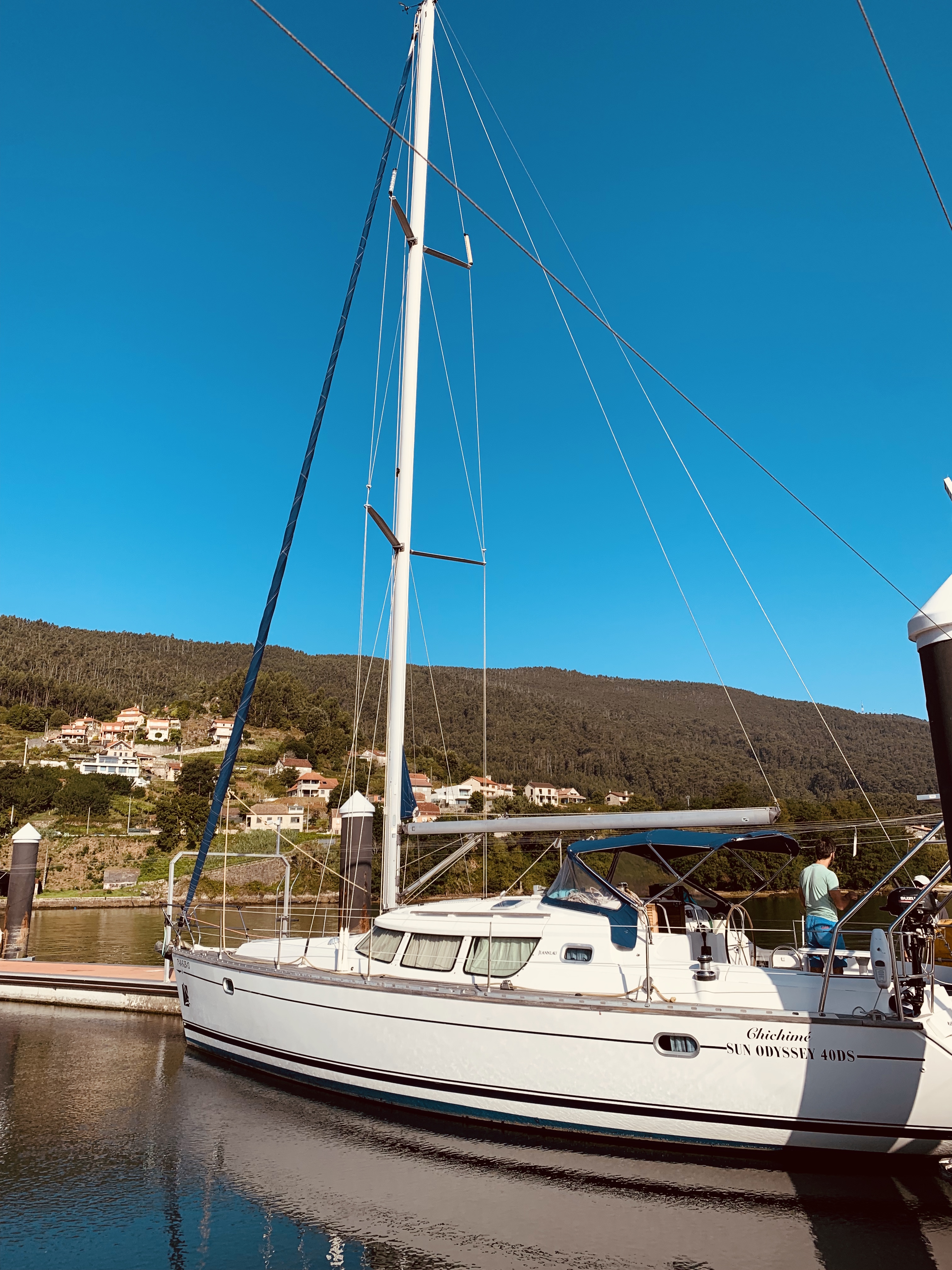
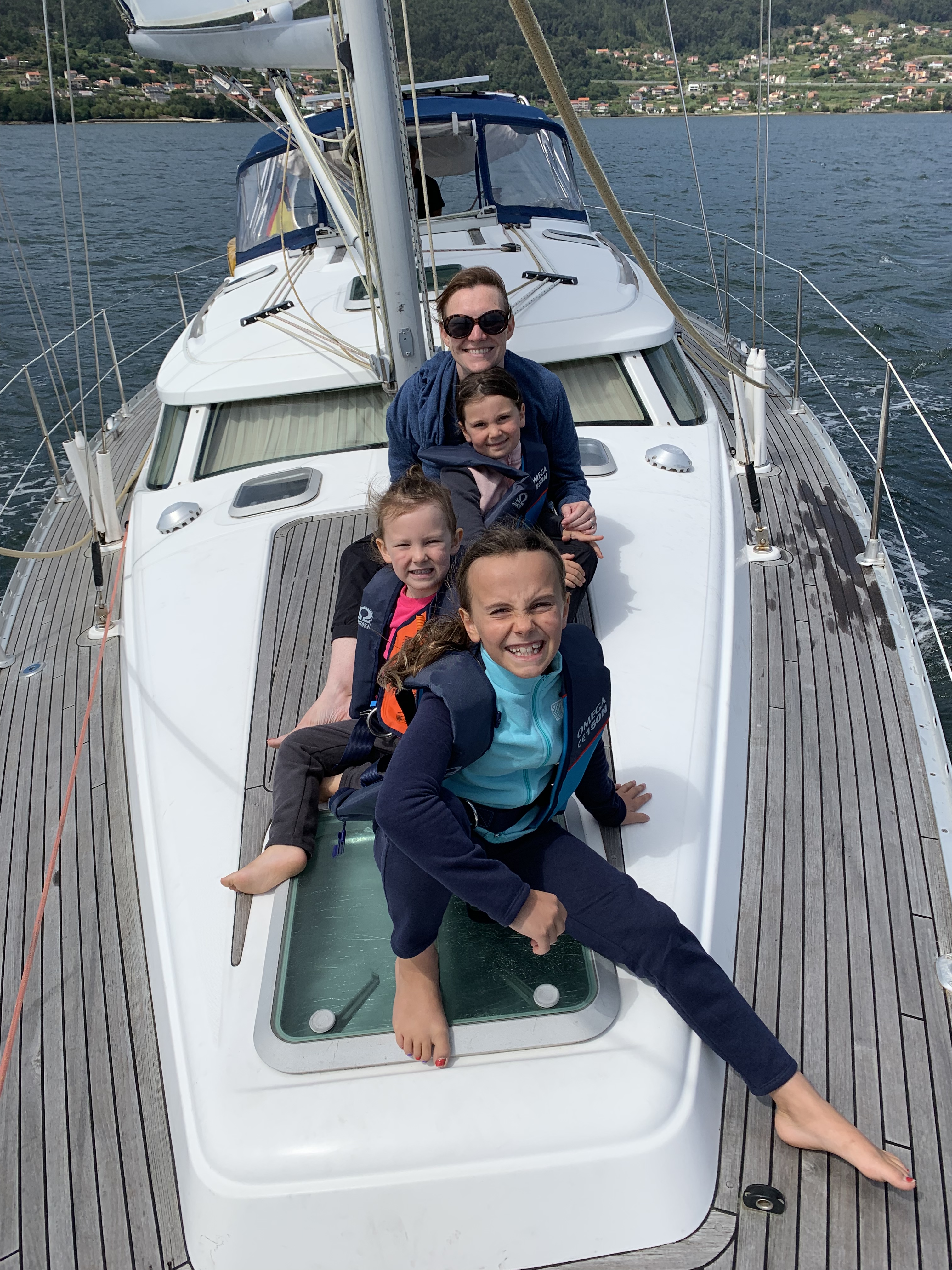
The kids were beside themselves with excitement at their ‘room’; Carlos looked worried as we jointly pondered how we would get all the food that we’d packed into his boat and what the kids would break/spill/destroy first.
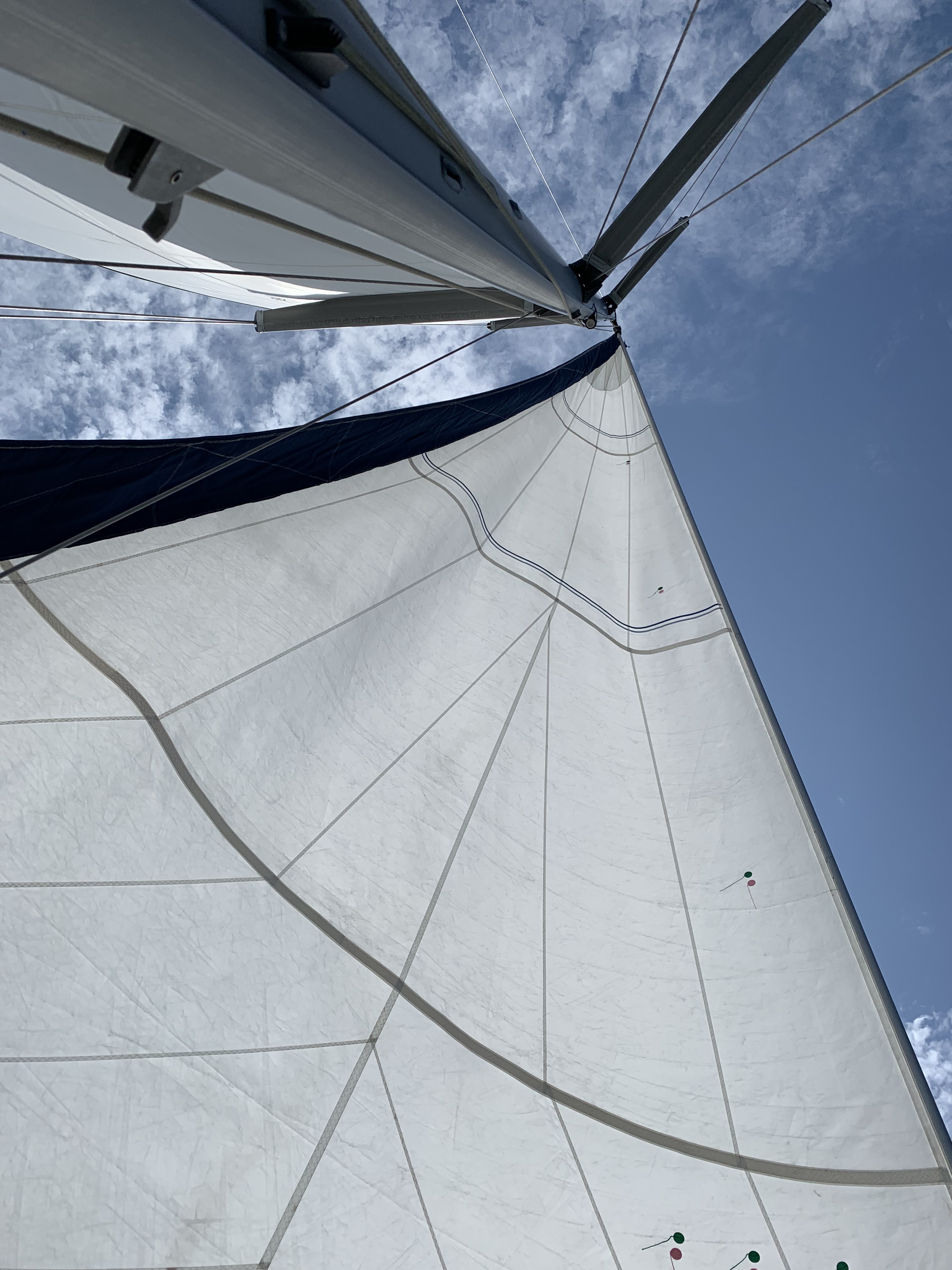
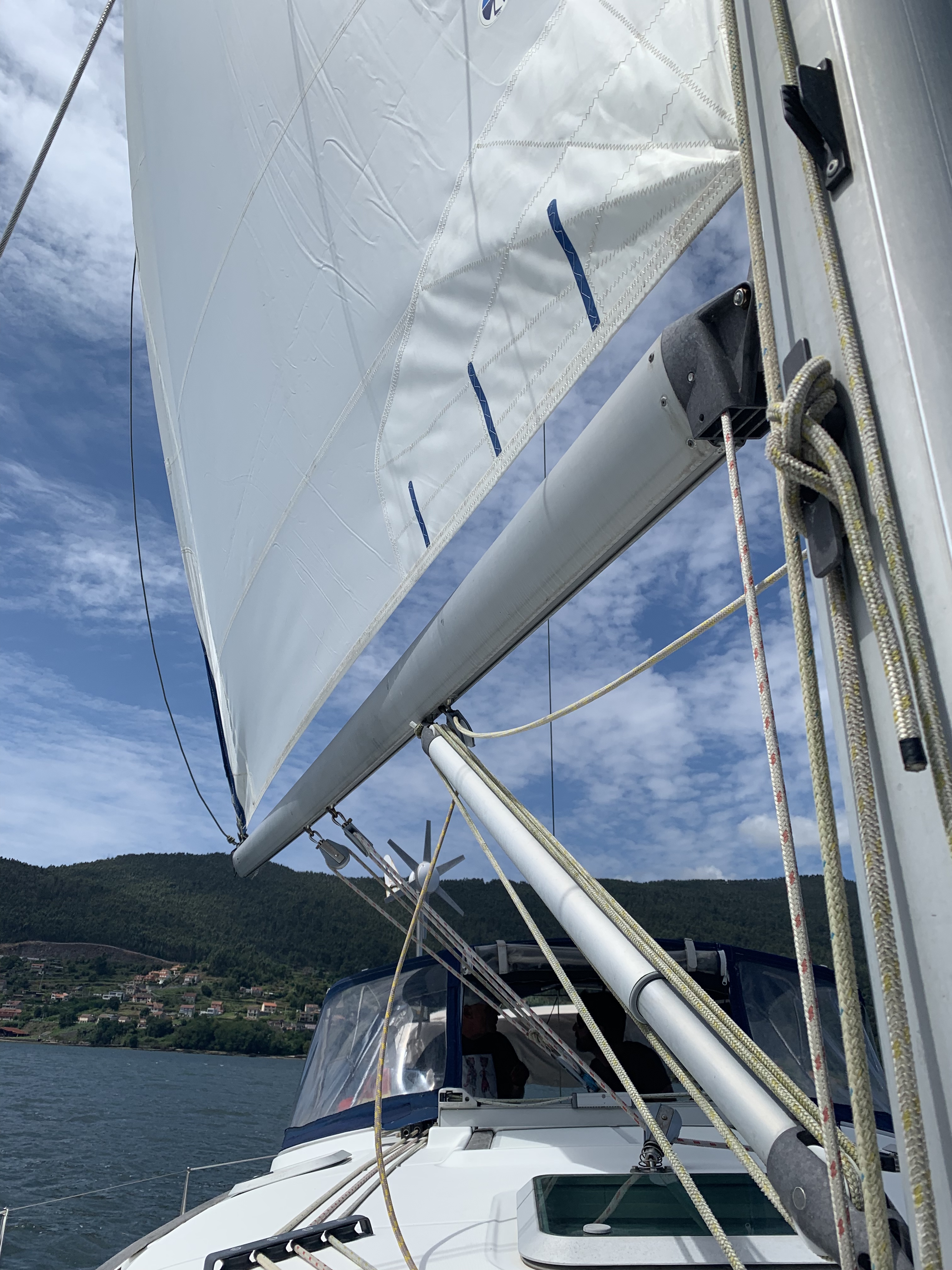
Somehow everything fit, we stashed the car and and pulled out of the marina, motoring out into the middle of the massive Vigo River. There was a moderate breeze from the north east as we cut the motor, unfurled the sails for the first time and turned west towards the Cies Islands.
Sena looked concerned and climbed nervously into Daddy’s lap. We looked nervously at each other. Too soon???
Our destination for the afternoon was the beautiful Praia de Barra, a stunning ‘clothing optional’ beach in a protected cove close to the mouth of the river and the Cies Islands beyond. We made our way up river towards the islands, past Vigo, the fishing trawlers and myriad of mussel farms that dot the river (each one earning 5m euros a year apparently).
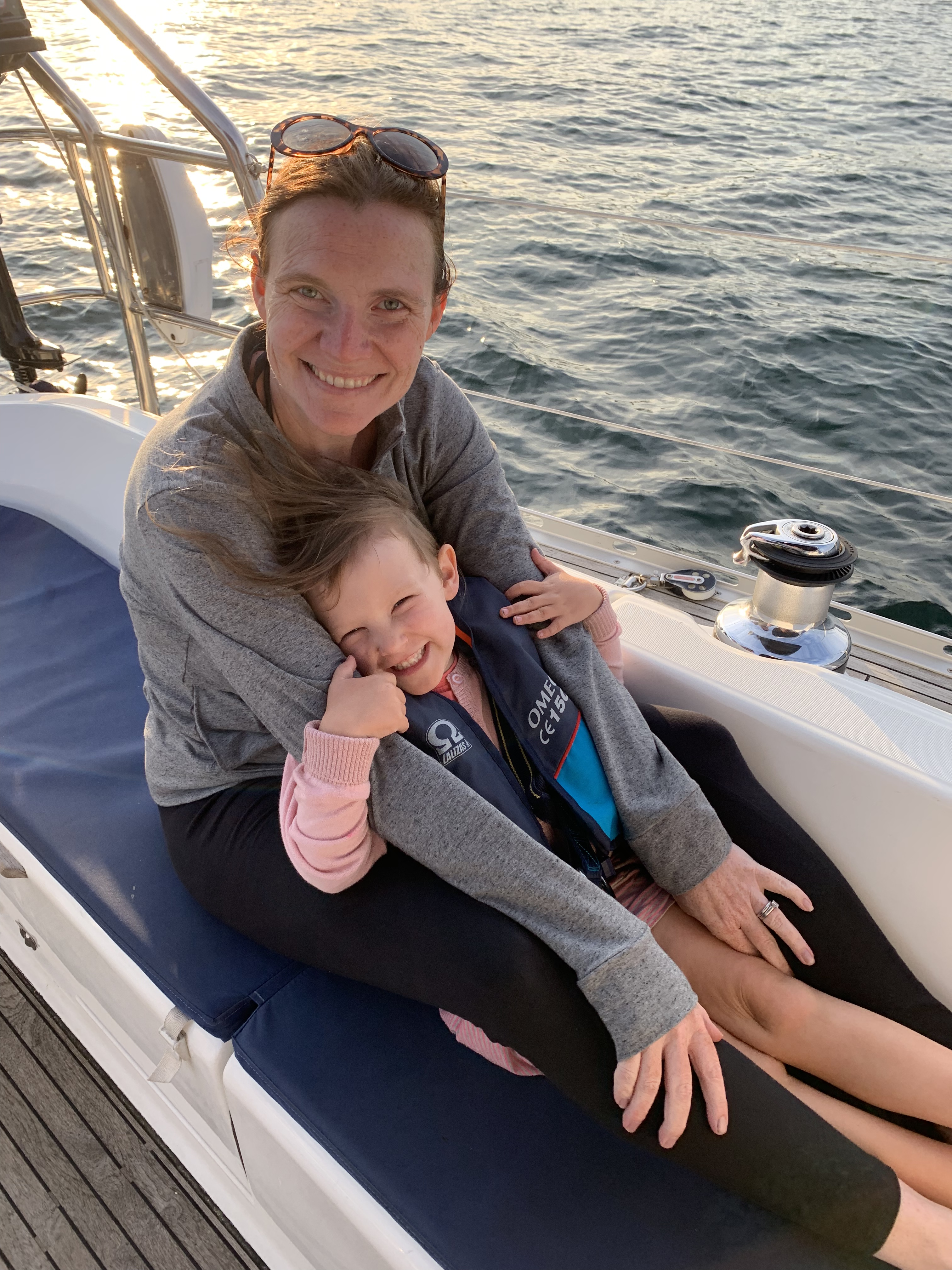
The wind picked up as we made our way out of the protective river and the boat started to gently tilt. Sena, looking more concerned, climbed higher into our arms. Maybe she wasn’t cut out for sailing?
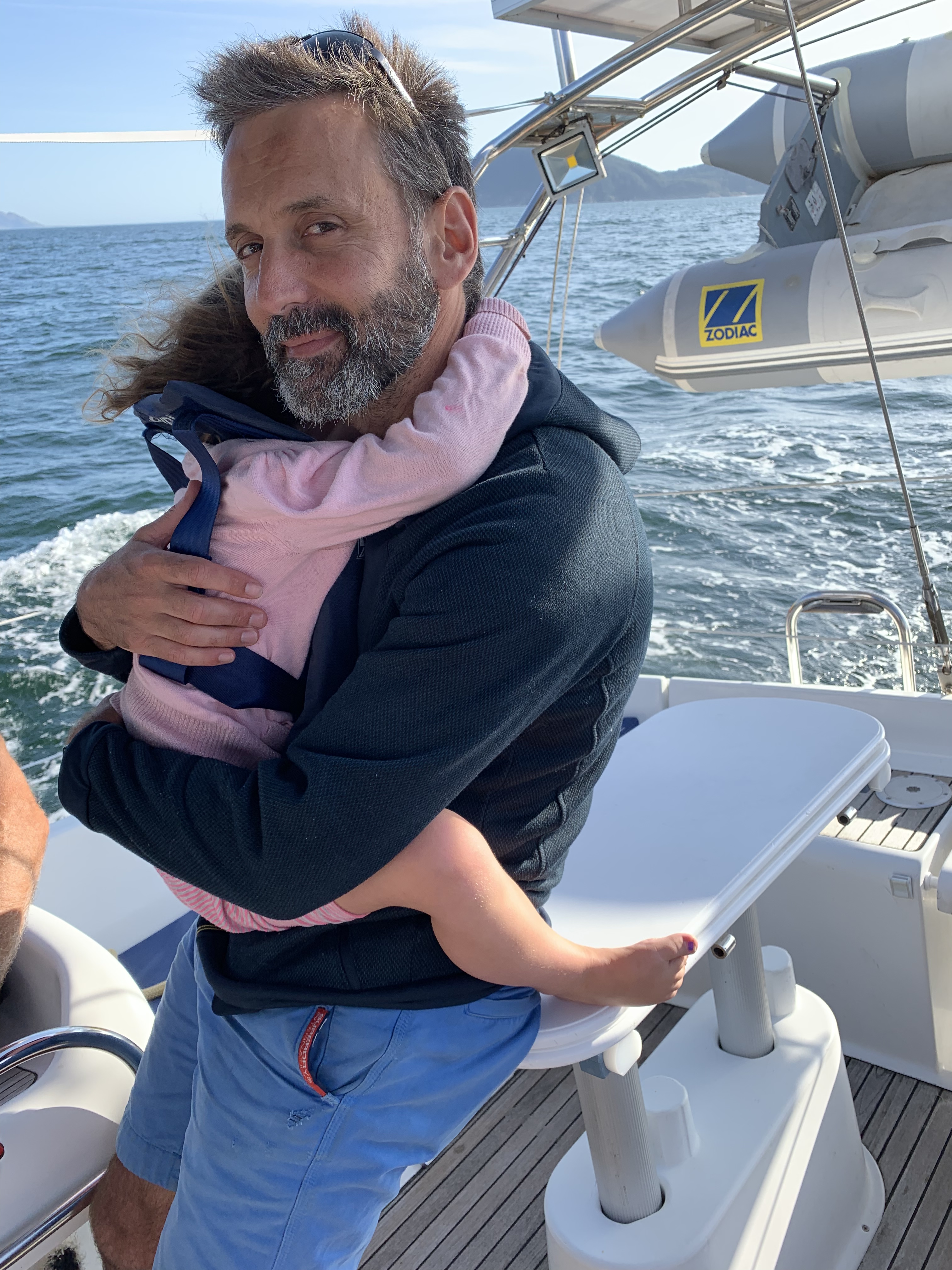
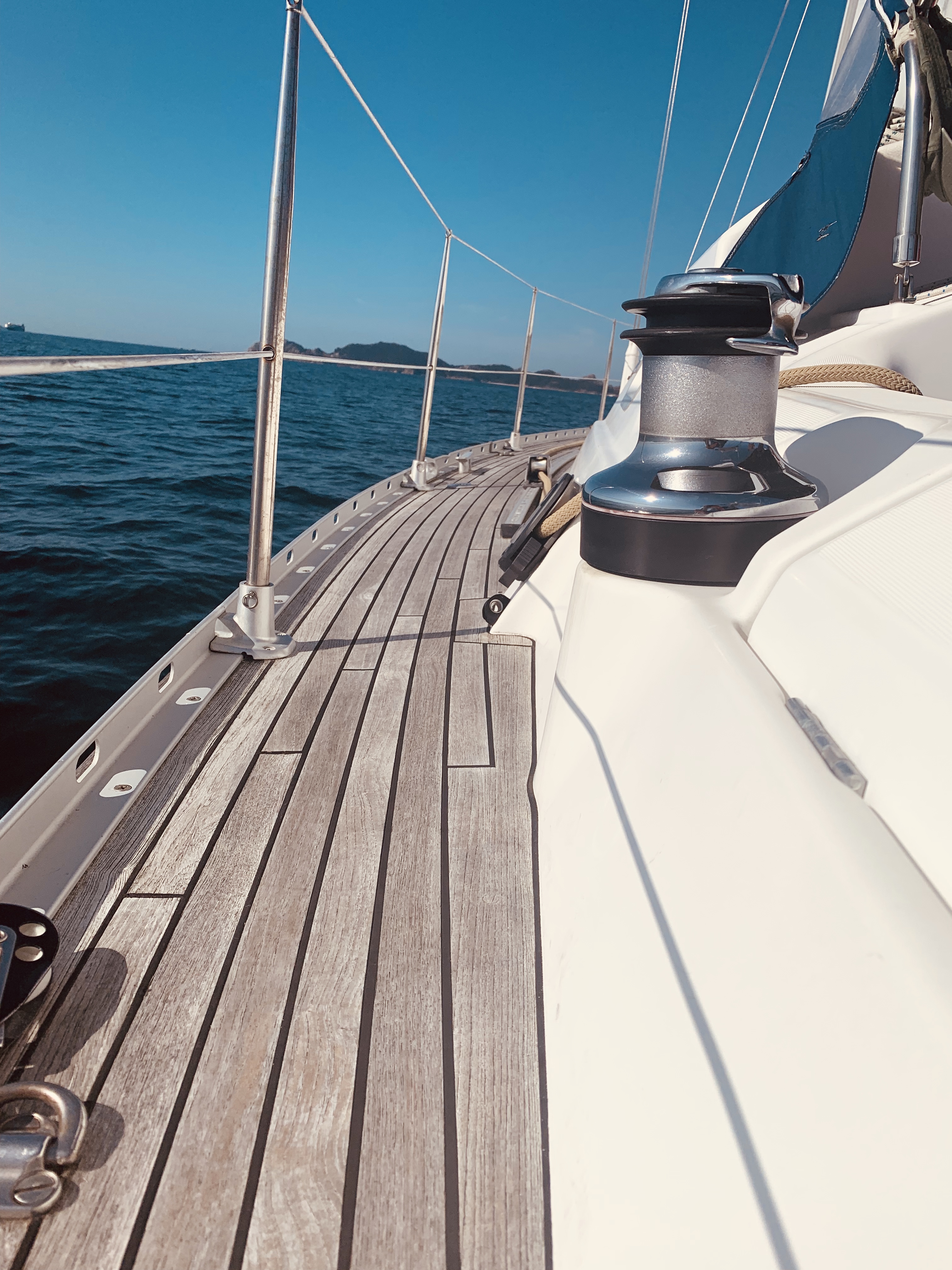
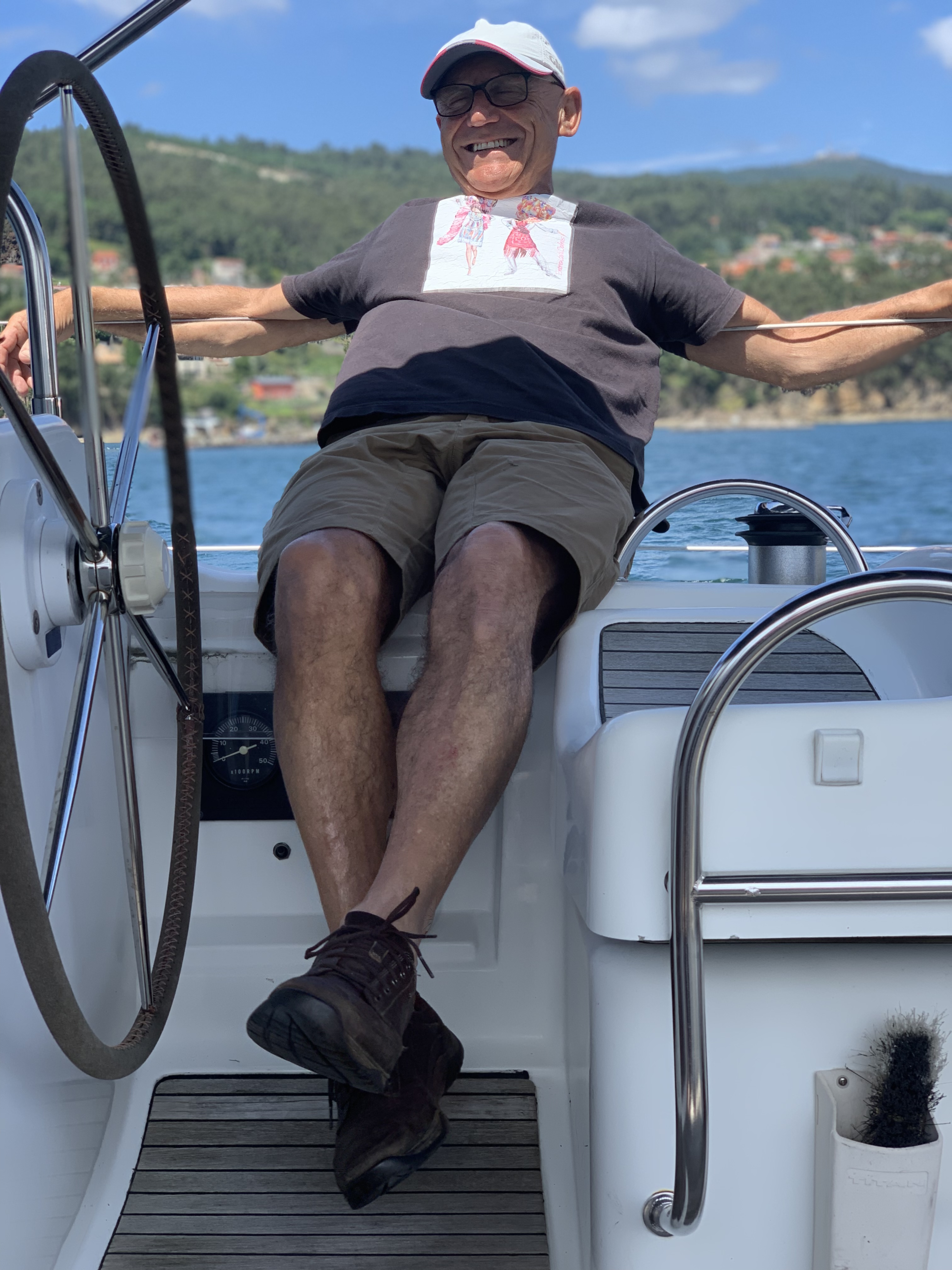
Despite Sena’s concerns, we made it safely to Praia de Rocher, anchored up and piled into the (very) small dinghy hanging from the back of the boat for the short transfer to the beach. Sena again looked very concerned as we pottered away from the relative safety of the yacht.
Carlos deftly navigated us towards shore but, unfortunately, did not do such a great job of reading the small shore break. As we approached, our small, overloaded craft was stuck by a particularly vicious wave which upended our dingy and unceremoniously deposited everyone (including towels, jumpers, phones etc) on top of Daddy and into the chilly Atlantic water.
Much squealing, some swearing and quite a lot of 4 year old crying followed as we fished children out of the (waist deep) water and attempted to save jumpers, phones and other belongings from the worst of the wet (with very limited success). The almost exclusively nude patrons of the beach looked on with amusement.
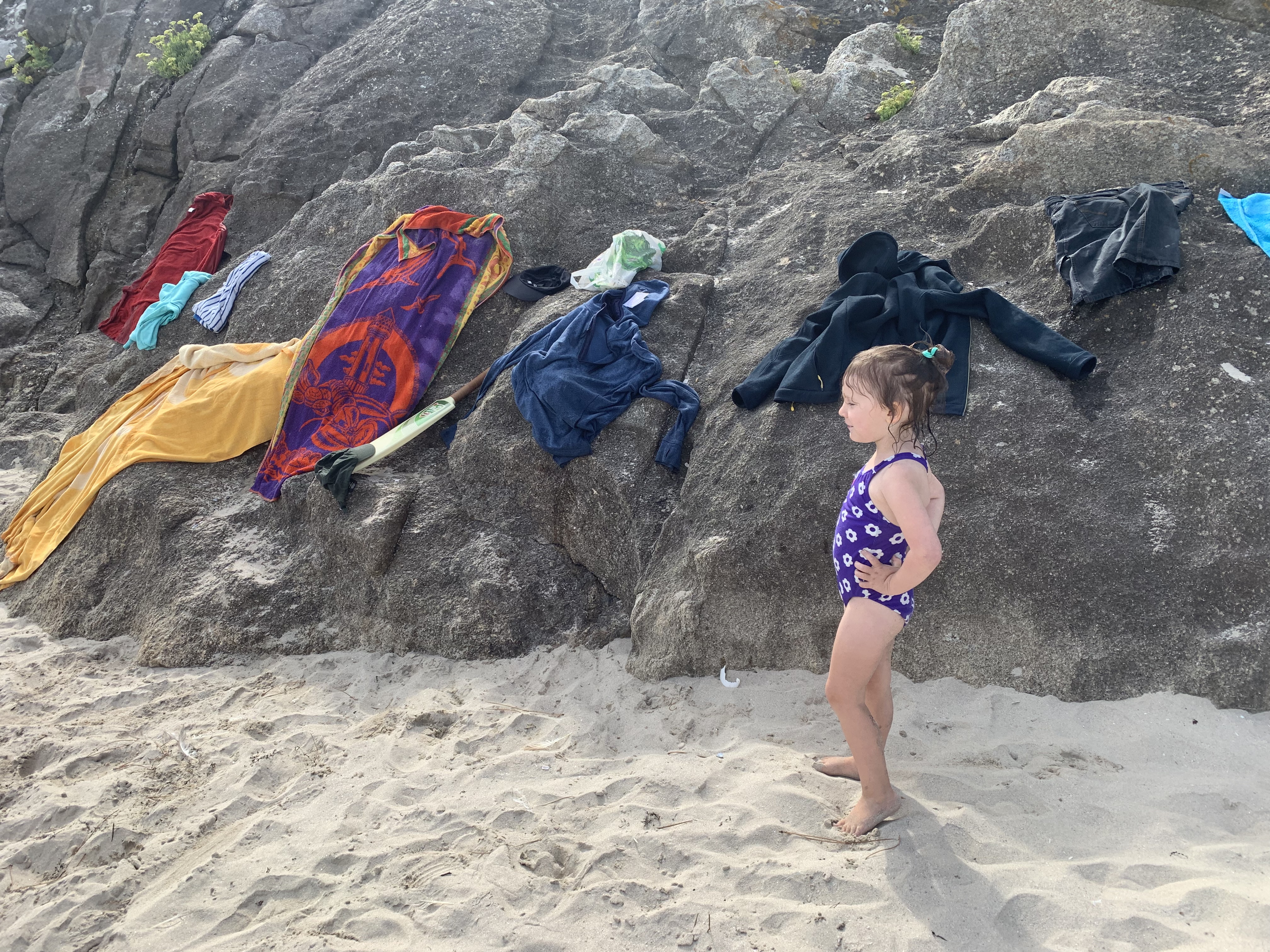
Ultimately, no damage done, except maybe to future psychologist bills for Sena.
We spent a nice hour or so on the beach, trying desperately to dry our only jumpers in the rapidly fading afternoon light and (unsuccessfully) educate naked Spaniards on the subtle art of beach cricket.
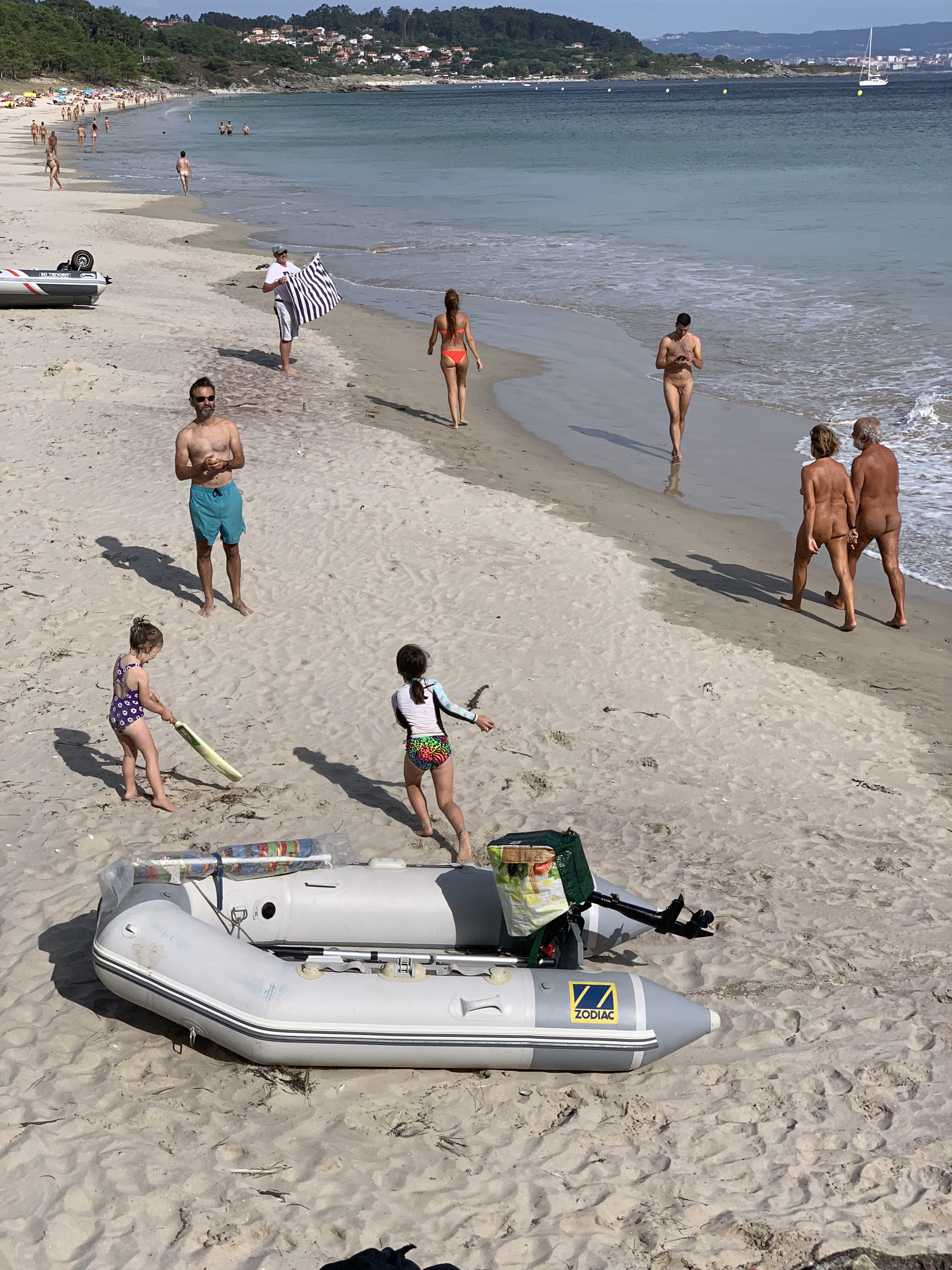
Despite Sena’s protestations, it was then back in the offending dingy for the short trip back to the boat, for a lovely dinner of Carlos’s left over paella (yum) and good wine.
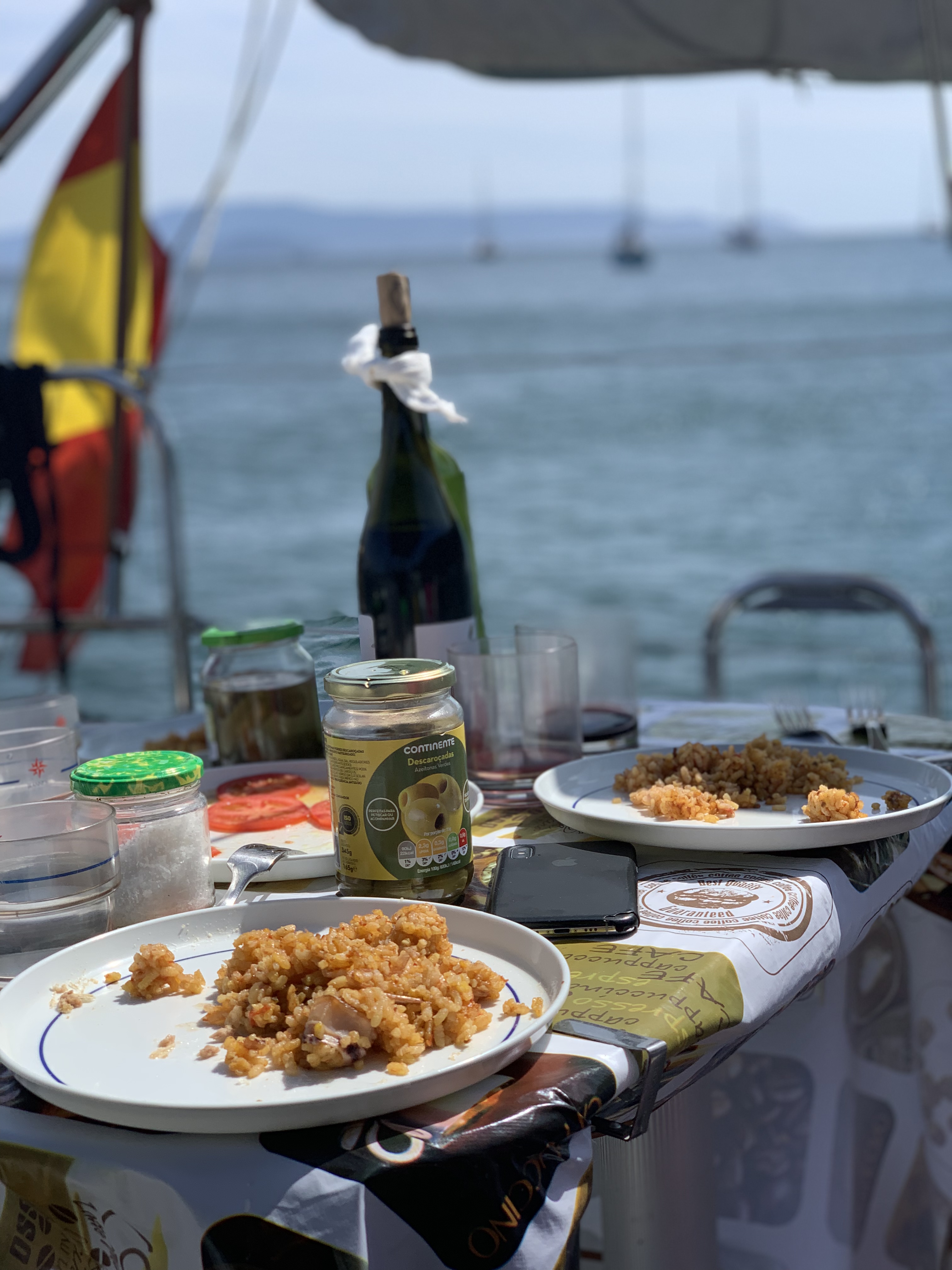
As the light faded, we shifted the boat to a mooring at the base of some cliffs recommended by Carlos’s friend, a local of these parts. As light faded, everyone settled in; warm dry and happy again after the excitement of the afternoon. The boat rocked gently as the water lapped against it in the largely protected cove and we settled in for the night.
We were awoken at 1230 by some rubbing sounds outside, then something scraping the boat underneath our bed. Some bright lights from a fishing trawler. Carlos is up now and shouting back. Anthony joins him on deck. The wind has picked up as forecast and our shelter is not as effective as it was a few hours ago. The tide is low and we have drifted on our mooring to within metres of the rocks at the base of the cliff. The bottom of the boat is flirting with the rocks. Carlos is consulting tide tables and looking scared. This is not particularly reassuring. He makes the decision to move. Tries to start the engine, but it is scraping the bottom of the sea floor. Swears. Tries again. Same. Third time lucky and we have power. Anthony unhooks us from the mooring and we escape into deeper water. The kids continue to snore. Carlos looks like he has aged 10 years. We return to the safety of the beach mooring and return to bed. Liz is looking wide eyed and worried, her confidence in our skipper taking a major beating.
The next day dawns calmer than forecast, the wind seemingly has blown itself out overnight. We have some breakfast and then head over to the Cies Islands under sail, keen to spend the day exploring the islands.
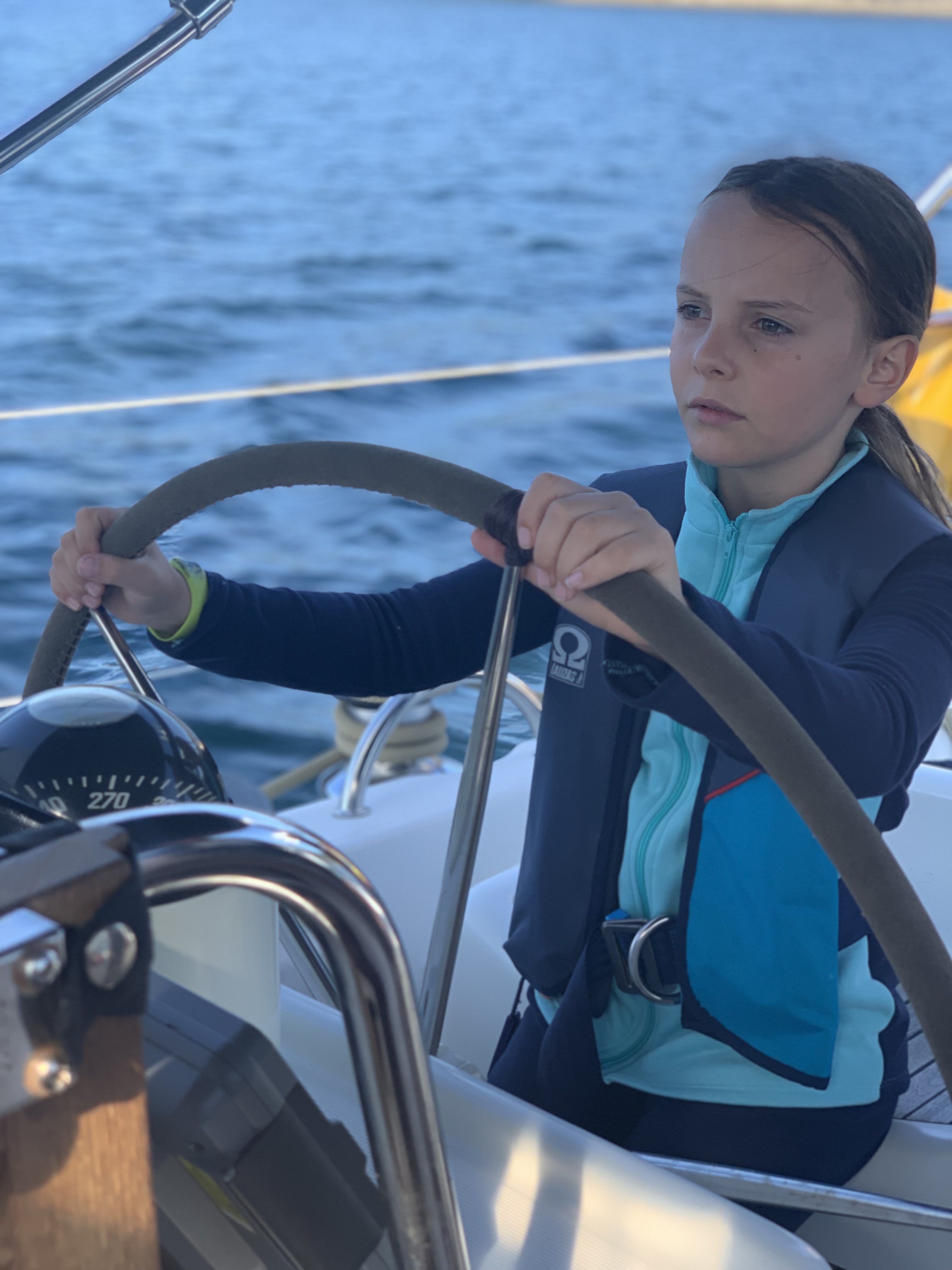
As we reach the channel between the peninsula and the islands we feel the effects of the Atlantic, unshielded by the headlands or the islands themselves. The swell, coupled with the increase is wind and the angle of the boat as it beats a course towards the islands, is too much for Sena, and she expresses this in no uncertain terms. We rapidly furl the sails and proceed under motor, now with Ellie helming. Still a bit bumpy, but much much quieter!
The Cies Islands are a rocky, 3 island archipelago guarding the mouth of the Vigo River which climb steeply out of the Atlantic. Two of the islands (Monteaguado and Morrazo) are effectively joined by the Rodas Beach (famously voted by the Guardian Newspaper as the most beautiful beach in the world in 2007). Tourist numbers are tightly controlled and access is limited.
We moored up off Rodas Beach and made our way (very carefully and much to Sena’s disappointment) to shore on the dinghy – this time managing to keep it the right way up all the way in.
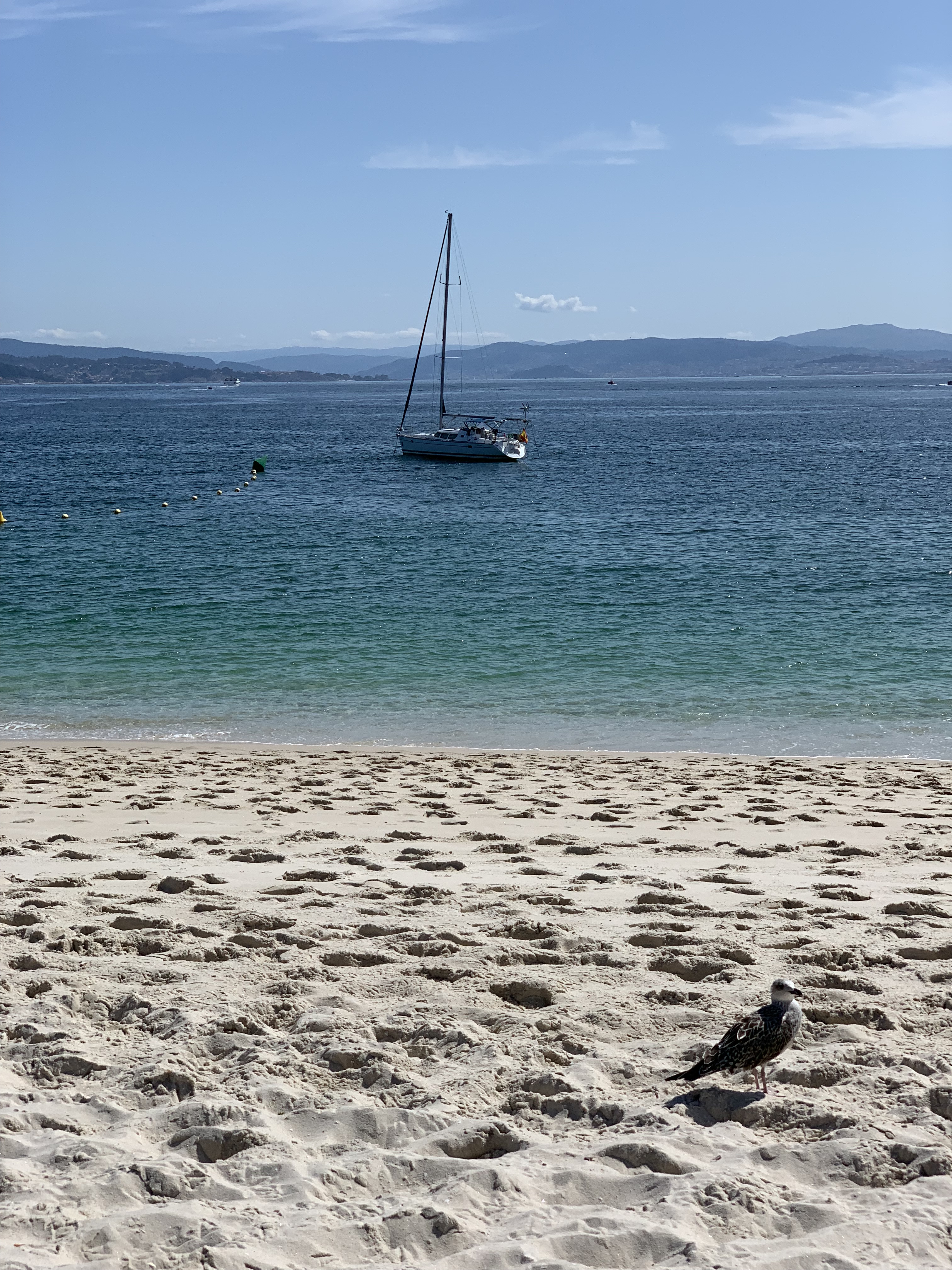
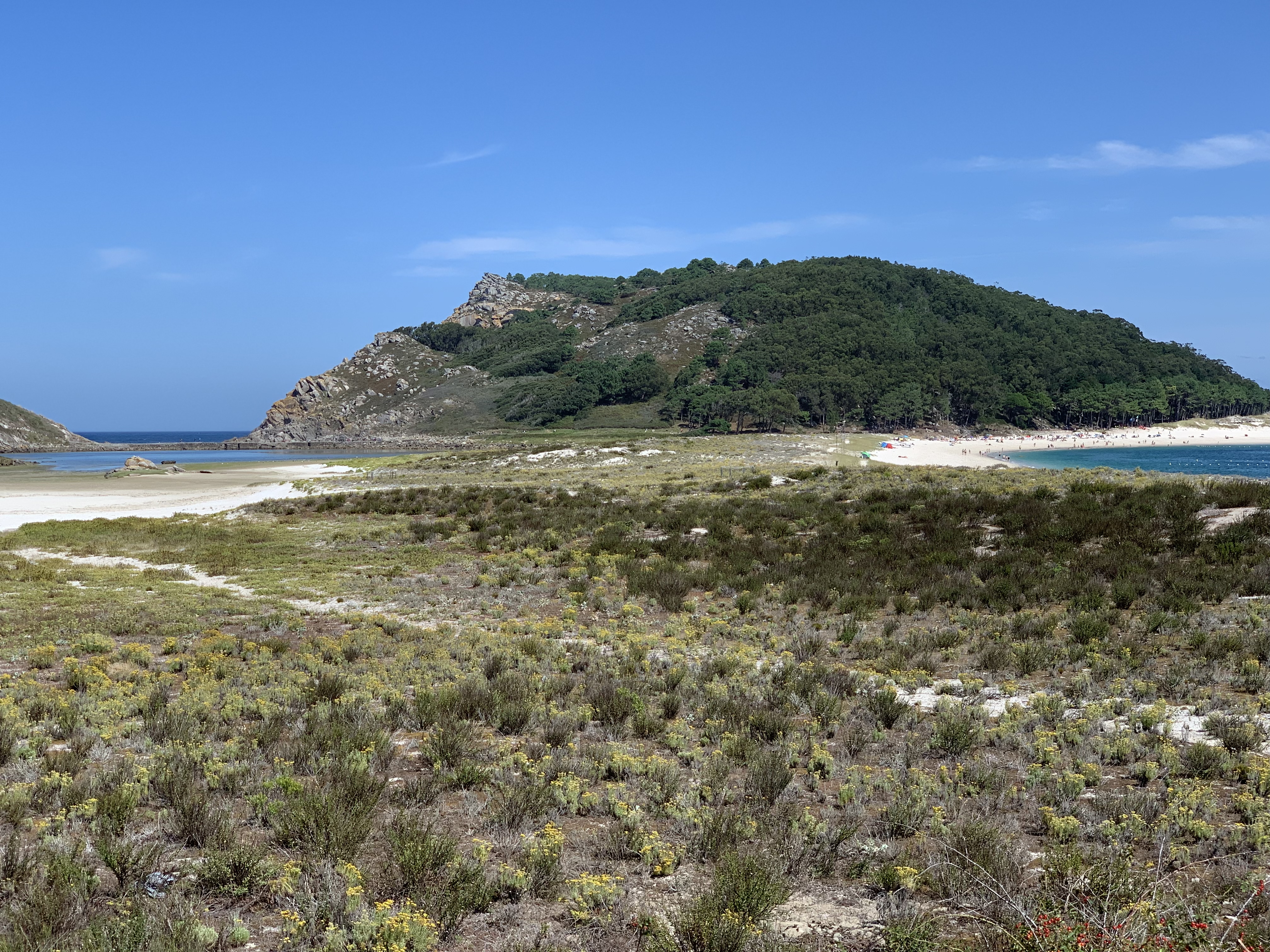
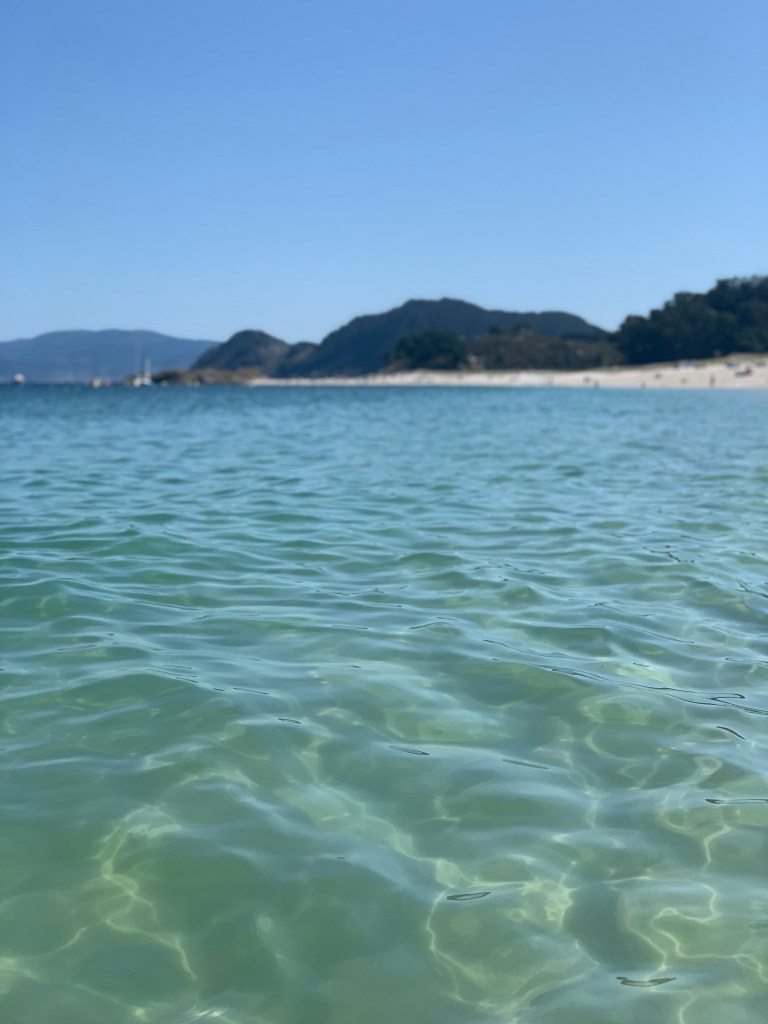
The beach is indeed beautiful – clear waters, white sands (fine enough that you sink when you’re walking) and backed by forests which give way to craggy mountains towards the west. Beautiful, yes. Best beach in the world? Maybe 2007 was a bad year for beautiful beaches or something.
Our first stop was the Faro de Cies, the lighthouse which sits high above the Atlantic. The walk is some 2.5kms from the beach, up a series of stairs and switch backs with limited shade once you get out of the pine forests which back Rodas Beach. It is absolutely stunning – on one side the islands stood watch over the Atlantic crashing into the base of the cliffs some 100+ metres below. On the other, the pine forests behind Rodas beach and the Vigo River.
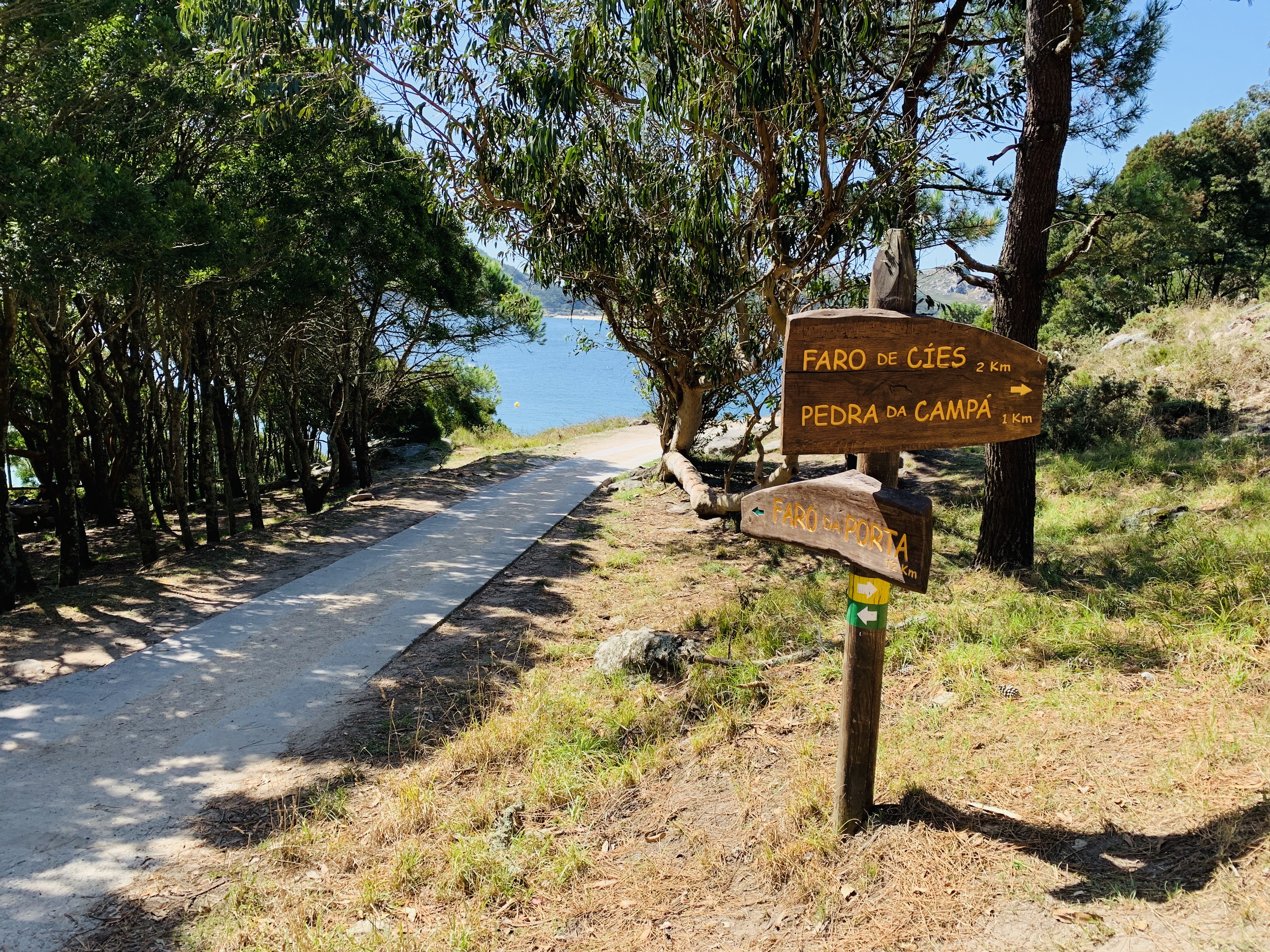
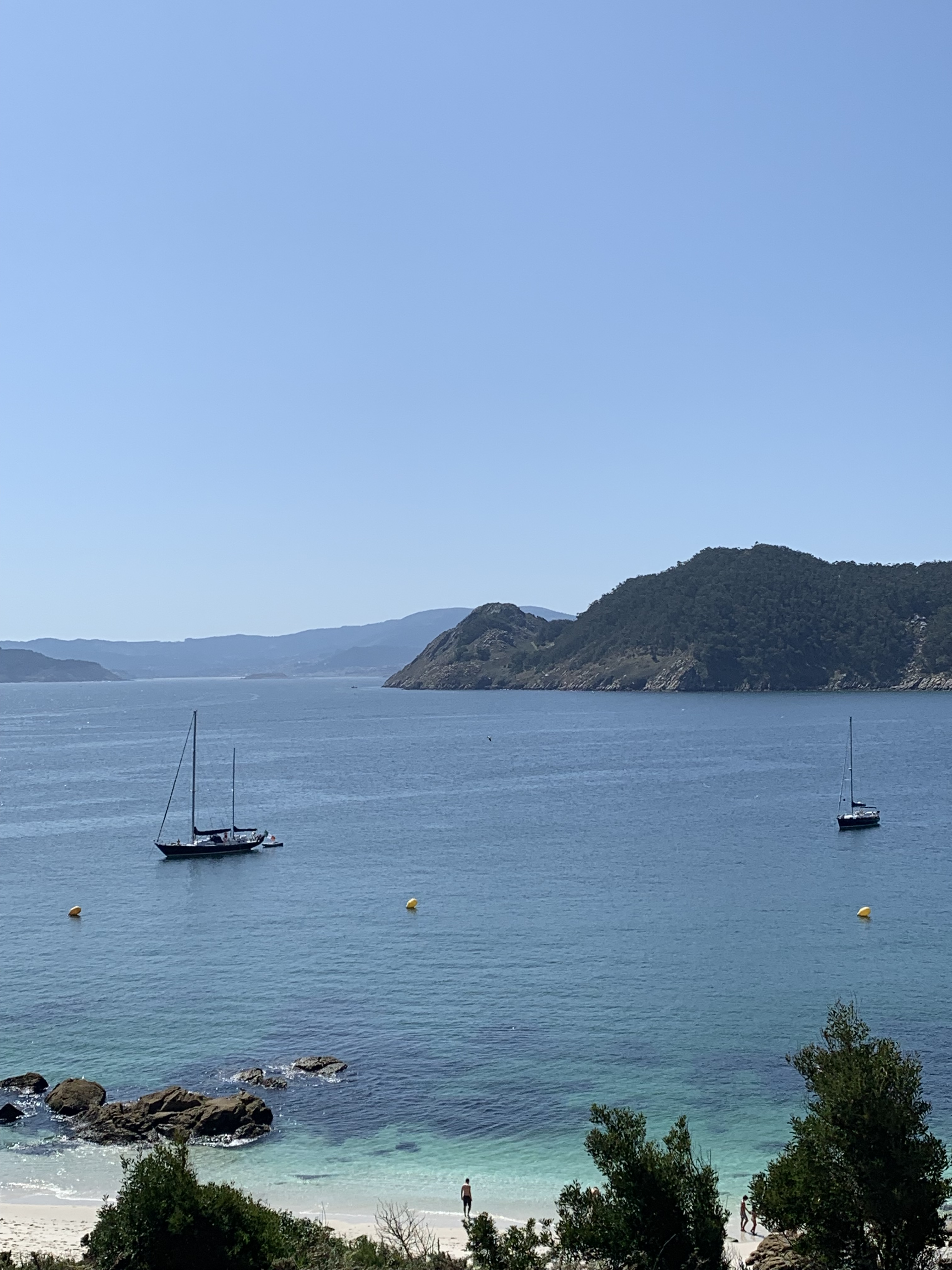
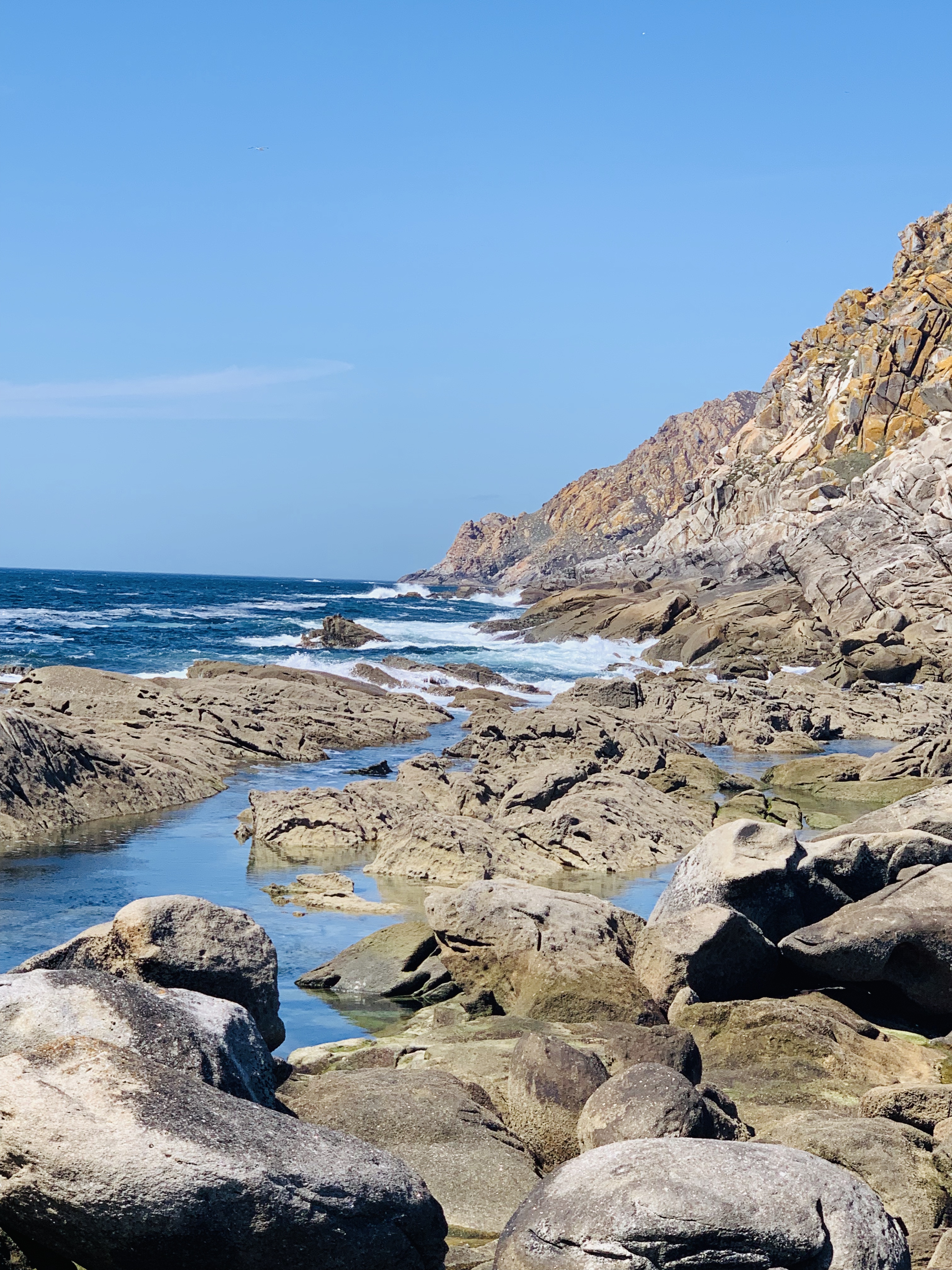
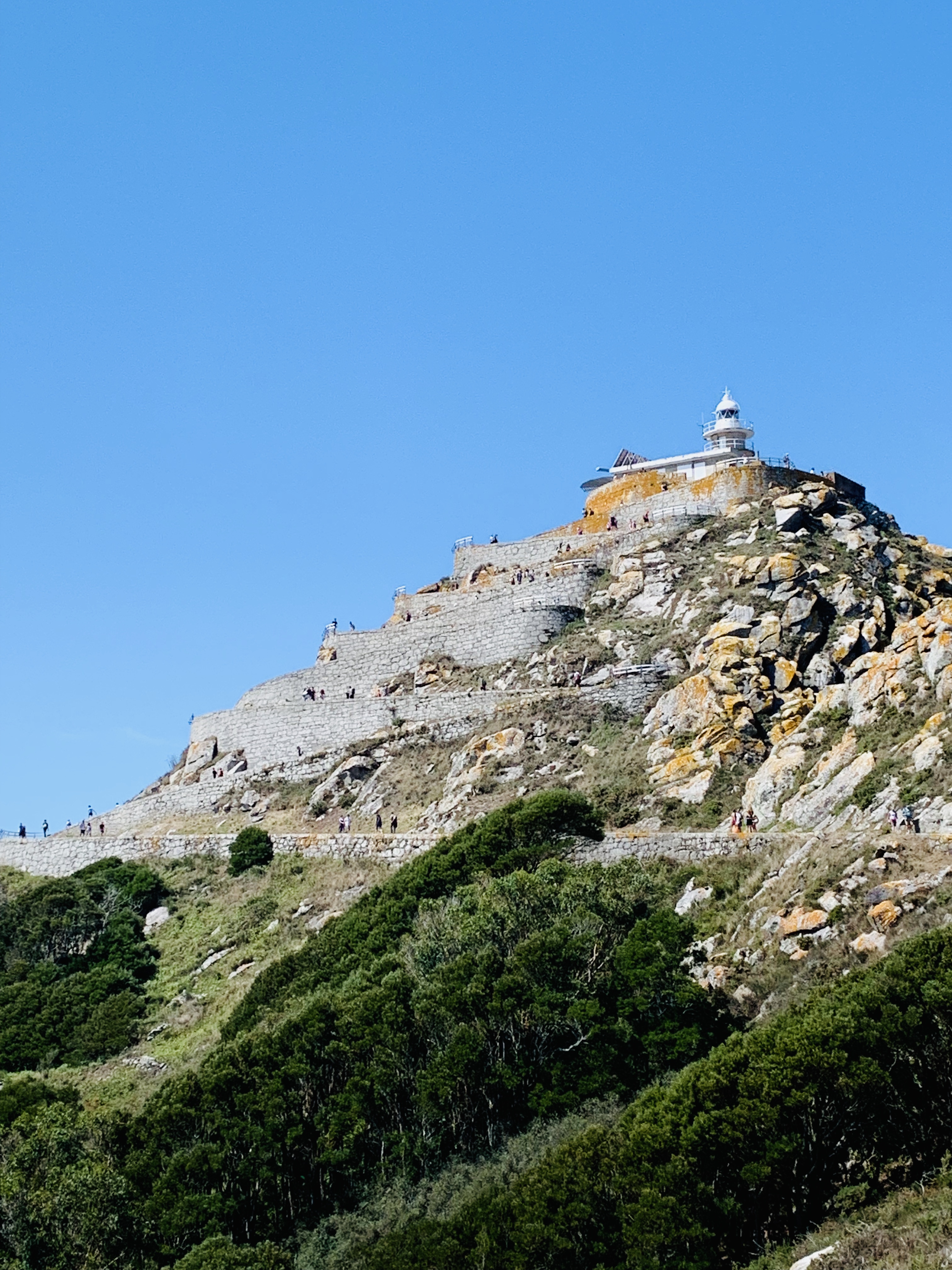
The kids made it to the last set of switch backs then buckled in the heat, refusing to go the last 250 metres. We took it in turns to go up and admire the amazing views – being able to clearly see the Portuguese border some 40 kms to the south and the Fisterra Point some 40 kms to the north.
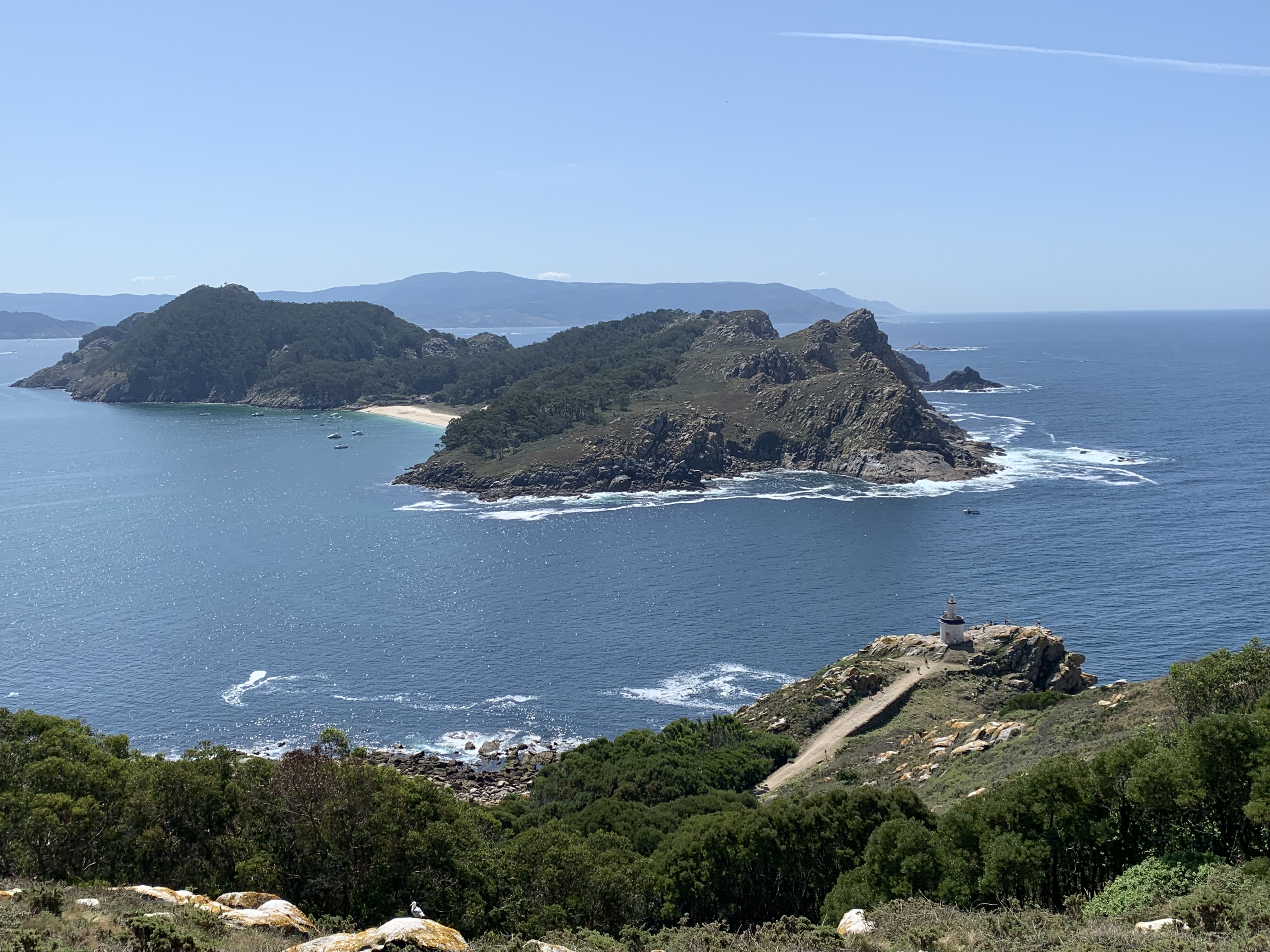
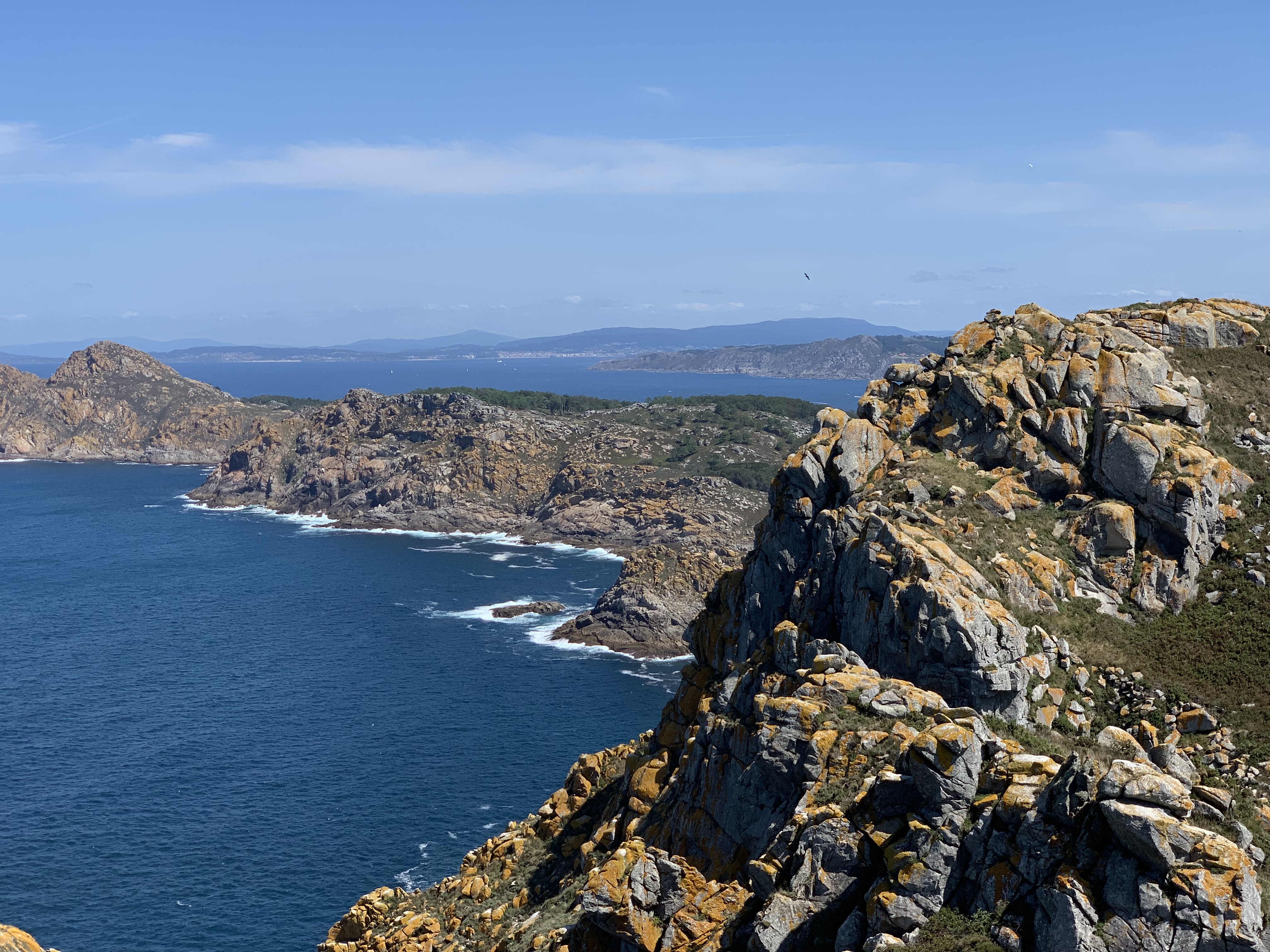
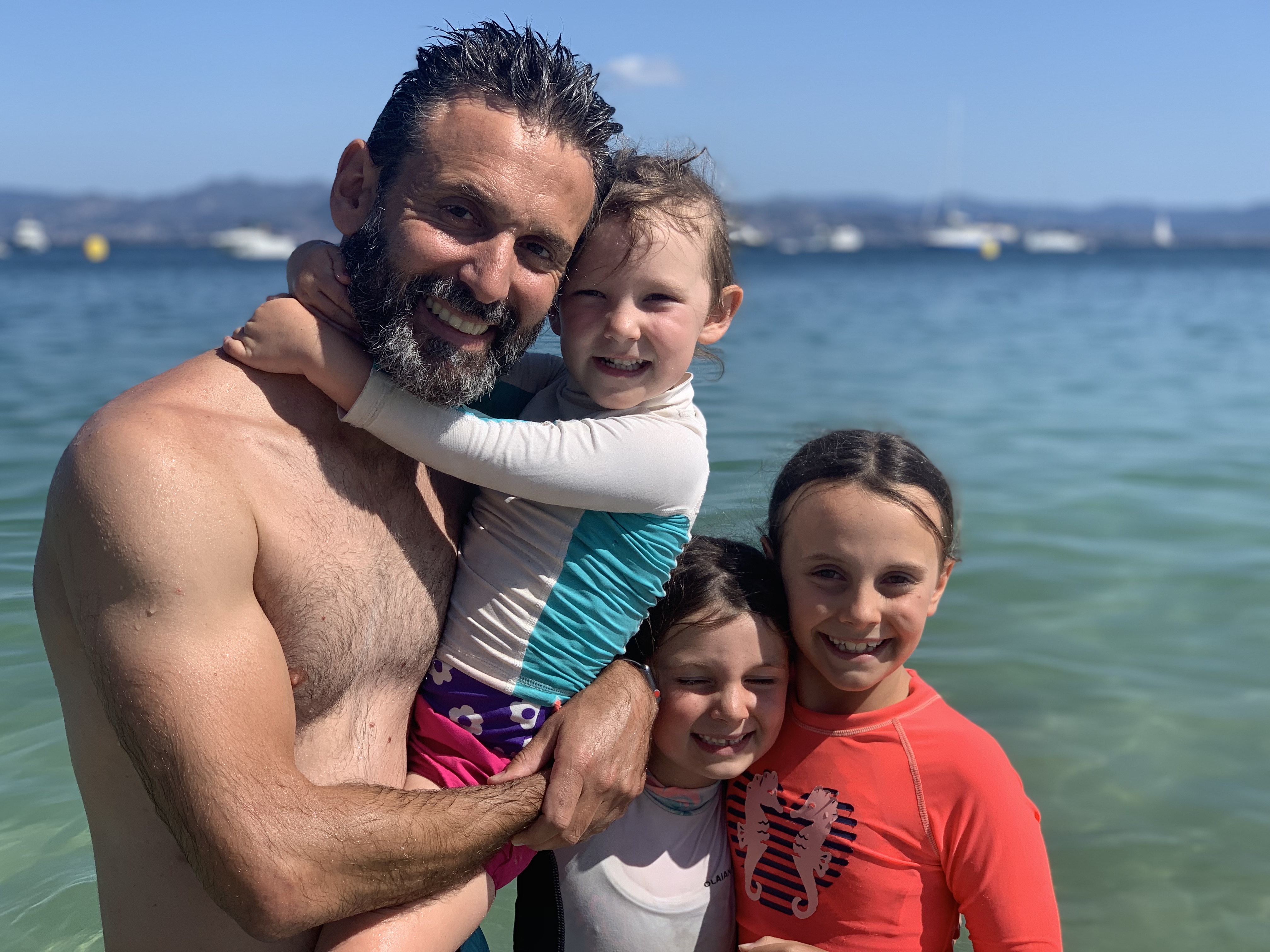
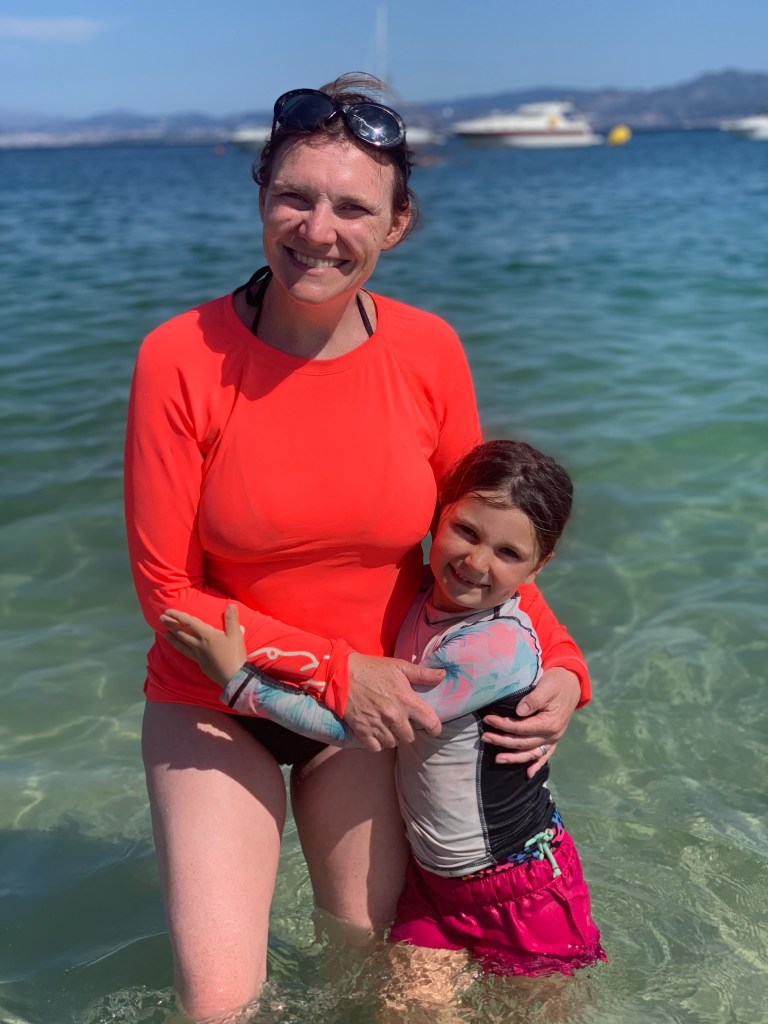
From the lighthouse, we made our way down to a wonderful fish restaurant for lunch and a well earned beer, before exploring the lagoon and even braving the frigid (but crystal clear) waters of Rodas to cool off.
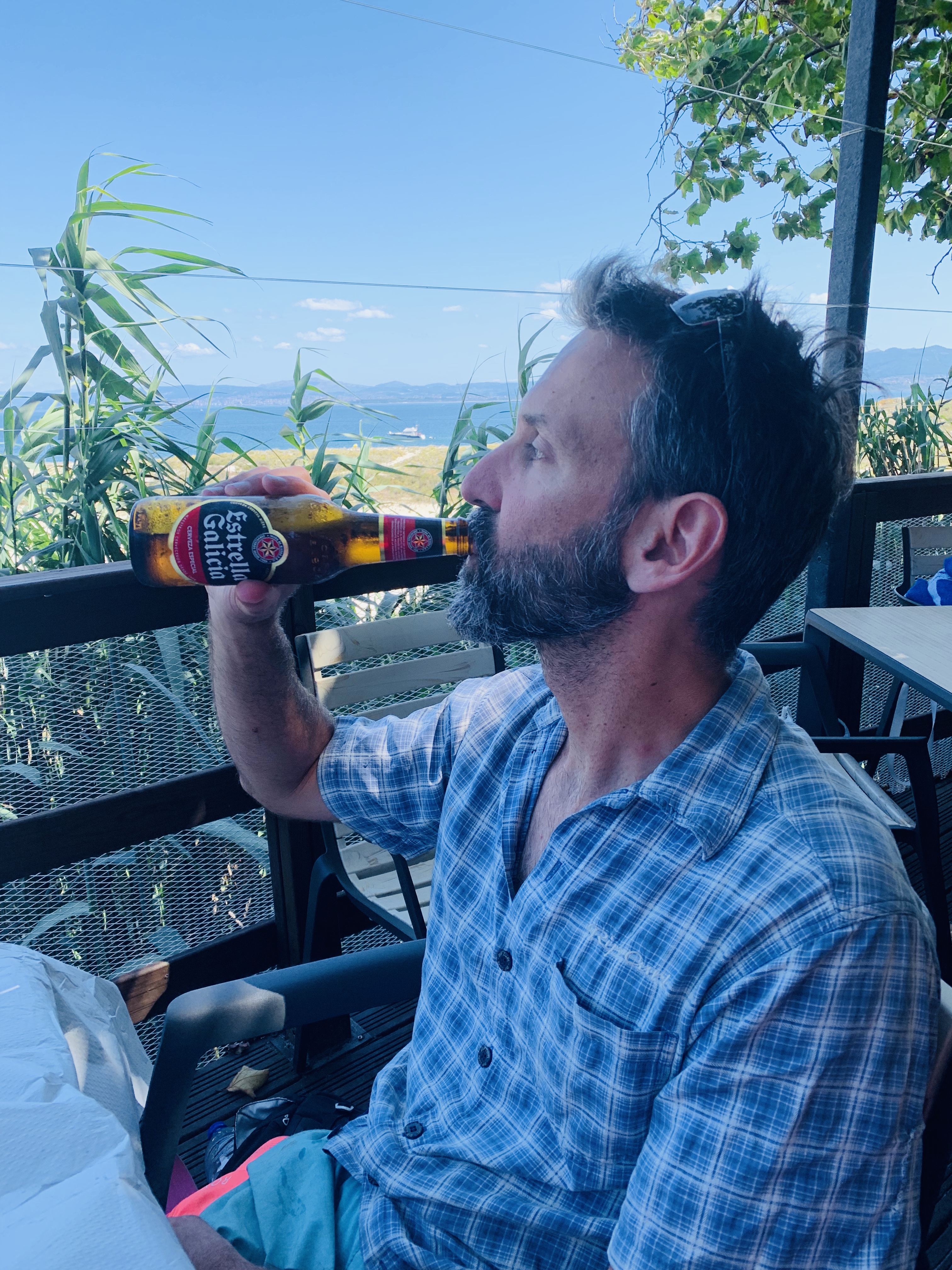
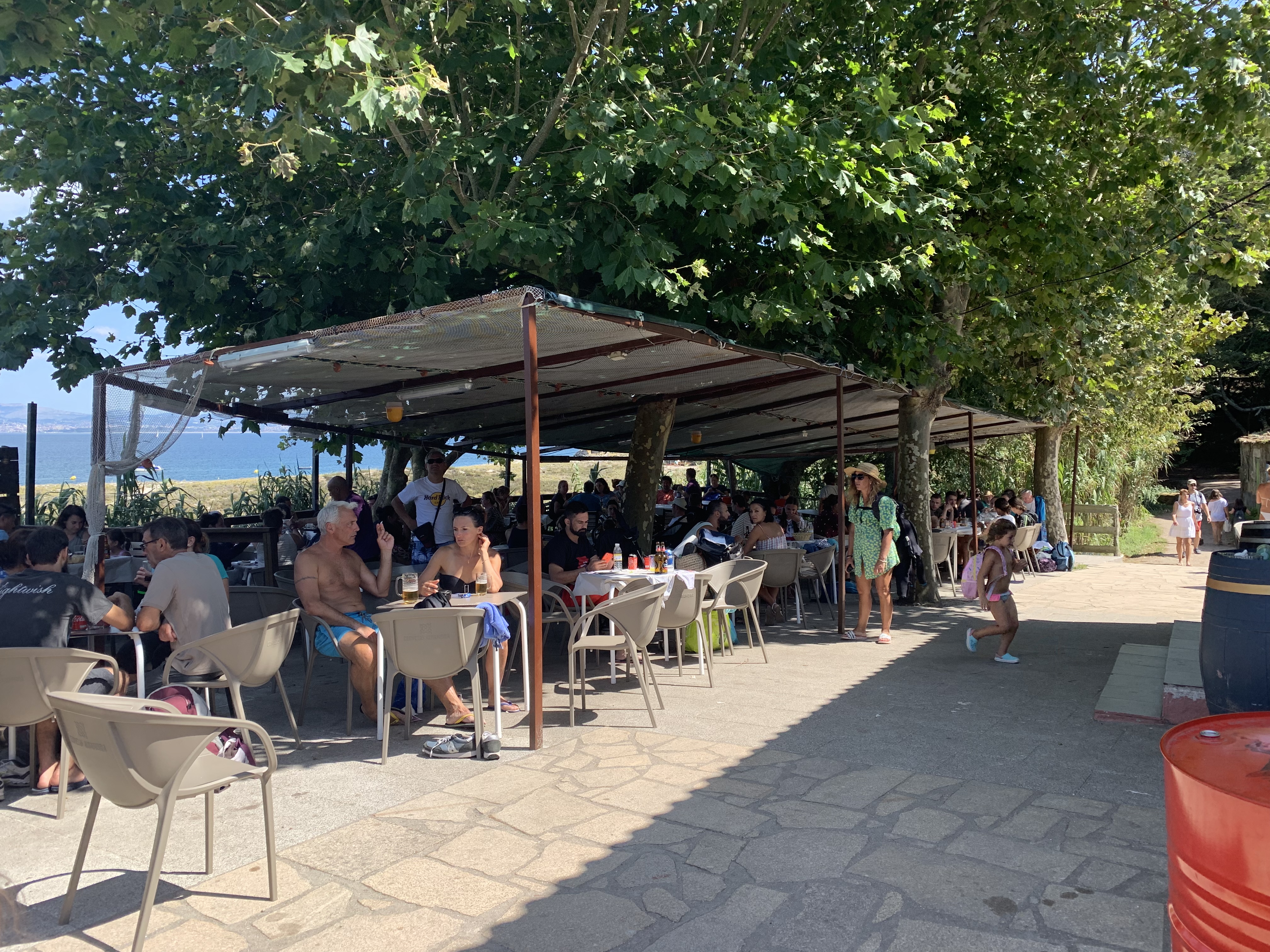
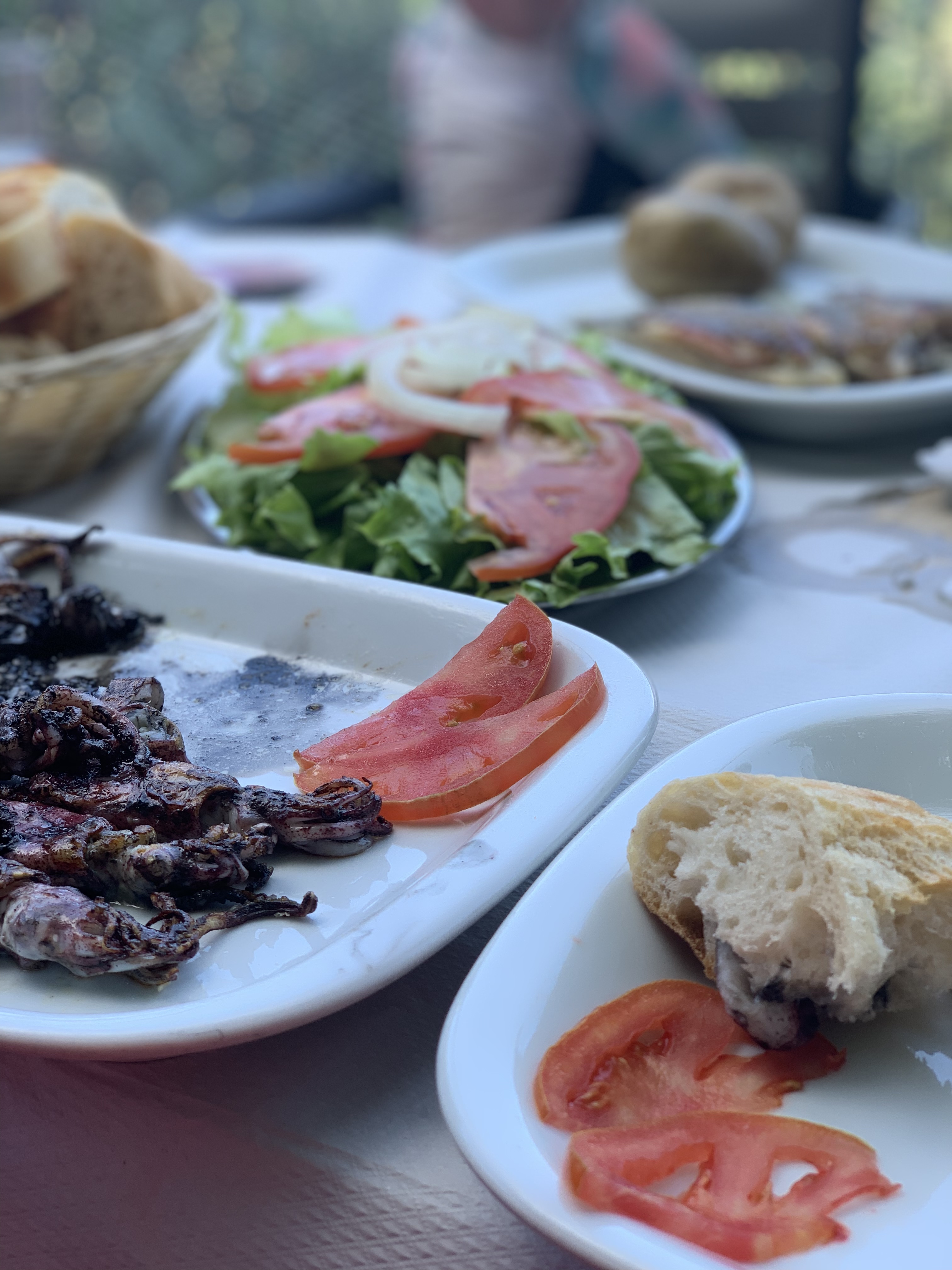
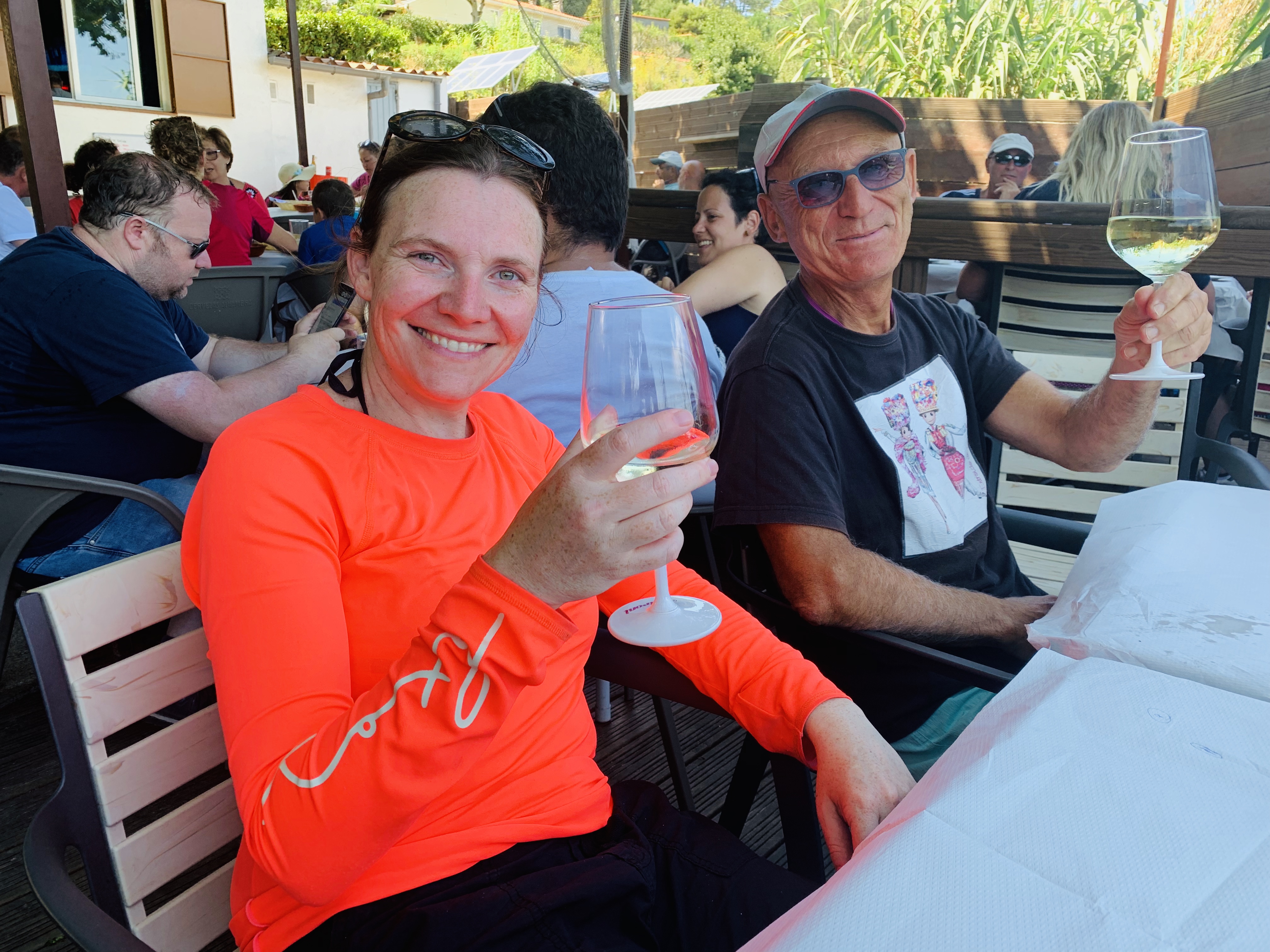
(Side note: we are still very much getting used to the idea that people here mainly go to the beach just to sit on the beach, rather than to go swimming – because the water is so cold. We have discovered that we are definitely more of a warm water family, and would rather spend time *in* the water, rather than just *by* the water when going to the beach!)
From there, it was back to the boat, Sena surviving yet another dinghy crossing despite much protestation. We motored around to another beautiful beach we’d been spying earlier in the day – Praia de Nosa Senora, which was rumoured to be a great snorkelling beach. We anchored up and took a poll of who wanted to come in.
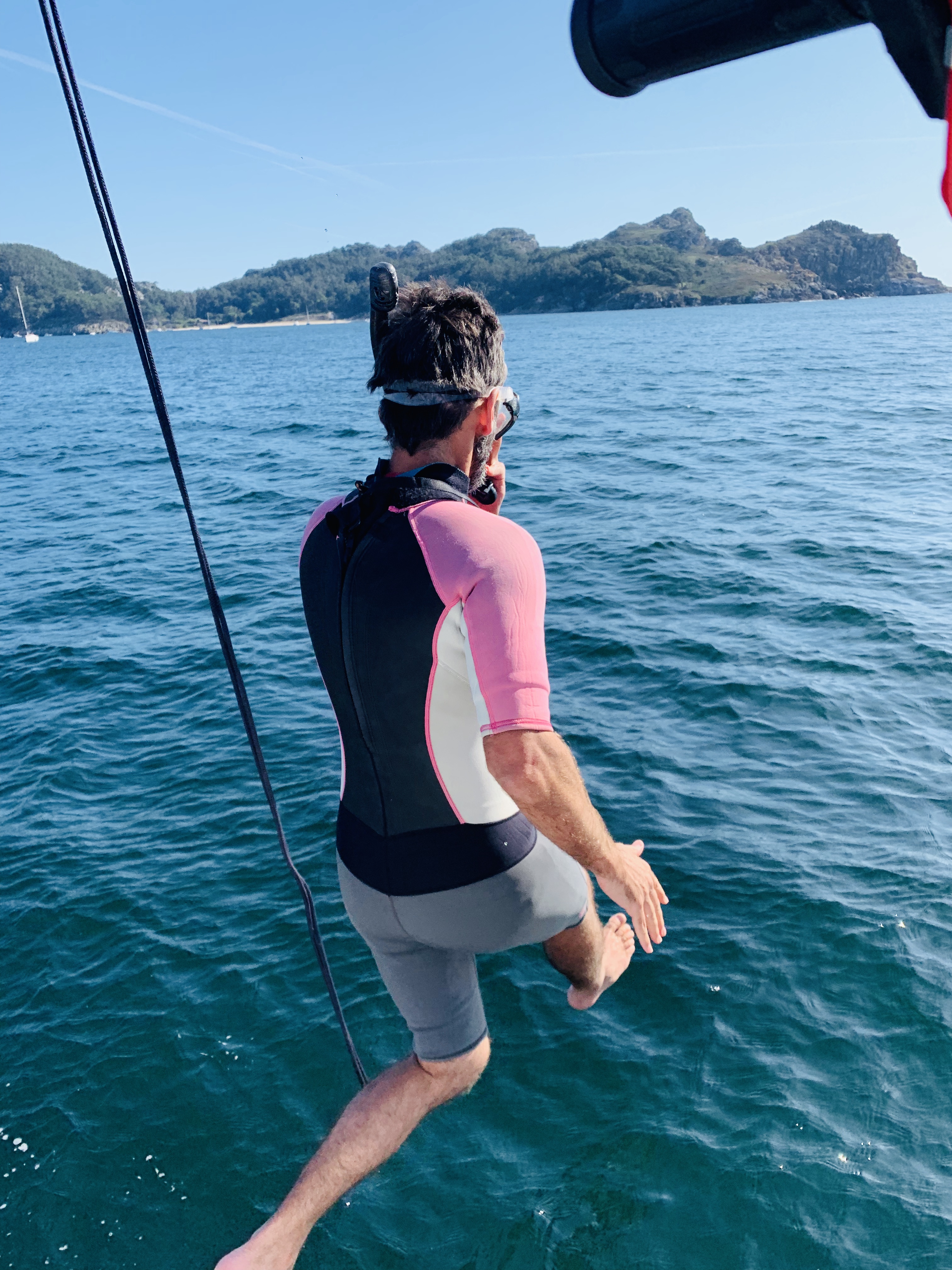
At the thought of diving into those frigid waters, previous support for snorkelling quickly dried up, and it was left to Ant alone to explore. We were moored about 100m from the beach in about 8 metres of water. Ant jumped in…. And could see absolutely nothing. Not even the hull of the boat from 2 metres away. Whilst in other areas of the islands visibility was amazing – you could literally see fish teeming around the boat – but in this particular spot it was hopeless. And there was the small matter of freezing brain and other parts of the anatomy which limited the exploration to a brief 10 or so minutes. Ouch.
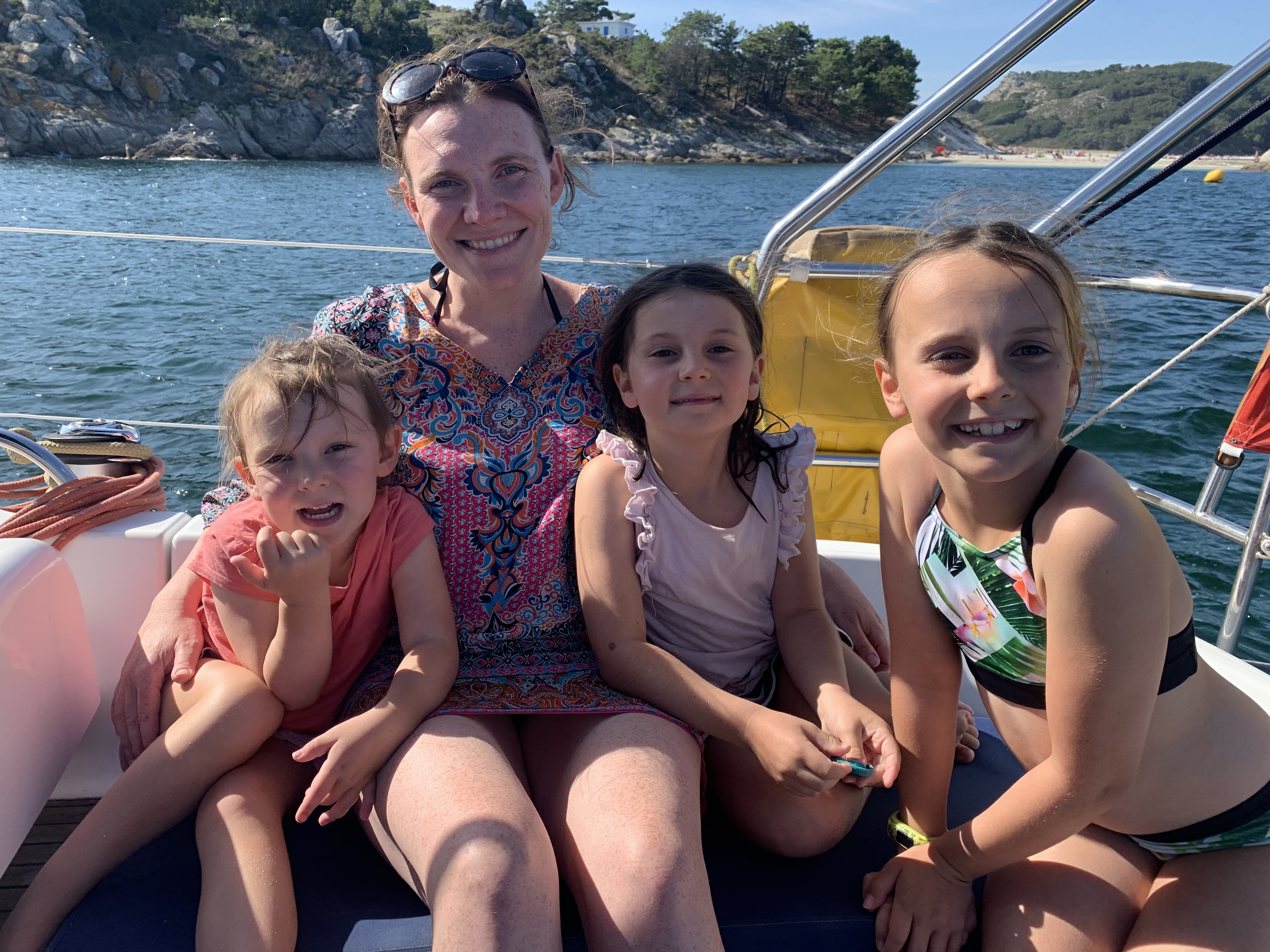
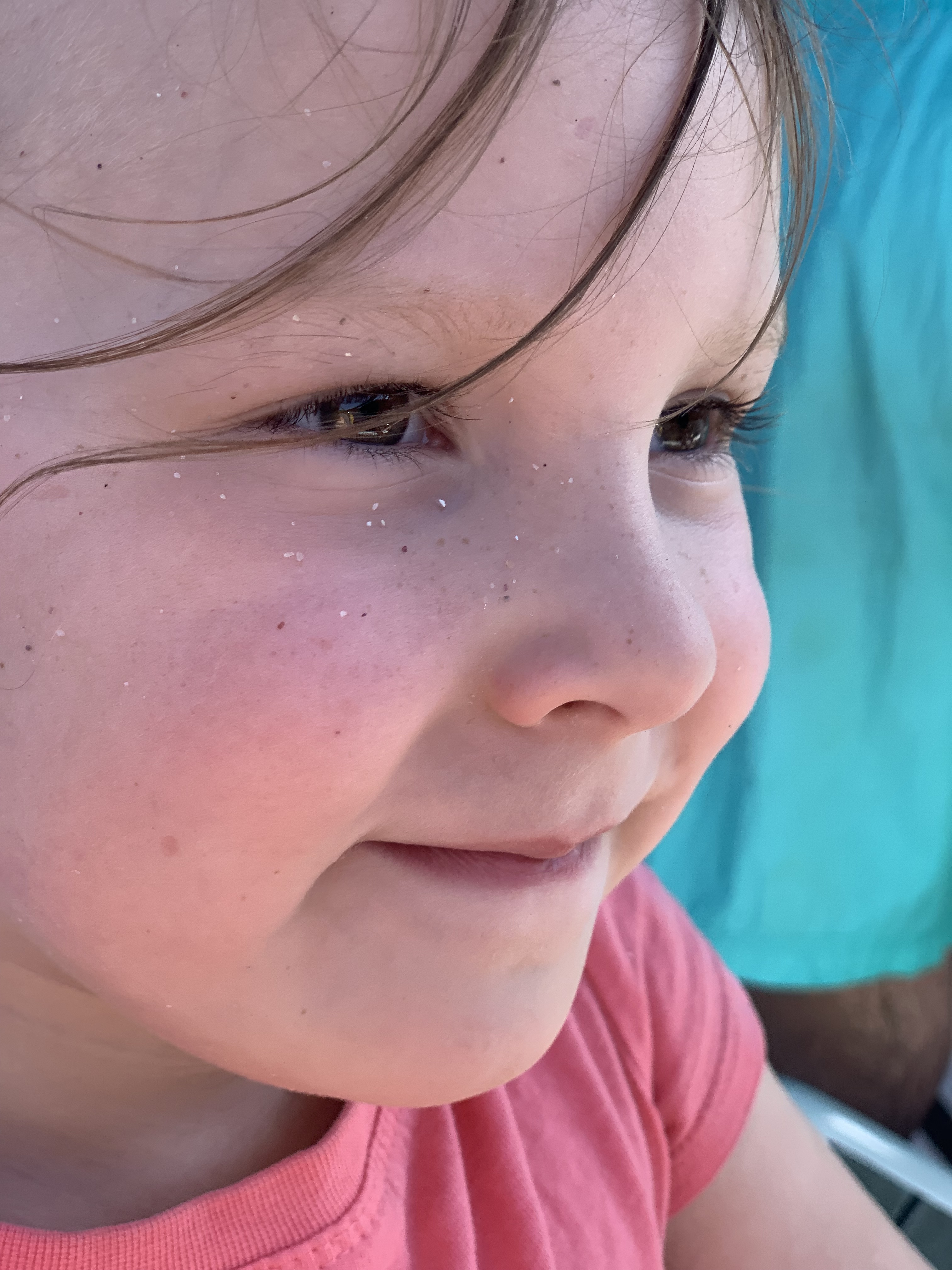
Back up and warm on the boat, we developed a new plan of attack for the remainder of our trip. Instead of mooring up on the islands for the evening, we decided to take advantage of the freshening breeze to sail back towards port tonight, thus avoiding the forecast calm of the following day, and increasing the chances of us making our optimisitic 10am departure the following day for the 8 hour drive to Bilbao via Santiago de Compostela.
The sail back was amazing. It was after 7pm when we set off, the sun was softening in the lat-ish afternoon (even in late August, it was not getting dark until after 10pm) and the wind was a consistent 15 or so knots. Perfect sailing weather and everyone felt it.
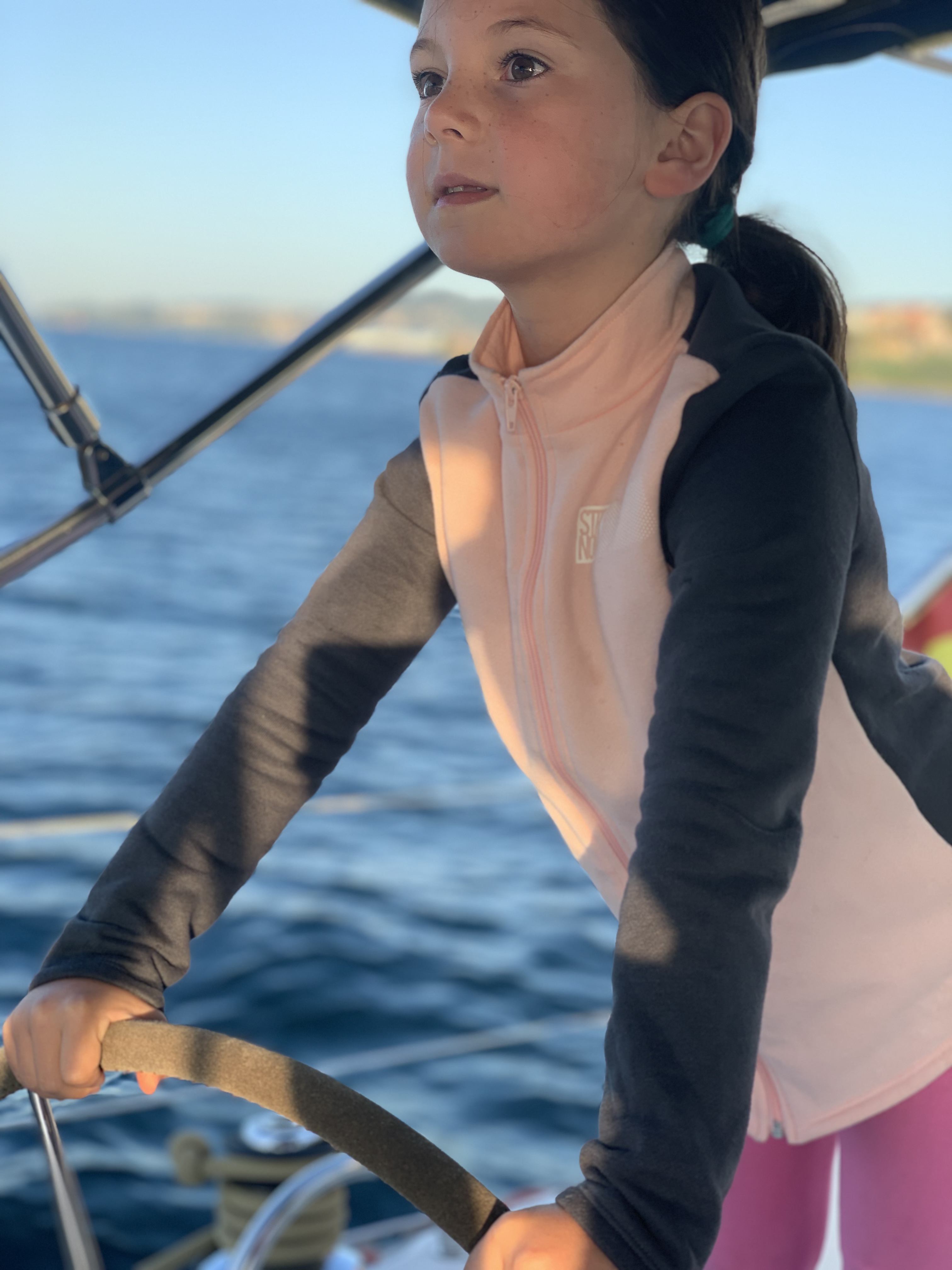
We made the crossing from the islands to the river under sail and even Sena forgot to be scared. Everyone had a turn at helming over the next few hours as we made our way down the river to a secluded cove for a late dinner and for the night.
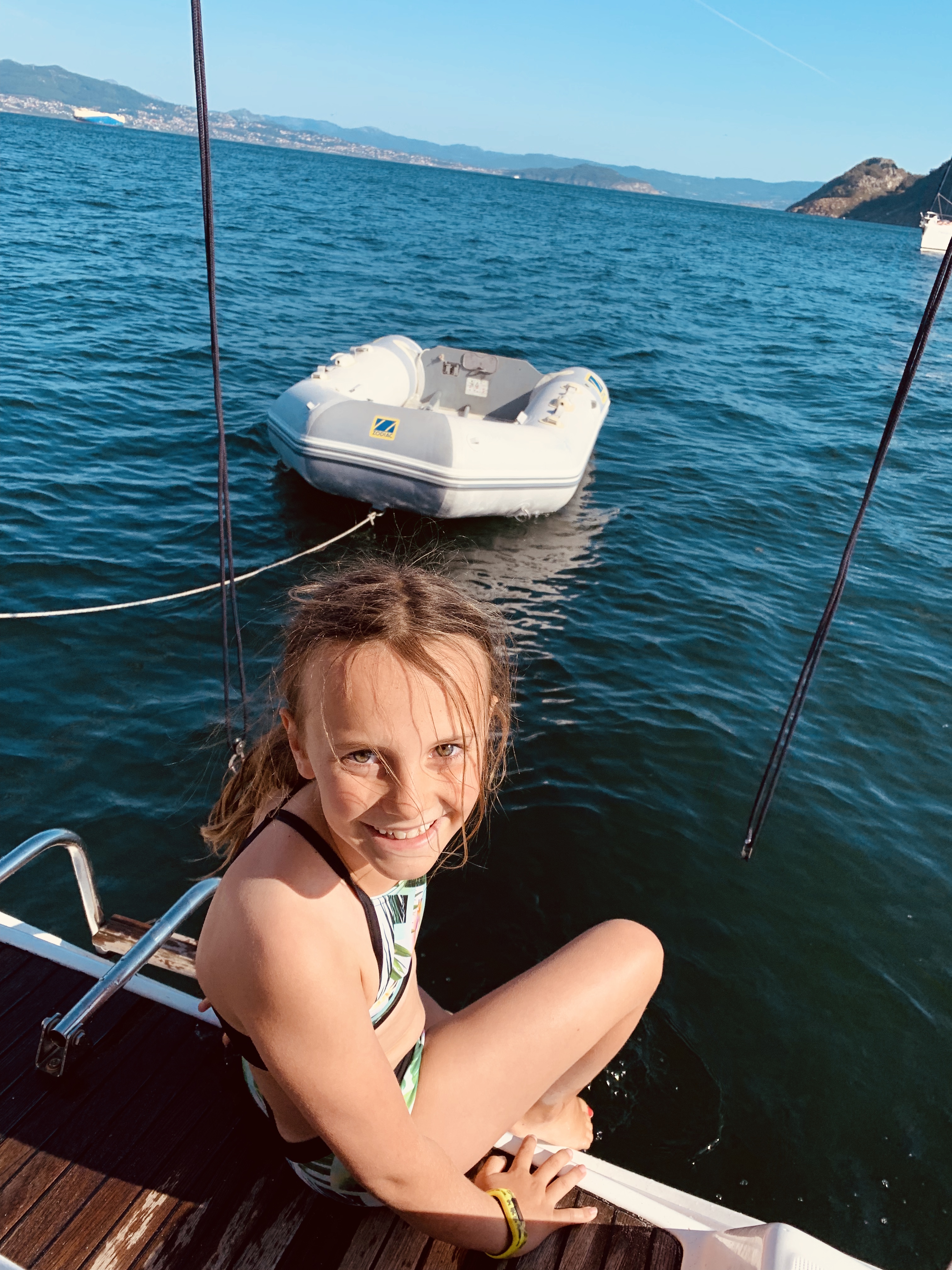
It will be this period that we remember most of the trip. The kids loving the control (Carlos acknowledging that Jessie was the youngest person ever to helm his boat), no one was scared anymore when the boat started to tip and everyone was thinking ‘yep, we could definitely do this as a family when we get back to Australia.’
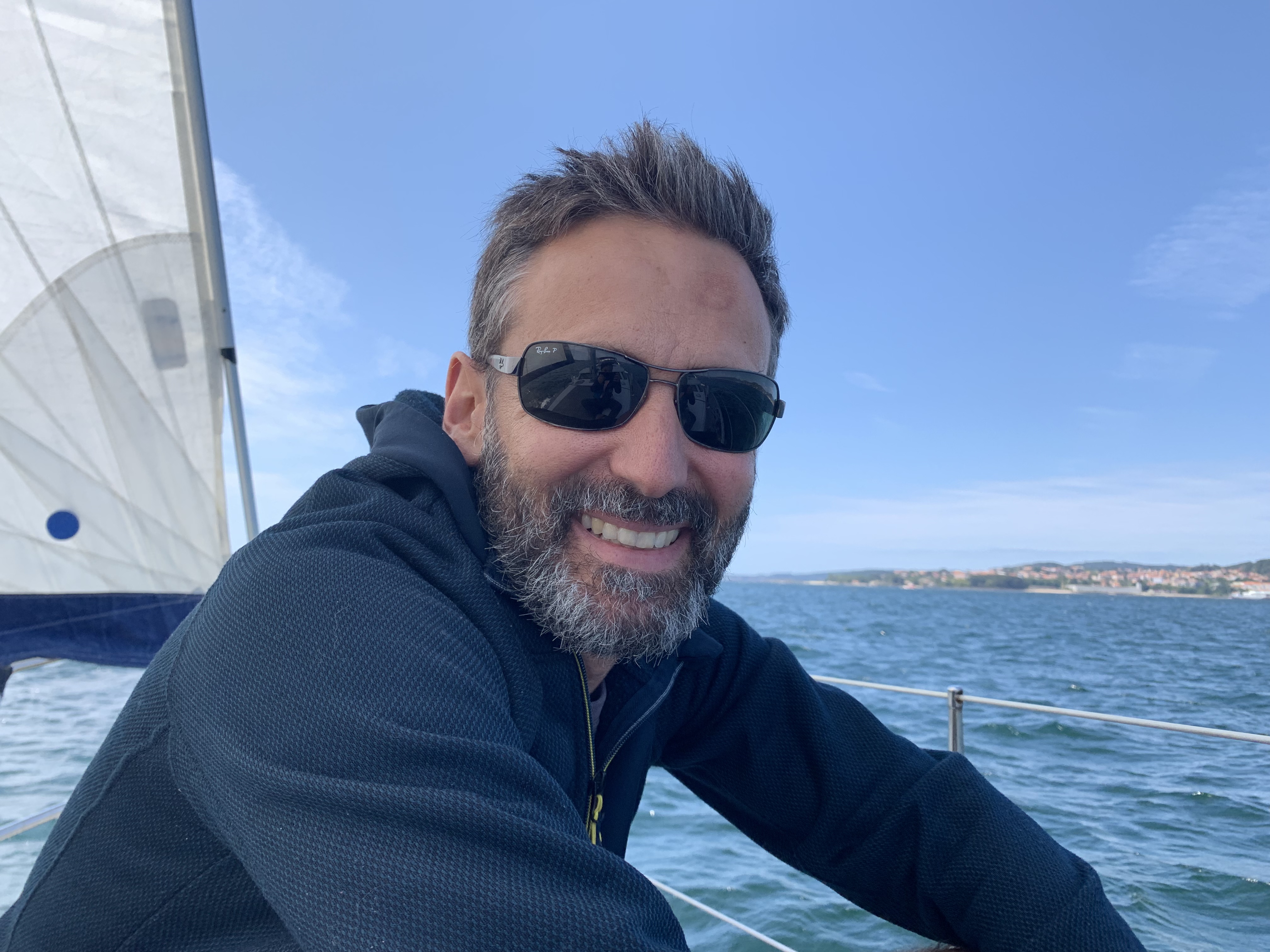
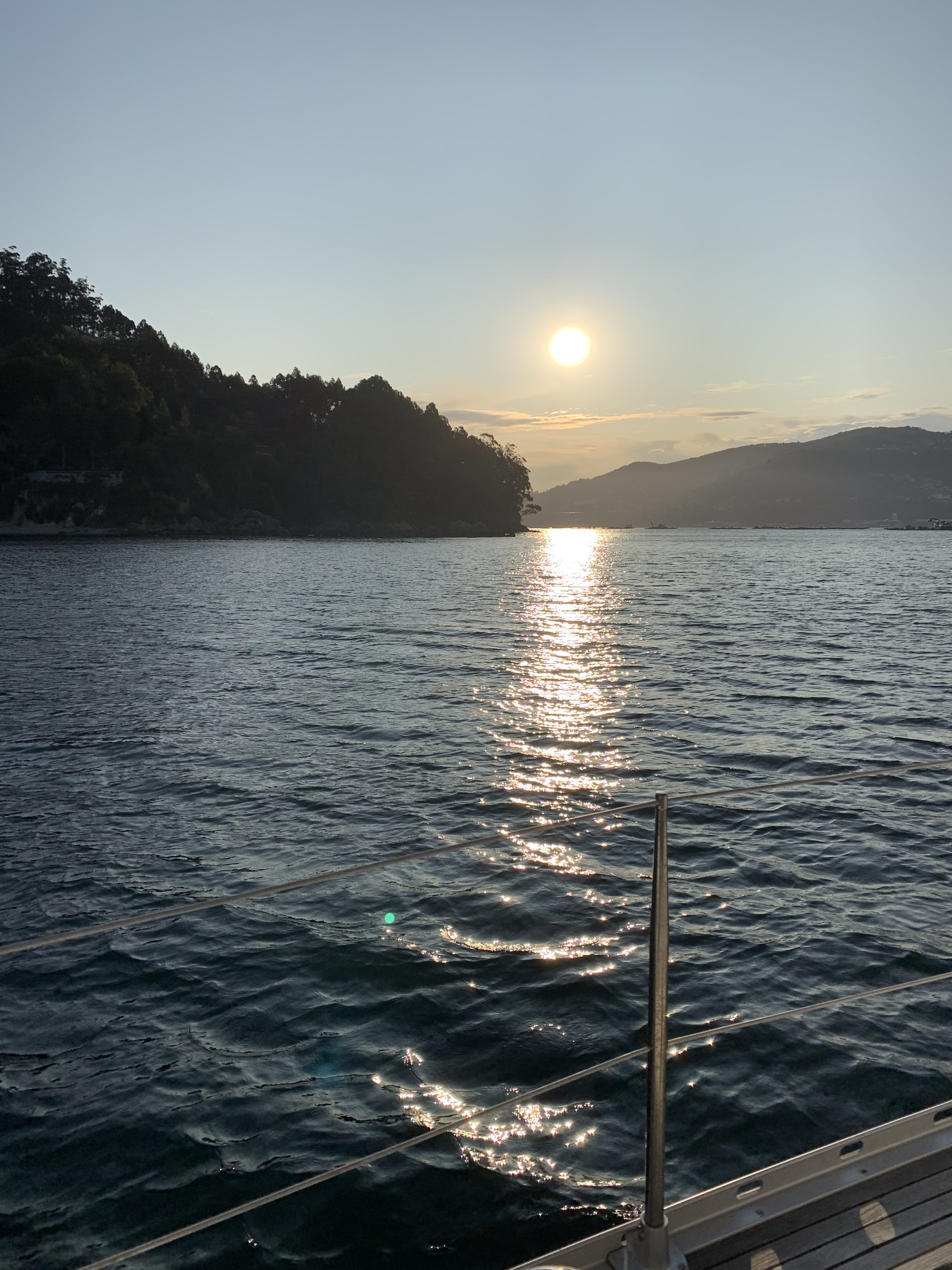
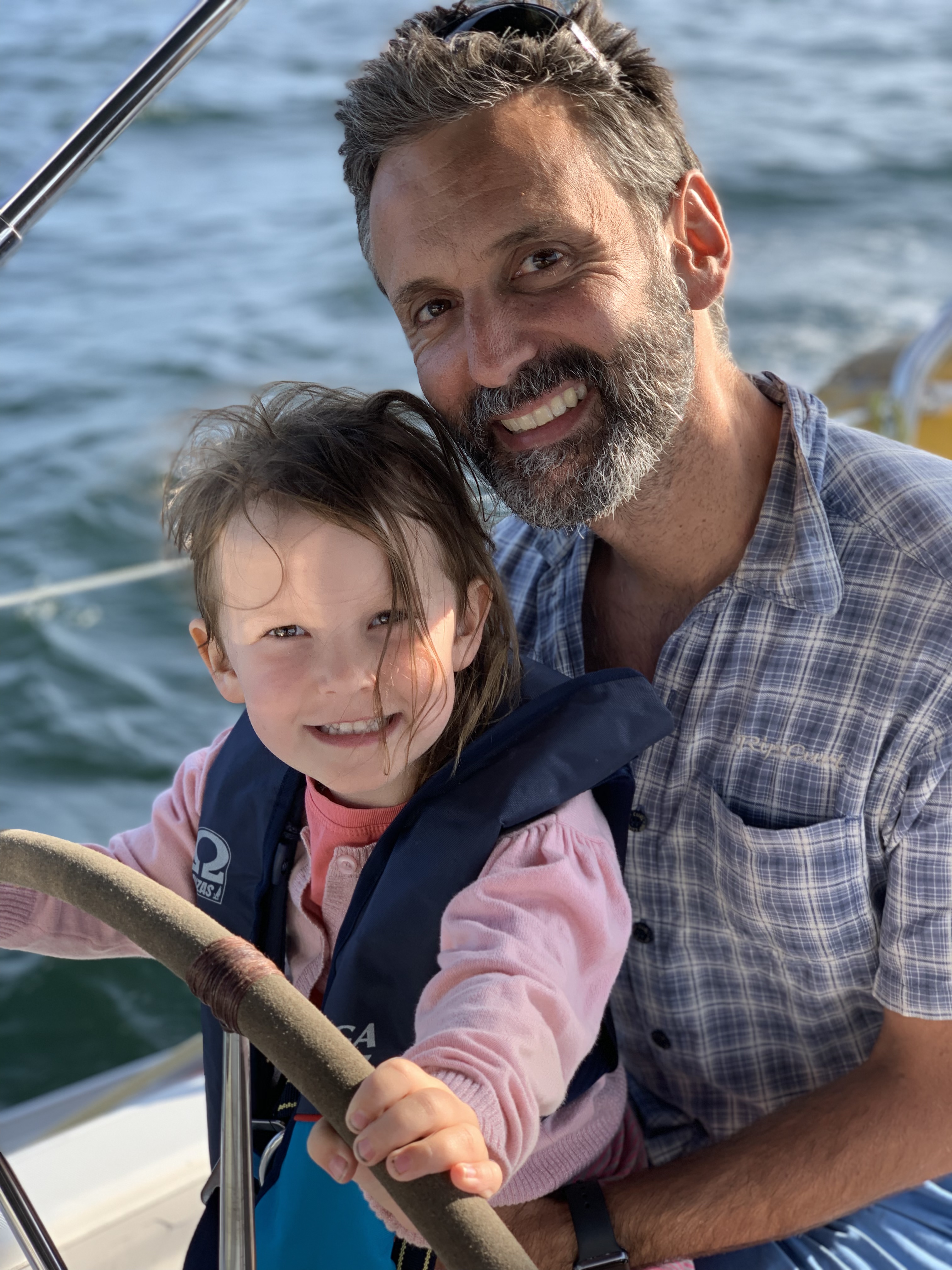
Overall, whilst it was a fairly quick trip, it was a great first crack at cruising on a yacht for everyone. We learned the joys of living and sleeping for multiple days/nights/meals on a boat (a bit like camping with a camper trailer, or what we imagine a caravan would be like, but have yet to try) – but with better views. We learned more about sailing. We learned not to be scared.
And we grew very fond of Carlos, our 65 year old skipper. Despite the language barrier (particularly with the kids), they were able to communicate and bond, over sailing, over board games and over many meals. Their relationship went from one of great concern/abject fear when we first arrived (as Carlos no doubt imagined what his beautiful boat would look like when the kids were finished with it) to the big cuddles from all three at the end of the trip (and what almost looked like tears from Carlos – probably of relief as we had left his boat largely unscathed)
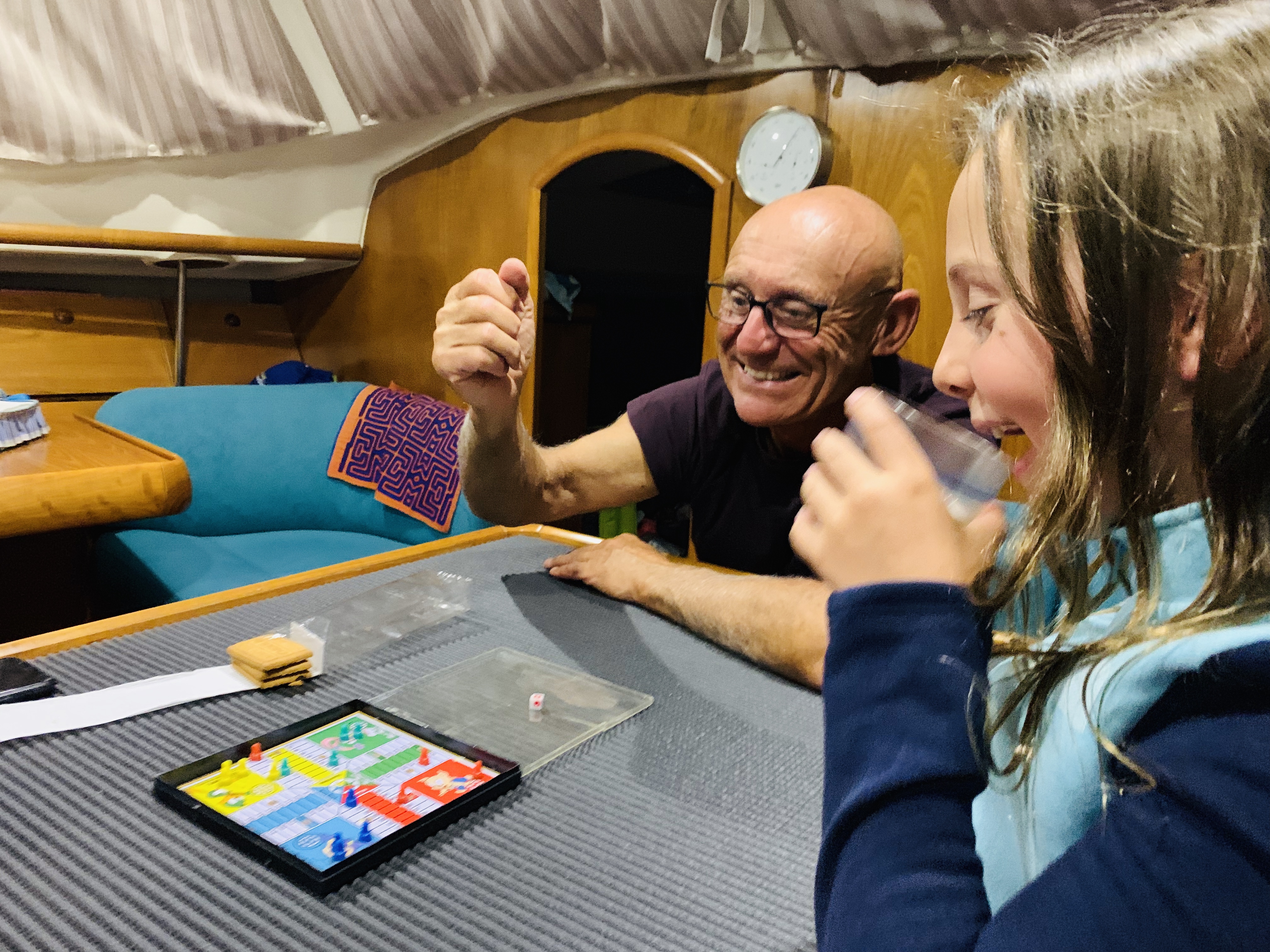
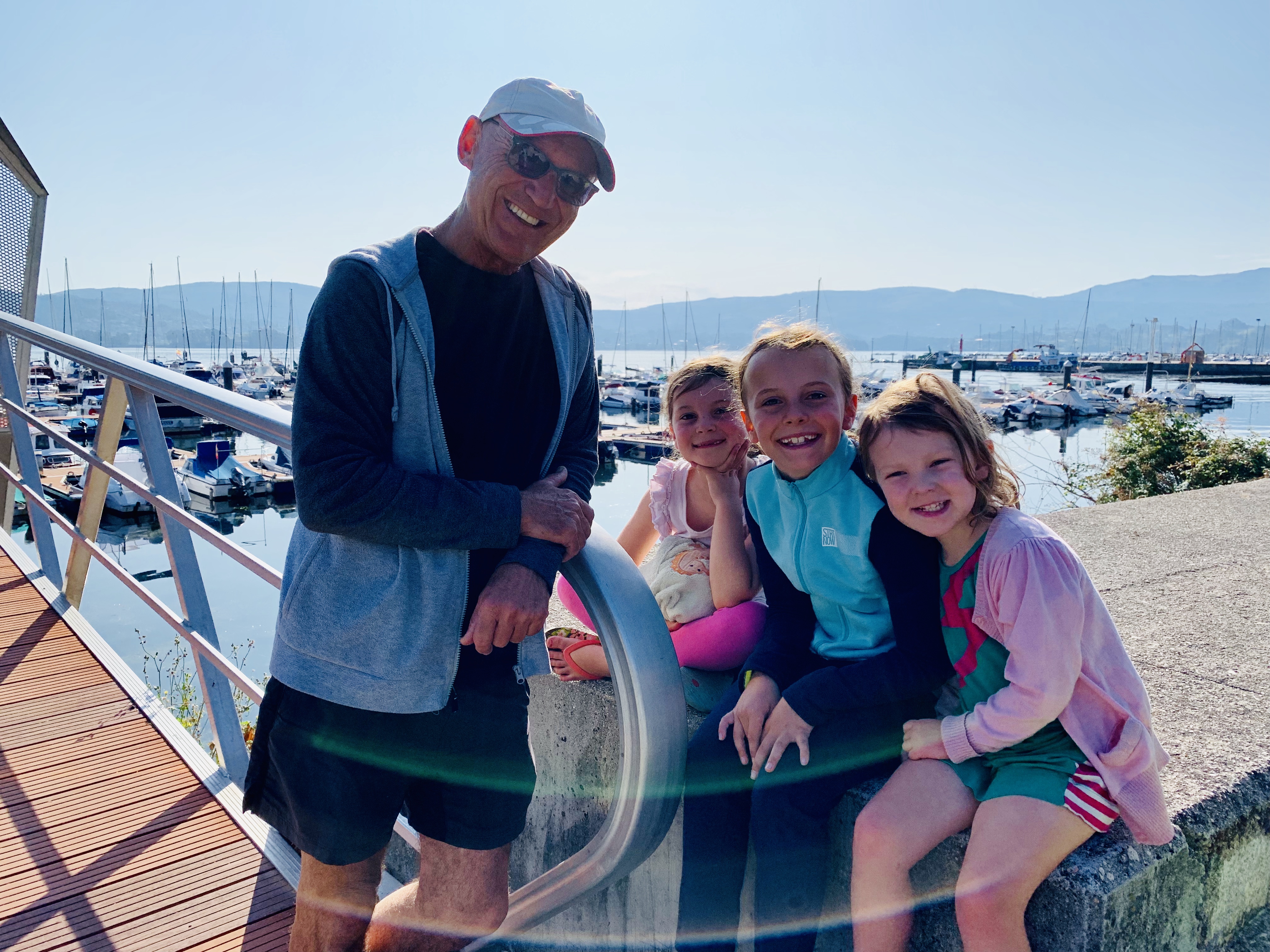
With the added benefits of communication – in a weird but largely functional mix of Spanish, French and some English – we were able to get to know each other a little better and really enjoyed the opportunity to get to know someone with whom we would have otherwise not had the chance to spend time with. An unexpected advantage of the couple of days.
The following morning dawned and we made our way back to the marina, the girls, having now got a taste for it, steering the whole way, the rest of us relegated to crew. It was with some sadness that we made our way into the marina, moored up and unloaded our stuff (greatly diminished now that we had eaten our bodyweight in goodies over the last few days).
Ant and the girls made their way with Carlos up to his house, a beautiful stone structure overlooking the marina that he had designed and built himself to get the car. He proudly showed us around, including his racing motor bikes, car collection and collection of other bikes, skis and other equipment (as he said, life was for games). Ellie looked like she wanted to move in.
Back to the marina, car loaded, goodbyes completed, we jumped in the car and headed east now for our 8 hour drive (the longest of our trip) to get to Bilbao via Santiago for lunch.
We consulted the brains trust on the way out to get fresh feedback on the boating experience. Amazing, loved it, want to do it again. Pretty unanimous.
Hamilton Island here we come (in 2021)!
 Joseph Family Adventure